DePIN Explained: How P2P Bandwidth Marketplaces Power Next-Gen Web3 Infrastructure
TL;DR
- ✓ DePIN replaces centralized ISP monopolies with resilient peer-to-peer infrastructure networks.
- ✓ Token incentives motivate independent operators to share bandwidth and hardware globally.
- ✓ P2P bandwidth marketplaces function like an Airbnb for decentralized internet access.
- ✓ Zero-knowledge proofs ensure secure and verifiable bandwidth exchange without compromising user privacy.
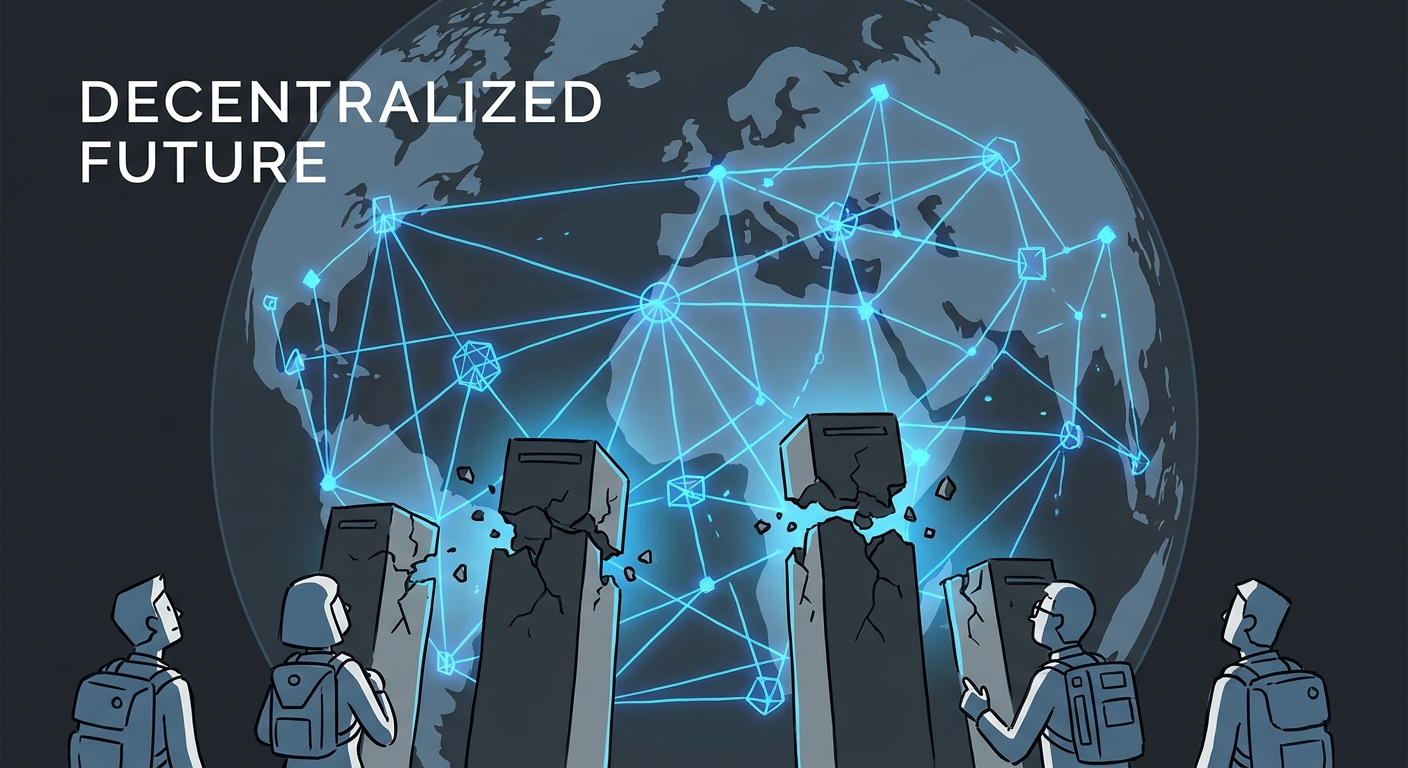
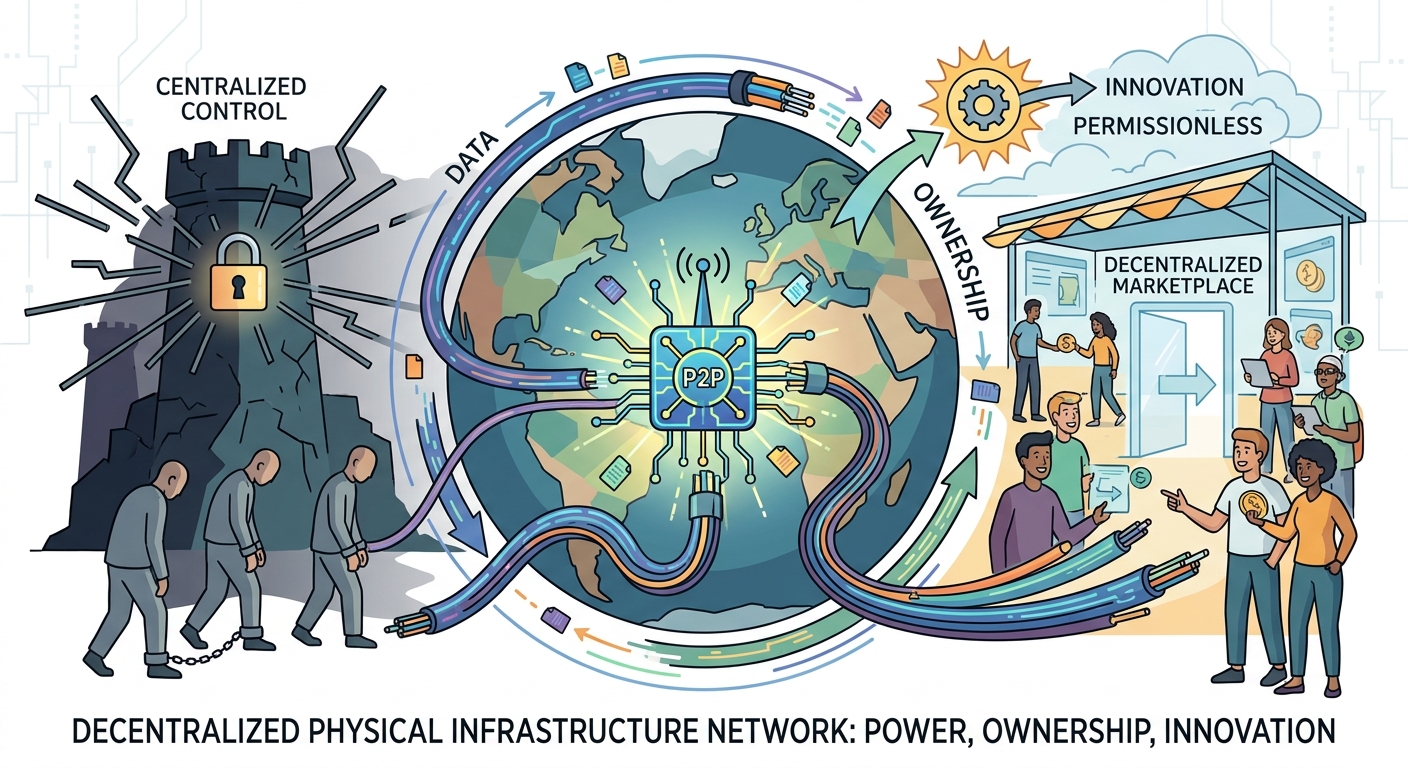
DePIN—Decentralized Physical Infrastructure Networks—is the bridge between the sterile promises of blockchain and the messy reality of the world we actually live in. It’s a fundamental pivot in how we wire the planet. We’re moving away from the fragile, censor-happy grip of traditional ISPs toward a resilient, peer-to-peer ecosystem where you aren’t just a customer. You’re an owner. By using token incentives to coordinate hardware, DePIN turns the internet into a permissionless marketplace that’s tougher and more efficient than the legacy model.
The End of the Centralized Internet Monopoly
For decades, we’ve been at the mercy of a handful of telecom giants. These companies act like digital bouncers: they log your clicks, gatekeep content based on your zip code, and maintain infrastructure that breaks whenever the wind blows. If a regional hub goes dark or a government decides to pull the plug, you’re stuck. That isn't a bug in the system. It is the system.
But the era of "crypto as a casino" is dying. We’re finally seeing a shift toward real-world utility. We are moving away from speculative tokens and toward protocols that solve actual, tangible headaches. As the latest Messari DePIN Report points out, this sector is growing up fast. It’s no longer about hype; it’s about uptime, latency, and throughput. DePIN is the necessary evolution of the internet’s architecture. By decentralizing the physical layer, we cut out the middleman. We stop treating connectivity as a corporate profit-extraction machine and start treating it as a utility governed by code.
What Exactly is DePIN?
At its simplest, DePIN is the marriage of two things: physical hardware (your router, your server, your spare bandwidth) and the blockchain, which acts as the global accountant.
To get under the hood, check out our guide on what is DePIN. Think of it as a protocol that pays people to deploy hardware anywhere on Earth. Instead of a single company spending billions to lay fiber-optic cables in a corporate vacuum, a DePIN protocol rewards thousands of independent operators to contribute what they already have. It solves the classic "cold start" problem of building infrastructure by crowdsourcing the hardware that’s already sitting in our living rooms and offices.
How Do P2P Bandwidth Marketplaces Actually Work?
Think of a P2P bandwidth marketplace as the "Airbnb for Bandwidth." On one side, you have suppliers—node operators sharing their extra capacity. On the other, you have demand—users who need private, censorship-resistant access to the web. The protocol sits in the middle, matching these parties and ensuring the exchange is fair, automated, and tamper-proof.
The secret sauce here is ZK-Proofs (Zero-Knowledge Proofs). These cryptographic tools let the network verify that a node operator is actually providing the bandwidth they promised, without forcing them to hand over sensitive info about their connection or the traffic flowing through it. It protects the user’s privacy while keeping the marketplace honest.
Why is Decentralized Bandwidth More Secure Than Traditional VPNs?
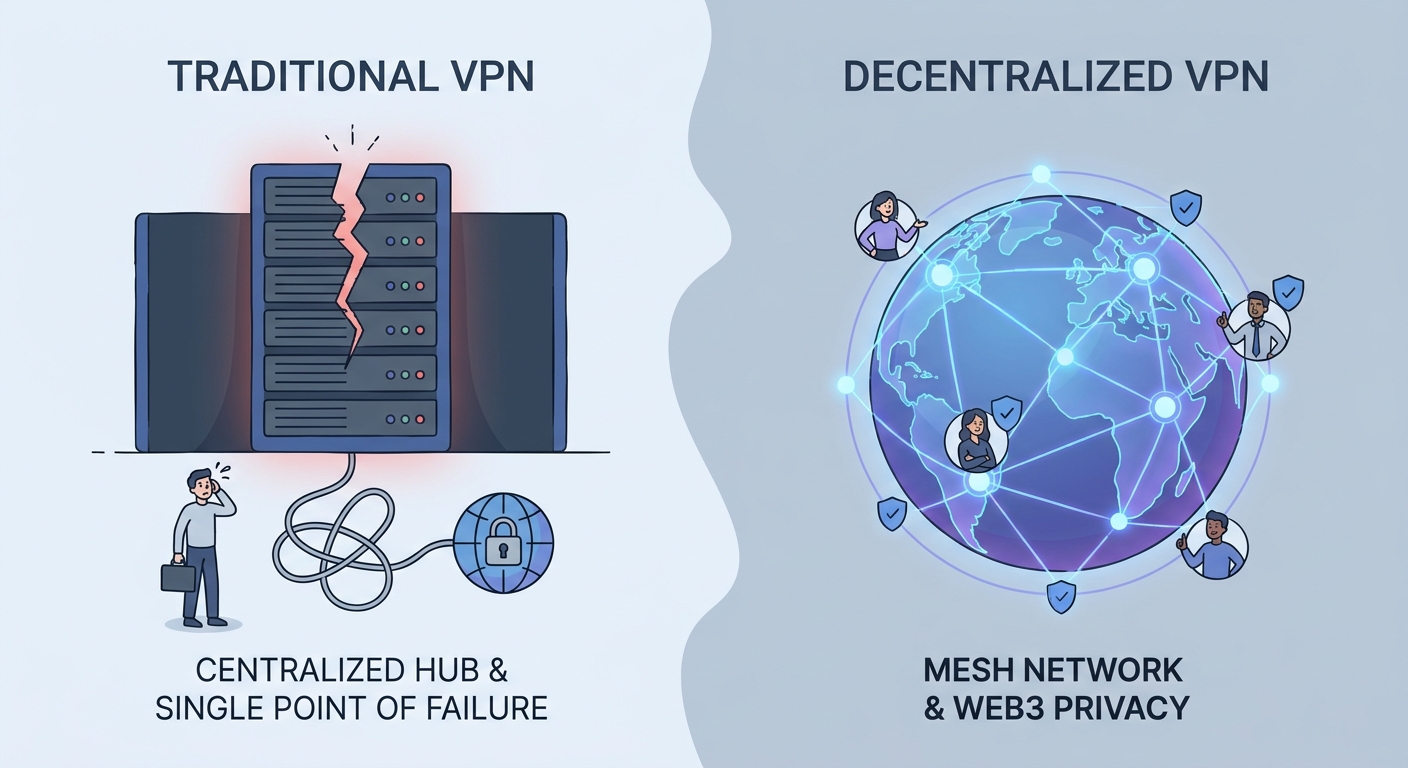
Traditional VPNs have a massive "trust" problem. When you use one, you’re basically handing your privacy to a private corporation. You have to hope they aren't keeping logs, that they aren't selling your data, and that they haven't been compromised by a state actor. In a decentralized marketplace, you don't trust a company. You trust the math.
The architecture uses multi-hop routing. Your traffic bounces through several independent nodes in the network. Because no single node sees both where you started and where you’re going, it’s mathematically impossible for any one entity to map your browsing. For a deeper dive on how this routing actually works, take a look at our VPN Privacy Guide. In this model, anonymity isn't a marketing promise—it’s a feature of the protocol.
The Economic Flywheel: What Drives DePIN Growth?
The sustainability of DePIN relies on the "economic flywheel." It’s a simple feedback loop. As more people crave private, censorship-resistant connectivity, demand for the network’s bandwidth goes up. That demand drives the token value, which gives node operators a bigger incentive to join.
When rewards rise, more people plug in their hardware. This extra supply drives down costs for the end-user and boosts performance, which attracts even more users. When it’s balanced correctly, this loop creates a self-sustaining network that’s faster and cheaper than any centralized dinosaur could hope to be.
Real-World Utility: How DePIN Bridges the Global Connectivity Gap
DePIN is already proving its worth in places where centralized infrastructure is nonexistent or heavily censored. In these areas, the ability to tap into a decentralized, global mesh of connectivity is nothing short of revolutionary.
Imagine a government that restricts access to the internet. A centralized ISP can be forced by the state to block specific IPs or kill the web for an entire region. A decentralized network, however, is essentially "unbreakable." Because nodes are distributed globally and run by individuals, there is no headquarters to raid and no single cable to cut. Resilience isn't an afterthought—it’s baked into the foundation.
How Can You Participate?
You don't need to be a data center engineer to play in the DePIN space. Today, becoming a node operator is as simple as running a small, lightweight app on your existing gear. You stop being a passive user and start being a vital cog in the network's infrastructure.
The barrier to entry is lower than you think. Most projects are designed for regular people with standard home internet. If you want to dive in, check out some of the top DePIN projects leading the charge. By sharing your unused bandwidth, you aren't just earning rewards; you’re helping build the internet of the next decade.
Comparison Matrix: ISP vs. Centralized VPN vs. DePIN
| Feature | Traditional ISP | Centralized VPN | DePIN |
|---|---|---|---|
| Privacy | Low (Logging) | Moderate (Trust-based) | High (Cryptographic) |
| Speed | High (Centralized) | Variable (Bottlenecked) | High (Optimized Routing) |
| Cost | High (Rent-seeking) | Moderate (Subscription) | Low (Market-driven) |
| Censorship | High (State-controlled) | Low (Single-point) | Extremely Low (Resilient) |
The Future: 2026 and Beyond
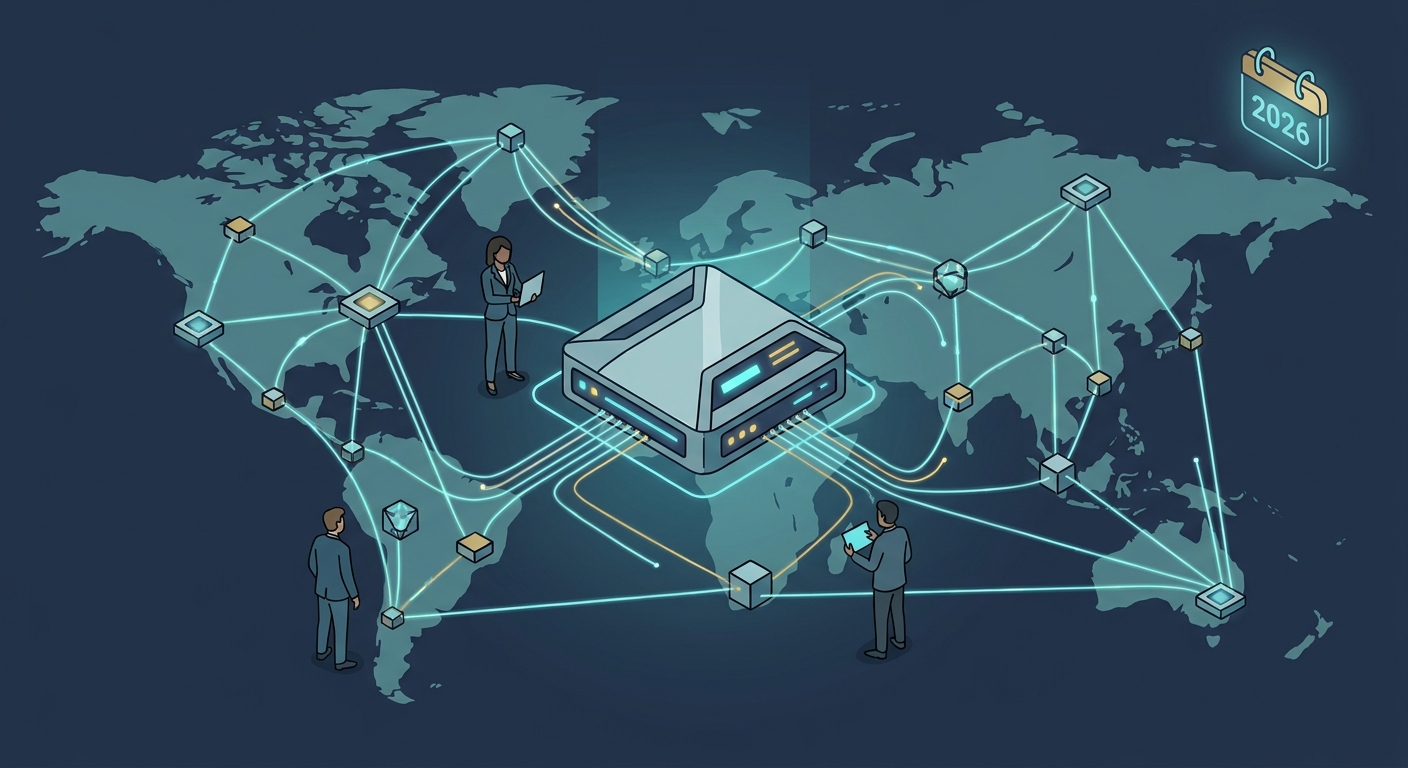
By 2026, we’re going to see DePIN merge with other heavy-hitting tech. We’re already seeing the early days of decentralized AI compute, where those same nodes providing bandwidth contribute their idle GPU power to train massive models. Then there’s the role of oracles—discussed in this Chainlink DePIN article—which act as the referees. They’ll validate physical performance, making sure token rewards go to people who are actually contributing, not just gaming the system.
The future of the internet isn't a series of walled gardens owned by mega-corporations. It’s a collaborative, peer-to-peer landscape. The infrastructure belongs to the people who use it.
Frequently Asked Questions
Is DePIN just another name for a VPN?
No. A traditional VPN relies on a centralized company to manage servers; if that company is compromised or forced to log data, your privacy is history. DePIN is a protocol-based marketplace where you connect to independent nodes. You aren't trusting a company; you are trusting the cryptographic code that routes your traffic.
How does the token incentive model prevent network spam and malicious abuse?
DePIN networks use "Proof of Bandwidth" or similar consensus mechanisms. To earn rewards, a node must prove it is actually routing legitimate traffic. Malicious nodes that try to spam or snoop are penalized through "slashing"—where their staked tokens are burned—ensuring that only honest, performant actors stay on the network.
Is my home internet speed fast enough to participate as a node operator?
In most cases, yes. While high-speed fiber is great for maximizing rewards, many DePIN projects are built for accessibility. The network pools together these diverse contributions to create a robust global resource, meaning your specific connection—no matter how modest—still adds value to the collective.
What happens to my personal data if a node operator in the network is malicious?
Because of multi-hop routing and end-to-end encryption, your data is never readable by a single node. Even if a node operator were malicious, they would only see a tiny, encrypted shard of traffic that has already been routed through other, unrelated nodes. It’s effectively impossible for them to decrypt your activity or pinpoint your location.