Step-by-Step: How to Secure Your Connection with a Blockchain-Powered Privacy Tool
TL;DR
- ✓ Traditional VPNs rely on centralized trust which creates dangerous privacy honeypots.
- ✓ Decentralized VPNs use peer-to-peer node networks to eliminate single points of failure.
- ✓ Blockchain infrastructure ensures your browsing data remains fragmented and truly private.
- ✓ Users can reclaim digital sovereignty by leveraging tokenized, censorship-resistant network protocols.
Securing your digital footprint in 2026 isn't just about clicking a button on a slick app anymore. It’s about admitting a hard truth: the "trust-me" model of traditional VPNs is dead. For years, we’ve handed our browsing history to corporations, crossing our fingers that they wouldn't log our activity or cave the second a government agency sent a subpoena.
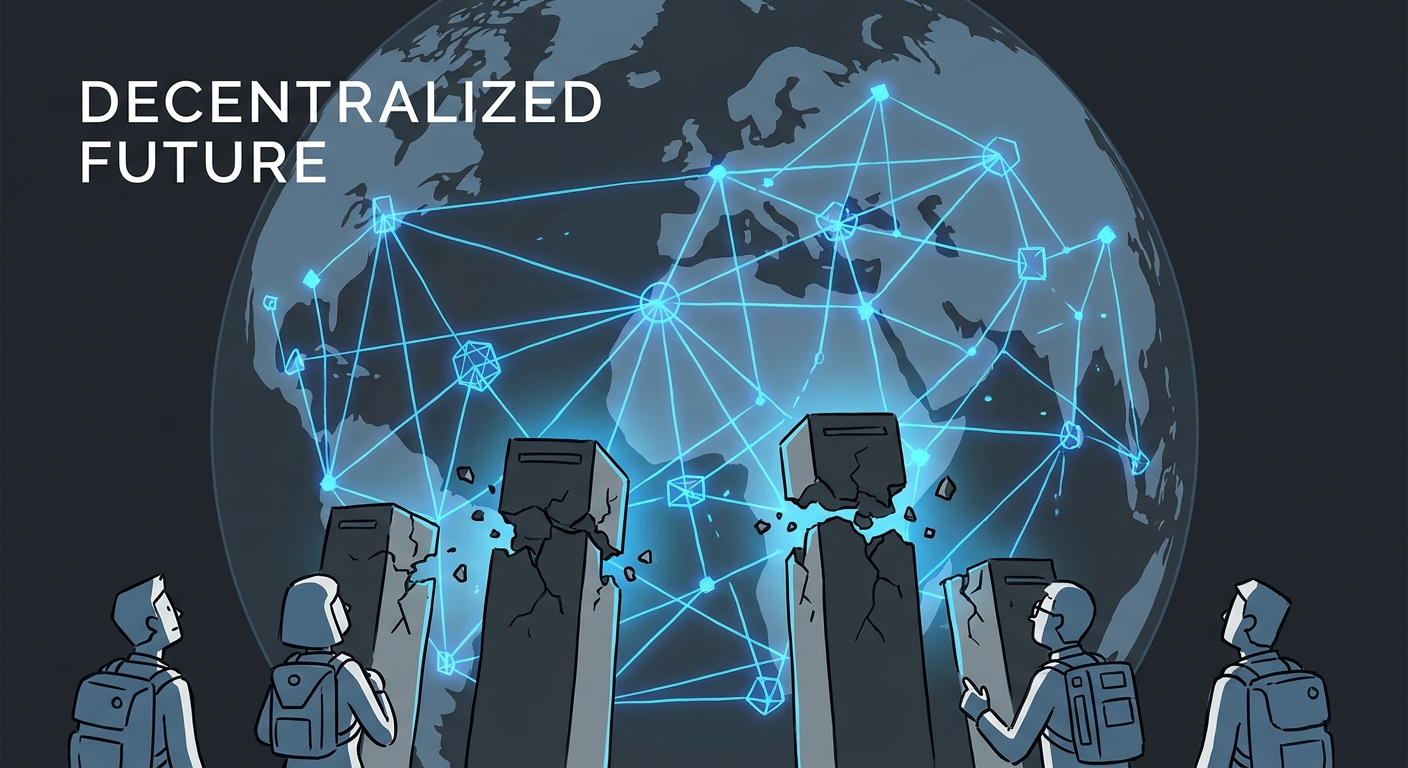
It’s time to stop hoping and start owning. The shift toward decentralized privacy—specifically the move to a dVPN—isn't just a fancy tech upgrade. It’s a reclamation of your digital sovereignty. By moving to a blockchain-powered infrastructure, you’re ditching that single point of failure in favor of a peer-to-peer network. No middleman. No secret logs. Just you and the internet, as it was meant to be.
Why the "Centralized" VPN Model is a Trap
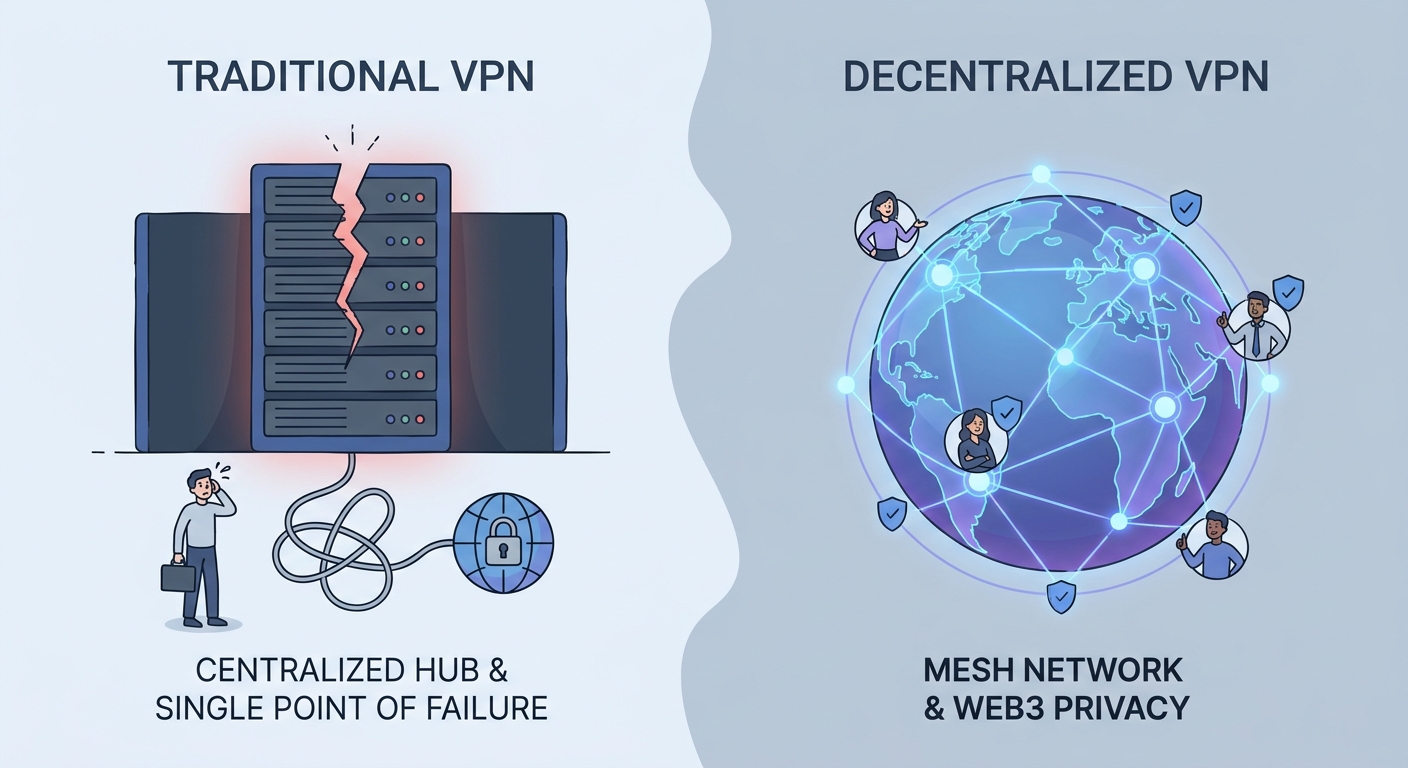
Let’s be honest: the traditional VPN setup is a paradox. You pay a company to hide your identity, yet you have to trust them implicitly to actually do it. They promise "no logs," but how do you verify that? You don't. You take their marketing team’s word for it.
When a VPN company owns all the servers, they create a "honeypot." It’s a single, juicy target for hackers and state actors alike. If they get hit, or if they get pressured, your data is gone.
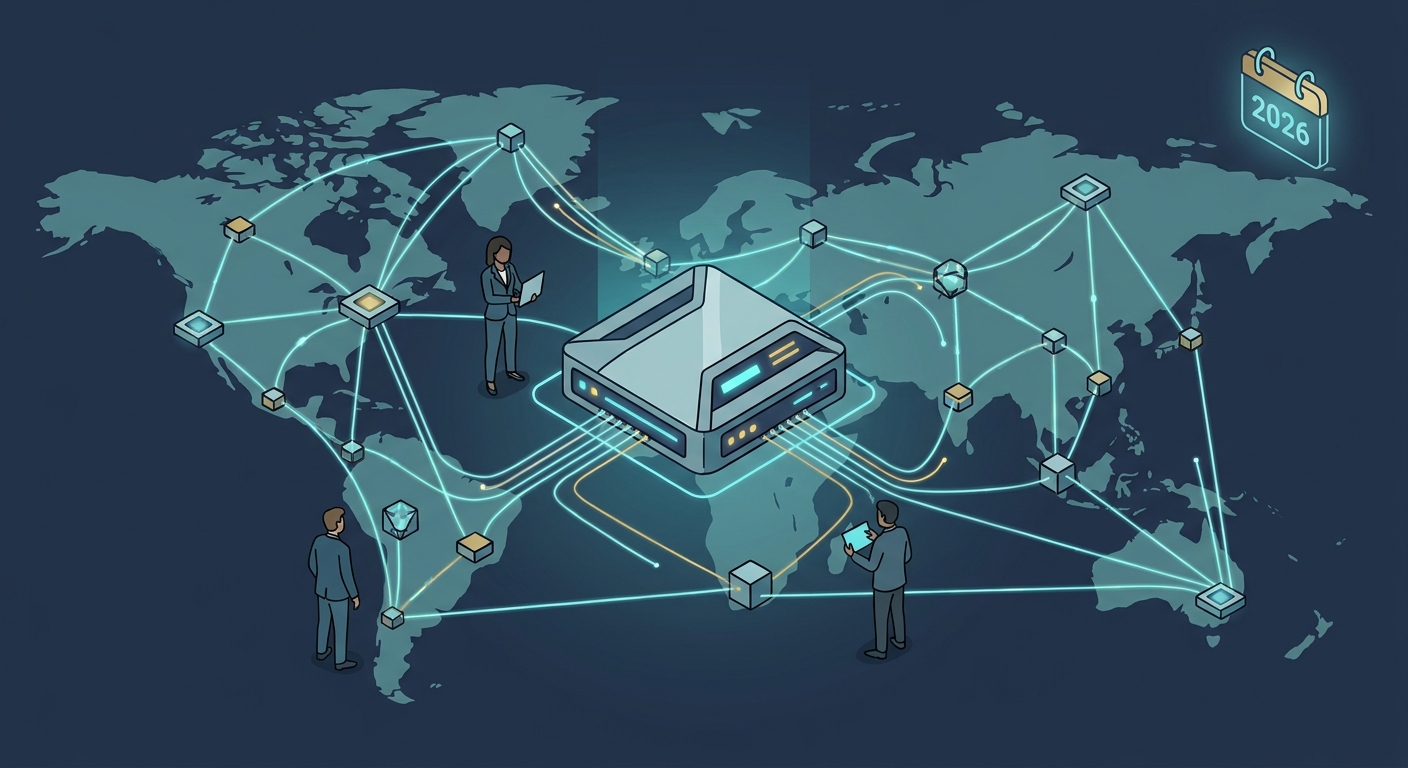
A decentralized VPN, or dVPN, flips the script. Instead of routing your traffic through some corporate server in a basement, your connection is distributed across a global mesh of independent nodes. Your data hops through community-operated hardware, making it nearly impossible for anyone to track the full path. This is the power of decentralized physical infrastructure, or DePIN. It’s not just about privacy; it’s about building a network that literally cannot be switched off by a single entity.
The Architecture of Privacy: A Reality Check
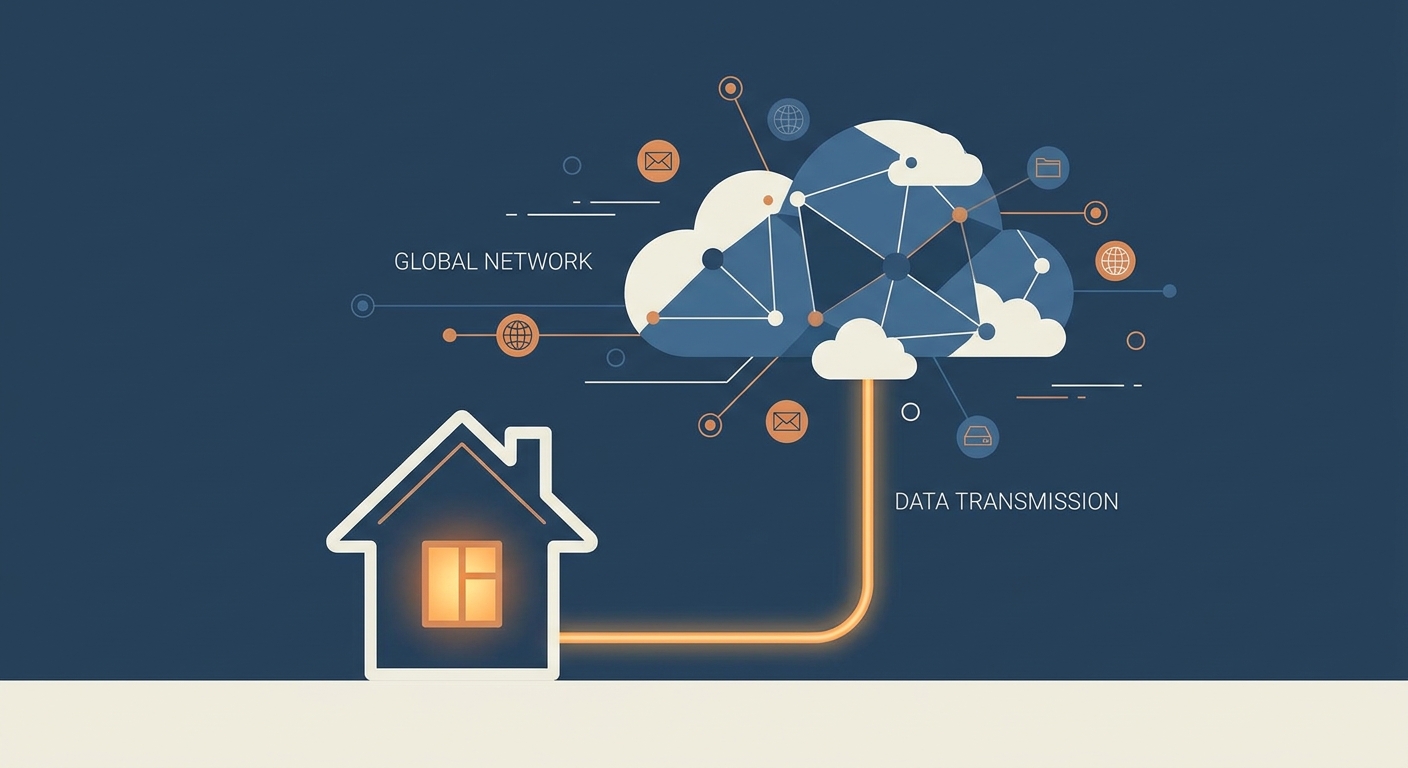
To understand why this matters, look at how your traffic travels from your device to the open web.
In the old model, the provider sits in the middle like a gatekeeper. In the decentralized world, your traffic is fragmented. It skips across multiple encrypted hops. No single node has the full picture of your browsing habits, and that’s exactly how it should be.
Preparing for Your First Connection
Before you dive in, you need your "digital passport." In the Web3 world, that’s just a non-custodial wallet. Think of it less like a bank account and more like a keychain that gives you total control over the tokens you use to pay for bandwidth.
These tokens are the fuel for the machine. Think of it as an "Airbnb for Bandwidth." You aren't paying some massive monthly subscription fee to a faceless corporation. You’re paying tiny micro-fees directly to the person hosting the node you’re using. It’s transparent, it’s fair, and it’s efficient. When you set this up, keep your wits about you: keep your private keys offline, use a hardware wallet if you can, and only connect to dVPN apps with a solid reputation.
How to Configure Your dVPN for Maximum Security
1. Don't Just Pick Any Node
Not all nodes are created equal. When you open your dashboard, don't just hit "Connect." Be picky. Look for nodes with high uptime, low latency, and a track record of good performance. If you aren't sure where to start, check out the 10 Best dVPN Platforms for 2026 to see which providers are actually building robust infrastructure.
2. Staking: The Heartbeat of the Network
Staking sounds like financial jargon, but it’s simple: you lock up a few tokens to ensure you have access to the best parts of the network. It keeps the ecosystem healthy. The good news? You don't need a PhD in crypto to do it. Modern apps handle the "gas fees" and smart contract headaches in the background. You just click "buy bandwidth," and the app does the heavy lifting.
3. Establishing the Tunnel
Once your wallet is ready, pick your exit nodes. This is where you gain real freedom. Need to bypass a geo-block? Pick a node located in the region you want to appear in. If you want to get into the weeds of how these tunnels work, the PrivacyTools.io Guide to dVPNs is the gold standard. Read it.
4. Verify, Don't Trust
Want to go the extra mile? Look into Zero-Knowledge Proofs. This is the "holy grail" of privacy tech. It allows you to prove you’re a legitimate user without actually revealing who you are or what your metadata looks like. It’s the ultimate way to stay anonymous while still getting the service you paid for.
Is a dVPN Actually Faster?
There’s a myth that decentralization is slow. That’s usually not true. Think of a traditional VPN as a single highway leading to a packed stadium—everyone is stuck in the same bottleneck. A dVPN is more like a massive, multi-lane highway system. If one lane (node) is congested, your traffic automatically reroutes to a faster neighbor. It’s intelligent, adaptive, and often much smoother than the "single server" experience.
Troubleshooting the Web3 Transition
Moving to Web3 can be bumpy. Sometimes a node drops. Sometimes a wallet permission request hangs. Don't panic. Modern dVPN clients have built-in "fail-safes"—if your current node goes offline, the app usually switches you to the next best one instantly. If you’re struggling, check your node settings. Nine times out of ten, the problem is just that your chosen node is too far away or lacks the bandwidth to handle your request.
Why This Matters
At the end of the day, moving to decentralized privacy isn't just a technical preference; it’s an ethical choice. There are people in parts of the world where the internet is a cage. For them, these tools aren't a luxury—they are a lifeline. By supporting a network that no single government or corporation can kill, you’re helping keep the internet a tool for freedom.
Privacy isn't a "feature," and it isn't "optional." It’s a human right. It’s time we started acting like it.
Frequently Asked Questions
Is a dVPN actually faster than a traditional VPN?
It depends on your geography. While traditional VPNs use high-speed data centers, they suffer from congestion. A dVPN offers a distributed network; if you choose a high-quality node, you can achieve comparable speeds, often with much lower latency during peak hours because the traffic isn't funneled through a single, overloaded server.
Do I need to know how to trade crypto to use a dVPN?
No. Modern dVPN applications use token abstraction. You interact with a standard user interface where you can purchase bandwidth using credit cards or stablecoins, while the application handles the blockchain transactions and token conversions behind the scenes.
What happens if my exit node is malicious?
Security is built into the protocol through multi-hop routing and end-to-end encryption. Even if an exit node is malicious, it only sees the encrypted data coming from the previous hop, not your original IP address or your unencrypted traffic.
Is my identity stored on the blockchain when using a dVPN?
No. Your personal browsing traffic never touches the blockchain. Only the transaction data—the payment for bandwidth—is recorded on the ledger, and this is done using wallet addresses that do not necessarily link to your real-world identity.
How do I participate in "Bandwidth Mining" to offset my costs?
If you have a stable internet connection and spare bandwidth, you can run your own node. By providing this service to others, you earn tokens, which can then be used to pay for your own privacy needs, effectively creating a self-sustaining cycle of decentralized connectivity.