DePIN Explained: How Decentralized Physical Infrastructure Networks Are Revolutionizing Internet Access
TL;DR
- ✓ DePIN replaces centralized ISPs with user-owned decentralized physical infrastructure networks.
- ✓ Blockchain protocols incentivize users to share bandwidth and hardware securely and transparently.
- ✓ The DePIN flywheel creates a resilient marketplace for censorship-resistant and private internet access.
- ✓ Participants earn tokens by contributing their idle hardware resources to the global network.
The age of the monolithic Internet Service Provider (ISP) is dying. For decades, we’ve played a rigged game: we pay through the nose, accept that our data is being harvested, and live with the constant threat of censorship. It’s a Faustian bargain. We trade our privacy for a connection that breaks whenever a local utility pole takes a hit.
But what if we cut out the middleman?
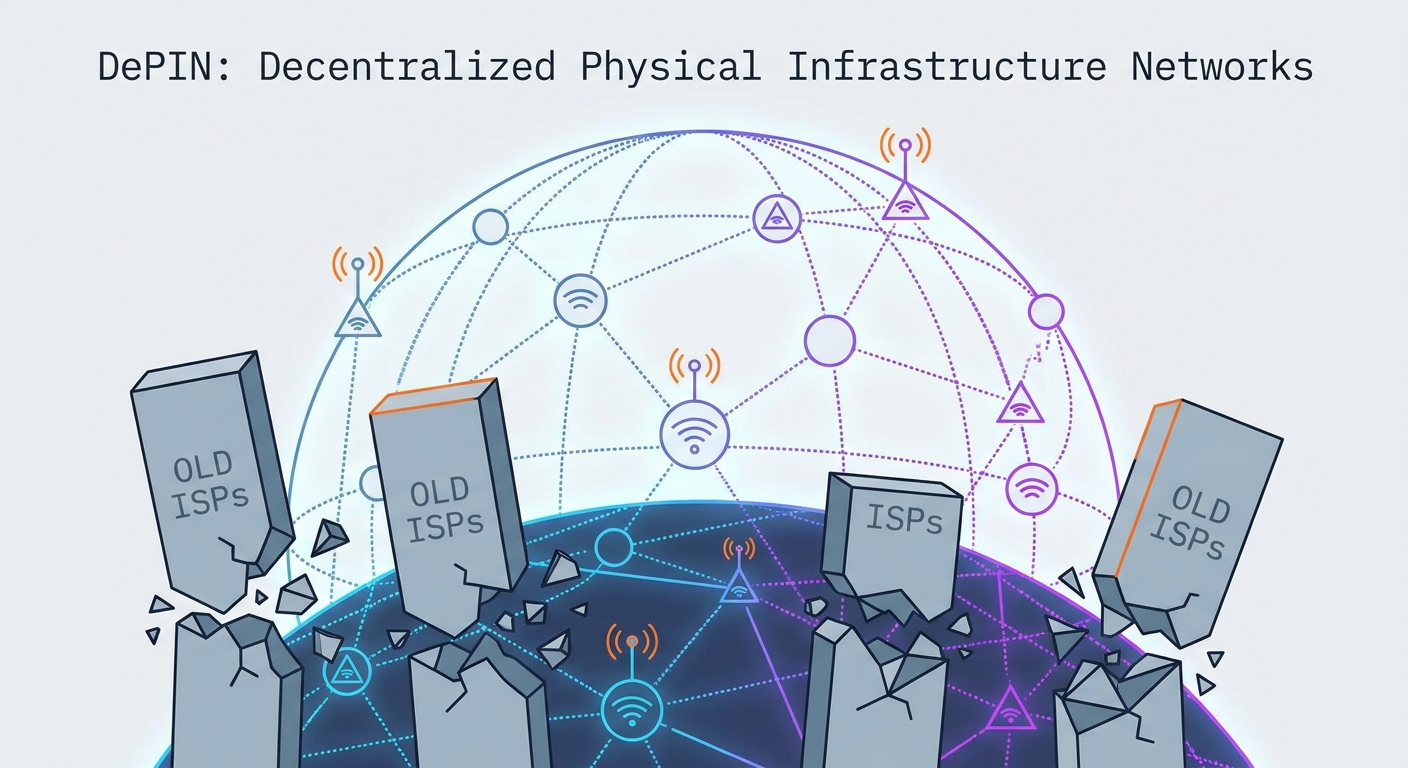
Enter DePIN—Decentralized Physical Infrastructure Networks. It’s not just tech-bro buzzword bingo; it’s a genuine attempt to hand the keys of the internet back to the people who actually use it. By shifting ownership from bloated corporations to individual users, DePIN turns internet access from a rented commodity into a resilient, user-owned marketplace.
What is DePIN, Really?
Forget the jargon for a second. At its core, DePIN is just a marriage of hardware, blockchain, and basic human incentives.
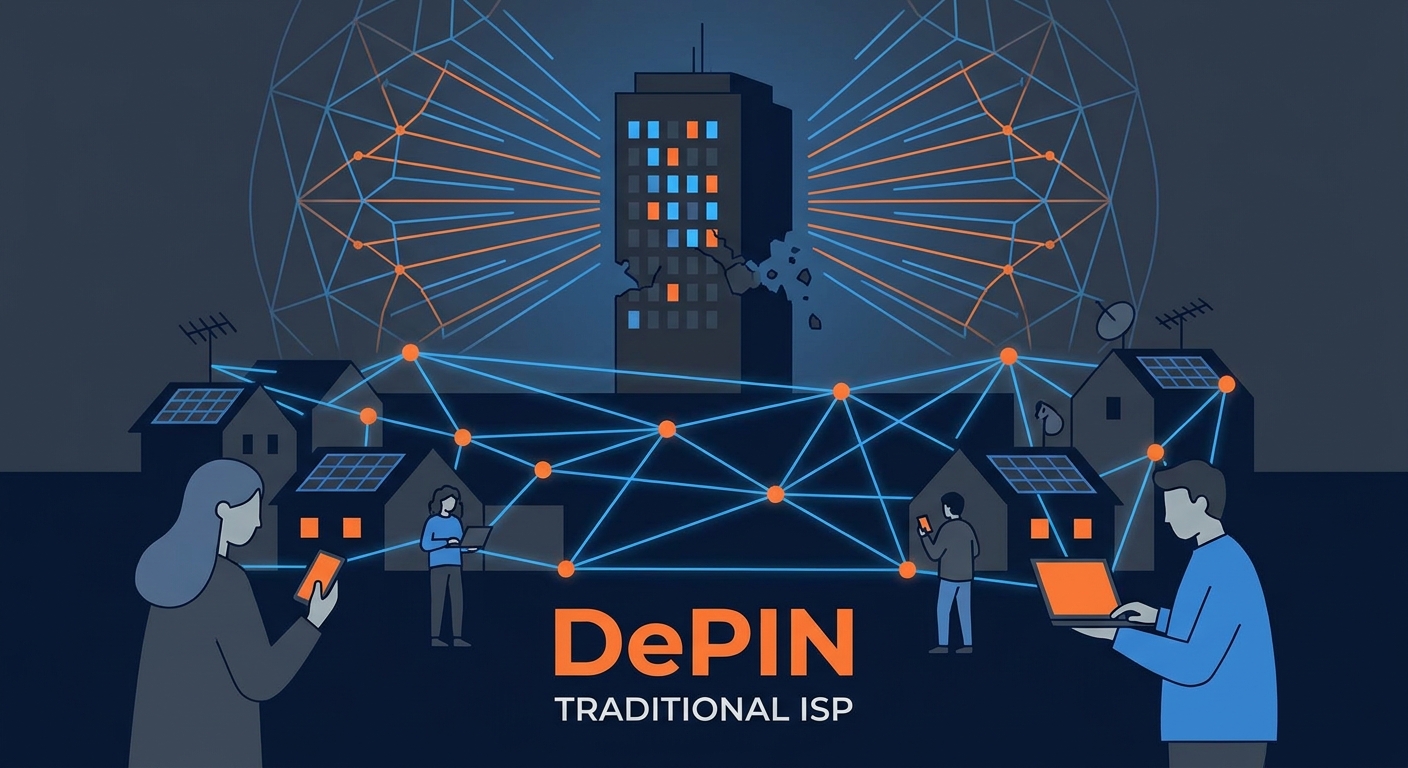
Think about how traditional ISPs work. They spend billions laying fiber and building massive towers. That massive debt requires them to squeeze every cent out of you, censor traffic to please regulators, and hoard your data to sell to advertisers. It’s centralized by necessity, but that centralization is exactly what makes the internet fragile.
DePIN flips the script. Instead of one massive company owning everything, it uses the idle hardware already sitting in your house. Your router, your extra bandwidth, your spare compute—it’s all part of the potential network.
The architecture is simple:
- The Physical Layer: Your hardware (a router, a server, a PC).
- The Capacity: The actual bandwidth or compute you’re sharing.
- The Protocol: The blockchain layer that handles payments and keeps everyone honest.
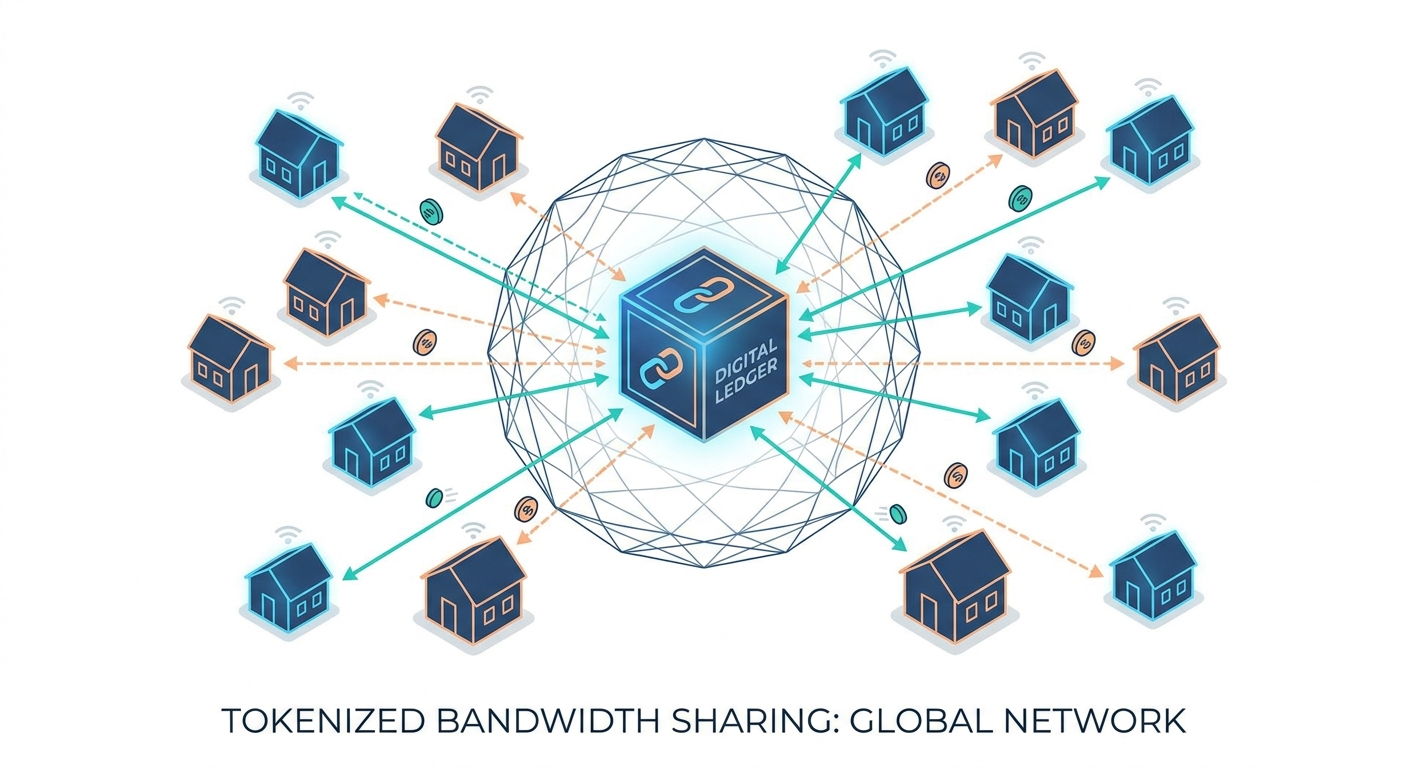
When you need data in a DePIN world, you aren’t pinging a corporate server that’s logging your every click. You’re pulling bandwidth from a distributed mesh of peers. The blockchain acts as an immutable ledger, ensuring node operators get paid instantly without some CEO skimming off the top or logging your traffic. It’s self-regulating, transparent, and—most importantly, it’s yours.
The "Airbnb for Bandwidth": The DePIN Flywheel
People love calling this the "Airbnb for Bandwidth," and honestly? The label fits.
On one side, you have the "suppliers"—regular people with extra internet capacity. On the other, you have the "demand"—users who want a private, censorship-resistant connection.
This creates a flywheel that’s hard to stop. As more people sign up for the benefits of P2P bandwidth sharing, the network becomes more valuable. As the network grows more useful, the native tokens gain value. That value attracts more node operators, which adds more capacity, which brings in more users.
According to the latest Messari DePIN Report, we’ve moved past the "crypto-hype" phase. We’re now seeing real-world utility drive the sector’s growth. Because the network rewards you for participating, it scales organically. It fills in the gaps where big ISPs refuse to invest, effectively building a global, unbreakable web that no single boardroom can kill.
Why DePIN Changes the Game for Your Privacy
Let’s talk about the elephant in the room: logging.
When you use a traditional ISP, your digital footprint is an open book. They see everything. Even when you use a standard VPN, you’re usually just shifting your trust from your ISP to a VPN company. You’re still handing your keys to someone else.
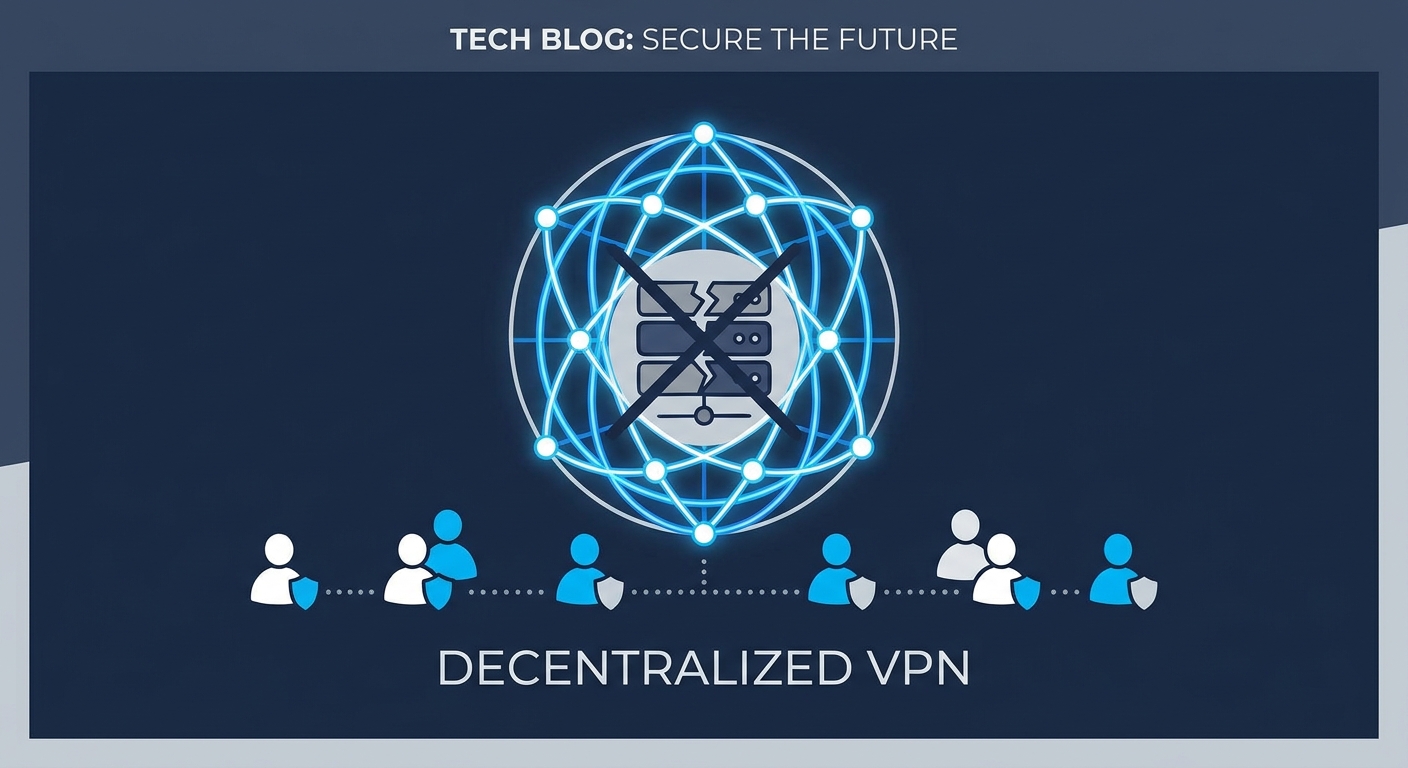
DePIN is different. It’s built on multi-hop routing. Your data bounces through a decentralized network, meaning no single node operator ever has the full picture of where your traffic is coming from or where it’s going.
This is the next evolution of the Decentralized VPN. You aren't just masking an IP; you’re routing through a trustless environment where there is no central authority to subpoena. If you’re in a region where the state controls the internet gateway, DePIN is a lifeline. It allows you to tunnel around geographical blocks by routing through a global, distributed relay system that’s nearly impossible to blacklist.
The Cost Breakdown: Why Legacy ISPs Are Losing
Legacy ISPs are bloated. They have armies of technicians, massive insurance policies, and layers of management—all of which you pay for in your monthly bill.
DePIN is lean. It uses the "long tail" of global internet capacity that’s already paid for.
| Feature | Legacy ISP | DePIN Network |
|---|---|---|
| Ownership | Centralized Corporation | Distributed/User-Owned |
| Data Privacy | High (Logging/Mining) | Low (Privacy-by-Design) |
| Resilience | Single Point of Failure | High (Redundant Nodes) |
| Cost Basis | Fixed Monthly Fees | Micro-payment Efficiency |
By using high-speed, low-fee Layer-2 blockchains, DePIN projects are making micro-payments for bandwidth a reality. It’s cheaper. It’s faster. If you check DePINscan, you can see the density of these networks exploding. When the network is the hardware, the price of connectivity trends toward the actual marginal cost. It’s deflationary, and it’s forcing the old guard to sweat.
How to Become a Node Operator (And Get Paid)
The best part? You don't need a degree in data science to join. The barrier to entry is lower than it's ever been.
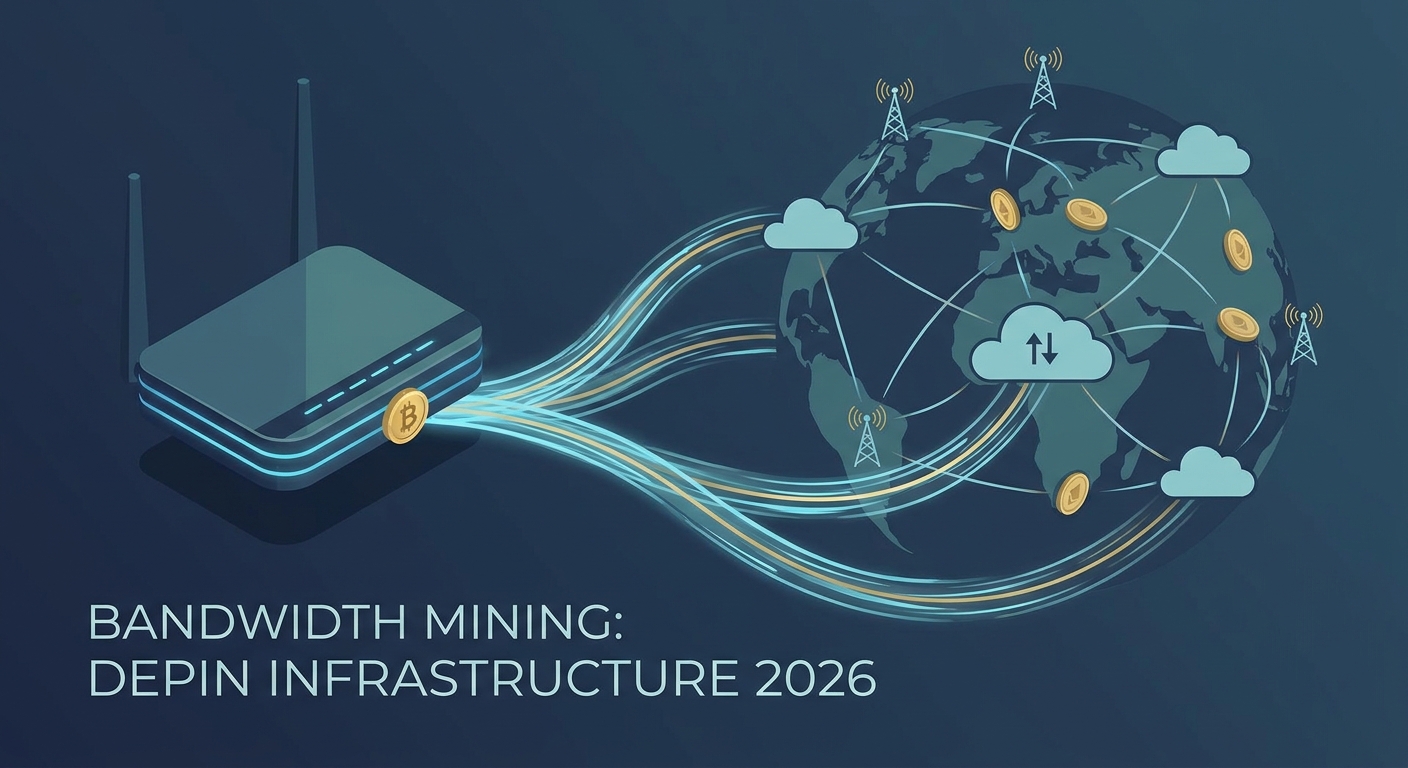
Many protocols, like those championed by IoTeX Research, let you turn a basic home router or an idle PC into a node. You’re essentially renting out your unused bandwidth.
It’s an "earn as you browse" model. Your internet bill goes from being a monthly drain on your bank account to a potential revenue stream. The software is plug-and-play. It runs in the background, it doesn't slow down your Netflix, and it just works.
The Road Ahead: 2030 and Beyond
Imagine 2030. Your smart fridge, your thermostat, and your security cameras aren't just "smart" devices—they’re active nodes in a global, decentralized mesh. They’ll negotiate bandwidth in real-time. They’ll find the fastest, most private path for your data without you lifting a finger.
Sure, there are hurdles. We aren't quite at the multi-gigabit speeds of fiber backbones yet. Regulators are still trying to figure out how to tax or control something they can't shut down. But as we all scramble to protect our digital privacy online, the shift toward DePIN feels inevitable.
We are moving away from a world where we are the product of our service providers. We are moving toward a world where we are the infrastructure.
Frequently Asked Questions
Is DePIN-based internet safe for daily use?
Yes, it is designed with privacy as the default. Because the network utilizes P2P encryption and nodes act only as blind relays, no single node operator can view or store your traffic logs. Your data remains encrypted end-to-end, ensuring that even if a node is malicious, they cannot inspect the content of your requests.
Do I need to buy expensive, specialized hardware to participate?
No. While some high-performance nodes utilize dedicated hardware, the vast majority of current DePIN projects are designed to run on common hardware, including standard home routers, Raspberry Pis, or even simple background software applications on your current PC or laptop.
How does DePIN differ from a traditional VPN?
A traditional VPN relies on a centralized company that operates its own servers, meaning you must implicitly trust that company not to keep logs or sell your data. A DePIN-based network is trustless; there is no central authority to collect logs, and because the network is composed of thousands of independent nodes, there is no single point of failure or centralized target for data requests.
Can DePIN completely replace my current ISP?
In the current state, DePIN is best viewed as a powerful augmentation to your existing connectivity, particularly for privacy and censorship resistance. While the network is growing in speed and reliability, it is still maturing. However, as the network density increases, it is rapidly becoming a viable, decentralized alternative for primary connectivity in many regions.