Decentralized VPN (dVPN) vs. Traditional VPN: Why Web3 Privacy is the New Standard
TL;DR
- ✓ Traditional VPNs rely on risky centralized servers and unverified no-logs policies.
- ✓ Decentralized VPNs use cryptographic protocols to remove single points of failure.
- ✓ DePIN architecture routes traffic through a global mesh of independent nodes.
- ✓ Web3 privacy replaces corporate trust with verifiable, decentralized network logic.
The biggest lie in tech isn’t a bug or a missing feature. It’s the "no-logs" marketing promise.
For years, we’ve been conditioned to hand over our digital lives to centralized VPN providers, trusting them because they put a fancy badge on their website. We treat these companies like digital sanctuaries. But in 2026, relying on a company’s internal policy to protect your privacy is like leaving your front door unlocked because you "trust" your neighbors. It’s a single point of failure.
A decentralized VPN (dVPN) flips the script. It moves the burden of trust from a boardroom of suits to the cold, hard logic of cryptographic protocols. Traditional VPNs are built for the convenience of a one-click app; dVPNs are built for people who realize that in a world where data is the ultimate currency, "trust me" isn't a security strategy.
Architecture: The Hub-and-Spoke vs. The Mesh
To see why the shift to dVPNs is inevitable, look at how your traffic actually moves.
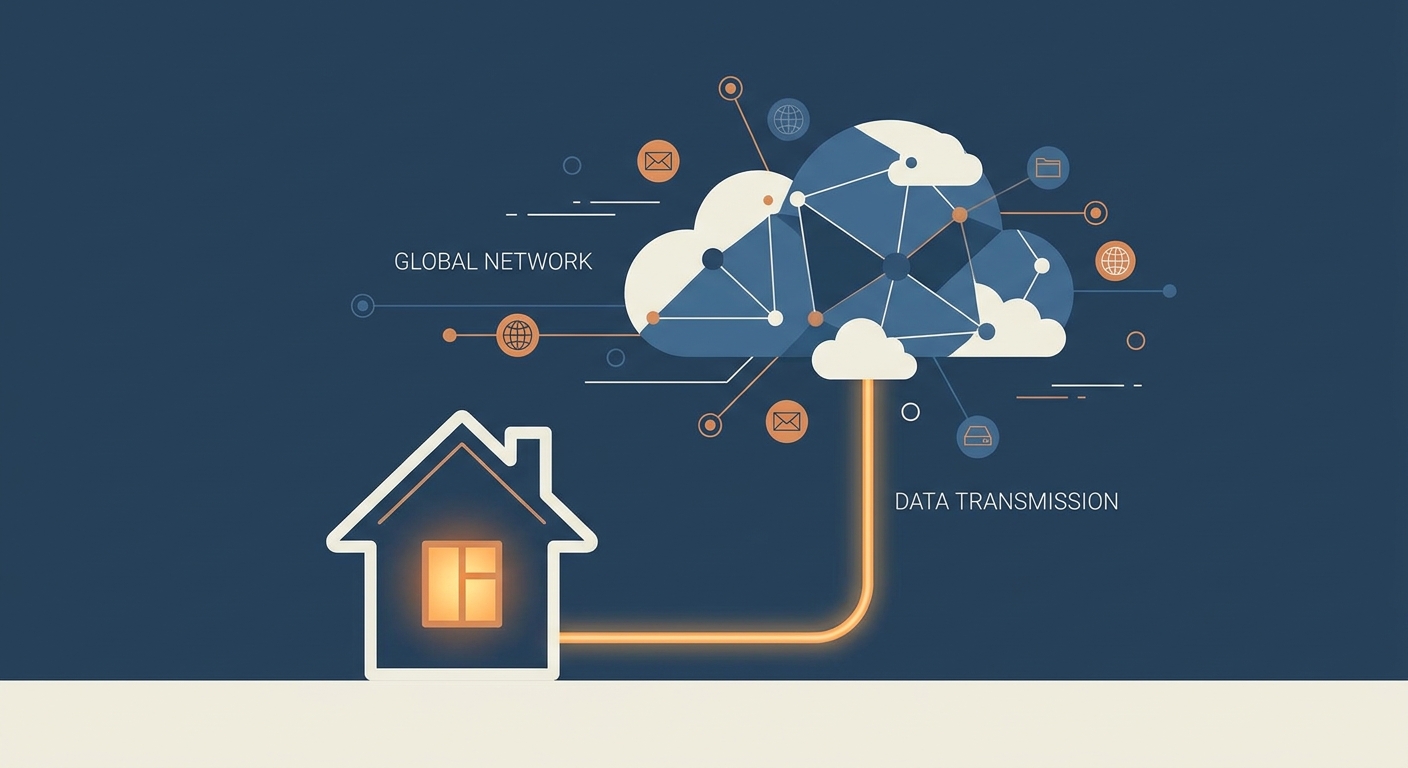
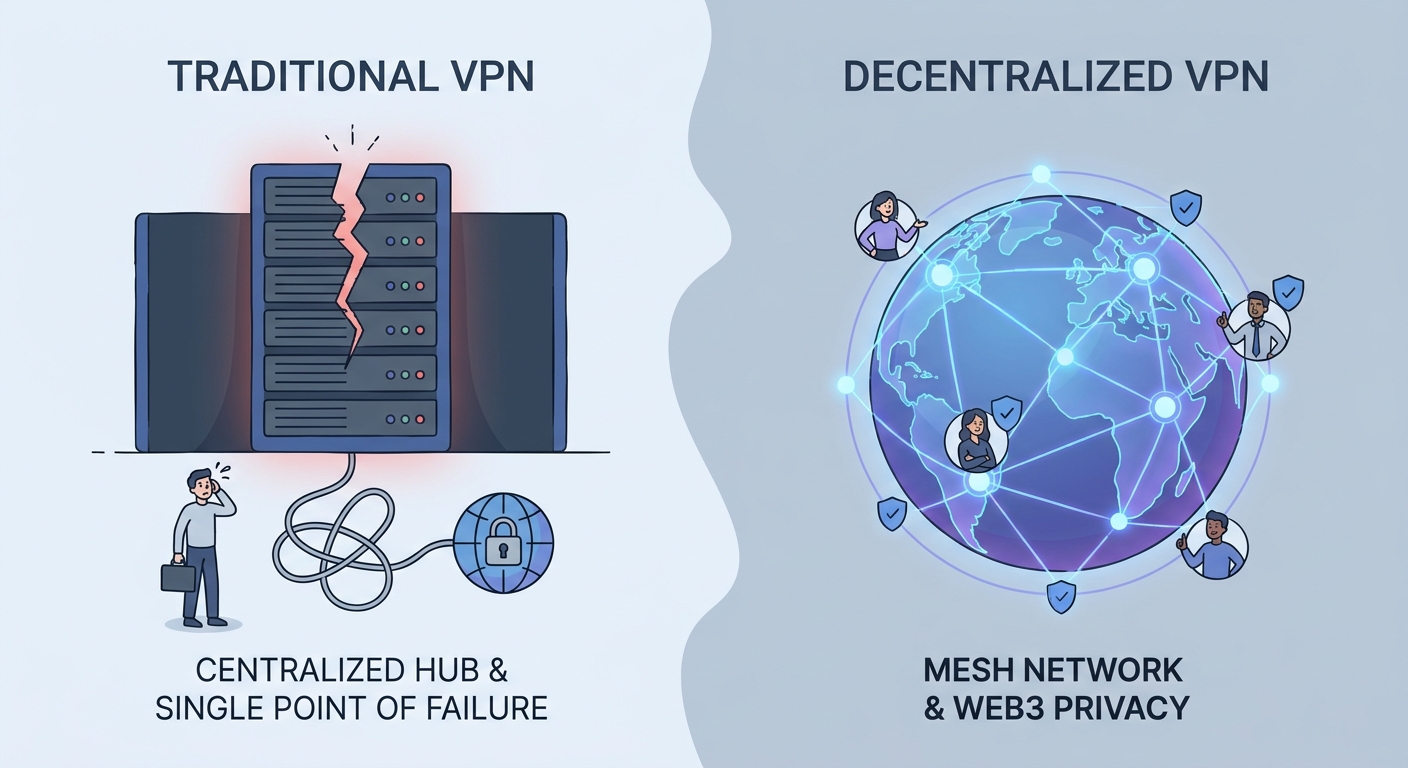
Traditional VPNs are "hub-and-spoke." Imagine a giant spiderweb where every thread leads back to one central office. Whether that provider is based in Panama, the Seychelles, or the British Virgin Islands, you are routing your entire digital existence through their infrastructure. If they get subpoenaed, hacked, or simply decide to sell your data to cover their operating costs, your privacy vanishes. You are at their mercy.
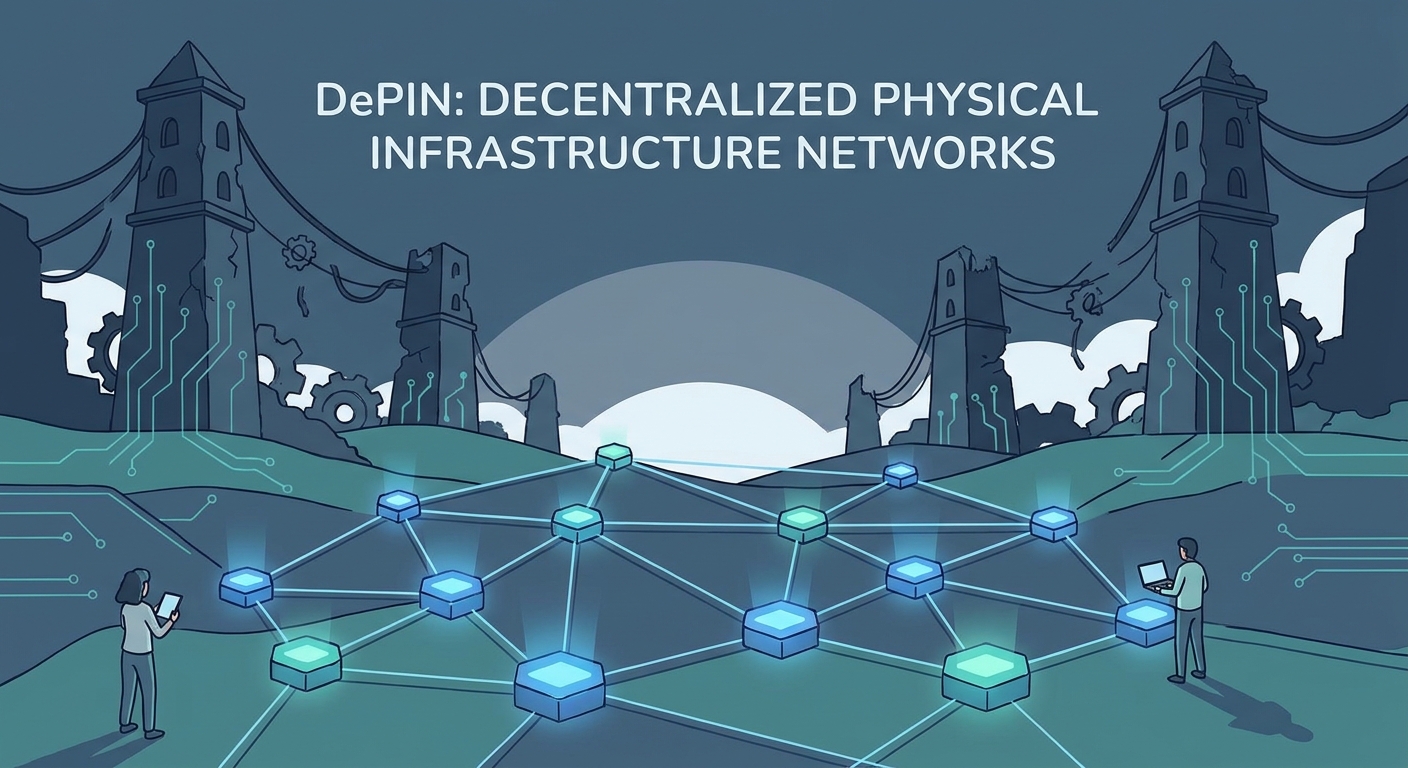
Decentralized VPNs use DePIN—Decentralized Physical Infrastructure Networks—to build a peer-to-peer mesh. As noted in the Nym Network - dVPN Architecture documentation, this setup guts the central authority. Instead of one server, your traffic is shattered, encrypted, and routed through a global network of independent nodes. No single point in the chain has the full picture of your activity. It’s not just safer; it’s structurally immune to the kind of corporate surveillance that defines the legacy VPN market.
Why "No-Logs" is No Longer Enough
The VPN industry has spent a decade clinging to "no-logs" policies like they’re a legal shield. But let’s be real: a legal promise is not a technical guarantee. When you use a centralized provider, you’re betting that their servers are configured perfectly and that their staff has the moral fiber to ignore a government request for your data. You’re betting on human integrity.
True privacy requires mathematical impossibility. When you dive into why dVPNs are the future of privacy, the distinction becomes obvious: decentralized networks don't ask you to believe them. The code is open-source. The traffic is cryptographically split. Even if a node operator wanted to snoop, they couldn't reconstruct your data if their life depended on it. You aren't auditing a PR department; you’re inspecting the math.
The DePIN Economy: An Airbnb for Bandwidth
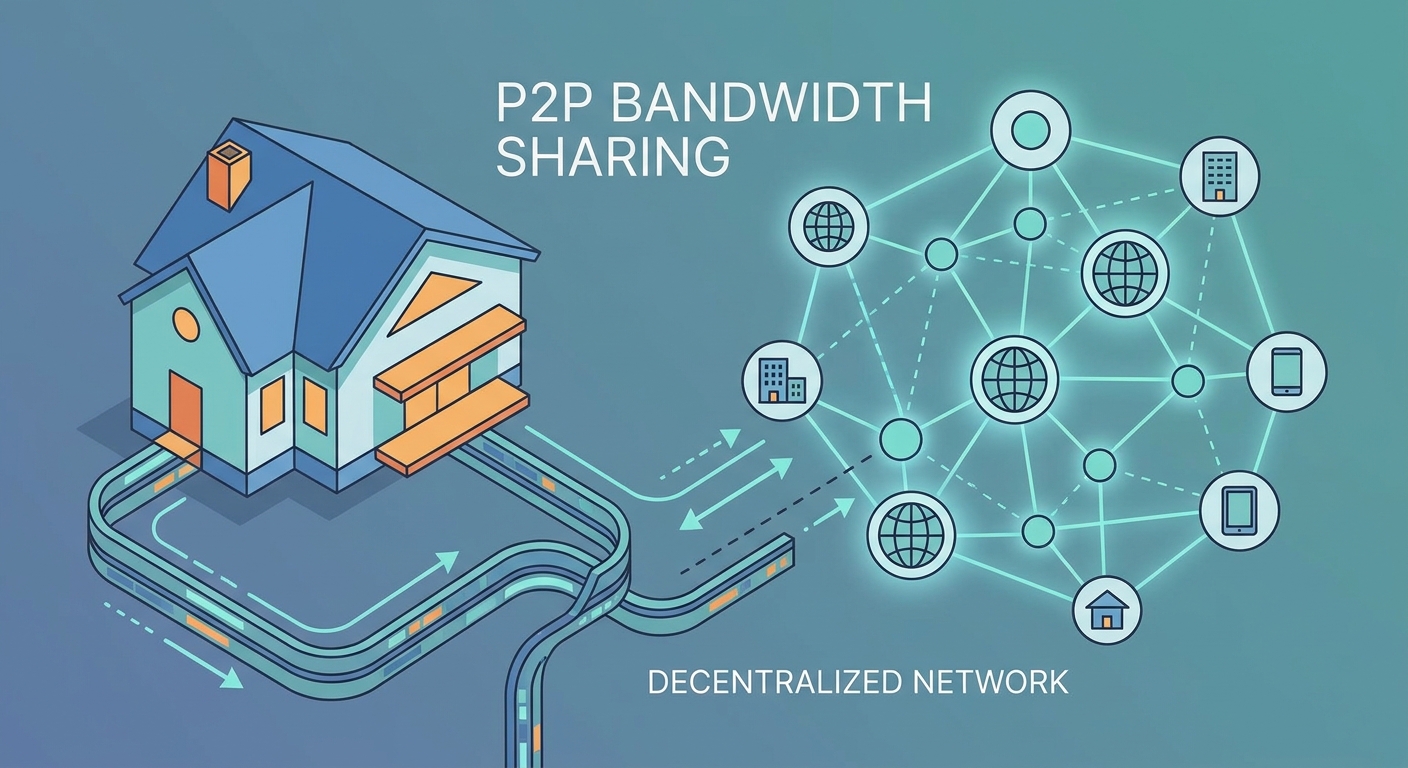
The genius of the dVPN movement is how it solves the infrastructure problem. By using tokenomics, dVPNs turn privacy into a marketplace. They incentivize regular people to host nodes, creating a massive, borderless, and censorship-resistant network of residential bandwidth. Think of it as the "Airbnb for bandwidth." It’s a core component of the broader Messari - State of DePIN 2025/2026 growth report.
Traditional VPNs pay for expensive data centers. These are easy for ISPs to spot and block. If you’re a government trying to censor the internet, you just blacklist the IP addresses belonging to the big VPN firms. But with a dVPN, the network is composed of thousands of residential IP addresses. It’s like playing whack-a-mole with an entire planet. By understanding Decentralized Physical Infrastructure (DePIN), you realize these networks aren't just about hiding your browsing history; they’re about building a resilient, permissionless internet layer that no single entity can pull the plug on.
Security and the "Trust, but Verify" Model
Decentralized networks use Zero-Knowledge Proofs (ZKP) to handle payments and node validation without ever knowing who you are or what you’re doing. It’s a "trust, but verify" environment. You don't trust the VPN provider; you trust the blockchain to handle the transaction.
This is the ultimate form of censorship resistance. There is no headquarters to raid. There is no CEO to threaten. There is no central database to seize. The network stays alive because the participants are everywhere.
The Streaming Caveat: A Necessary Reality Check
Let’s be honest: dVPNs aren't a magic bullet for everything yet. If your only goal is to watch a show that’s geo-blocked for your region, you’ll probably find traditional VPNs more reliable. As noted in the IVPN - Privacy Guides, centralized providers spend millions of dollars keeping their IP addresses "clean" so Netflix doesn't block them.
dVPN nodes are often residential, which makes them unpredictable. You might get lightning-fast speeds one minute and a crawl the next because your node host decided to hop offline. Plus, streaming giants are getting better at spotting residential IP ranges and blocking them. For the privacy-obsessed power user, this is a fair trade-off. But if you’re looking for "one-click" streaming convenience, the centralized model still has the edge. For now.
Comparative Analysis: The New Standard
| Metric | Traditional VPN | dVPN |
|---|---|---|
| Trust Model | Centralized (Company) | Cryptographic (Code) |
| Auditability | Limited (Policy-based) | High (Open Source) |
| Infrastructure | Proprietary Servers | Distributed Mesh Nodes |
| Ease-of-Use | High (Plug & Play) | Moderate (Improving) |
| Streaming | Excellent | Limited/Inconsistent |
The Path Forward: Bridging the UX Gap
We’re in the middle of a transition. The friction that kept dVPNs in the "nerd-only" category is fading fast. Modern interfaces are dumping the esoteric wallet management that scared off casual users, moving toward fiat-on-ramps that let you pay for bandwidth with a credit card, just like you would for any other sub. Even better, you can become a node provider yourself. You get paid for sharing your extra bandwidth, turning you from a passive consumer into an active stakeholder in the network.
The choice is yours. If you just want to watch regional sports and don't care who sees your traffic, a legacy VPN is "good enough." But if you want digital sovereignty—where your privacy is guaranteed by math, not by a fine-print contract that a company can change at 3:00 AM—the dVPN is the only logical choice. We are moving toward a future where your data belongs to you. It's time to act like it.
Frequently Asked Questions
If I use a dVPN, do I need to be a crypto expert to use it?
Not anymore. Most modern dVPN projects have integrated simplified wallet solutions and fiat-on-ramps, allowing you to pay with a credit card or standard payment methods, shielding you from the complexities of managing private keys or gas fees.
Are decentralized VPNs faster than traditional ones?
Generally, no. Traditional VPNs use high-bandwidth, dedicated data centers optimized for throughput. dVPNs rely on a mesh of individual nodes, which can introduce latency. However, for standard browsing and privacy needs, the speed is more than sufficient for the average user.
Why do I need a dVPN if my current VPN has a "no-logs" policy?
A "no-logs" policy is a legal promise, which can be broken or bypassed by a subpoena. A dVPN uses a decentralized architecture that makes logging technically impossible by design, removing the human element from the equation entirely.
Can I use a dVPN to bypass streaming geo-blocks?
While it is technically possible, it is not the primary use case. dVPNs are designed for privacy and censorship resistance. Because they use residential IPs, they often lack the "clean" reputation required to consistently bypass the restrictive geo-fencing filters used by major streaming platforms.