Is Your VPN Truly Private? Why Web3 VPNs are Replacing Centralized Servers
TL;DR
- ✓ Traditional VPNs rely on centralized servers that can easily track your traffic.
- ✓ No-logs policies are often legal fictions that vanish under government or legal pressure.
- ✓ Web3 dVPNs use peer-to-peer architecture to ensure code-based trust instead of corporate trust.
- ✓ Decentralized networks eliminate single points of failure to protect your digital sovereignty.
- ✓ Moving to Web3 infrastructure makes it significantly harder for services to block your connection.
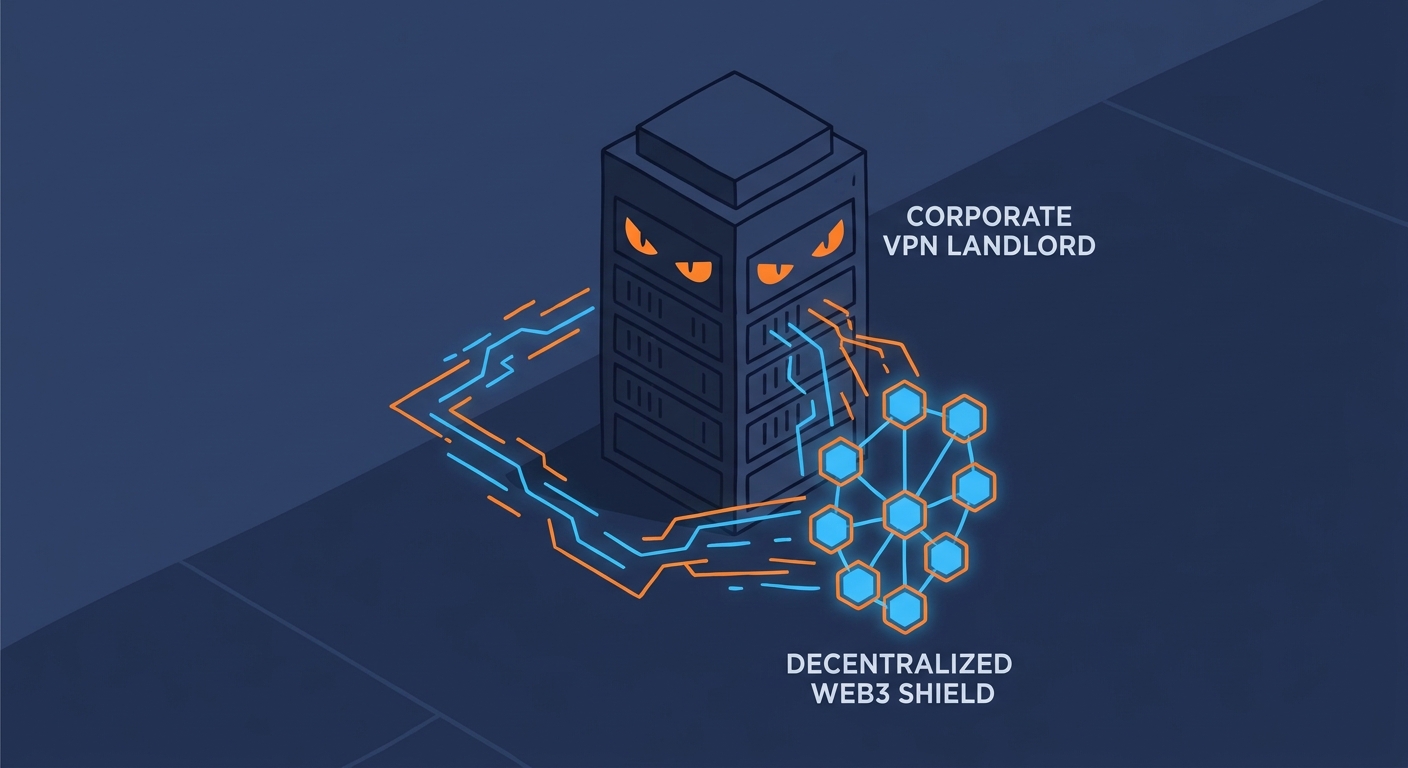
Your "No-Logs" VPN is a promise wrapped in a legal fiction. When you route your digital life through a centralized server farm, you aren't gaining privacy—you’re just switching landlords. You trade your ISP for a VPN corporation. These providers hold the keys to your traffic, and when the heat is on—a subpoena, a government demand, or a "national security" request—that "strict no-logs policy" usually evaporates faster than the data they claim to delete.
The industry is finally waking up. We’re moving away from corporate trust and toward code-based trust. Web3 and decentralized VPNs (dVPNs) aren't just another marketing trend; they are a necessary evolution for anyone who actually cares about digital sovereignty. We’re taking the power of privacy out of the boardroom and handing it over to the blockchain.
The "No-Logs" Paradox
The modern VPN industry has spent a decade selling "No-Logs" as the gold standard. It sounds great, doesn't it? It’s comforting. But it’s fundamentally broken.
When you use a traditional, centralized VPN, you are connecting to a server owned, operated, and maintained by one entity. They own the hardware, they manage the software, and they control the exit point.
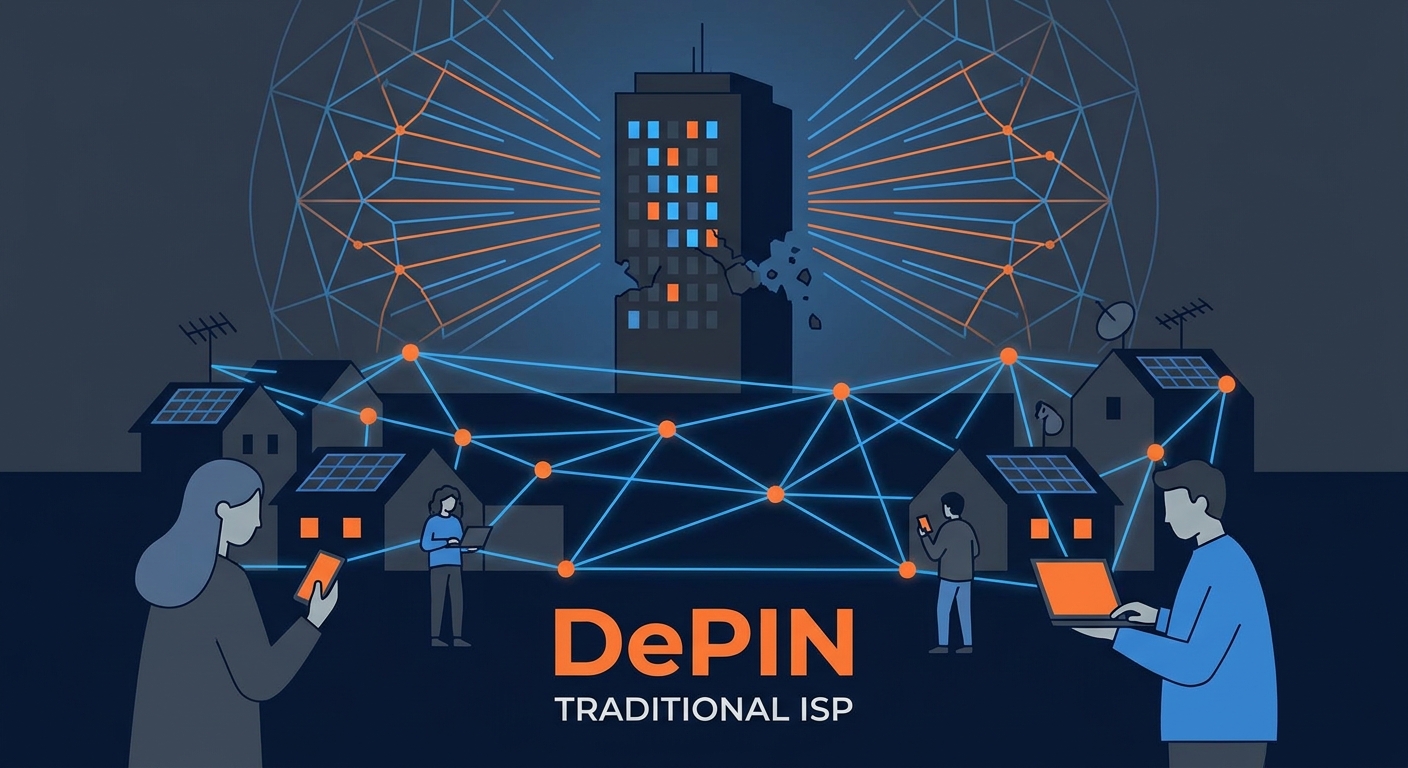
If a government agency knocks on their door, the provider has two choices: comply or get shut down. Even if they aren't logging today, the architecture makes it trivial to flip a switch and start logging tomorrow without you ever knowing. This is the "Single Point of Failure" model. When you rely on a company to protect your privacy, you are betting that their lawyers and their corporate interests will always align with your anonymity. History shows us that this is a losing bet. To truly understand why the infrastructure matters as much as the encryption, it helps to look at what is DePIN? A Beginner’s Guide to see how distributed networks are changing the game.
Why Centralized VPNs Fail the Privacy Test
The legal reality here is a trap. Most VPN companies are incorporated in jurisdictions that sound privacy-friendly on paper, but they operate global networks of servers that span dozens of countries. When your traffic exits a server in a jurisdiction with aggressive surveillance laws, your data is subject to the specific legal realities of that region.
Furthermore, these companies rely on traditional data centers. These centers are easy to spot. ISPs and streaming services know exactly where they are, which is why your "private" connection gets blocked by Netflix or Amazon. They aren't just blocking you; they are blocking the known IP ranges of massive server farms. When you centralize your privacy, you create a target. A single subpoena to a data center provider or one compromised server can expose the traffic of thousands of users. You aren't anonymous; you’re just another customer in a database waiting for a security breach.
The Shift to Peer-to-Peer Architecture
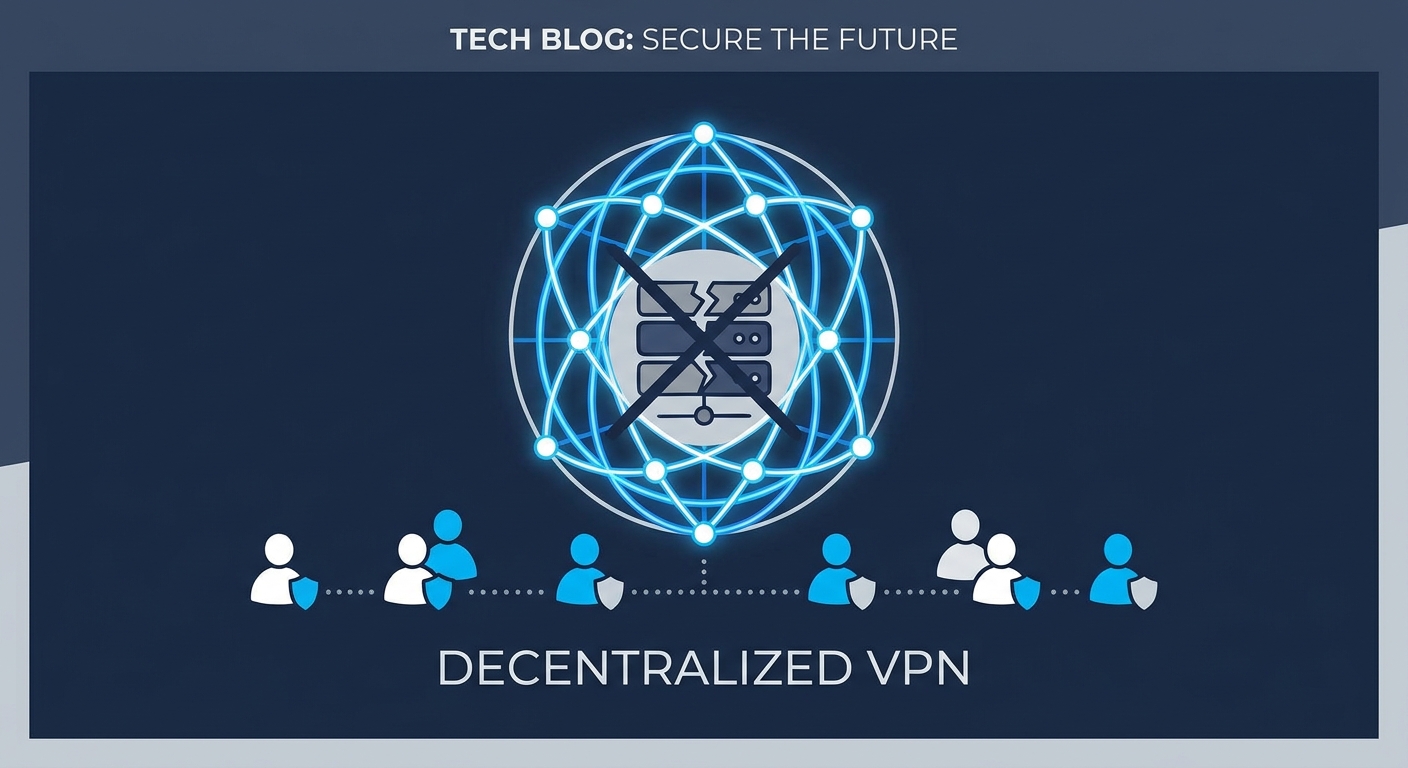
A Web3 VPN, or dVPN, flips this power dynamic on its head. Instead of routing your traffic through a corporate data center, it uses a distributed network of residential nodes. Think of it as the "Airbnb for Bandwidth." Individuals around the world share their idle internet connection, and these connections form the backbone of the network.
When you connect, your traffic is encrypted and routed through one or more of these peer-to-peer nodes before reaching its final destination. Because there is no single company acting as the "middleman," there is no central server to subpoena, no corporate log to leak, and no single point of failure.
Decentralization as the New Privacy Standard
The beauty of a dVPN? It’s incredibly hard to censor. Because your traffic exits through a residential IP address, it looks exactly like the traffic of a normal person browsing from their living room.
Deep Packet Inspection (DPI) tools—designed to flag and block the uniform, high-volume traffic coming from known VPN data centers—struggle to identify dVPN traffic.
This is the power of a trustless architecture. By utilizing smart contracts, these networks manage the routing, authentication, and payment layers without human intervention. As discussed in The Future of DePIN, this move toward community-owned infrastructure ensures that the network remains resilient, neutral, and censorship-resistant. You aren't trusting a company anymore; you’re trusting the math of the protocol.
Monetizing Your Idle Bandwidth
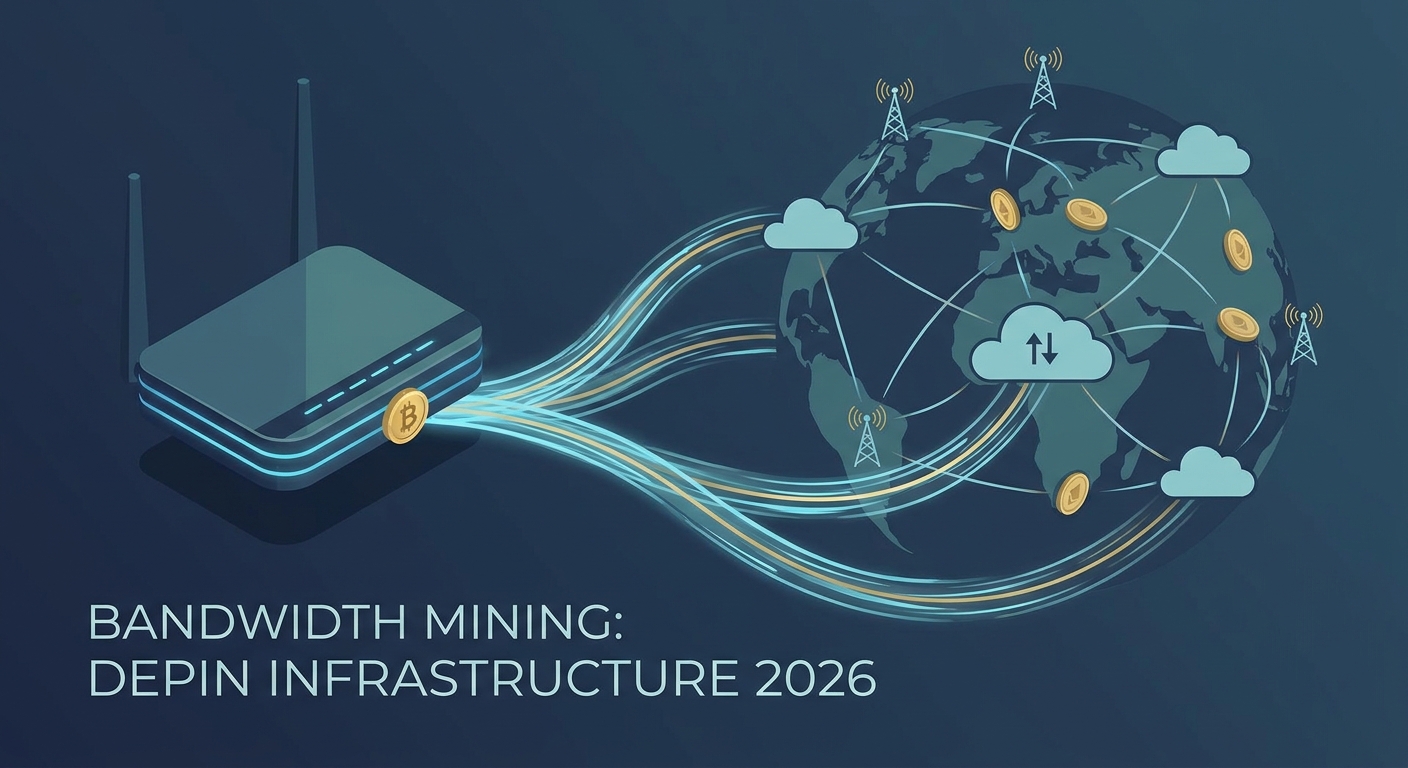
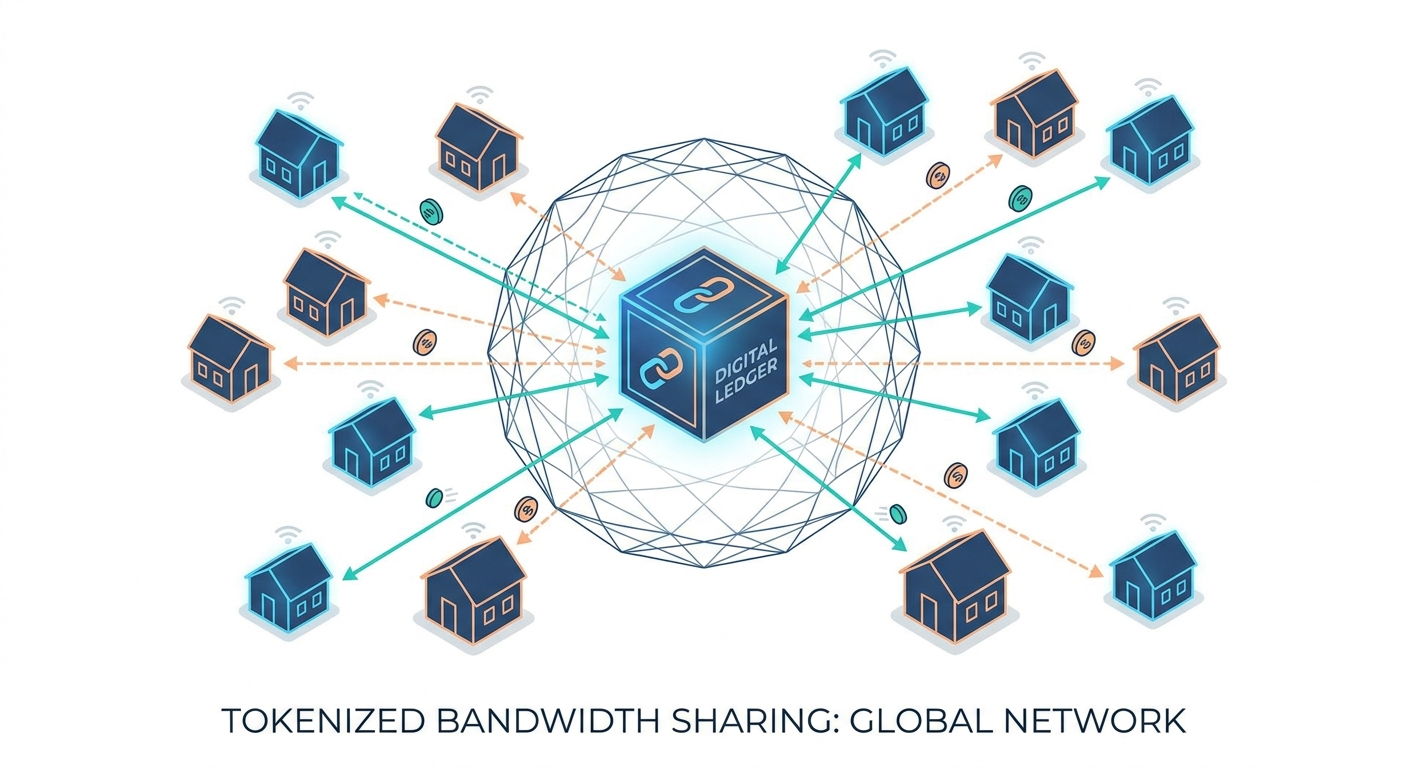
The economic model of the internet is shifting. Historically, you paid a monthly subscription fee to a VPN company to rent their servers. In the world of Web3, the model is circular. You can become a contributor to the network by sharing your own idle bandwidth.
DePIN projects reward these high-uptime, high-quality nodes with tokens, effectively offsetting the cost of your internet bill. This creates a hyper-competitive market where node operators are incentivized to provide the best possible service to keep their reputation score high. For those interested in the nuts and bolts of this, our guide on Incentive Structure Design for Residential Proxy Nodes breaks down how these systems maintain balance. For a look at the broader landscape, you can explore Top DePIN Projects 2026 to see how this ecosystem is scaling.
Performance: The Myth of the Data Center
There is a persistent myth that decentralized networks are inherently slower than centralized ones. In reality, the opposite is often true. Centralized VPNs often backhaul your traffic through congested, distant server farms. If you are in London and your VPN server is in New York, your traffic is traversing the Atlantic twice.
With a dVPN, you can choose to route your traffic through a residential node in your own city or country. By reducing the physical distance your data travels and avoiding the bottleneck of a single, overloaded data center, you often achieve lower latency and faster speeds. When combined with Smart Contract-Based Bandwidth SLAs, the network can automatically prioritize nodes that meet specific performance requirements.
    title Latency Comparison: Centralized vs. Decentralized
    dateFormat  X
    axisFormat %s
    section Centralized
    Data Center Routing : 0, 150
    section Decentralized
    Local Peer-to-Peer Node : 0, 40
Comparative Audit: Centralized vs. Decentralized
| Feature | Centralized VPN | Decentralized VPN (dVPN) |
|---|---|---|
| Ownership | Corporate | Community / Protocol |
| Verification | Trust-based (Audits) | Trustless (Code/Smart Contracts) |
| Data Handling | Potential for Logs | Zero-Knowledge Proofs |
| Resilience | Single Point of Failure | Distributed / Multi-Node |
Navigating the Transition
Transitioning to a decentralized privacy stack doesn't require a degree in computer science. The current generation of dVPN tools has focused heavily on UI/UX, bringing the "one-click" simplicity of traditional VPNs to the Web3 space. You download the client, connect to the network, and the protocol handles the handshake, the node selection, and the encryption automatically. As noted in the DePIN Explained by CertiK, the focus on security audits and transparent code is making these tools safer for the average user than ever before.
Frequently Asked Questions
Are Web3 VPNs slower than traditional VPNs?
Not necessarily. In many cases, they are faster. Because dVPNs allow you to route through local residential nodes rather than distant, congested data centers, you often experience lower latency and more stable, "native-like" connection speeds.
Do I need to be a crypto-expert to use a dVPN?
No. Modern dVPN applications have abstracted the complexity of blockchain interactions. For the end user, it functions like any other app—you click "Connect," and the background protocols handle the peer-to-peer routing and tokenized payments seamlessly.
How can a decentralized network be secure if strangers are routing my traffic?
Your traffic is protected by end-to-end encryption before it even leaves your device. The nodes in the network act as blind relays; they see encrypted packets, but they have no way to decrypt or view the contents of your traffic. You are trusting the encryption protocol, not the node operator.
Is my bandwidth-sharing node legally liable for the traffic passing through it?
Most dVPN protocols are designed to protect node operators by ensuring they do not have access to the unencrypted data passing through their connection. However, users should always review the specific terms of the network they join, as regulations regarding distributed infrastructure continue to evolve globally.
The Future of Internet Access
We are moving away from an era where privacy is a service you buy from a corporation and toward an era where privacy is an infrastructure you participate in. The shift to Web3 and decentralized networks is the natural progression of the internet—a return to its roots of peer-to-peer connection, unencumbered by central gatekeepers.
The "No-Logs" promise of the past was a band-aid on a broken model. It is time to audit your current privacy stack. If you are still relying on a centralized provider, you are still relying on a promise. It’s time to move toward a future where your privacy is guaranteed by code, not by a corporate policy that can be rewritten at any time. The transition is happening now—don't get left behind on the old, centralized web.