Earn Crypto by Sharing Internet: Your Guide to Bandwidth Mining in 2026
TL;DR
- ✓ Turn your idle internet connection into a consistent stream of passive crypto income.
- ✓ Understand how DePIN technology connects AI labs with your unused residential bandwidth.
- ✓ Learn why high-quality residential IP addresses are essential for modern AI data scraping.
- ✓ Discover the mechanics of bandwidth mining and its role in the decentralized internet.
If you’ve got a stable internet connection, you’re currently sitting on a goldmine that global AI companies are desperate to rent. Most people don’t realize it, but your idle bandwidth is a dormant asset. Bandwidth mining—the act of selling your unused network capacity to decentralized networks for crypto—has finally moved out of the "weird niche experiment" phase and into the big leagues. It’s now a pillar of the DePIN (Decentralized Physical Infrastructure Network) ecosystem.
Forget about speculative token farming or gambling on moonshots. In 2026, it’s all about utility. AI labs are scrambling for "clean" residential IP addresses to train their models and scrape data without hitting firewall walls. Your home Wi-Fi? It’s essentially the plumbing of the new internet. If you want to turn that idle data into a steady stream of passive income, check out our master guide to blockchain bandwidth monetization for a deep dive into the mechanics of this space.
What is DePIN and Why Does It Matter?
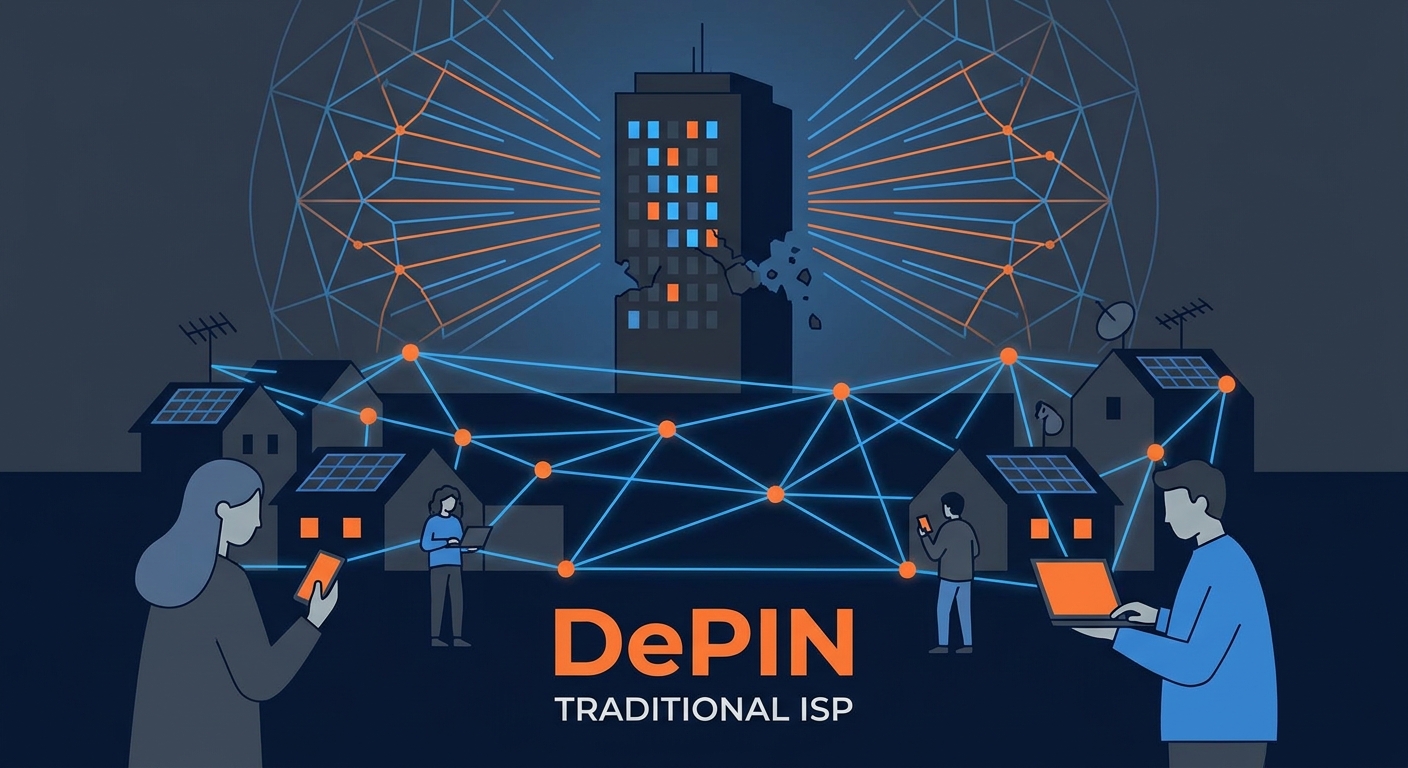
DePIN stands for Decentralized Physical Infrastructure Networks. Sounds fancy, right? In plain English: it’s the biggest shift in how we build global connectivity since the cloud arrived.
Historically, if a company needed massive amounts of data, they tapped into the giants—AWS, Google Cloud, Azure. But there’s a problem: these data centers are easy for websites to spot and block. They’re like giant neon signs saying, "I’m a bot."
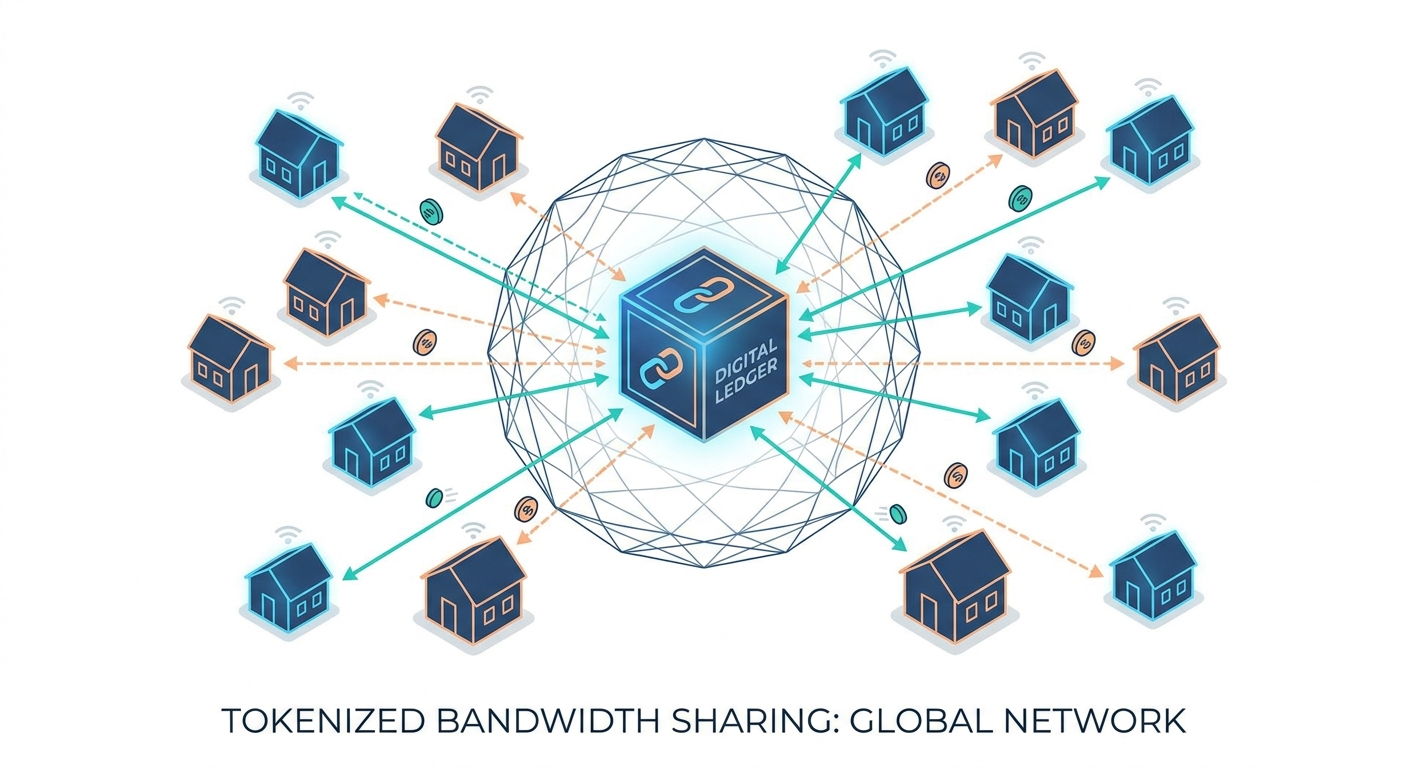
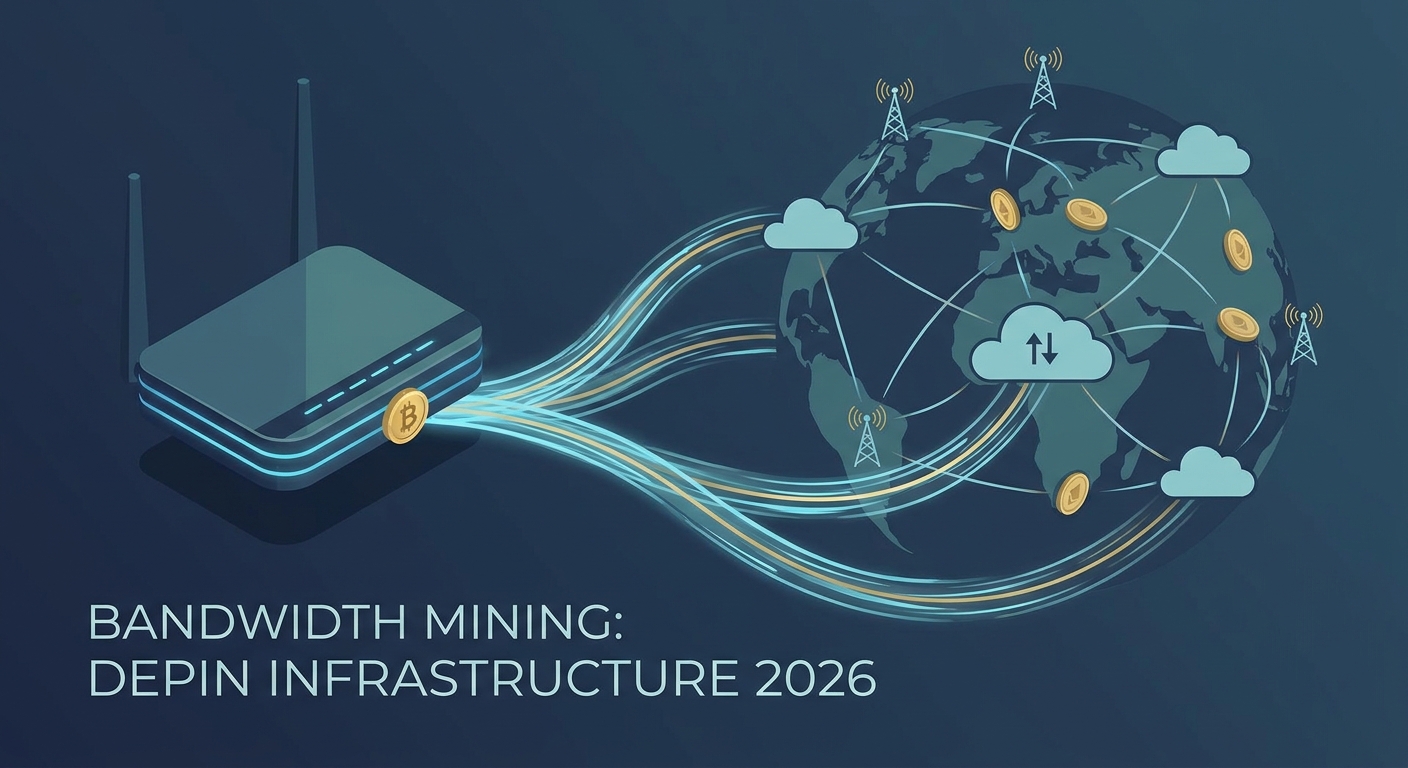
By 2026, the hype has died down, and the industry is focused on what actually works. When you run a bandwidth-sharing node, you become a tiny, decentralized piece of a massive global mesh network. Companies can now route their traffic through your residential IP, making their requests look like they’re coming from a regular person in a living room, not a server farm. As noted in this comprehensive DePIN market overview, this isn't just a trend. It’s a total rewrite of how we provision and pay for internet resources.
Why is Bandwidth Mining Booming in 2026?
It’s a simple supply-and-demand mismatch. AI models are data-hungry beasts. When an AI crawler hits a site from a data center IP, it gets throttled or blocked instantly. Residential IPs are the "trusted" traffic—they’re gold dust to these companies.
Then there’s the "Geographic Arbitrage" factor. AI labs don't just want any IP; they want IPs from specific high-demand spots. If you live in a Tier-1 city in the US, the UK, or the EU, your connection is worth a premium compared to regions with lower demand. The protocol acts as a broker, matching the AI lab’s request with your node, and paying you for the privilege.
How Does Bandwidth Mining Work Under the Hood?
At the core of this are Zero-Knowledge (ZK) proofs. In the early days, people were terrified to share their internet because they worried about "what" traffic was passing through their modem. Could it be illegal stuff? Malicious code?
ZK-proofs kill that fear. They allow the network to verify you’re actually providing the bandwidth and uptime you promised, without ever needing to peek at the content of the traffic. It keeps your network secure while proving you’re doing the job.
Your home Wi-Fi is a premium commodity because it represents an authentic human browsing environment. Unlike a data center with a static IP range, your home connection is dynamic and indistinguishable from millions of other households. They aren't paying for your data, folks. They’re paying for your identity as a legitimate, non-bot user.
Which Projects Should You Watch in 2026?
The market has matured, and it’s split into three clear camps. When you’re picking a project, pay attention to how they handle your data and how they pay out.
- Scraping and AI Data: Projects like Grass have dominated the space by focusing on the massive demand for AI training data. They’re usually the easiest to start with—just download a browser extension and you’re off.
- Connectivity and Infrastructure: Protocols like Helium and Titan are building decentralized wireless networks. These often require more commitment and sometimes specific hardware, but they’re a more robust long-term play.
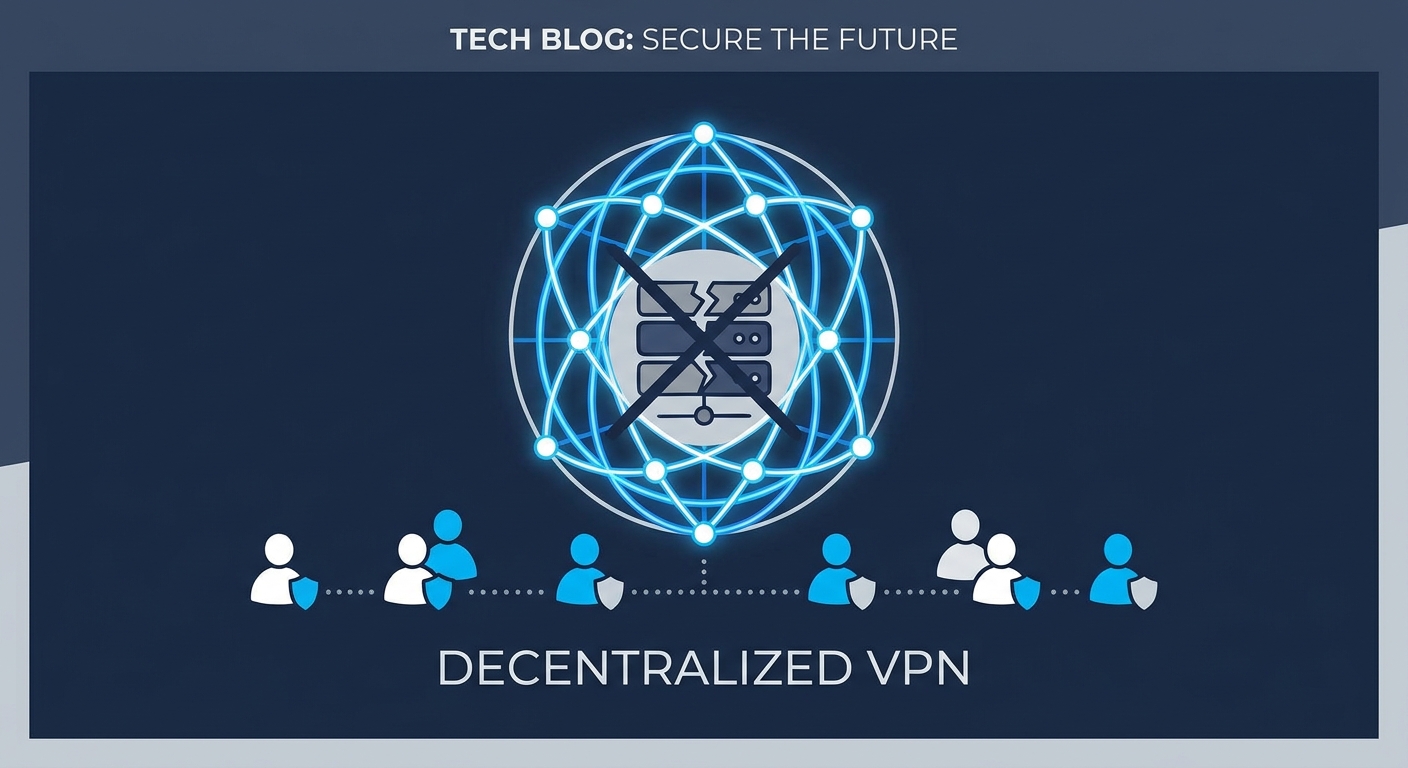
- Privacy-Centric Nodes: These focus on dVPN (decentralized VPN) services. If you’re worried about the security of your network, these are your best starting point.
For a current breakdown of the most reliable protocols, this list of top DePIN projects is the gold standard for comparing payout frequencies and ease of entry.
Is Bandwidth Sharing Actually Safe?
The "elephant in the room." We have to talk about security. Users worry that by sharing their bandwidth, they’re inviting hackers into their home.
The reality? Modern, well-built protocols implement strict isolation. When you run a node, you’re creating a "tunnel" that is physically separated from your primary network traffic. It’s like having a private road in your backyard that people can drive on, but they can’t touch your house.
However, "safe" is always relative. If the idea of your IP being used for traffic you don't control makes you sweat, you should always secure your connection with a professional-grade VPN to ensure your own browsing remains private and encrypted. Think of it this way: you’re providing the highway, but you aren't letting anyone into your living room.
What Are the Realistic Earnings Expectations?
Let’s be real. Bandwidth mining isn't a "get rich quick" scheme. It’s a utility-based income stream. If you see someone claiming they’re making thousands a month on a single home connection, they’re selling you a dream—or worse, a scam.
Your earnings depend on three things:
- Location: Tier-1 regions earn more because AI labs pay a premium for those IPs.
- Uptime: The more consistently you’re online, the higher your reward tier.
- Latency: The network loves snappy connections. The lower your latency, the better the experience for the end-user, and the more you earn.
How Can You Start Mining in 10 Minutes?
The barrier to entry has never been lower. Most modern protocols have moved to browser-based extensions.
- Select a Project: Pick a reputable protocol from the list above.
- Install the Extension: Grab the official plugin from the project’s site.
- Configure Settings: Set your bandwidth limits. If you’re worried about your own speed, cap the app so it only uses a percentage of your total upload capacity.
- Monitor: Watch your dashboard. Most projects show you an "uptime" score. If it starts to dip, check your connection stability.
By setting clear limits, you make sure your Netflix streaming and remote work calls stay smooth while your computer quietly works for you in the background.
Frequently Asked Questions
Is it safe to share my internet bandwidth?
Yes, provided you use reputable, well-audited protocols that utilize isolation technology. These protocols act as a gatekeeper, ensuring that your personal data is separated from the bandwidth you are sharing.
How much can I realistically earn per month?
Earnings vary wildly based on your location and uptime. Most users in Tier-1 countries can expect a modest supplemental income, while those in lower-demand regions will see lower returns. It is best viewed as a way to offset your monthly internet bill rather than a full-time salary.
Does bandwidth mining slow down my home internet?
It can, if left unmanaged. Most apps allow you to throttle your bandwidth usage. By limiting the application to use only 10–20% of your available upload speed, you can keep your own browsing experience perfectly snappy.
Do I need special hardware to start?
Not anymore. While some early DePIN projects required dedicated hardware nodes, the current wave of projects is almost exclusively software-based, meaning you can run them on your existing laptop or desktop.
What are the main privacy risks involved with DePIN?
The primary risk is the potential for your IP address to be associated with traffic you haven't authorized. This is why using a project with strong ZK-proof verification is critical—it ensures that the protocol is held accountable for the traffic routed through your connection.