The Rise of DePIN Projects: How Blockchain Bandwidth Sharing is Disrupting ISPs
TL;DR
- ✓ DePIN projects use blockchain to decentralize physical internet infrastructure and challenge ISP monopolies.
- ✓ Users earn tokens by sharing idle bandwidth through a secure peer-to-peer network model.
- ✓ Proof-of-Physical-Work verifies that your connection provides real-world value to the global network.
- ✓ Decentralized bandwidth sharing enhances privacy by removing central points of failure and surveillance.
The internet was promised as a wild, decentralized frontier. Remember that? Instead, we got stuck with regional monopolies—faceless giants that dictate your speeds, cap your data, and treat your browsing habits like a harvestable crop.
But the tide is turning. Decentralized Physical Infrastructure Networks (DePIN) are finally punching a hole in the "last mile" monopoly. By turning everyday internet users into micro-ISPs, these projects are effectively cutting out the middleman. You aren't just a customer anymore; you’re the infrastructure.
What is DePIN, Anyway?
At its simplest, DePIN is the marriage of real-world hardware and blockchain. It’s the bridge between a physical box in your living room and a trustless digital ledger. If you want the technical weeds, this guide on DePIN basics from CoinGecko is the best place to start.
Building a network used to be a game for billionaires. You needed fiber-optic cables, massive towers, and data centers the size of aircraft hangars. DePIN flips that script. It uses token incentives to crowdsource the heavy lifting. Got an internet connection? You’re a node. By sharing your spare bandwidth, you’re not just consuming data—you’re providing a service. It’s a complete restructuring of how we value digital resources.
Why Legacy ISPs are Sweating
The modern ISP model is built on a "last mile" trap. In most cities, you have two, maybe three, choices for internet. They all act the same. They throttle your Netflix during peak hours, slap you with "data caps," and—most annoyingly—sell your data to the highest bidder.
It’s a single point of failure. When an ISP hub goes down, your whole neighborhood goes dark. Worse, they own the pipes, meaning they have a front-row seat to every packet of data you transmit. They log it. They track it. They monetize it.
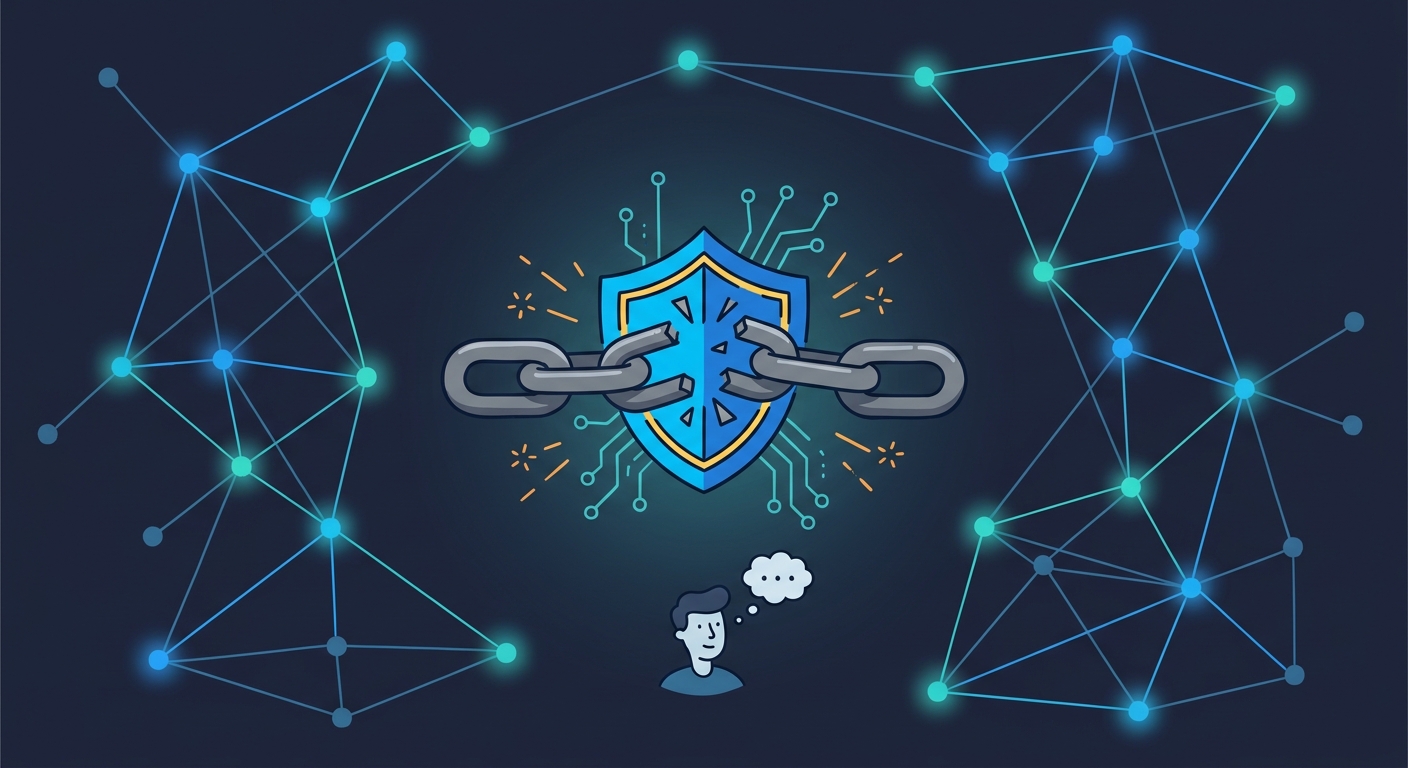
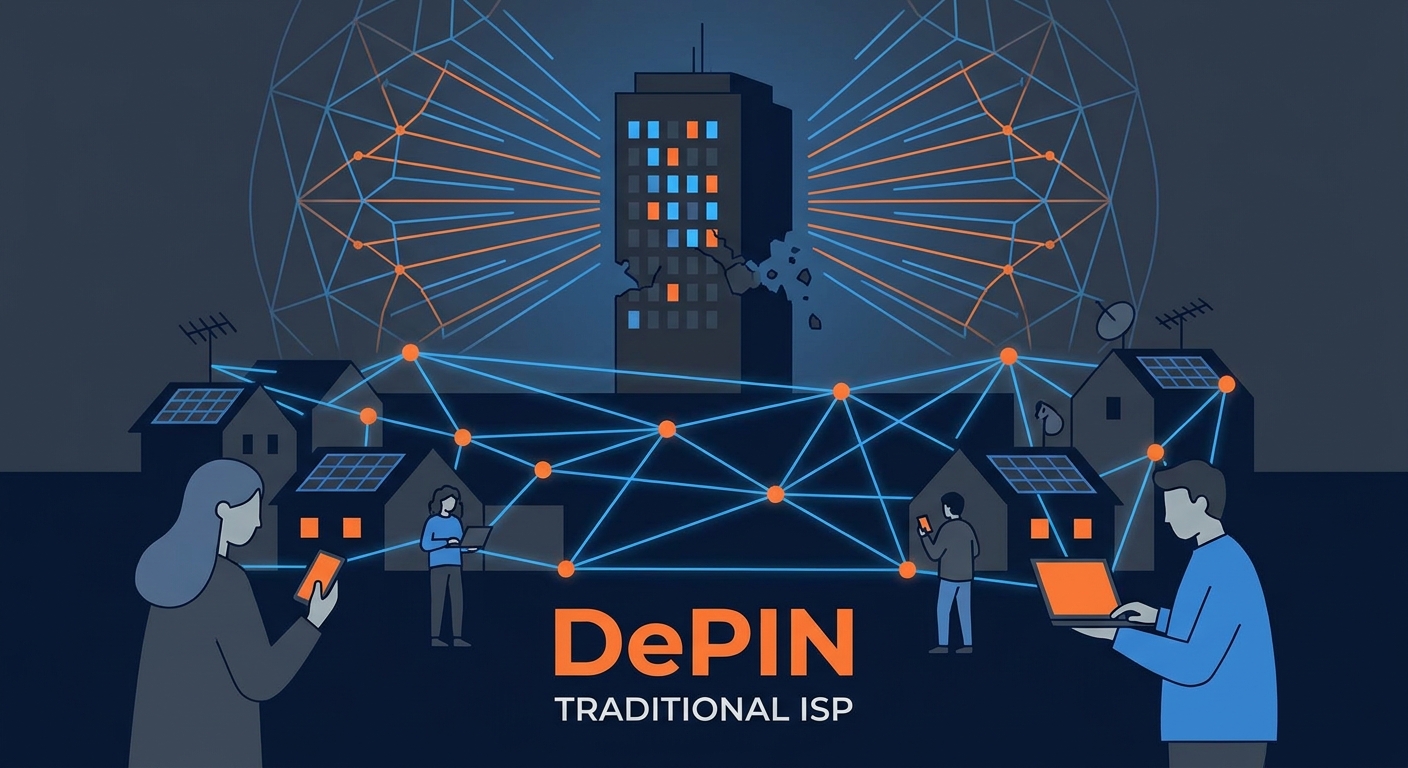
DePIN projects aim to tear down these walls. By distributing the load across a global mesh of independent nodes, they remove the central authority. There’s no big server room to hack, no CEO to subpoena, and no incentive to track your behavior for a quick buck.
How Bandwidth Sharing Actually Works
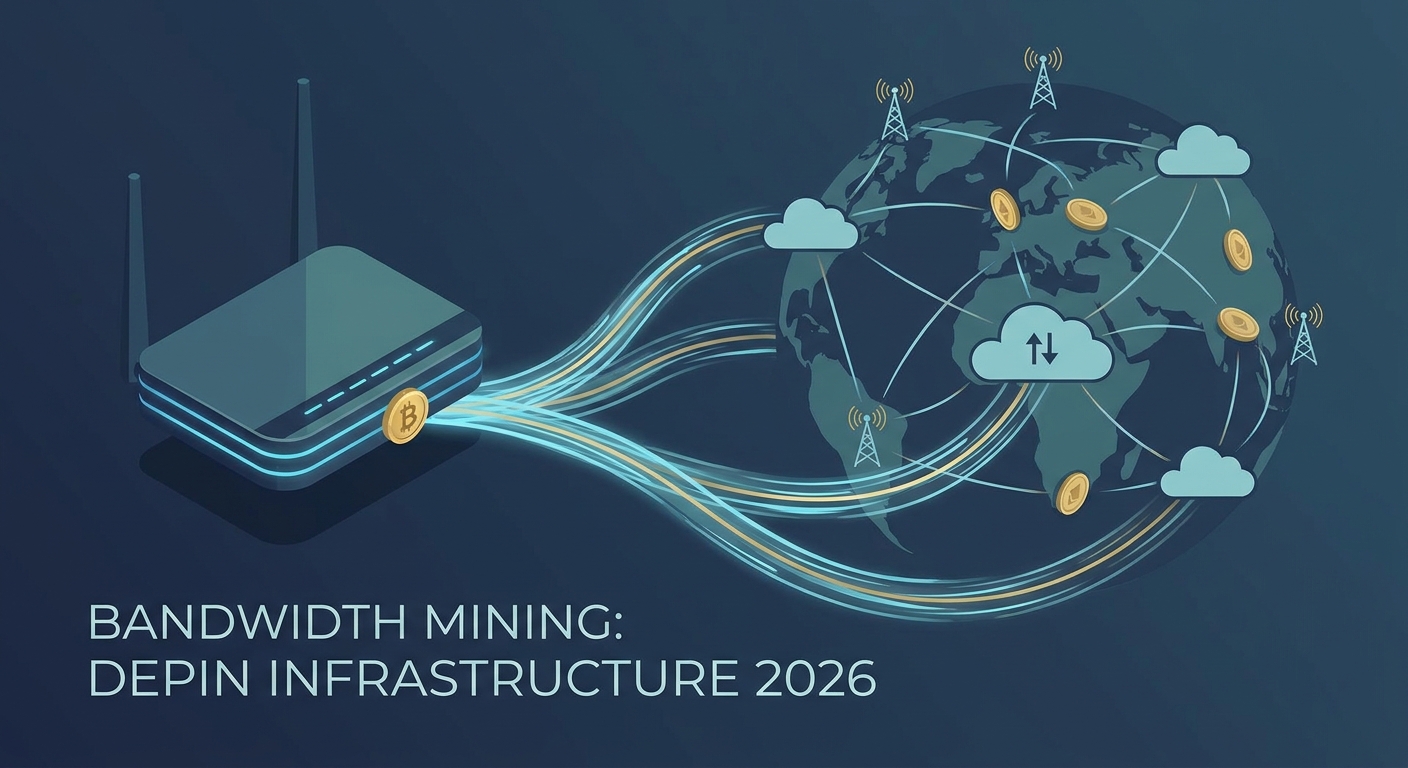
Think of your router as a passive appliance. With DePIN, it becomes a revenue-generating asset. You install some lightweight software, and suddenly, you’re a node. When someone halfway across the globe needs a secure, private connection, your idle bandwidth facilitates that request.
This is powered by "Proof-of-Physical-Work" (PoPW). Unlike Bitcoin mining, which burns electricity to solve useless math problems, PoPW proves your connection is actually doing something. It verifies that your bandwidth is stable, real, and ready to work. It’s not a hub-and-spoke model anymore; it’s a self-healing mesh. If one node drops, the traffic just finds another way.
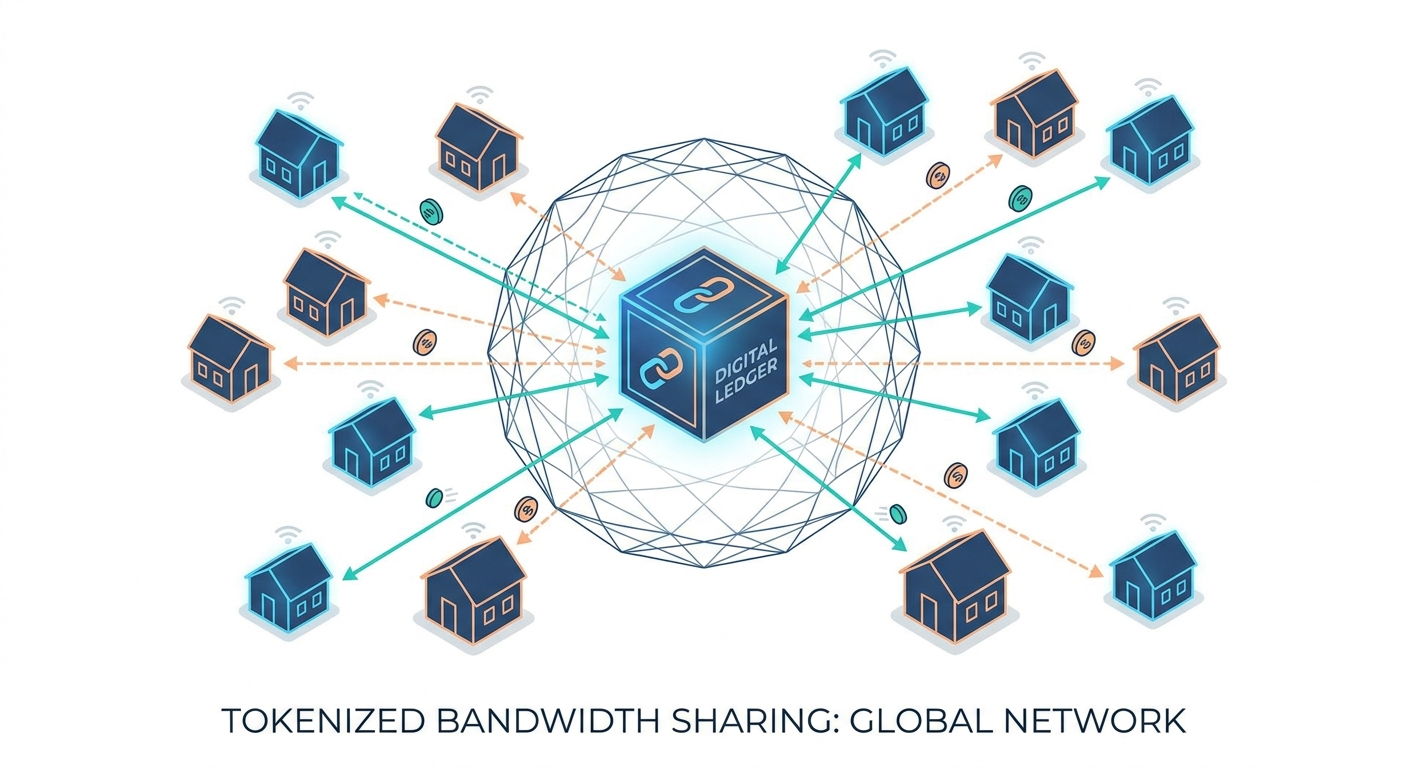
Visualizing the Shift: Centralized vs. Decentralized Networks
Are dVPNs the Future of Privacy?
Traditional VPNs are often just a different brand of gatekeeper. You hide your traffic from your ISP, sure—but now you're handing it over to the VPN provider. They can still log your activity. If you’re fuzzy on how the old-school systems work, learn more about standard VPNs here.
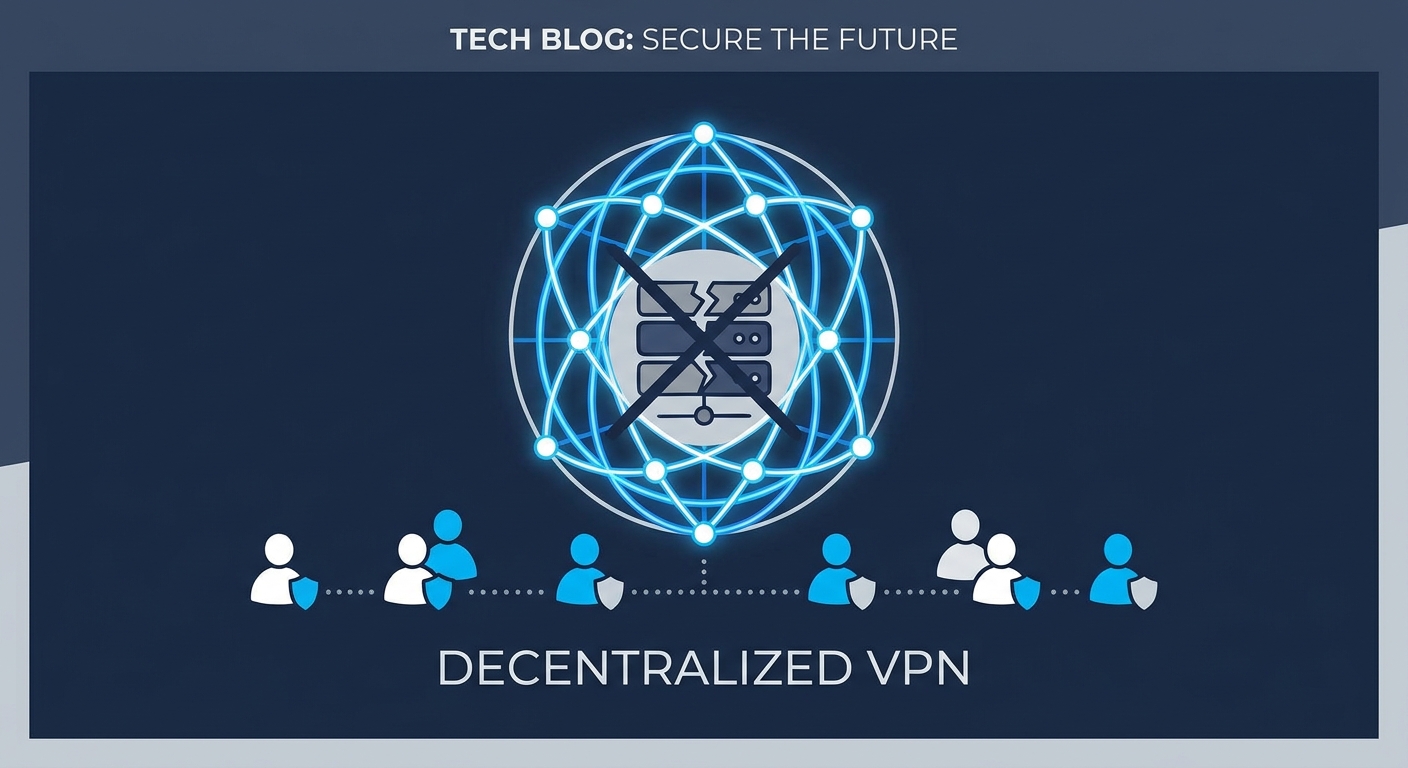
Decentralized VPNs (dVPNs) kill the "central point of logging." Your traffic isn't routed through a single commercial server; it bounces through a series of anonymous nodes. No single entity owns the chain. There’s no database to hack, because there’s no central database to begin with. Privacy isn't a feature you pay for; it’s the default setting. If you’re serious about locking down your digital life, check out best practices for your digital footprint before you make the switch.
The Economic Engine: Tokens as Fuel
DePIN projects don't need billions in capital to scale. They use a circular economy. You share bandwidth, you earn tokens. It’s the "Airbnb for Bandwidth" model. You aren't paying a corporation to build infrastructure; you're paying your neighbor.
This model is remarkably efficient. The native token acts as the lubricant for the market. As demand for bandwidth goes up, the supply of nodes grows to meet it. According to market data trends on DePINscan, we’re seeing a massive influx of people looking to turn their passive assets into income, which creates a faster, more robust network for everyone.
Who is Leading the Charge?
The sector is currently a mix of wireless connectivity, distributed compute, and bandwidth marketplaces. To make this work, you need high-performance blockchains that can handle millions of micro-transactions. This is why infrastructure relies on high-speed chains like Solana to manage the throughput. Projects like Helium have already paved the way, proving that decentralized wireless isn't just a fantasy—it's a functioning utility.
The Reality Check: Risks You Can't Ignore
Look, it’s not all sunshine and passive income. Regulation is the big gray cloud hanging over the space. ISPs are already looking for ways to update their terms to ban bandwidth sharing. Plus, token volatility is real; your earnings might fluctuate based on market sentiment, not just the bandwidth you provide.
Then there’s the "bad actor" risk. You’re opening your node to the world. Ensure your hardware is configured correctly so your connection isn't used for anything illicit. Most projects have reputation systems to filter out the bad apples, but the responsibility ultimately rests on you, the node operator.
Is This Sustainable for 2027?
In the next two years, expect the focus to shift from hobbyists to enterprise-grade infrastructure. Businesses are going to realize that dVPNs and decentralized storage are cheaper and more secure than legacy alternatives.
"Airbnb for Bandwidth" isn't a flash in the pan. It’s the inevitable result of a market that’s sick of being gouged. As the performance gap between decentralized and centralized networks closes, DePIN will stop being a "crypto experiment" and start being a household utility. The way we access the digital world is changing. It’s about time.
Frequently Asked Questions
Is DePIN bandwidth sharing legal in my country?
While generally legal, it depends on your ISP’s Terms of Service. Most residential agreements prohibit commercial use of a home connection. While decentralized networks operate as peer-to-peer traffic, it is wise to check your specific provider's policy regarding the "sharing" of your connection.
Do I need to buy expensive hardware to start earning rewards?
Not necessarily. Many DePIN projects are software-based and can run on existing hardware like a PC, a Raspberry Pi, or even a specialized router. While dedicated hardware can offer better performance and higher rewards, the barrier to entry is significantly lower than traditional mining.
How does a dVPN differ from the commercial VPN I use today?
A commercial VPN routes your data through a single company's servers, meaning you must trust that company not to log your data. A dVPN routes your traffic through a decentralized mesh of independent nodes, meaning no single entity has the ability to view, log, or store your complete browsing history.
Is there a risk that my internet connection will be used for illegal activity?
Reputable DePIN projects use sophisticated filtering and reputation-based systems to ensure that nodes are not used to facilitate malicious traffic. However, as a node operator, you should always research the specific security protocols of the project you join to ensure they offer robust exit-node protection.
Can I realistically expect to pay my monthly internet bill through bandwidth mining?
It depends on your location, your available bandwidth, and the specific project's tokenomics. While some users in high-demand regions can offset a significant portion of their costs, it should be viewed as a variable side-hustle rather than a guaranteed monthly salary.