Is Decentralized Internet Access Secure? A Deep Dive into Blockchain-Powered Privacy
TL;DR
- ✓ Decentralized VPNs replace corporate trust with cryptographic protocols and smart contracts.
- ✓ Traditional VPNs represent a security cliff due to centralized honeypots and single failure points.
- ✓ DePIN networks leverage global peer nodes to create censorship-resistant and private traffic routing.
- ✓ Users must choose between the convenience of traditional providers and the mathematical security of dVPNs.
Let’s get one thing straight: decentralized internet access isn't some magic shield that makes you invincible. It doesn't magically make you "more secure" than the old-school methods. Instead, it pulls the rug out from under the corporate middleman and hands the security burden over to a cold, hard cryptographic protocol.
When you use a decentralized VPN (dVPN), you’re swapping one set of risks for another. You’re trading the "single point of failure" of a giant corporate server farm for the chaotic, unpredictable potential of a randomly configured peer node. In 2026, the question isn’t whether decentralization is "safe"—it’s whether you’re actually ready to ditch the reliable, high-speed luxury of a traditional VPN for the raw, trust-minimized, mathematical gamble of a blockchain-based network.
Why Traditional VPNs Are Hitting a "Security Cliff"
For years, the gold standard for online privacy was the classic VPN. You pay your monthly fee, hit "connect," and your data flows through a server owned by a company you’ve never met. It’s convenient. It’s fast. And, honestly, it’s a massive honeypot.
When you pack millions of users into the same cluster of servers, you’re creating the ultimate trophy for state-level actors, hackers, and anyone with a subpoena. You’re essentially placing a massive "Data Here" sign on the front door of your digital life.
The problem? You’re forced to make a massive leap of faith. You’re trusting a black box. Even if a provider slaps a No-Log Commitment on their website, you’re just taking their word for it. You’re relying on the hope that their internal audits are honest and that their systems haven't been backdoored. If that company gets bought out, compromised, or just decides to sell your history to the highest bidder, your privacy is gone. We’ve reached a "security cliff" where this blind-faith model is starting to buckle. People are waking up, and they’re looking for architectures that don’t require a corporate pinky-swear.
What Actually Is a dVPN and DePIN?
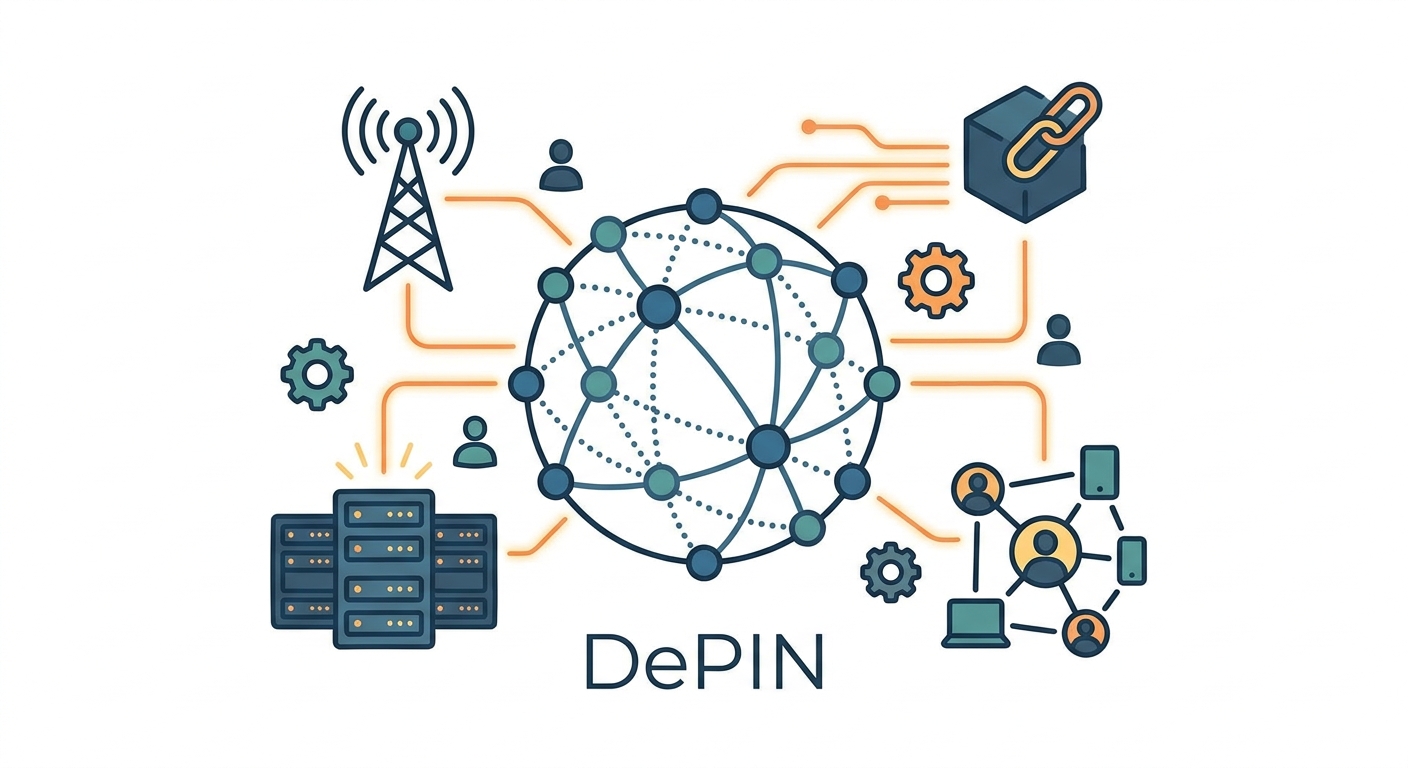
To get why the shift is happening, you have to look at the rise of Decentralized Physical Infrastructure Networks—or "DePIN," if you’re into the alphabet soup of crypto-speak. A dVPN is just the privacy-focused branch of this whole movement.
Instead of routing your traffic through a data center owned by a single company, you’re bouncing your data through a global web of independent nodes. These are just regular people or small entities sharing their extra bandwidth for a handful of tokens.
The middleman is gone. Instead, smart contracts handle the heavy lifting. When you connect, the protocol automatically finds a node, checks the settings, and handles the payment—all without a human operator ever touching your metadata. As noted in recent DePIN Sector Analysis, this flips the economics of bandwidth on its head. By cutting out the massive overhead of corporate server farms, the network becomes harder to kill, more resilient, and—in theory—a hell of a lot more private.
Is Decentralized Access Actually More Secure?
Security in the decentralized world is all about killing trust. By using tried-and-true standards like WireGuard and OpenVPN, dVPNs are trying to bridge the gap between legacy reliability and the new P2P world. If you set it up right, the traffic between you and the exit node is locked tight. The node operator can’t see what you’re doing.
This aligns with the NIST/NSA Zero Trust Guidance, which essentially says: don’t trust anyone. Not the server, not the admin, not the network. In a decentralized setup, "Zero Trust" is baked into the code. You aren’t betting that the node operator is a "good guy"; you’re betting that the cryptography holds up.
But here’s the catch: decentralization is only as good as the software running it. If the P2P routing code has a hole in it, the fact that it’s decentralized doesn't mean a thing. A weak link is a weak link, whether it’s in a corporate office or a basement in a different time zone.
The Reality: The "Exit Node Dilemma"
Decentralization isn’t a magic wand. It just changes the flavor of the danger. The biggest headache in a dVPN setup is the "Exit Node Dilemma."
Think of it like this: your data is encrypted, but the very last stop in the chain—the node that actually connects you to the open web—must decrypt that traffic to send it to the destination website. If that node operator is malicious, they could theoretically sniff unencrypted traffic or log metadata about where you’re headed.
Then there’s the legal nightmare. If you run a node, and some random person uses your connection to do something illegal, your IP address is the one that shows up on the police report. This is exactly why defending access to the decentralized web is such a heated topic right now. The law is still stuck in the 20th century, and it doesn't know how to handle the fact that the "internet gateway" is now just some guy’s laptop.
The Great Debate: dVPNs vs. The Old Guard
Choosing between a regular VPN and a dVPN is a trade-off between performance and ideology.
Traditional VPNs are built on Tier-1 infrastructure. They have fiber lines, high-end hardware, and teams of engineers whose only job is to make sure you get 99.9% uptime and blistering speeds. If you’re trying to optimize your connection speed for 4K streaming, the old-school services are still the kings of the hill.
dVPNs are the Wild West. Performance is all over the map because it depends on the upload speed and the location of a random stranger’s node. You might get a blazing fast connection, or you might get speeds that feel like the dial-up era.
| Feature | Centralized VPN | dVPN (Blockchain) |
|---|---|---|
| Trust Model | Provider-based | Algorithm-based |
| Speed/Latency | High (Tier-1 Infrastructure) | Variable (P2P dependent) |
| Anonymity | High (if No-Logs) | High (if Node is verified) |
| Ease of Use | Plug-and-Play | Moderate (Wallet/Token setup) |
How to Pick a Secure dVPN in 2026
If you’re going to dive into the decentralized frontier, don't be lazy about it. In 2026, security is all about reputation and audits.
Look for platforms that force node operators to "stake" their own money. If an operator has a stack of tokens on the line, they have a real financial reason to play by the rules and keep their node running properly. Stay away from networks that prioritize having a "huge number of nodes" over having "high-quality nodes." A network with 10,000 nodes is garbage if 9,000 of them are slow, flaky, or malicious.
Find the networks that show you the stats—let you pick your exit nodes, give you clear rankings, and explain exactly how they handle your data. The best tools in this space treat the network not just like a commodity, but like a transparent, auditable layer of the internet.
Frequently Asked Questions
If I use a dVPN, can the person hosting the exit node see my traffic?
Because dVPNs use end-to-end encryption (like WireGuard or TLS), the exit node operator can see that you are visiting a website (like google.com), but they cannot see the content of your requests, your passwords, or your specific activity on that site.
Is a dVPN legal to use in countries with strict internet censorship?
While the technology itself is neutral, using a dVPN to circumvent state-mandated internet controls can be legally risky depending on your jurisdiction. Always research local regulations before bypassing network restrictions.
Does "decentralized" mean I am responsible if my IP is used for illegal activity?
If you are merely a user of a dVPN, your IP is hidden. However, if you are an "exit node" operator, your IP address is the one communicating with the open web. This creates legal liability, which is why most reputable dVPN providers offer built-in legal protections or clear guidance for node operators.
Are dVPNs faster than traditional VPNs in 2026?
Generally, no. Centralized Tier-1 VPNs are still optimized for high throughput and consistent latency. dVPNs are currently better suited for users who prioritize privacy and censorship resistance over raw speed.
What is the primary difference between a DePIN-based network and a standard VPN?
A standard VPN routes your data through a private server owned by a company you must trust. A DePIN-based network uses a decentralized marketplace where you connect to independent nodes, using smart contracts to ensure that no single entity has control over your data or connection logs.