Western Digital Launches First Post-Quantum Cryptography Hard Drives to Secure Data Against Future Threats
TL;DR
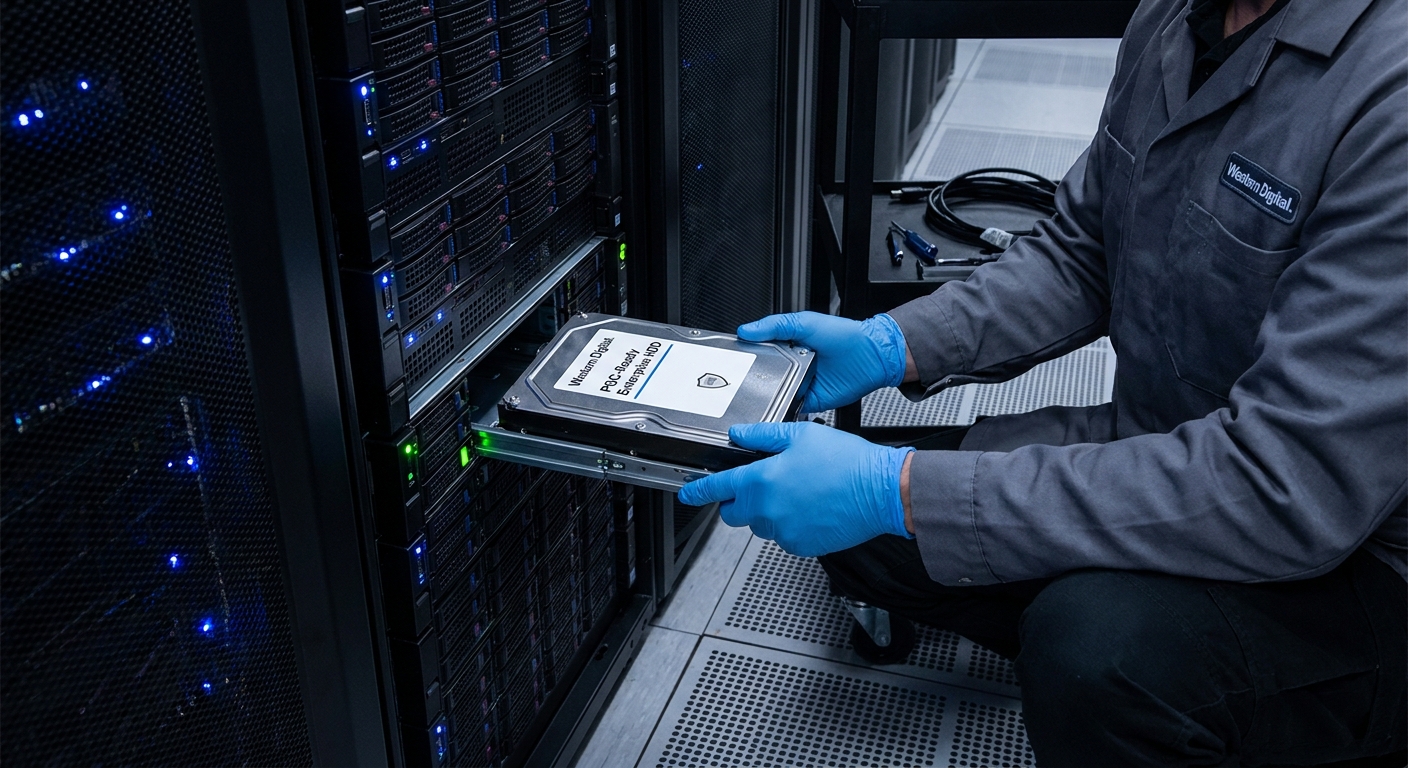
Western Digital—now simply "WD"—has just fired a warning shot across the bow of the cybersecurity world. They’ve officially unveiled the industry’s first hard drives armed with Post-Quantum Cryptography (PQC). It’s a massive move, signaling that the company is done playing around with standard storage and is instead pivoting hard toward the high-stakes world of AI-driven infrastructure.
Why does this matter? Because quantum computing isn't just a sci-fi buzzword anymore. It’s a looming threat to every encryption standard we currently rely on. By baking quantum-resistant security directly into the drive’s architecture, WD is trying to future-proof data that needs to stay locked away for decades. If you’re an enterprise managing massive, long-term archives, this is the kind of proactive defense you’ve been waiting for.
This announcement was the centerpiece of the company’s 2026 Innovation Day. Leadership didn't just talk about drives; they laid out a roadmap for a world where AI workloads are the baseline, not the exception. The consensus is clear: as AI eats the world, the hardware underneath needs to do more than just hold data. It needs to be faster, denser, and smart enough to survive the next generation of computing power.
A Roadmap Built for the AI Era
WD is shedding its skin. By focusing exclusively on high-performance storage for cloud and AI giants, the company is betting its future on the idea that the "data gravity" problem—the sheer difficulty of moving and securing massive datasets—is the biggest hurdle in tech.
They’ve set some aggressive targets to make this happen. Here’s what’s on the docket:
- Quantum-Resistant Security: PQC standards are now hard-coded into the hardware to stop future quantum decryption attacks in their tracks.
- The Road to 100TB+: Using Heat-Assisted Magnetic Recording (HAMR), they’re mapping out a path to massive 100TB+ drives by 2029.
- AI-Optimized Performance: New architectures are hitting the market with double the bandwidth and IO performance, specifically tuned to keep AI training models fed and happy.
- Sustainability as a Feature: They’ve managed to shave 20% off energy consumption, which is a massive win for the bottom line of any data center operator looking to cut TCO.
Right now, the team is busy qualifying their 40TB UltraSMR ePMR drives. If you’re wondering when you can get your hands on them, volume production is slated for the second half of 2026. It’s a rapid transition, moving from the lab to the server rack faster than we’ve seen in previous cycles.
The Shift to "WD"
The rebranding to just "WD" isn't just a marketing gimmick. It’s a signal of intent. They are aligning their entire product roadmap with the cloud service providers and massive data enterprises that actually run the internet. This strategic acceleration of storage innovation is a direct response to the bottleneck created by the explosion of AI-generated data.
| Metric | Current Status / Target | Timeline |
|---|---|---|
| UltraSMR ePMR Capacity | 40TB | H2 2026 |
| AI Workload Performance | 2x IO/Bandwidth | Available Now |
| Power Efficiency | 20% Reduction | Available Now |
| Maximum HDD Capacity | 100TB+ | 2029 |
Why Quantum Resistance is the New Baseline
We’re living in a time where the advancing capabilities of quantum computing is making today’s encryption look like a screen door on a submarine. By pushing these protections down to the hardware level, WD is essentially saying that security can no longer be an "afterthought" or a software-only layer. It has to be structural.
As data centers grow to meet the voracious appetite of AI, the complexity of keeping that data safe is only going to climb. If you’re building an infrastructure that needs to last for ten or twenty years, you can’t afford to be vulnerable to the inevitable breakthrough in quantum decryption.
WD is trying to solve the "data gravity" problem by balancing the impossible: they want to give you massive capacity, blistering speed, and iron-clad security all in one package. Whether they can maintain this pace as they push toward 100TB drives remains to be seen, but for now, they’ve set the bar for what a modern, secure hard drive should look like. The race to the quantum future is officially on.