Private Internet Access Updates WireGuard and OpenVPN Protocol Implementations to Strengthen Remote Access Security
TL;DR
Private Internet Access (PIA) has quietly rolled out a series of significant upgrades to how it handles WireGuard and OpenVPN. The goal? To tighten the screws on remote access security and squeeze a bit more performance out of the connection. These aren't just minor tweaks; they’re a fundamental refinement of how the service manages encrypted data tunnels. By optimizing the architecture for both protocols, PIA is aiming for a more stable, ironclad experience whether you’re sitting at a desktop or scrolling on a phone.
It’s easy to get lost in the weeds of encryption standards, but at the end of the day, the magic happens in the handshake. If you’ve ever wondered what is a VPN anyway, it’s essentially a secure pipe for your data. The technical heavy lifting—how that data is packed, shipped, and shielded—is what keeps your digital footprint invisible to prying eyes. By sharpening these implementations, the service ensures that even as threats evolve, the encryption remains a step ahead of those looking to snoop or intercept your traffic.
The Tale of Two Protocols
Why bother with two different protocols? Because they serve different masters. WireGuard is the new kid on the block—lean, mean, and incredibly fast. It’s built on a codebase of roughly 4,000 lines, which is a massive win for security researchers. With so little code to crawl through, finding a vulnerability is like looking for a needle in a haystack that’s actually the size of a shoebox.
OpenVPN, on the other hand, is the battle-tested veteran. It’s been around the block and carries a much heavier codebase—around 400,000 lines. That sounds like a security nightmare, but it’s actually a feature. That bulk brings incredible flexibility, allowing OpenVPN to play nice with legacy systems and bypass firewalls that would stop other protocols dead in their tracks.
| Feature | WireGuard | OpenVPN |
|---|---|---|
| Codebase Size | ~4,000 lines | ~400,000 lines |
| Encryption | Fixed (ChaCha20, Poly1305) | Customizable (AES-128/256) |
| Performance | High (up to 1.5x faster) | Moderate |
| Flexibility | Lower | High (TCP/UDP support) |
Speed vs. Stealth
The recent updates to WireGuard are all about efficiency. By sticking to modern cryptographic primitives like Curve25519 and ChaCha20, WireGuard remains the go-to for anyone who hates lag. If you’re streaming 4K video or handling heavy P2P transfers, the speed difference is tangible. Plus, because it’s so lightweight, your battery isn't going to take a nosedive just because you’re running a VPN. It’s protection without the overhead.
OpenVPN, meanwhile, is your Swiss Army knife. The updates here focus on its ability to slip through restrictive networks. If you’re stuck behind a corporate firewall or in a region with heavy censorship, OpenVPN is your best friend. By running it over TCP port 443—which is the same port your web browser uses for standard HTTPS traffic—it effectively disguises your VPN connection as normal web browsing. It’s a clever bit of digital camouflage that keeps the connection alive when everything else fails.
Why This Matters for Your Privacy
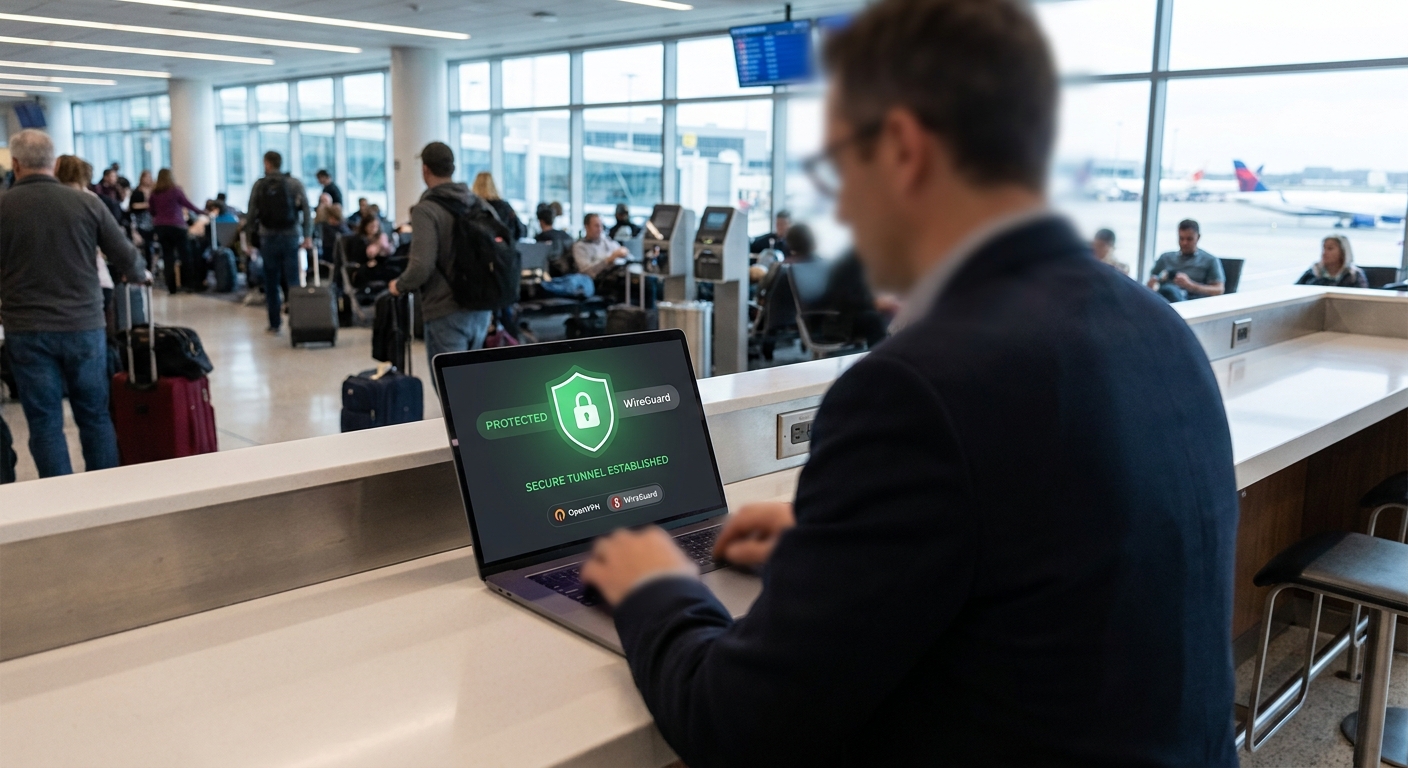
At its core, a VPN is about building a secure tunnel between your device and the rest of the internet. Without it, you’re basically shouting your browsing history across a crowded room. Whether you’re on public Wi-Fi at a coffee shop or just trying to keep your ISP from logging your every click, these encrypted tunnels are the only thing standing between your data and the advertisers or malicious actors who want it.
If you’re trying to figure out which one to use, the WireGuard VPN setup is generally the better choice for everyday, high-speed browsing. But if you’re traveling or dealing with complex network restrictions, you’ll want to look into the best VPN protocol for your specific situation. Sometimes, you need speed; other times, you need the ability to punch through a firewall.
The Bottom Line
The best part about these updates? You don't have to do a thing. The service handles the complex handshake and key exchanges behind the scenes. It’s a "set it and forget it" approach that keeps your security posture strong without turning you into a network engineer.
Here is the breakdown of why these updates actually move the needle:
- Auditability: WireGuard’s tiny codebase makes it far easier to verify for security flaws compared to the massive legacy protocols of the past.
- Speed: Real-world benchmarks show WireGuard consistently outperforming older standards by up to 1.5x, which makes a noticeable difference in daily usage.
- Compatibility: OpenVPN’s ability to use TCP port 443 remains the gold standard for bypassing aggressive network-level censorship.
- Privacy: Both protocols utilize high-grade encryption, ensuring that your data remains a scrambled mess to anyone trying to intercept it.
The digital landscape is constantly shifting, and the threats are only getting more sophisticated. Relying on outdated, unmaintained protocols is a recipe for disaster. By keeping these implementations sharp, the foundation for a secure online experience remains intact. For those interested in the deeper technical weeds, there’s plenty of documentation available on the Private Internet Access Blog.