The Airbnb for Bandwidth: Is P2P Bandwidth Sharing the Future of Connectivity?
TL;DR
- ✓ P2P bandwidth sharing allows users to monetize idle internet capacity as micro-utility providers.
- ✓ DePIN projects replace centralized ISP models with decentralized, blockchain-incentivized physical infrastructure networks.
- ✓ Users gain digital autonomy by bypassing traditional gatekeepers and avoiding restrictive traffic throttling.
- ✓ The bandwidth marketplace connects individual node operators directly with AI researchers and privacy users.
Peer-to-peer (P2P) bandwidth sharing isn’t some high-concept tech experiment. It’s a correction. For years, we’ve been shackled to a broken internet infrastructure that treats our home connections as one-way pipes. By turning your idle, unused internet capacity into a tradeable digital asset, we’re finally seeing the rise of a decentralized web that doesn’t need corporate permission to exist.
Is this a massive shift in how we buy, sell, and distribute connectivity? Absolutely. We’re moving toward a model where every household functions as a micro-utility provider, stripping power away from the gatekeepers.
Why Are Our Current ISPs Failing Us?
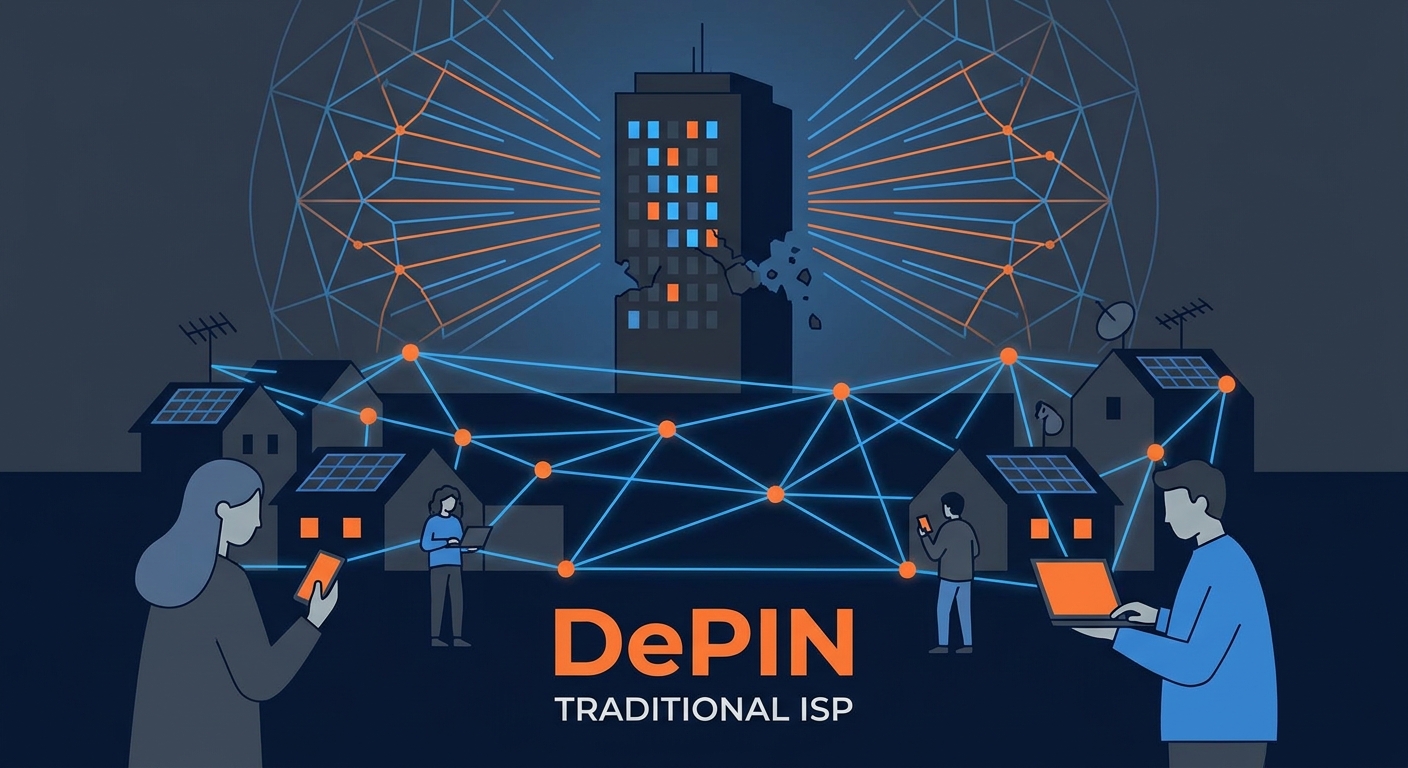
Let’s be honest: the "gatekeeper" model is a relic. You pay a monthly bill, they give you access—if you follow their arbitrary rules. It’s a stagnant system. They throttle your speeds based on what you’re doing, and they treat your personal data like a secondary revenue stream to be harvested and sold.
It’s a one-way street. ISPs dictate the terms, control the routing, and keep their profit margins fat by turning your privacy into their product. That’s why understanding why traditional ISPs fail privacy is the first step toward reclaiming your digital autonomy. When your traffic is funneled through one centralized pipe, you’re at the mercy of their traffic management and government surveillance. Net neutrality? In a world where ISPs can degrade or block your traffic with a few keystrokes, it’s a fairy tale.
What is the 'Airbnb for Bandwidth'? (DePIN Explained)
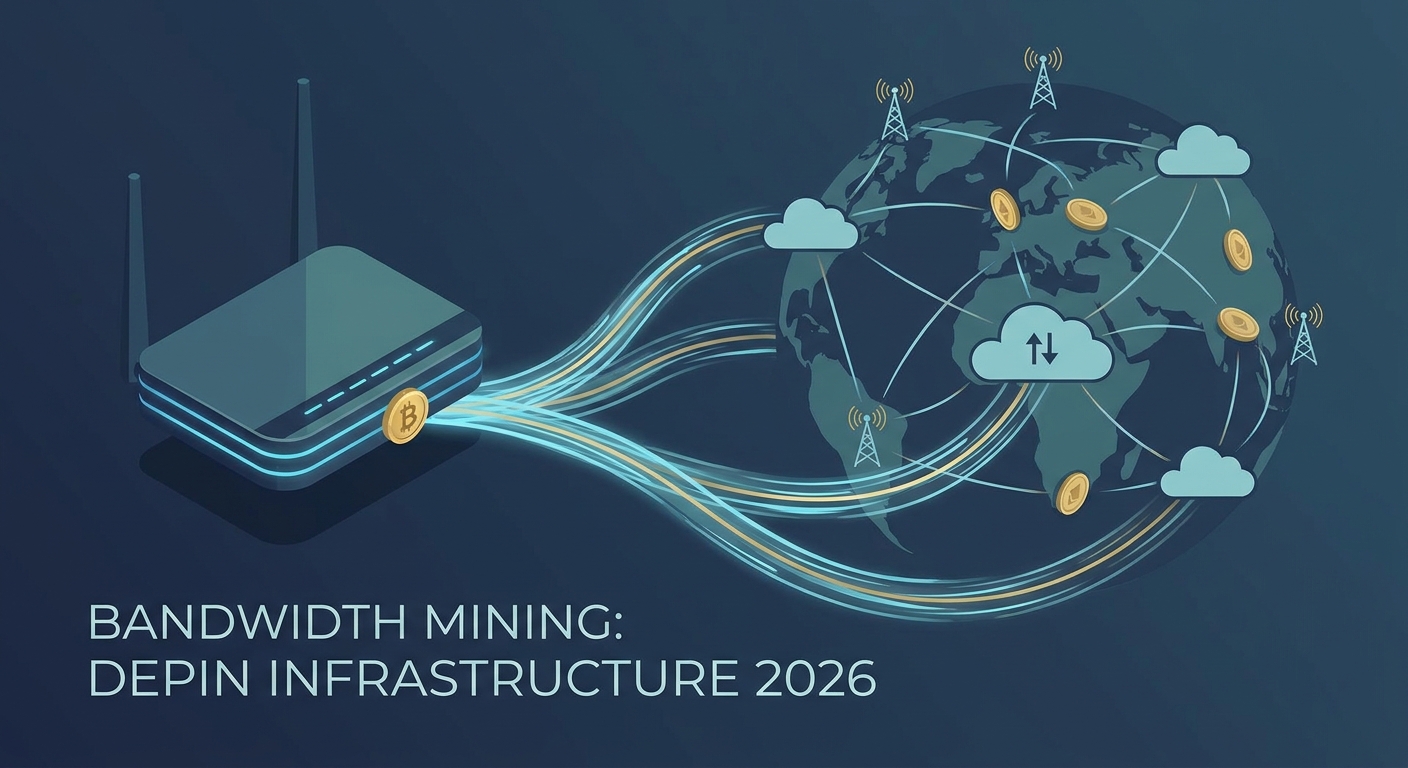
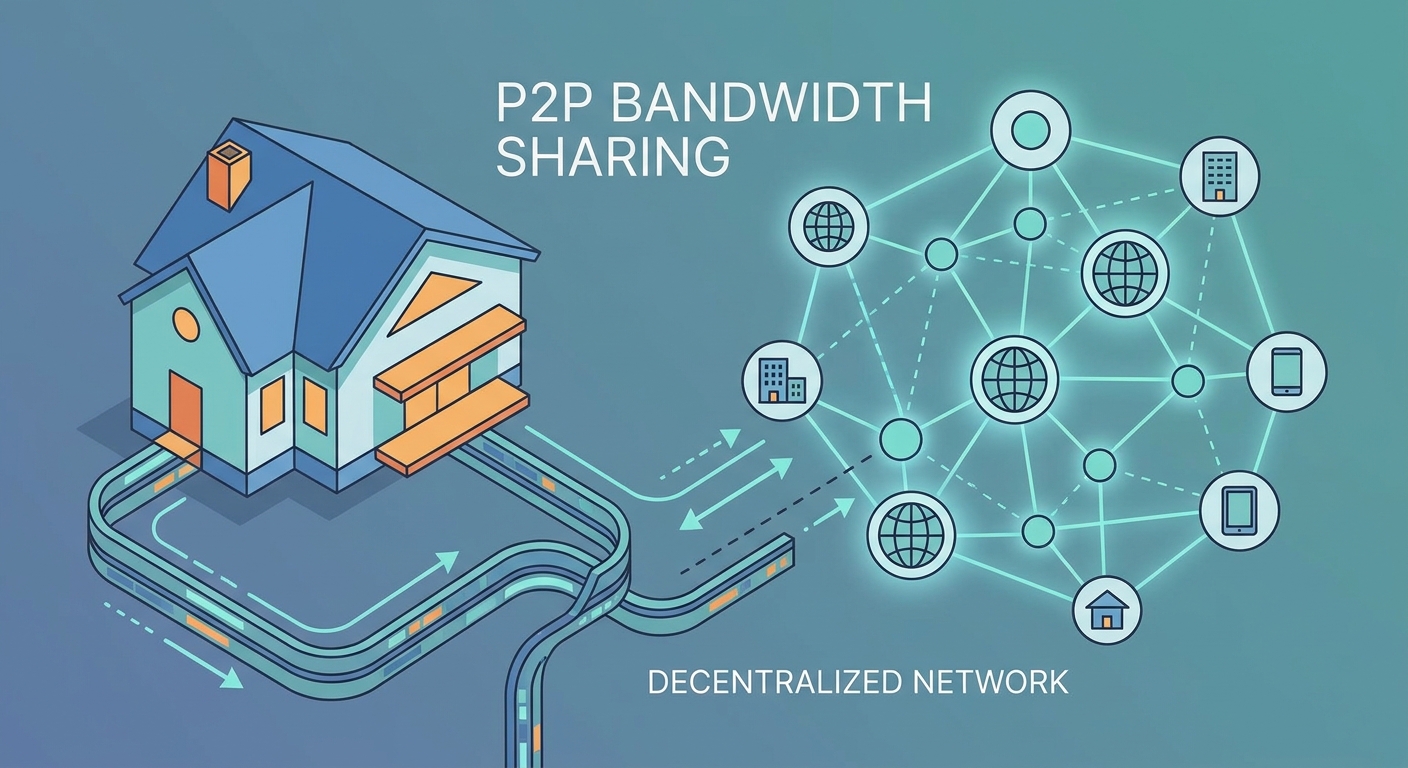
Think of it as the "Airbnb for Bandwidth." It’s the most intuitive way to wrap your head around Decentralized Physical Infrastructure Networks—or DePIN for short. Just like Airbnb turned your spare bedroom into a revenue stream, bandwidth sharing lets you monetize the gigabits you aren’t using while you’re asleep or at work.
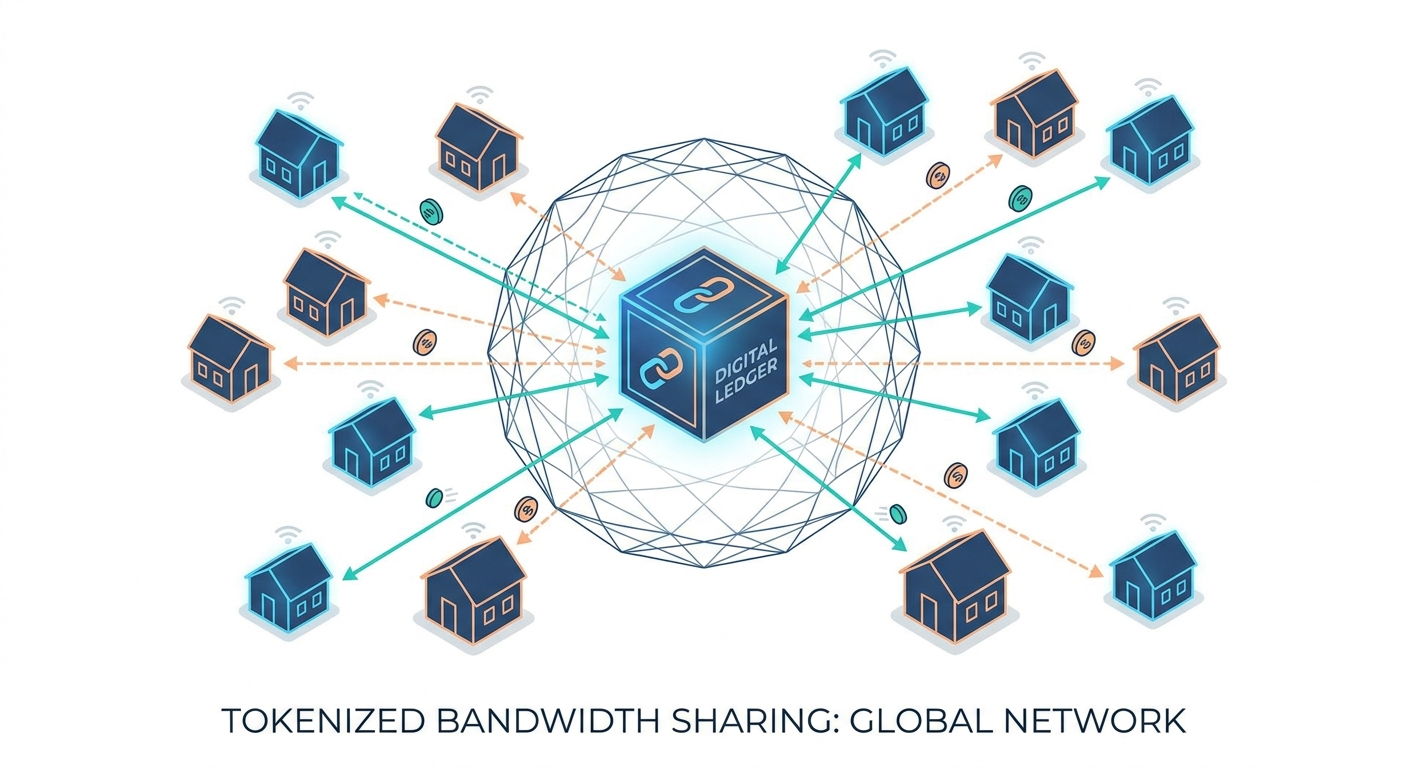
DePIN bridges the gap between blockchain incentives and actual, physical hardware. A decentralized protocol gathers the "spare capacity" from thousands of residential connections to build a high-performance network for AI researchers and privacy-focused users. If you want a deep dive into how this works, the DePIN sector overview tracks how these projects evolved from speculative side-hustles into actual, functioning infrastructure. It’s the "Uberization" of your internet connection. No central authority required. Just the collective power of individual users.
How Does the Bandwidth 'Flywheel' Actually Work?
The ecosystem is a three-way dance: the node operator (that’s you), the marketplace (the protocol), and the demand side (AI companies, proxy services, or dVPN users).
The "flywheel" kicks off when you install software that runs quietly in the background. It creates a secure tunnel for traffic to pass through your residential IP. Why does that matter? Because residential IPs are gold. They’re harder to block and look "human" to websites, which keeps demand high. The network uses "Proof-of-Traffic" to verify you’re actually moving data, ensuring you get paid for real, high-value work. As demand grows, the network value climbs, which brings in more nodes, which makes the whole thing faster and more reliable. It’s a self-sustaining cycle.
Is This the End of the Centralized VPN?
For years, the standard VPN was the go-to for privacy. But here’s the rub: they’re centralized. If the provider gets a subpoena or decides to log your activity, your privacy is toast.
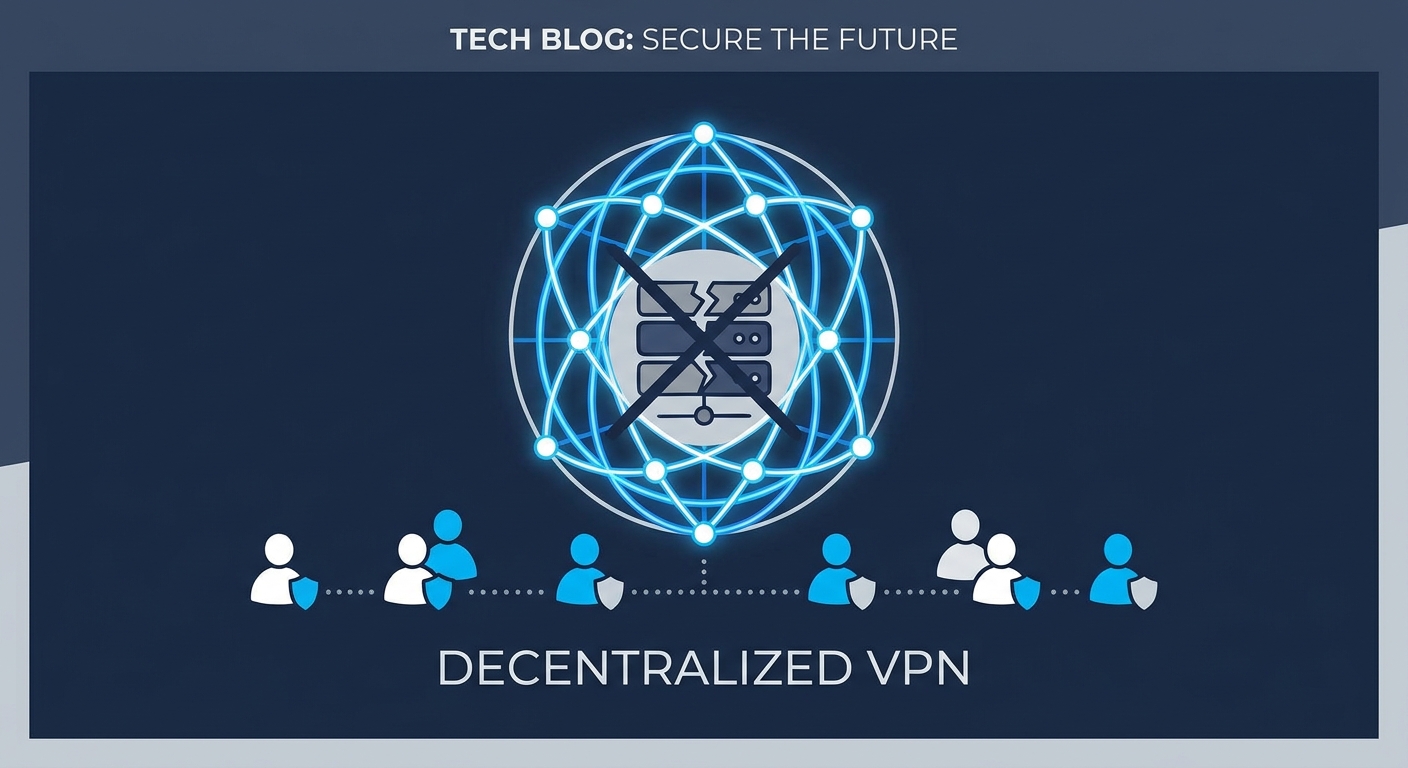
Decentralized VPNs (dVPNs) change the game by cutting out the middleman. Instead of routing your traffic through a massive, suspicious corporate server farm, you’re using residential IPs from all over the world. Websites can’t block you because you look like just another guy browsing from home. If you want to see how this changes everything, checking out what a dVPN is shows how these protocols use P2P network principles to keep your data truly anonymous. By spreading the load, dVPNs create a resilient, censorship-resistant web that’s nearly impossible for one entity to pull the plug on.
Can You Really Monetize Your Idle Internet?
The narrative has shifted. Back in 2024, it was all about "token farming"—people running nodes just to chase a quick buck. By 2026, the focus is squarely on utility.
Modern blockchain bandwidth revenue models now link your earnings to the quality of your service. If your connection is stable, has low latency, and offers a "clean" residential IP, you make more. "Proof of Traffic" acts as the filter here, ensuring your node is actually doing work like AI training or data verification. It’s not a "get rich quick" scheme; it’s a micro-passive income stream, much like earning interest on a high-yield savings account.
What About the Risks? Addressing Security and IP Reputation
People always ask: "Will a stranger use my IP to do something illegal?" It’s a fair concern.
Professional DePIN networks handle this through strict traffic filtering and Zero-Knowledge Proofs (ZKPs). ZKPs prove that your bandwidth is available and being used properly without ever exposing your private data or poking holes in your home network’s security.
The network acts as a proxy layer, vetting all traffic. Reputable protocols maintain strict "allow-lists" for sites, which prevents your IP from getting caught up in malicious activities. It’s a layer of insulation that protects you while you provide the service.
The Ethics of Being a Node Operator
Running a node isn't just about the money. It’s a stand for digital freedom. In places where the internet is locked down, routing traffic through a residential node in a free-market country is a lifeline. By sharing your bandwidth, you’re building a censorship-resistant layer that helps people who are otherwise silenced.
Of course, there’s a trade-off. You’re letting the world use a slice of your connection. While the risks are heavily mitigated by modern protocols, you have to weigh the passive income against the responsibility of digital stewardship. It’s a choice you make about what kind of internet you want to support.
What Does the Future Hold for 2026 and Beyond?
We’re moving past desktop-only setups. With smartphones getting more powerful, we’re seeing mobile-based nodes—your phone acting as a node while it sits on your nightstand.
Plus, the AI boom has created a bottomless appetite for high-quality, human-like residential IPs for data scraping and model training. As AI models get hungrier for diverse data, the value of your residential bandwidth is only going up. We are entering an era where your internet connection isn't just a utility you buy—it’s an asset you own.
Frequently Asked Questions
Is it safe to share my bandwidth with strangers?
Yes, provided you use reputable protocols. Modern bandwidth-sharing platforms use end-to-end encryption to separate the traffic flowing through your node from the traffic on your personal devices. Your private data remains isolated from the proxy traffic.
Can I get in trouble if a node user does something illegal on my IP?
Reputable networks employ rigorous traffic filtering and "Proof of Traffic" protocols to prevent illegal activity. By blocking known malicious sites and monitoring traffic patterns, these platforms minimize the risk of your IP address being flagged or blacklisted by ISPs.
How much can I realistically earn by sharing my bandwidth?
Earnings depend on your geographic location, the quality of your internet connection (latency and uptime), and current network demand. While it won't replace a full-time salary, it serves as a consistent, low-effort passive income stream that scales with the growth of the DePIN sector.
How does bandwidth sharing affect my internet speed?
Most modern node software is designed with "resource management" at its core. It will only utilize your excess bandwidth, prioritizing your local traffic first. If you begin streaming 4K video or gaming, the node automatically throttles itself to ensure your personal experience remains seamless.