Is Your VPN Truly Private? Why You Should Switch to a Blockchain-Powered Privacy Tool
TL;DR
- ✓ Traditional VPNs create a single point of failure by centralizing your traffic data.
- ✓ Decentralized VPNs use P2P mesh networks to eliminate reliance on a single provider.
- ✓ Multi-hop relay technology makes it impossible for node operators to track your activity.
- ✓ Switching to a dVPN moves your security from a trust-based to a verify-based system.
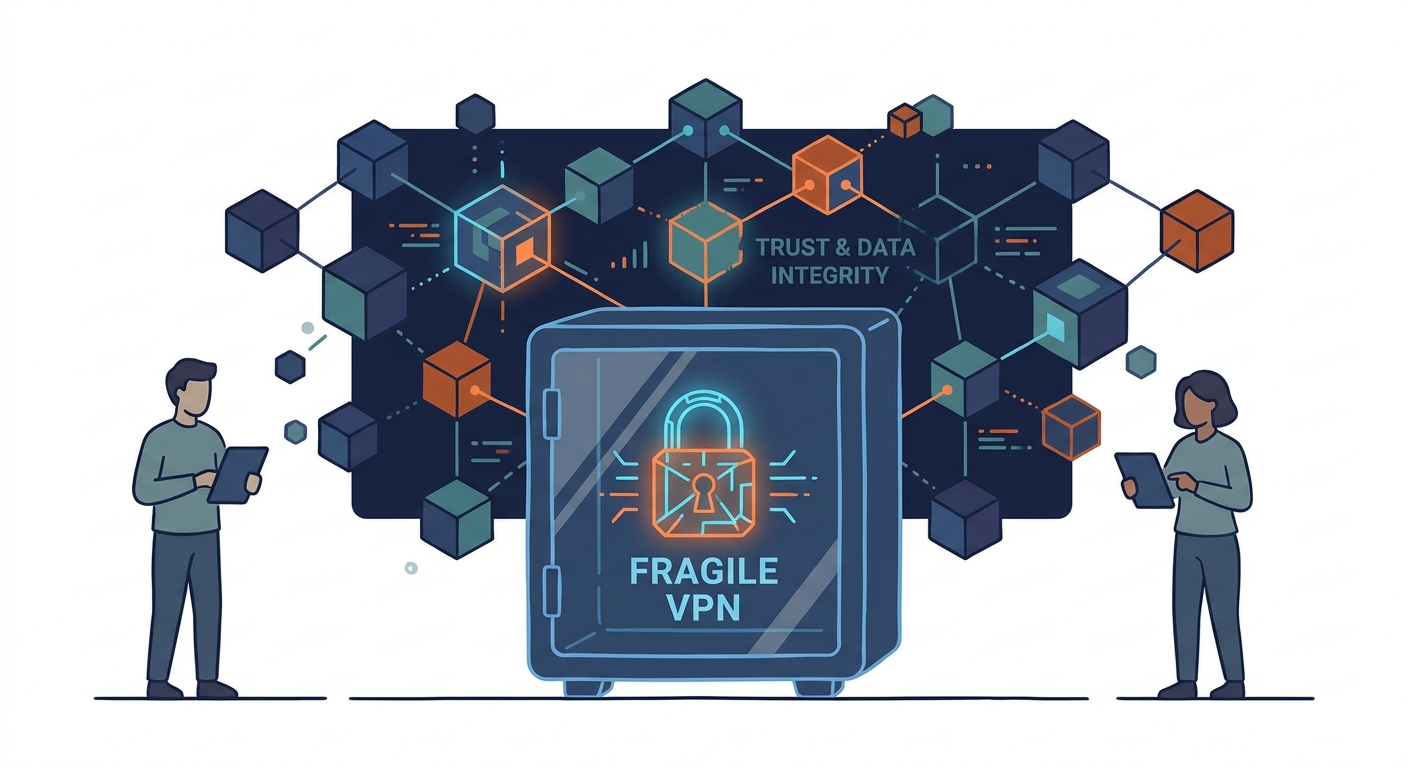
Your "No-Logs" VPN? It’s basically a vault with a glass door. You pay your monthly subscription, convinced your digital footprint is being scrubbed clean, but the truth is much shakier. You’re handing the keys to your digital life to a single, centralized company. You’re banking on them to keep their word.
But what happens when that company gets a subpoena? Or a state-mandated order? Or gets hacked by someone who knows exactly where to look? Your privacy doesn't just flicker—it vanishes. By 2026, the shift toward decentralized privacy isn't some niche hobby for tech bros; it’s a survival tactic. Understanding why privacy matters in 2026 means realizing that privacy isn't just about dodging a few creepy ads. It’s about protecting your digital sovereignty in an age of systemic surveillance.
Is Your VPN Actually Protecting You? The "Single Point of Failure" Problem
The whole traditional VPN model is built on a fundamental flaw. When you click "Connect," you’re routing your traffic through a server owned, operated, and watched by one company. Marketing teams love to scream "No-Logs!" from the rooftops, but as the Electronic Frontier Foundation has highlighted regarding the limitations of such policies, a privacy policy is just a pinky-promise. It is not a technical guarantee.
History is littered with "privacy-first" VPNs—some with stellar reputations—that folded the second law enforcement knocked on the door. Because the infrastructure is centralized, the provider holds the keys to the kingdom. If they’re forced to install a monitoring agent or start logging traffic at the network level, you’ll never know. You’re at the mercy of their legal department and their internal security standards. You aren't buying privacy; you’re renting a temporary shield from a landlord who can evict your data whenever they feel like it.
How Does a Decentralized VPN (dVPN) Actually Work?
A decentralized VPN (dVPN) flips the script by firing the landlord. Instead of the old "hub-and-spoke" model where every user funnels into a central data center, a dVPN uses a peer-to-peer (P2P) mesh network. Your traffic bounces through a series of nodes run by independent, often anonymous, people all over the world.
This is a multi-hop relay. Since no single entity owns the entire route, no one can see where you started or where you’re headed. Your request is encrypted and passed from point to point, making it effectively impossible for any single node operator to piece together your activity.
By switching to this P2P model, you move from a "trust-me" system to a "verify-me" system. You aren't relying on a glossy marketing brochure; you’re relying on the hard, immutable rules of a protocol.
What is DePIN and Why Does It Matter for Your Internet?
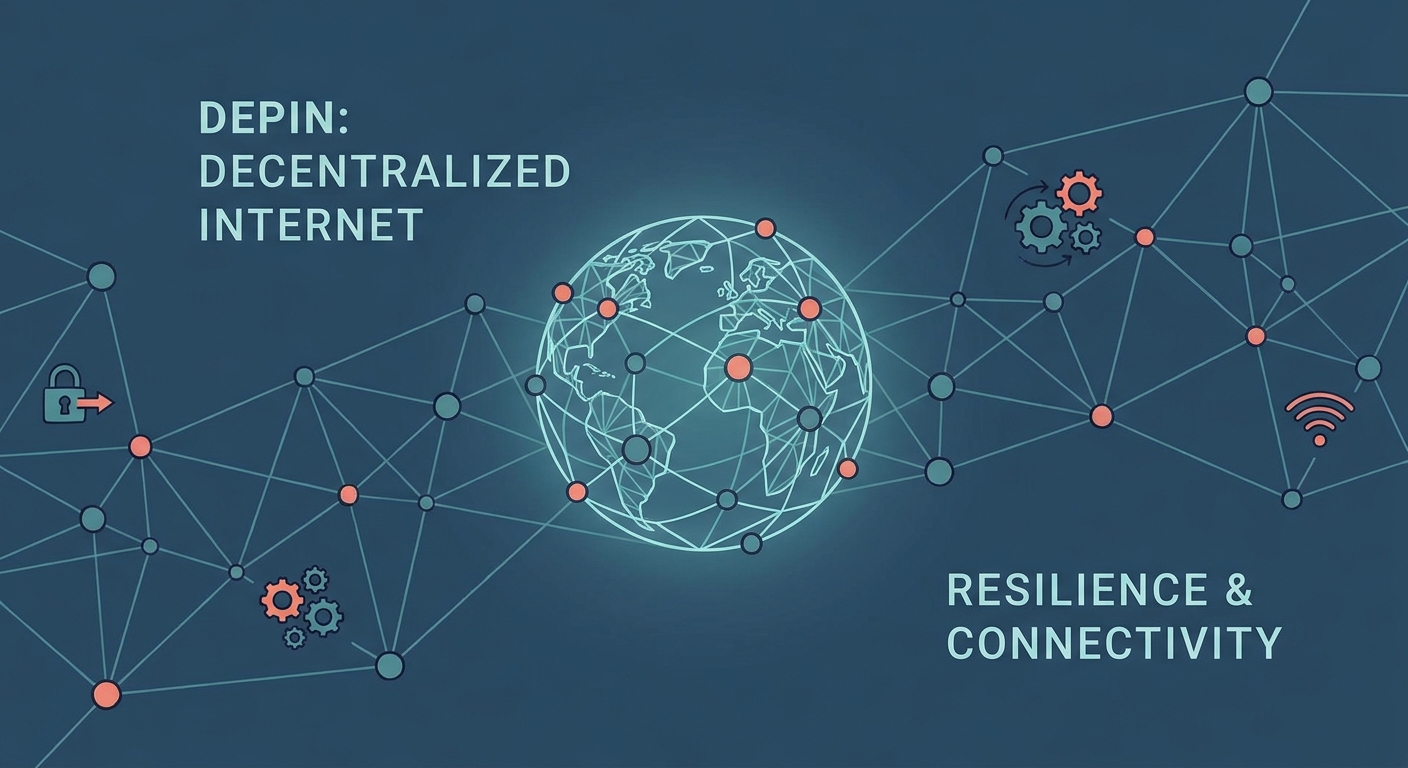
DePIN—Decentralized Physical Infrastructure Networks—is the biggest shift in internet architecture since the cloud went mainstream. As explored in the DePIN Sector Overview by Messari, this model allows us to crowdsource physical resources, like bandwidth, instead of building massive, centralized server farms.
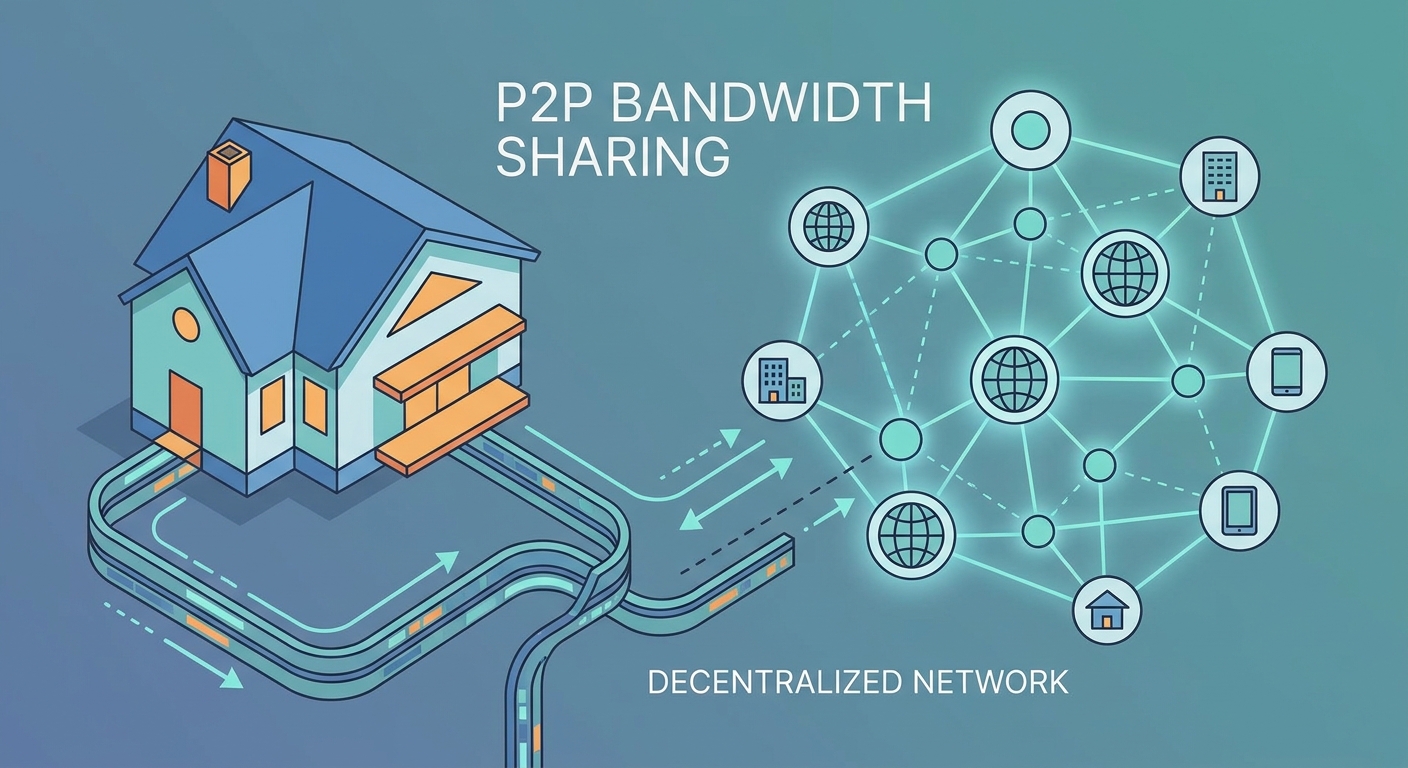
Think of it as the "Airbnb for Bandwidth." A traditional VPN provider spends millions building or leasing server farms. In a DePIN model, the network is just thousands of individuals sharing their extra internet capacity. When you join this network, you stop being just a passive consumer. You become a stakeholder. You can earn tokens for sharing your bandwidth, turning your internet connection into an asset rather than a monthly bill. It creates a network that is resilient, censorship-resistant, and nearly impossible for any government or corporation to pull the plug on.
What Are the Core Advantages of Blockchain-Powered Privacy?
Moving to a blockchain-powered tool gives you three massive advantages that centralized providers just can't touch:
Trustless Architecture: In a decentralized network, "No-Logs" isn't a policy; it's code. Smart contracts handle the routing and payments. No human intermediary can reach in and grab your data. Math is the only auditor that matters.
Censorship Resistance: Centralized VPNs use static IP addresses tied to data centers. These are easy for ISPs and streaming services to blacklist. A dVPN, however, routes traffic through residential IP addresses—real connections in real homes. It is incredibly hard to block a shifting, distributed mesh of residential nodes compared to blocking a known data center IP range.
Profitability: This is the "participant" advantage. Run a node, and you get rewarded. You’re no longer just paying a subscription fee to a corporation; you're helping run the infrastructure that secures the web.
Pro-Tip: If you have high-speed, stable internet, consider setting up a light node. Many dVPN protocols let you earn tokens just by keeping your computer or router connected to the network, which can offset your subscription costs or even generate a little passive income.
Centralized vs. Decentralized: Which Should You Choose?
The table below breaks down the fundamental differences between these two models.
Is the Technology User-Friendly Enough for the Average Person?
For years, you had to be a "crypto-expert" to mess with this stuff. Setting up a node or fumbling with a wallet was a total headache. But that era is effectively over. The leading projects are building clean, intuitive interfaces that hide the complexity of gas fees and wallet management. It’s starting to feel just as seamless as clicking "Connect" on a standard VPN app.
If you’re ready to take control of your digital footprint, getting started with secure browsing is the logical first step. Today’s dVPN clients handle the heavy lifting of node selection automatically, giving you the perfect balance of speed and anonymity without requiring you to get a degree in blockchain engineering.
Understanding the Trade-offs: Speed vs. Privacy
Let’s be real: dVPNs aren't always as fast as a commercial VPN sitting on a massive, optimized server cluster. Because your traffic might hop through several residential nodes, you might see a bit more latency.
But look at the philosophy here. Are you using a VPN to stream 4K content from another country, or are you using it to protect your identity from AI-driven trackers and state surveillance? As Orchid explains in their documentation on dVPN architecture, the goal of decentralized privacy is to prioritize the security of the connection over raw throughput. If your priority is true, verifiable privacy, a slight speed trade-off is a small price to pay for the peace of mind that your data actually stays yours.
How to Get Started with a Blockchain-Powered Tool
- Select a Protocol: Look for established dVPN projects with open-source code and a transparent, active community.
- Download the Client: Most modern dVPNs now offer desktop and mobile apps that look and feel like standard software.
- Fund Your Wallet: You’ll need a bit of the native token to pay for bandwidth. Many platforms now have "fiat-to-crypto" on-ramps to make this process painless.
- Select Your Routing: Many interfaces let you pick your own "hops" or just select a region. A multi-hop configuration is the best way to maximize your anonymity.
Frequently Asked Questions
Are decentralized VPNs significantly slower than traditional VPNs?
Generally, yes, you may notice a slight increase in latency due to the multi-hop P2P routing. While they are sufficient for most browsing and communication, they are currently less optimized for high-bandwidth streaming than top-tier centralized providers.
Do I need to be a crypto-expert to use a dVPN?
Not anymore. Modern dVPN applications have made massive strides in UX, abstracting away the technical complexities so that using a decentralized network is as simple as using a standard VPN switch.
Can my ISP still see my traffic with a dVPN?
Your ISP will know that you are connected to a VPN node, but they will be unable to see the destination of your traffic, the content of your data, or your final IP address. This is a significant upgrade over standard browsing, where your ISP has full visibility into your activity.
How do I earn tokens by sharing my bandwidth?
Most dVPN platforms have a "node" or "provider" mode. By enabling this in your client, you allow others to route traffic through your connection, and you are compensated in the protocol’s native token based on the amount of data you facilitate.
Is my data safer from malicious exit nodes compared to a free VPN?
Yes. Because dVPNs often utilize multi-hop routing and cryptographic verification, the risk of a single malicious node compromising your data is drastically lower than using a "free" centralized VPN, which often relies on selling your user data to third parties to cover costs.