DePIN and the Decentralized Internet: How P2P Networks Are Creating a Censorship-Resistant Web
TL;DR
- ✓ DePIN replaces centralized data centers with resilient decentralized physical infrastructure networks.
- ✓ Blockchain incentives power crowdsourced bandwidth and compute for a truly censorship-resistant internet.
- ✓ Decentralized P2P networks provide the massive, scalable compute power required for modern AI development.
- ✓ Moving away from Big Tech control creates a more secure, self-healing digital ecosystem.
The internet was sold to us as a wild, borderless frontier. Remember that? Somewhere along the line, that dream got fenced in. Today, the web is basically a series of digital gated communities owned by a handful of companies. A few massive data centers act as the central nervous system for everything you do online. They aren’t just servers; they’re choke points.
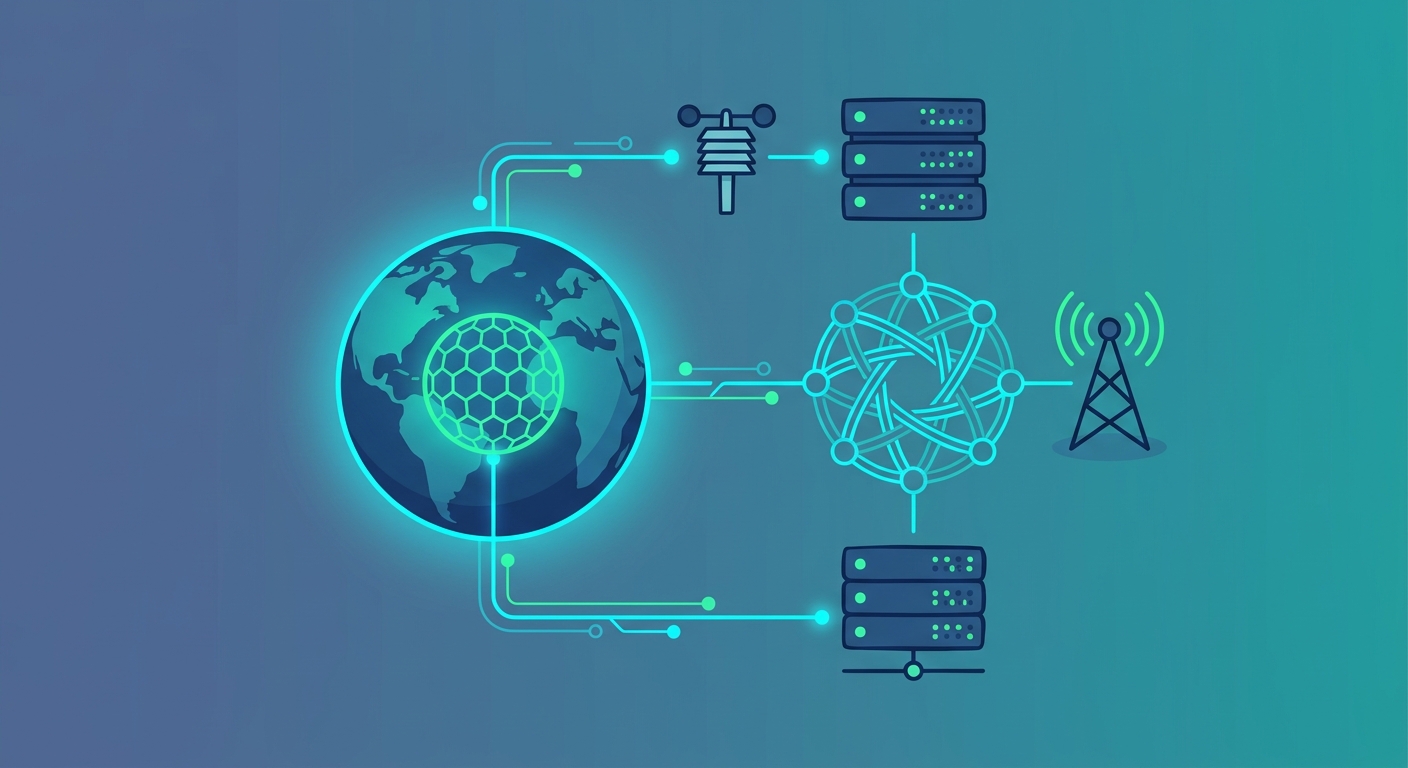
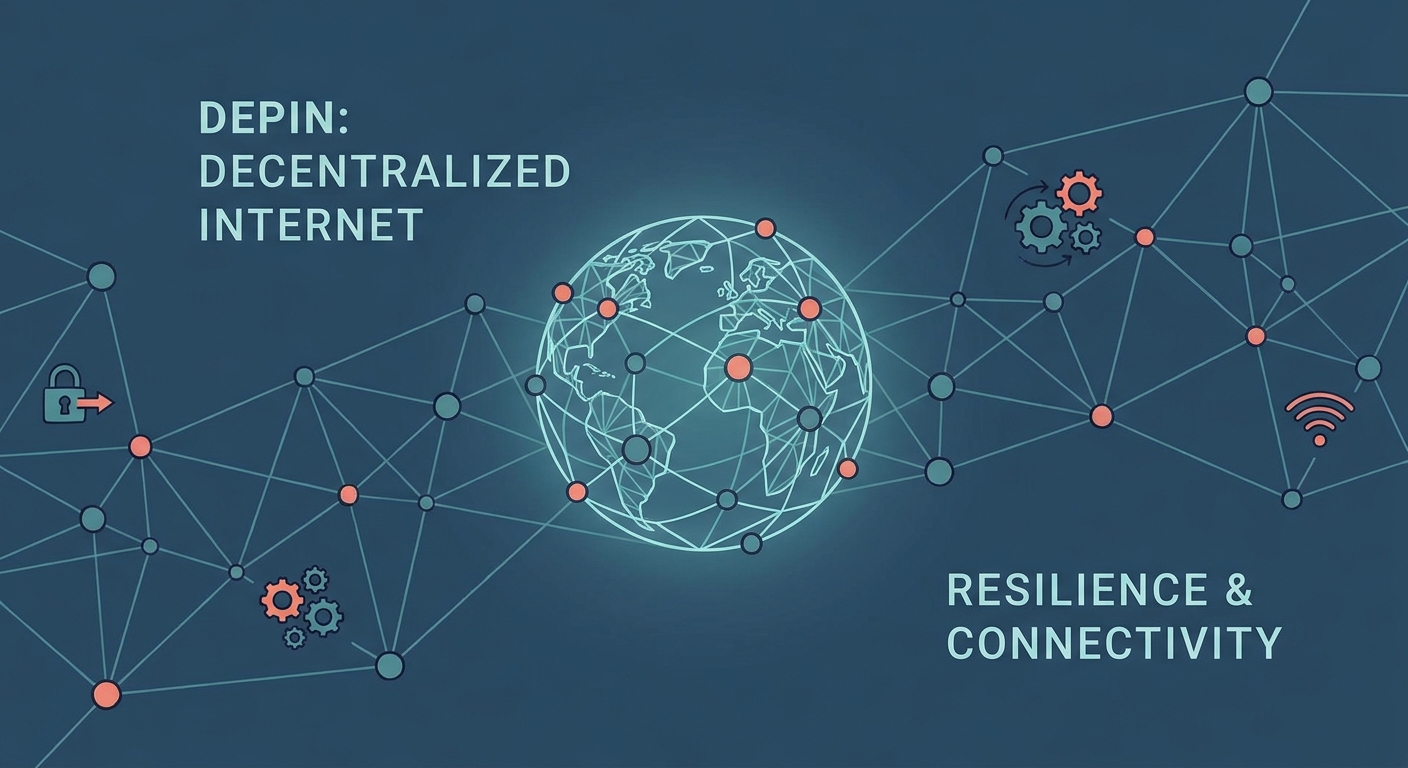
If a provider decides to throttle your connection, or a government flips a "kill switch," your access vanishes. It’s a fragile, top-down mess. Enter DePIN—Decentralized Physical Infrastructure Networks. It’s not just tech jargon; it’s a structural rebellion. By ditching corporate-owned infrastructure for a bottom-up, crowdsourced model, we’re finally building a web that’s actually hard to break and impossible to fully control.
The Death of the Centralized Bottleneck
For decades, we’ve relied on a hub-and-spoke model. Your data travels through ISP-owned nodes that are essentially sitting ducks for monitoring, filtering, and blackouts. It’s a massive privacy disaster, but there’s a physical problem, too.
We’re hitting the ceiling. AI demands massive compute power, and our current data centers are energy-hungry, heat-constrained, and stuck in one place. They can’t scale forever. Moving from "Big Tech Cloud" to crowdsourced infrastructure isn't just a clever trend—it’s how we survive the next decade of internet growth. By tapping into the idle bandwidth and compute power of millions of residential devices, DePIN turns the internet from a brittle hierarchy into a self-healing, resilient mesh. It’s the difference between a system you’re a prisoner of and one you’re a part of.
What Exactly is DePIN, and Why Does It Matter Now?
At its simplest, DePIN is just real-world hardware paired with blockchain incentives. If you’re just getting your head around this, you can learn more about the foundational mechanics here. A few years back, these projects were mostly speculative crypto experiments—you’d run a node, farm some tokens, and hope for the best.
That era is dead. We’re in the "utility" phase now. Today, DePIN projects are providing real-world services like wireless coverage, decentralized storage, and distributed compute that go head-to-head with legacy telecoms and cloud giants. The crypto tokens aren't just for show; they’re the fuel. They ensure the network stays fast, reliable, and operational, allowing it to scale in ways that centralized firms—hampered by their massive, slow-moving budgets—simply can’t touch.
The AI-DePIN Symbiosis: Why Centralization is Failing
AI is moving fast, and it’s breaking the traditional cloud. Training these models requires vast amounts of "clean" data and distributed compute. Our current data centers are redlining, struggling with cooling costs and energy spikes. Plus, relying on a few concentrated data sources is a recipe for bias and failure.
P2P networks solve this by spreading the workload across a global grid. It’s more efficient, it’s local, and it’s inherently cleaner for AI development. As highlighted in this analysis of the Global AI Data Crisis, decentralized networks are uniquely positioned to handle the compute demands of the next decade without the overhead of building another proprietary server farm in the desert.
How Do P2P Networks Create a Censorship-Resistant Web?
The secret sauce of decentralized networks? There is no "off" switch. In a traditional ISP model, your traffic follows a predictable, easy-to-track path. It’s trivial for a middleman to log, filter, or block what you’re doing.
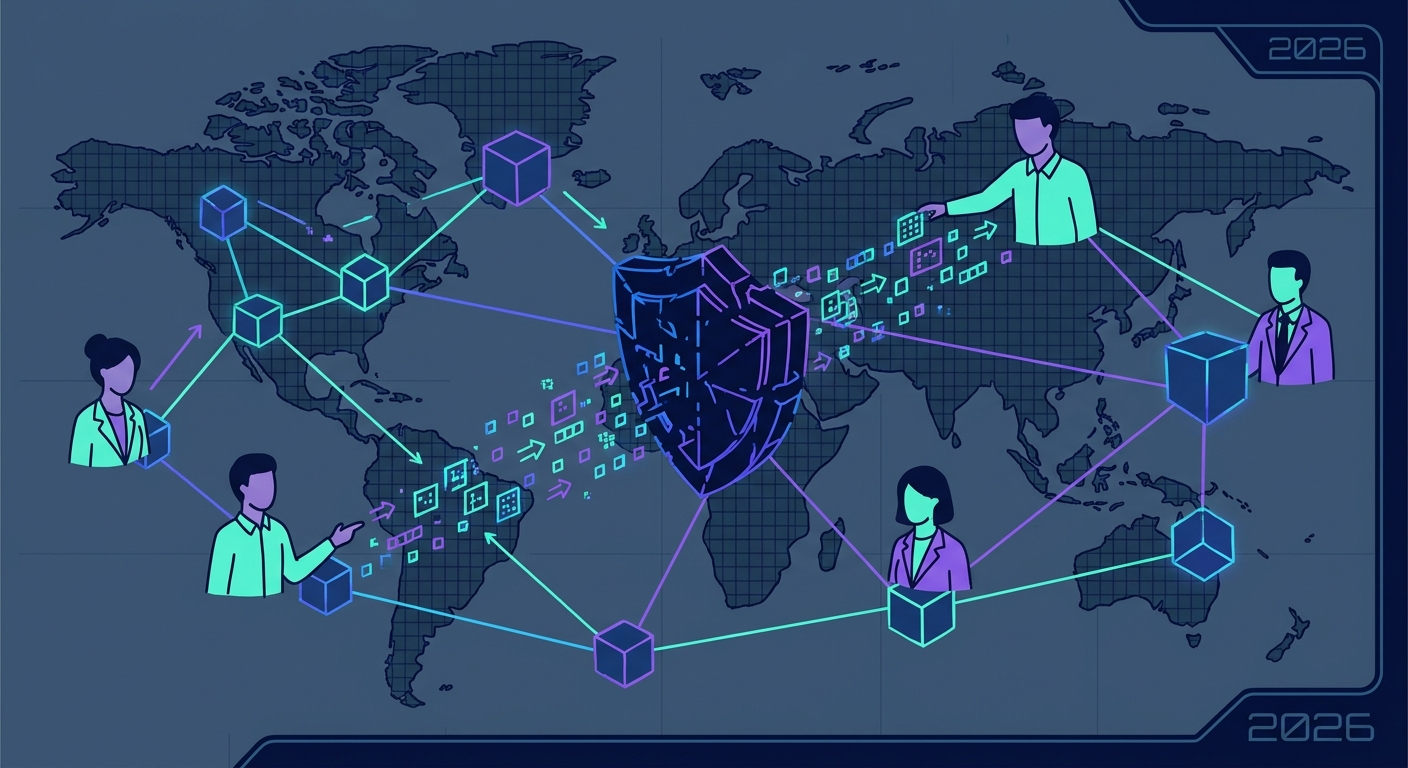
P2P networks do the opposite. Your traffic is sliced up and routed through a mesh of residential nodes. It’s like trying to track a single raindrop in a hurricane—it’s impossible for an outsider to pinpoint where your packets are coming from or where they’re headed.
Even better, these networks use residential IP addresses. Geo-blocking services hate these. They’re used to blacklisting static data-center IPs, but blocking residential traffic? That means accidentally blocking real users, which is a PR nightmare for them. Understanding the difference between these types of connections is vital; you can read more about why residential IPs are the gold standard for privacy. By hiding your activity in the noise of everyday residential traffic, you basically vanish from the radar of even the most aggressive firewalls.
DePIN vs. Traditional VPNs: Why the Architecture Matters
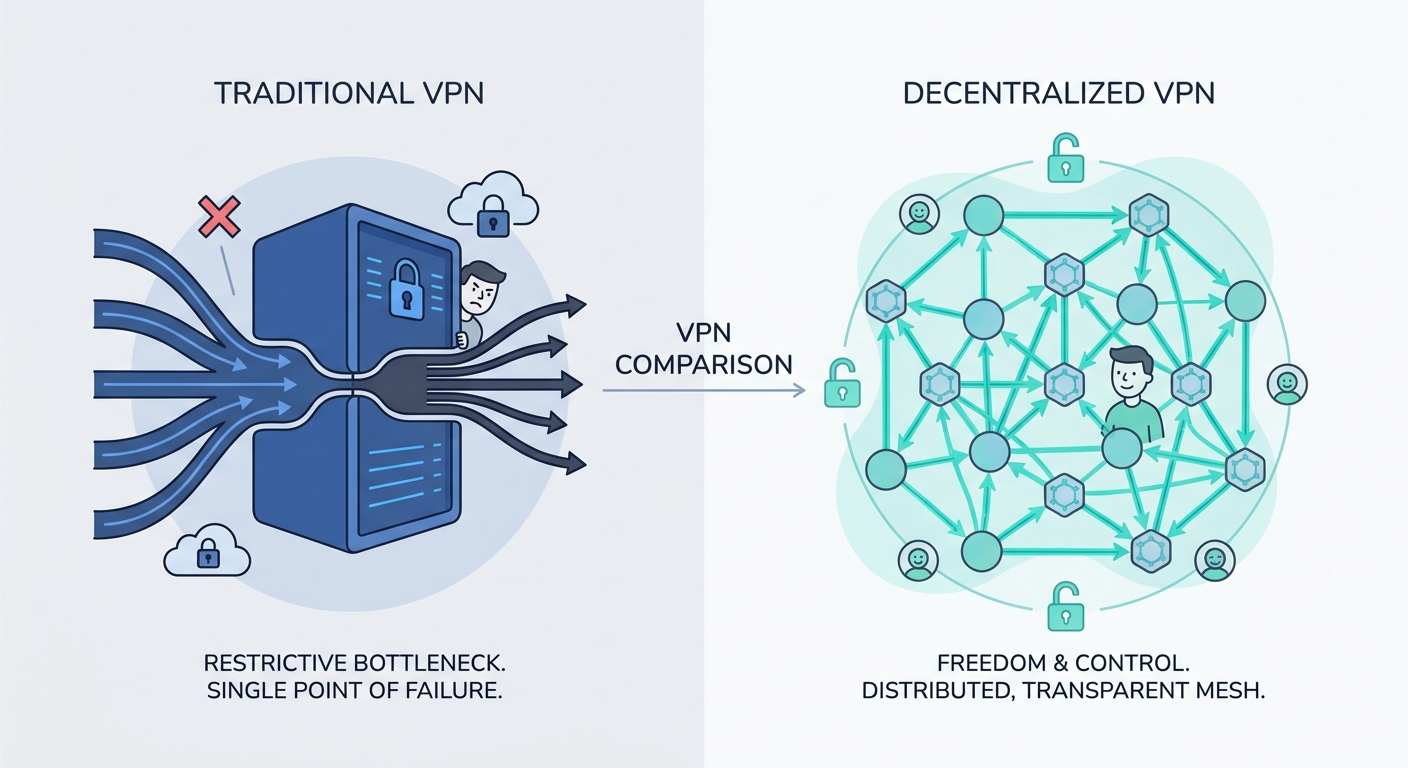
Don't be fooled by the marketing—the architecture of your privacy tool determines if you’re actually protected. Traditional VPNs offer encryption, sure, but they’re still centralized. If the provider gets a subpoena or decides to start logging your history, you’re done.
DePIN flips the script. It’s a trustless model. You don't have to "trust" the provider because the math does the work for you. Using cryptographic proofs, the network verifies everything without needing to know a single thing about you.
| Factor | Traditional VPN | DePIN Network |
|---|---|---|
| IP Type | Datacenter (Easily Blocked) | Residential (High Reputation) |
| Trust Model | Centralized (Trust the Provider) | Trustless (Cryptographic Proofs) |
| Censorship Resistance | Low (Centralized "Kill Switch") | High (Distributed Mesh) |
| Latency | Variable (Server Load Dependent) | Optimized (Proximity-based Routing) |
| Privacy Level | Log-based (Often) | Zero-Knowledge (Default) |
How Can You Participate in the Decentralized Internet?
You don't need a PhD in network engineering or a basement full of hardware anymore. The barrier to entry has cratered. You can run software-only nodes—basically an app on your phone or computer—or, if you’re feeling ambitious, use specialized hardware for things like mapping or sensor data.
This "passive participation" is why this is finally going mainstream. It’s often just running a browser extension or leaving an app open in the background. As discussed in The Node Revolution, we’re heading toward a future where your hardware earns its keep, strengthening the network while you go about your day.
Security and Privacy: Are You Safe in a P2P Pool?
People always ask: "If I share my bandwidth, can people see my stuff?"
The short answer is no. Modern DePIN protocols use hardened tunneling and encryption. Many of these networks also use Zero-Knowledge Proofs (ZKPs). This allows the network to verify that a node is doing its job without ever needing to look at the actual traffic.
You get to contribute to the network’s health and keep your digital life to yourself. It’s a win-win. To get deep into the weeds on how these protocols keep your data yours, read our guide on decentralized privacy.
Case Study: The Modern Remote Worker’s Toolkit
Picture this: you’re a digital nomad working from a region that loves to flip the kill switch on internet access. Your standard VPN? Blocked. Your work tools? Unreachable. You’re stranded.
If you’re using a DePIN-based routing layer, you aren't connecting to one easily identifiable server. Your traffic is bouncing through a shifting, global mesh of residential nodes. If one path gets cut, the network just routes around it. It’s the ultimate failover for the work-from-home era. It turns a fragile, censored connection into a robust, censorship-resistant pipeline that just works.
Regulatory Challenges and the Future of the Decentralized Web
Innovation never asks for permission, and DePIN is no different. Regulators are starting to notice, and they’re going to be obsessed with the idea of "sovereign data." They want to know which country your data lives in. But in a decentralized network, the data doesn't "live" anywhere—it’s everywhere.
Governments will try to force traditional ISP-style compliance on these protocols, but how do you regulate a network that has no headquarters, no CEO, and no central server? It’s going to be a long, drawn-out tug-of-war between state control and the borderless reality of decentralized infrastructure. My money is on the math.
Frequently Asked Questions
Is a DePIN-based network as fast as a traditional ISP?
DePIN networks are often faster than you’d expect because they pull bandwidth from local, residential connections rather than a bottlenecked data center halfway across the world. Latency can bounce around a bit depending on how many nodes are active, but it’s usually a much more stable, organic browsing experience.
How does decentralized bandwidth prevent censorship?
Because there’s no central "off" switch, there’s no single point of failure. If one node gets blocked, the network just finds a new path. It’s like cutting a single thread in a spiderweb—the web stays intact, and the traffic just flows around the gap.
Are my personal internet activities visible to the person whose bandwidth I'm using?
Absolutely not. The traffic is encrypted end-to-end. The person hosting the node is essentially just a relay station. They have zero visibility into your data, your history, or your identity. Advanced encryption and ZKPs make sure of that.
Do I need specialized hardware to join a decentralized network?
Most of the time, no. Most projects now have software-only nodes that run on your existing desktop or mobile device. A few specific projects—like those handling heavy compute or mapping—might ask for dedicated hardware, but the barrier to entry is lower than it's ever been.
Does contributing to a P2P network actually help reduce the carbon footprint of the internet?
Definitely. Instead of building more energy-guzzling, massive data centers, we’re using the hardware that already exists in our homes. It’s the ultimate form of internet recycling. We’re optimizing the capacity we already have, which is a huge win for sustainability.