What is a Decentralized VPN (dVPN)? The Complete Guide for 2026
TL;DR
- ✓ Decentralized VPNs replace corporate servers with a global mesh of independent nodes.
- ✓ dVPNs utilize blockchain and DePIN technology to ensure trustless online anonymity.
- ✓ You no longer rely on centralized providers that can be subpoenaed or breached.
- ✓ dVPNs function as a peer-to-peer marketplace for secure and private internet bandwidth.
Forget everything you think you know about VPNs. For the last decade, we’ve been sold a massive, polished lie: that "no-log" promises from corporate giants actually keep us safe.
Spoiler alert: they don’t.
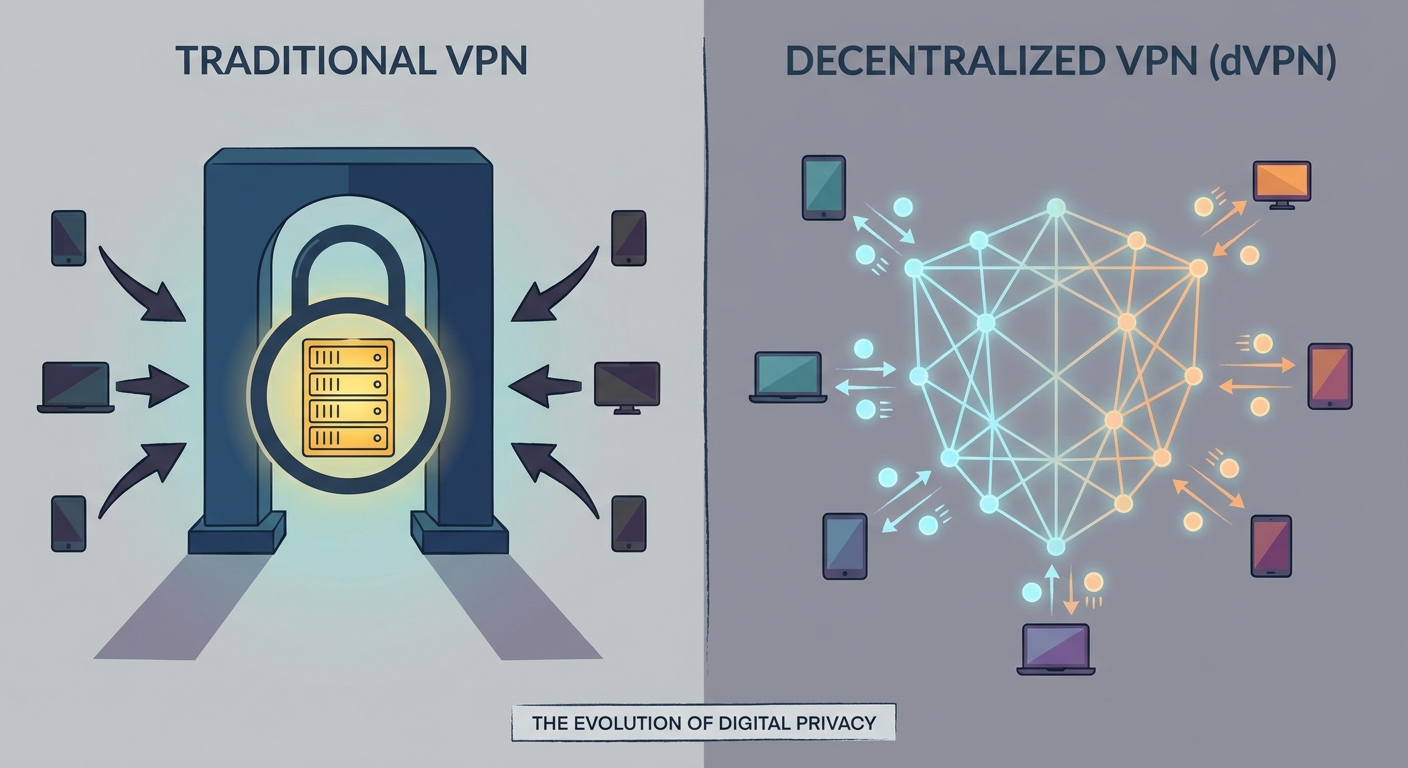
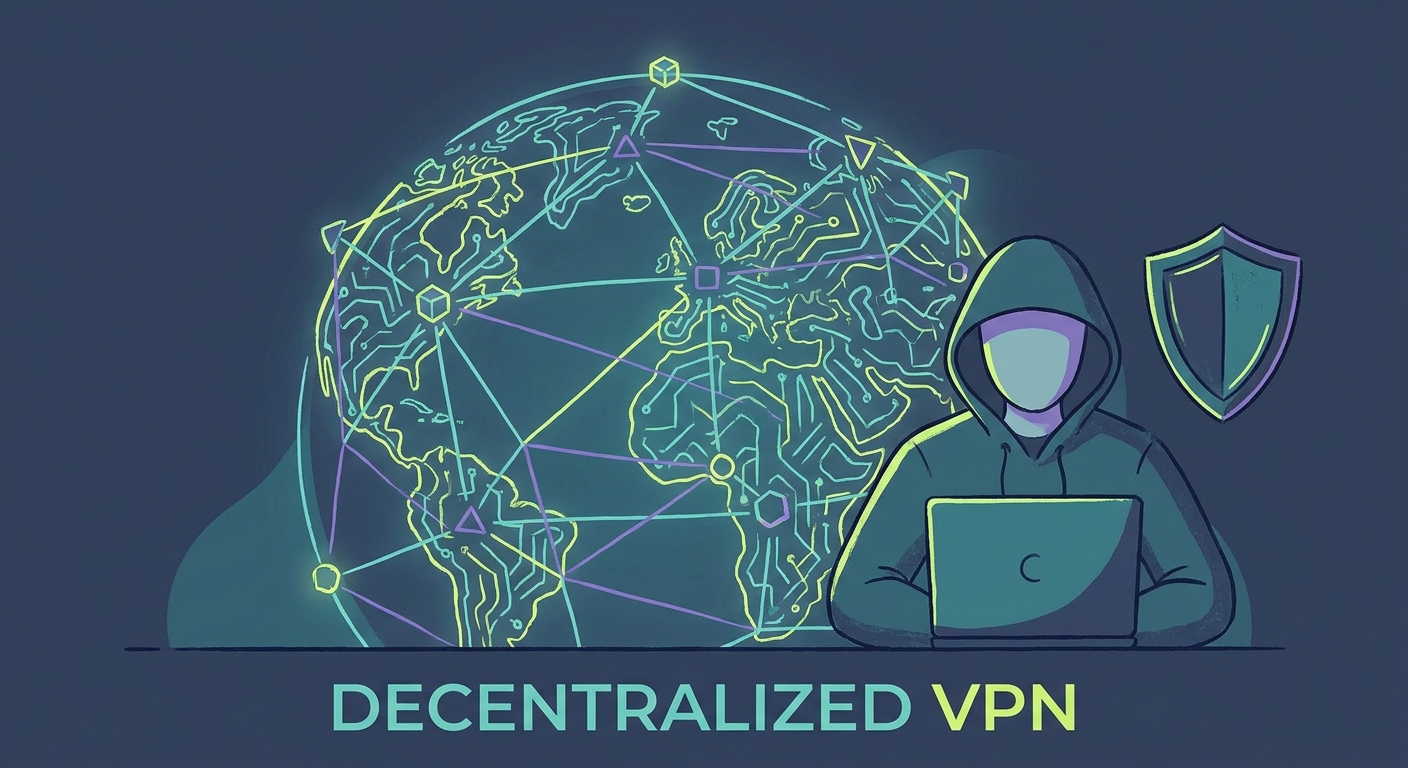
A decentralized VPN (dVPN) tears down that centralized model. Instead of routing your data through a server owned by a single company—a company that could be hacked, subpoenaed, or simply dishonest—a dVPN uses a global, distributed mesh of independent nodes. You aren't trusting a CEO or a marketing department anymore. You're trusting math and cryptography. It’s the biggest leap in online anonymity since the proxy was invented.
The Death of the "No-Log" Promise
We’ve all seen the ads. Big VPN brands promise they don't keep logs. They dangle "no-log" guarantees like a shield. But let’s be honest: it’s blind faith.
When you use a commercial VPN, you’re funneling your digital life through a server farm owned by a private entity. You have zero visibility into what happens behind those closed doors. If a government agency knocks on their door with a warrant, or a rogue employee decides to snoop, your privacy is toast.
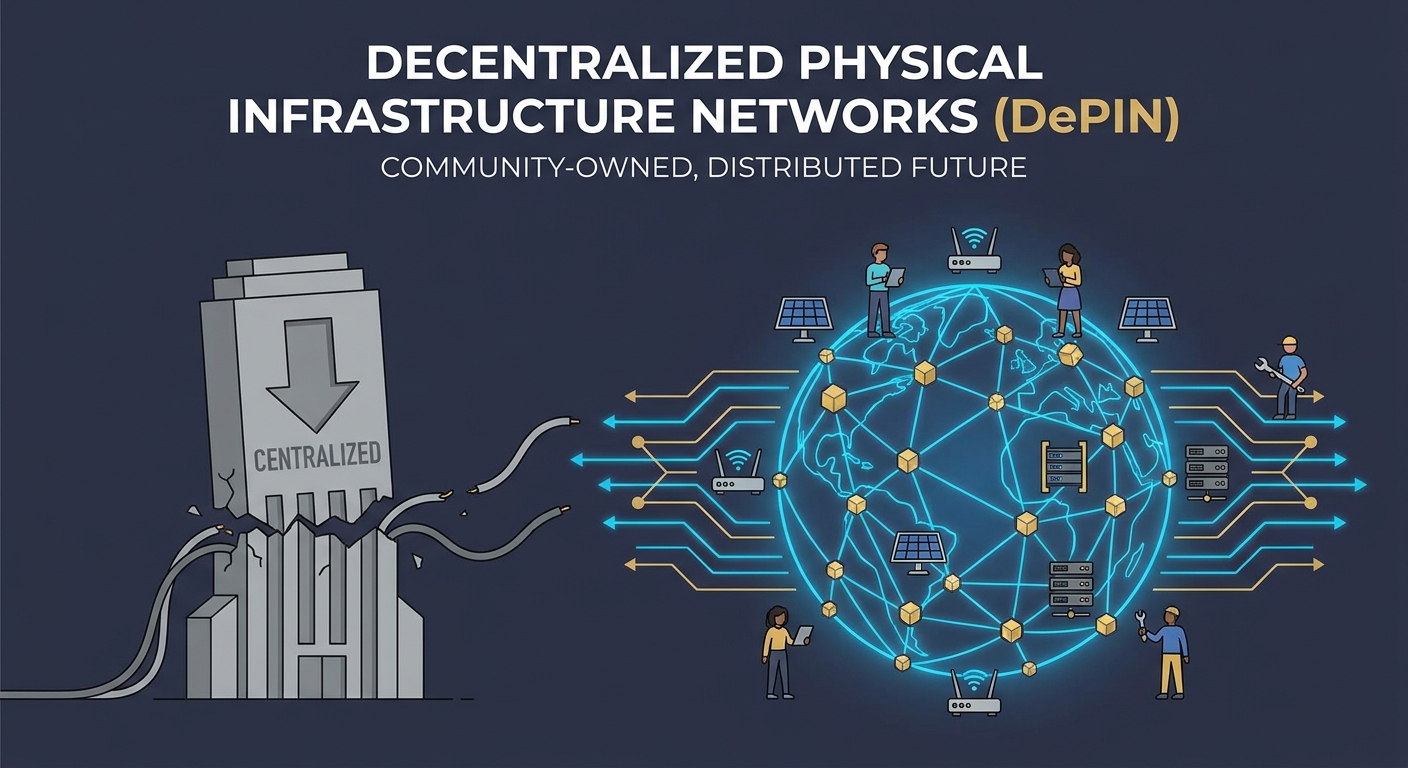
The dVPN flips the script. It moves us from a "trust-based" architecture to a "trustless" one. By leveraging blockchain and distributed ledger tech, dVPNs route your traffic through a randomized web of residential nodes across the globe. This isn't just a technical upgrade; it’s a fundamental shift toward DePIN (Decentralized Physical Infrastructure Networks), where the actual infrastructure is owned and verified by regular people, not gatekeepers in suits.
What Exactly is a Decentralized VPN (dVPN)?
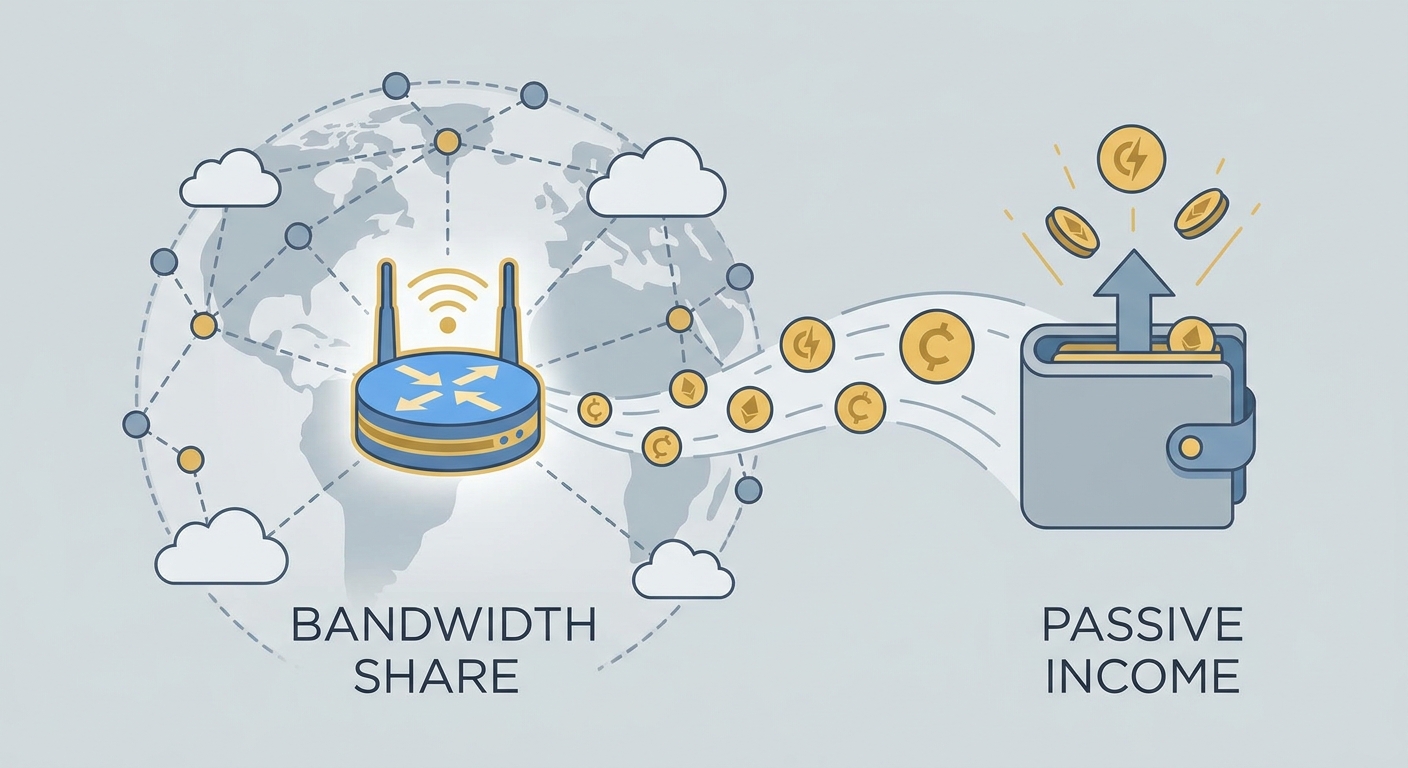
At its heart, a dVPN is just a peer-to-peer (P2P) marketplace for bandwidth. Imagine thousands of people contributing their extra internet capacity to a shared pool. There is no "single point of failure" because there is no single server.
In the old model, the server is a giant, glowing target. In a decentralized mesh, the network is fluid. Nodes pop up and vanish. Routes shift constantly. There is no entity to subpoena, because no one entity controls the whole pipeline. You’re borrowing a "pipe" from a stranger halfway across the world, and your data is encrypted so tightly that even the guy running the node hasn't got a clue what you're doing.
Why the "DePIN" Angle Changes the Narrative
By 2026, the days of buggy, slow "crypto-toys" are over. Integrating dVPNs into the DePIN ecosystem has turned them into heavy-duty, infrastructure-grade tools. This isn't just buzzword-heavy marketing; it's about building networks that can actually survive censorship and massive outages.
When you use a dVPN, you aren't just hiding your IP address. You’re voting with your traffic. You’re participating in a global, permissionless economy. This is why why privacy matters in 2026 is about more than just staying off the radar—it's about democratizing the internet. These networks scale organically, growing as more users join, without the massive, crushing capital costs that traditional ISPs face.
How it Works: The "Airbnb for Bandwidth" Model
Think of a dVPN as the "Airbnb for bandwidth."
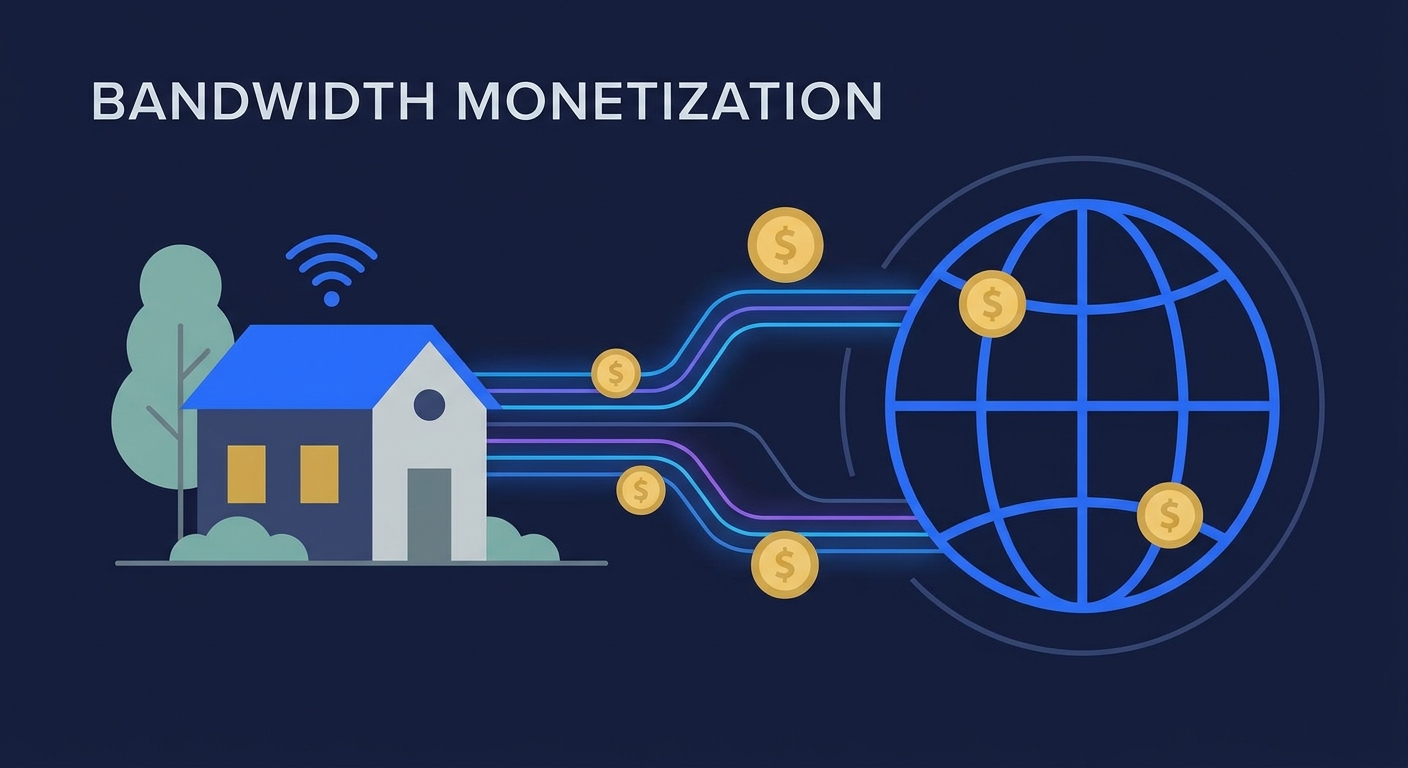
Maybe you live somewhere with cheap, high-speed internet and zero censorship. You can turn your unused capacity into a node and earn a little crypto on the side. Meanwhile, someone in a highly restricted region can pay a fraction of a cent in tokens to route their traffic through that node.
The best dVPNs now use multi-hop routing, a concept perfected by The Tor Project (Onion Routing). Your traffic hops through several nodes before hitting the open web. Node A knows you, but not your destination. Node B knows your destination, but not who you are. Trying to de-anonymize that is statistically a nightmare for anyone watching. It’s a massive leap over the single-hop systems we’ve been using for years.
Residential IPs: The Secret Sauce
Traditional VPNs have a massive identity crisis. Streaming services, banks, and retailers have spent years building "hit lists" of data-center IP ranges. If you use a standard VPN, you’re likely intimately familiar with that "Access Denied" screen or the annoying "You are using a proxy" warning.
dVPNs are different. They use residential IPs—the actual, legitimate connections of real people in their living rooms. Because these IPs look exactly like any other home user, they’re incredibly hard to block. You aren’t "hiding" in a massive, suspicious server farm; you’re simply blending into the background noise of the residential internet.
The 2026 Reality Check: Privacy vs. Performance
Let’s be real for a second: decentralization isn't a magic wand for speed.
Since you’re routing through volunteer nodes, you’re at the mercy of their home internet quality. If you need raw, blistering speeds to stream 8K video, a traditional, centralized server might still feel faster.
But when it comes to standing up to censorship? dVPNs are the undisputed kings. During recent internet shutdowns, centralized VPNs were wiped out in hours by state-level firewalls. Decentralized networks, with their fluid, shifting exit points, stayed up. As noted in comparative industry analysis, it’s a trade-off. Do you want raw speed for your movies, or do you want an unbreakable, censorship-resistant tunnel? Pick your priority.
How to Get Started (The 3-Step Path)
Getting into the dVPN game is easier than it used to be, though you still need a basic grasp of the Web3 landscape.
- Get a Web3 Wallet: You’ll need a non-custodial wallet (like MetaMask or a hardware version) to hold the tokens you’ll use to pay for bandwidth. It acts as your account.
- Pick a Node Provider: Choose a dVPN protocol. You’ll be able to browse a marketplace of nodes, filtering by country, speed, and cost.
- Connect: Pick a node, click connect, and that’s it. Your traffic is tunneled, and you’re part of a user-owned network.
If that sounds like a lot, don't sweat it. Many users prefer the standardized support and setup guides offered by platforms that handle the heavy lifting for you.
The "SquirrelVPN" Bridge: When Simplicity Wins
Technological miracles are great, but they’re useless if they’re too hard to use. Managing wallets and hunting for nodes is a steep learning curve for someone who just wants to browse safely.
That’s where SquirrelVPN comes in. We know the future is decentralized, but we also know that you just want a "one-click" experience. SquirrelVPN takes that high-end, decentralized tunneling tech and wraps it in a package that actually makes sense. We strip away the wallet-management headaches and the manual node-hunting, giving you the power of the decentralized ecosystem without the friction. You shouldn't have to choose between cutting-edge security and a seamless experience.
Frequently Asked Questions
Is a dVPN faster than a traditional VPN?
Generally, no. Traditional VPNs use high-speed, optimized data-center servers. dVPNs route traffic through residential nodes, which are subject to the variable speeds of home internet connections. You gain privacy and censorship resistance, but you may sacrifice raw download speed.
Do I need a crypto wallet to use a dVPN?
Most pure-play dVPN protocols require a crypto wallet because they utilize tokenized payment systems to compensate node operators for their bandwidth. This is the mechanism that keeps the network decentralized and incentivized.
Are dVPNs legal?
Yes. Using a VPN—decentralized or not—is legal in most of the world. Because the protocol uses end-to-end encryption, the node operator cannot see your traffic, and the network is designed to protect both the user and the provider through strict privacy-preserving architecture.
Can dVPNs bypass streaming geoblocks better than traditional VPNs?
Yes. Because dVPNs use residential IP addresses, they are much harder for streaming services to detect and block. Traditional VPN servers run on data-center IPs, which are easy for services to blacklist.
What happens if my node provider goes offline?
The mesh network is designed to be self-healing. If your chosen node goes offline, the dVPN client will automatically search for the next available node that matches your criteria and re-route your traffic, ensuring your connection remains active.