Decentralized VPN vs. Traditional VPN: Which P2P Technology Offers Better Security?
TL;DR
- ✓ Traditional VPNs rely on trust while dVPNs use verifiable P2P math.
- ✓ Centralized VPN providers often share parent companies and single points of failure.
- ✓ dVPNs utilize distributed nodes to make universal logging technically impossible.
- ✓ DePIN architecture removes the middleman to ensure censorship-resistant and private internet access.
Forget the buzzwords. Forget the marketing fluff. The real difference between a traditional VPN and a decentralized VPN (dVPN) isn't about speed, and it isn't about how many servers a company claims to have. It’s a philosophical fork in the road: do you want to play the "Trust Me" game, or do you want to play the "Verify Me" game?
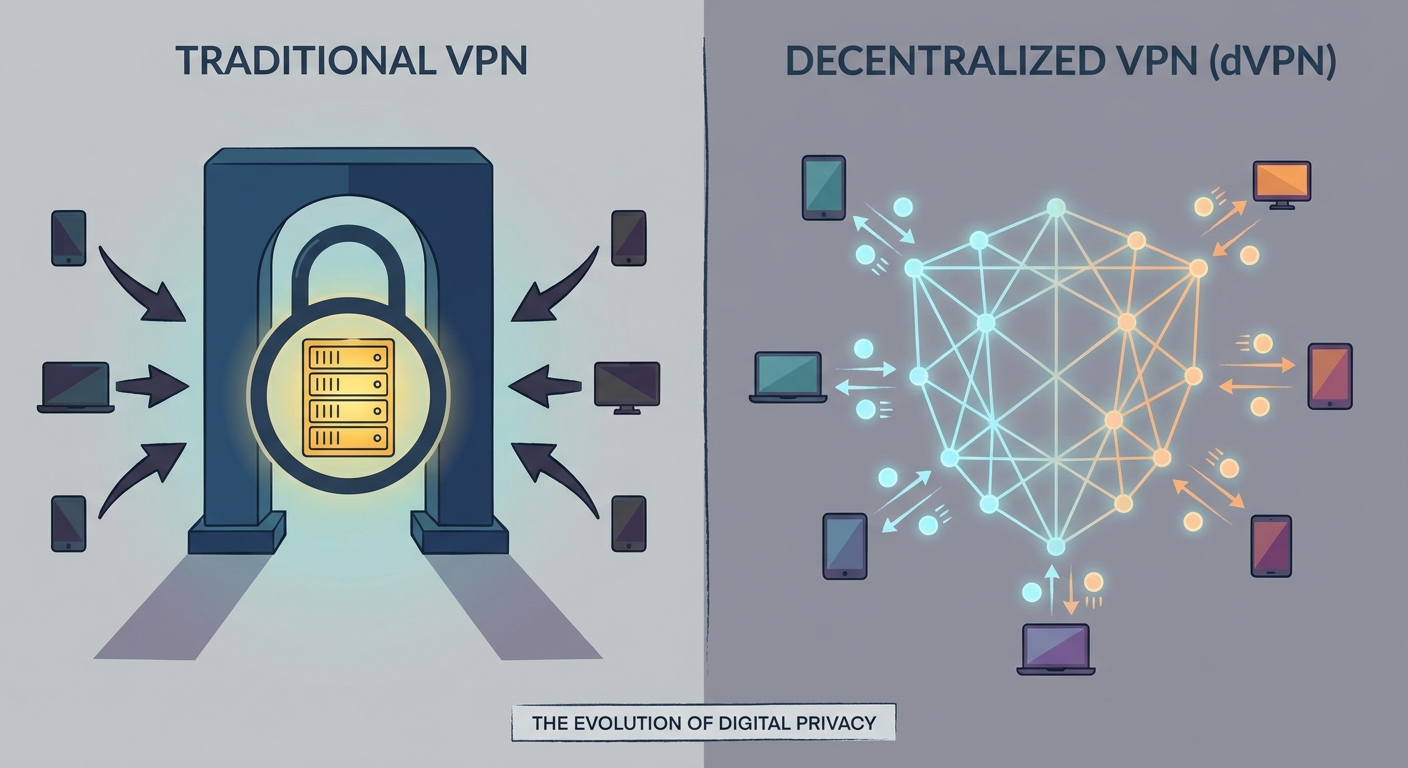
When you sign up for a traditional VPN, you’re essentially handing your digital life over to a single company. You’re taking their word for it when they claim they don’t "log" your activity. You’re trusting their legal team, their server admins, and their jurisdiction. A dVPN, however, uses a peer-to-peer (P2P) architecture. It makes universal logging technically impossible. It’s not a policy; it’s the math. If you’re ready to pull back the curtain on the tools currently "protecting" your data, Why Traditional VPNs Are Failing Users breaks down exactly why the industry is starting to crack under its own centralized weight.
The Illusion of Choice: The Centralized Point of Failure
The VPN industry is a hall of mirrors. You hop on an app store, see fifty different "independent" providers, and think you have options. You don't. The vast majority of these brands are owned by a tiny handful of holding companies.
Think about the risk here. If one parent company owns the infrastructure, the exit nodes, and every "no-logs" policy for twenty different brands, your privacy is only as strong as that company’s weakest link. Or, more realistically, as strong as their willingness to hand over your data when a lawyer comes knocking with a subpoena.
When you connect to a standard VPN, your traffic leaves your device and goes straight to a server they own or lease. Because they control the whole pipe, they have the technical power to watch, log, and store your metadata. As the CSIRO Study on VPN Security Risks pointed out years ago, even "no-log" providers get caught leaking data all the time. Their infrastructure often contradicts their marketing. You aren't just trusting software; you’re trusting a corporation, a country’s legal system, and every single employee with backend access.
Architectural Divergence: How dVPNs Redefine Trust
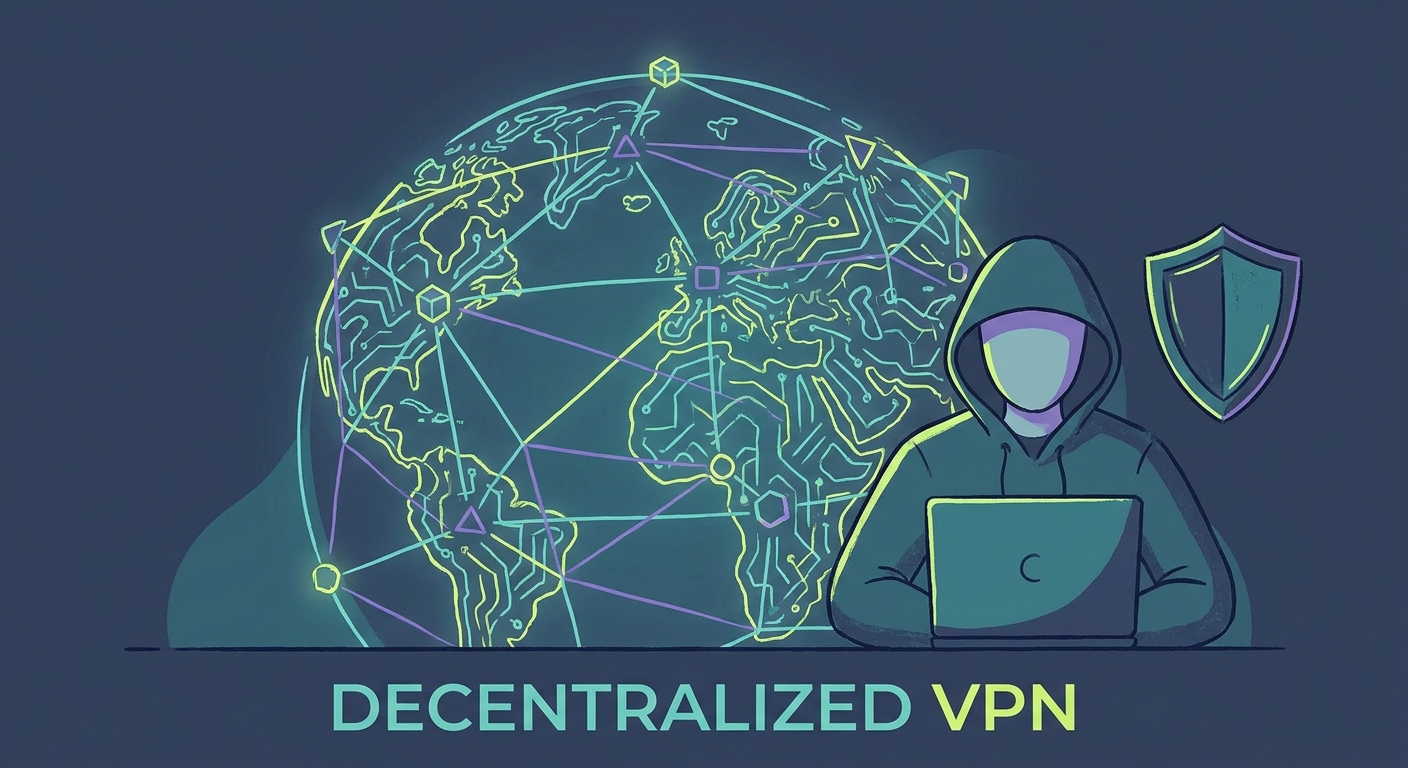
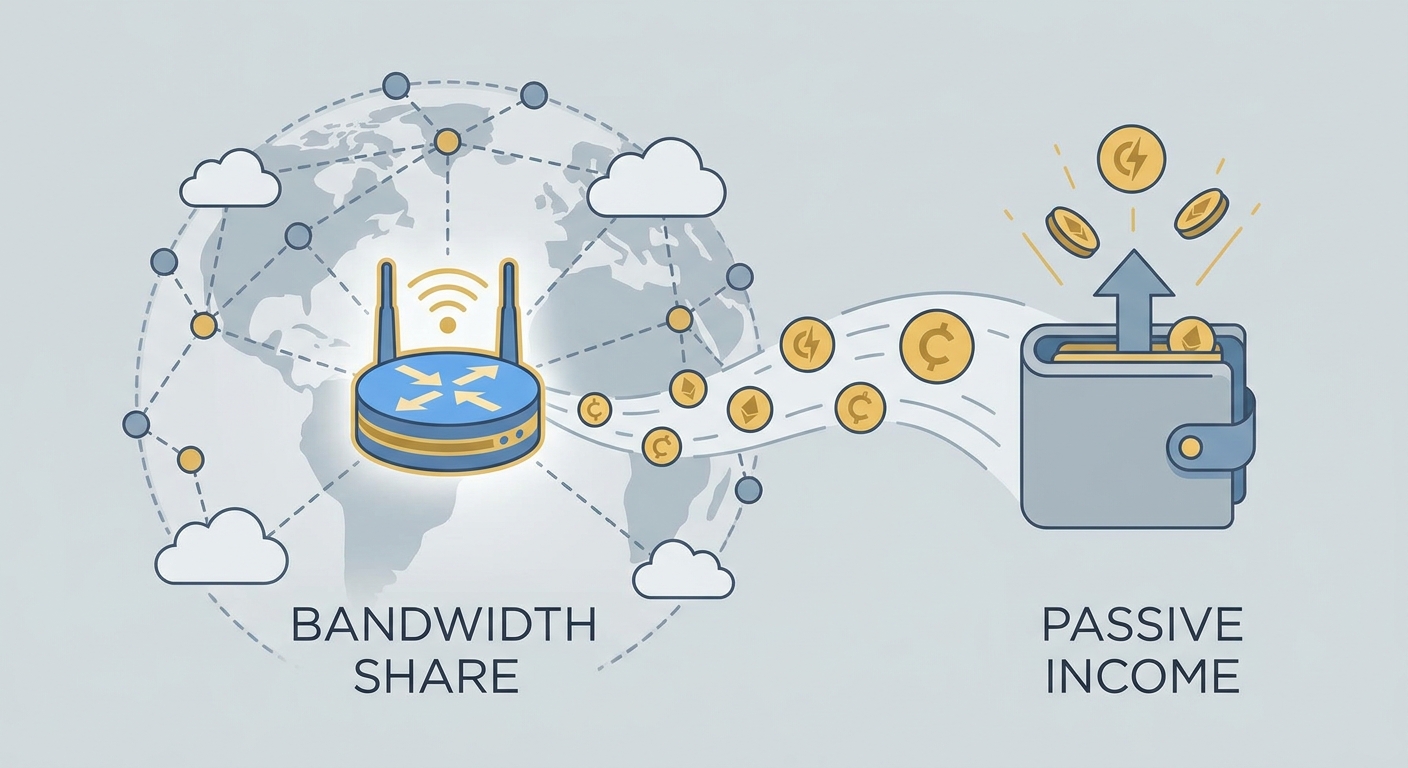
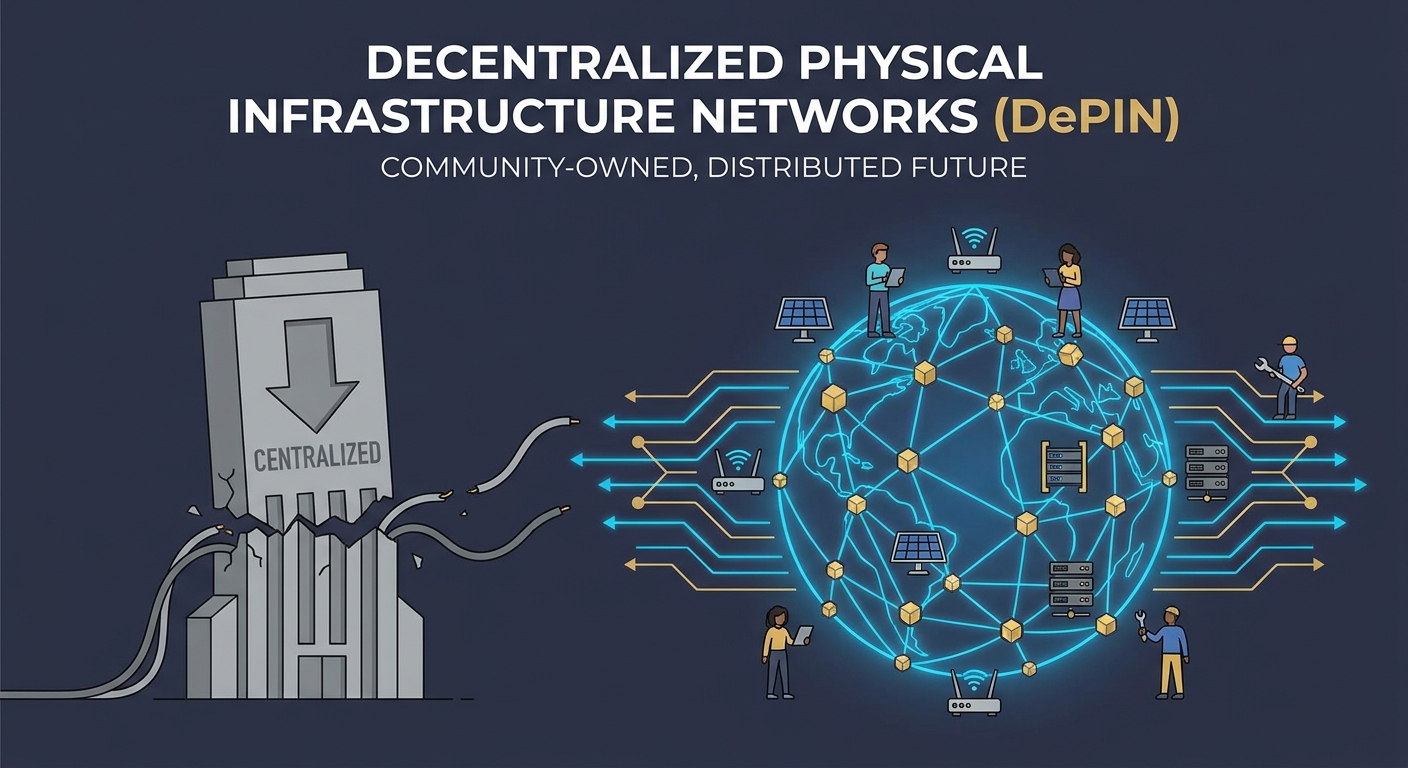
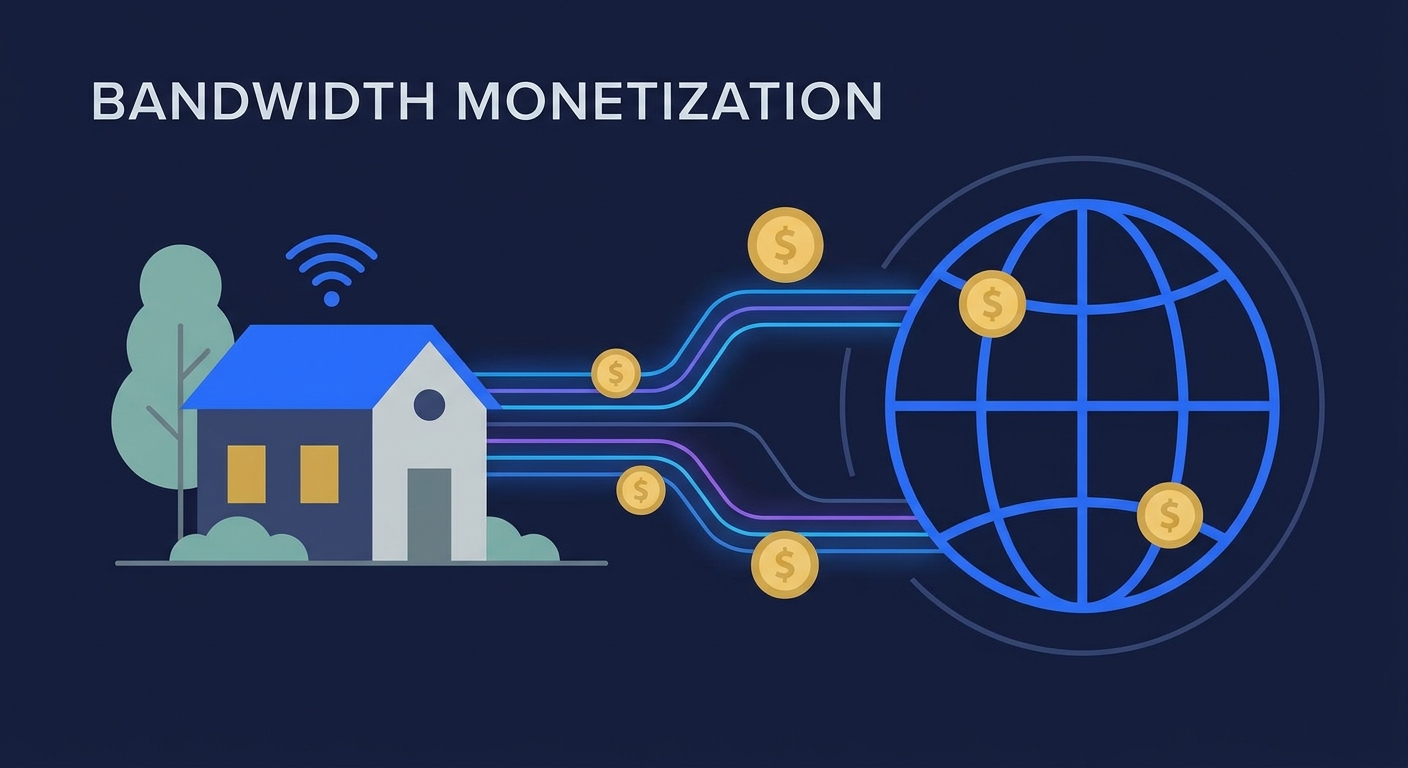
A dVPN flips the script. Instead of relying on centralized data centers, it uses a distributed network of independent nodes. You aren't "connecting to a service" in the traditional sense. You’re routing your traffic through a global marketplace of people sharing their bandwidth. This is the heart of the DePIN (Decentralized Physical Infrastructure Network) movement—using blockchain to build a network that doesn't need a middleman to stay honest.
In a dVPN, your data is chopped up and bounced through multiple, unrelated nodes. No single entity owns the entire path. Node A knows who you are, but not what you’re doing. Node C sees the traffic hitting the website, but has no clue who started the request. This architectural segregation is the secret sauce. It’s fundamentally more secure than a centralized pipe.
The "No-Logs" Myth vs. Technical Reality
"No-logs" is a promise. Policies can change. If a company has the technical ability to log your data, they will eventually be pressured to do so. It’s happened before, and it’ll happen again.
dVPNs sidestep this entire problem. By spreading your data across a permissionless network, there is no "central database" to subpoena. If an attacker or a government agency hacks one node, they see a tiny, encrypted fragment of noise. They lack the context. They lack the user. They lack the destination. The security here isn't based on a company's PR statement; it’s based on the mathematical impossibility of piecing together your traffic stream.
Beyond the IP Address: The Metadata Problem
Most people think, "I hid my IP, I'm safe." That’s a dangerous delusion. Traditional VPNs are great at masking your IP, but they are often totally blind to traffic analysis. If an adversary watches the volume of data leaving your device and the timing of those packets hitting a server, they can de-anonymize you through simple correlation.
This is where "mixnets" come in. A mixnet doesn't just send your data; it shuffles, delays, and re-encrypts your packets at every hop. By adding artificial latency and "decoy" traffic, a mixnet makes it statistically impossible for an observer to match your entry point to your exit point. If you want to dive into the weeds, understanding what a mixnet is explains how this tech neutralizes the sophisticated surveillance that normal VPNs just can't handle.
Real-World Trade-offs: The Price of Privacy
Nothing is truly free. Moving to decentralized infrastructure carries real-world costs.
Performance is the big one. Because dVPNs route through scattered, independent nodes, you’re going to see higher latency. If you’re trying to stream 4K video from halfway across the world, a multi-hop decentralized route might feel like navigating through mud.
Usability is the other hurdle. Right now, we’re moving from the "one-click" world of centralized apps to a space where you might need to handle non-custodial wallets and tokenized bandwidth. While projects like SquirrelVPN are working hard to make this invisible to the user, there’s no denying it requires a bit more technical know-how than a standard credit card subscription. Finally, stability can be more volatile; you’re relying on the uptime of independent operators, not a professional server farm.
The Threat Model Framework: Which One Should You Actually Use?
Not everyone needs to be a ghost. Your choice comes down to your personal threat model.
- Scenario A: General Convenience and Streaming. Just want to watch a show from another country or hide your history from your ISP? A traditional VPN is fine. It’s fast, it’s easy, and it’s reliable for day-to-day media consumption.
- Scenario B: Whistleblowing and Journalism. In high-stakes environments where your safety is on the line, a dVPN is the only choice. You need architectural resistance to traffic analysis and the total absence of a central entity to subpoena.
- Scenario C: Censorship-Resistance. Living under heavy internet filtering? Standard VPN protocols (like OpenVPN or WireGuard) are easy for censors to spot and block. dVPNs use P2P protocols that are much harder to kill because there isn't a static list of server IPs to blacklist.
Verifying Your Privacy
If you’re going to switch, don't just trust a "dVPN" sticker. Look for open-source code. Can you audit it? Is it actually decentralized, or is it just a centralized service with a "blockchain" logo slapped on the front? Check for multi-hop defaults—if it only connects you to one node, you aren't getting the privacy benefits. Transparency in how the network is maintained is the hallmark of a legitimate project.
The Future of Private Infrastructure
The move toward decentralized privacy isn't just a trend. It’s a necessary evolution of the internet. As the web becomes more centralized and surveillance-heavy, relying on the "good intentions" of corporations is an outdated strategy. We need to move toward a model where privacy is enforced by architecture—not by a Terms of Service agreement. Whether you go with a traditional VPN or a dVPN, make sure your choice matches your reality, not just the marketing copy on the landing page.
Frequently Asked Questions
Is a dVPN just a "crypto" version of a normal VPN?
No. While they use tokens to keep the lights on, the foundation is totally different. A traditional VPN is a service you pay, which gives them control over your data. A dVPN is a marketplace where you pay independent node operators. There is no central authority to log your data, because no central authority manages the network.
Are dVPNs slower than traditional VPNs?
Generally, yes. Because dVPNs often use multi-hop routing to keep you private, your data takes a longer path, which adds latency. Developers are getting better at optimizing these routes, but there is currently a trade-off between the speed of a direct, centralized server and the privacy of a multi-hop decentralized route.
Can a dVPN still be tracked if the node operator is malicious?
It is extremely difficult. Because of multi-hop encryption, even if a node operator is malicious, they only see a tiny, encrypted slice of your traffic. They don't know who you are, what the final destination is, or what the data actually says. Your privacy is protected by the collective lack of information across the entire path.
Why do dVPNs need tokens?
Tokens are the fuel. They provide a transparent, automated way to pay people to run high-quality nodes around the world. Without this tokenized economy, you couldn't maintain a distributed network of bandwidth providers that's actually useful for the average person.
How do I transition from a traditional VPN to a dVPN?
Start by looking at your threat model. If you’re ready to switch, look for dVPN providers that offer easy, non-custodial wallet integrations. You’ll eventually need to set up a small wallet to manage the tokens used to pay for your bandwidth—it’s a much more secure and anonymous way to pay than handing over a credit card to a corporate entity.