The Rise of the 'Airbnb for Bandwidth': Understanding the Decentralized Bandwidth Exchange Economy
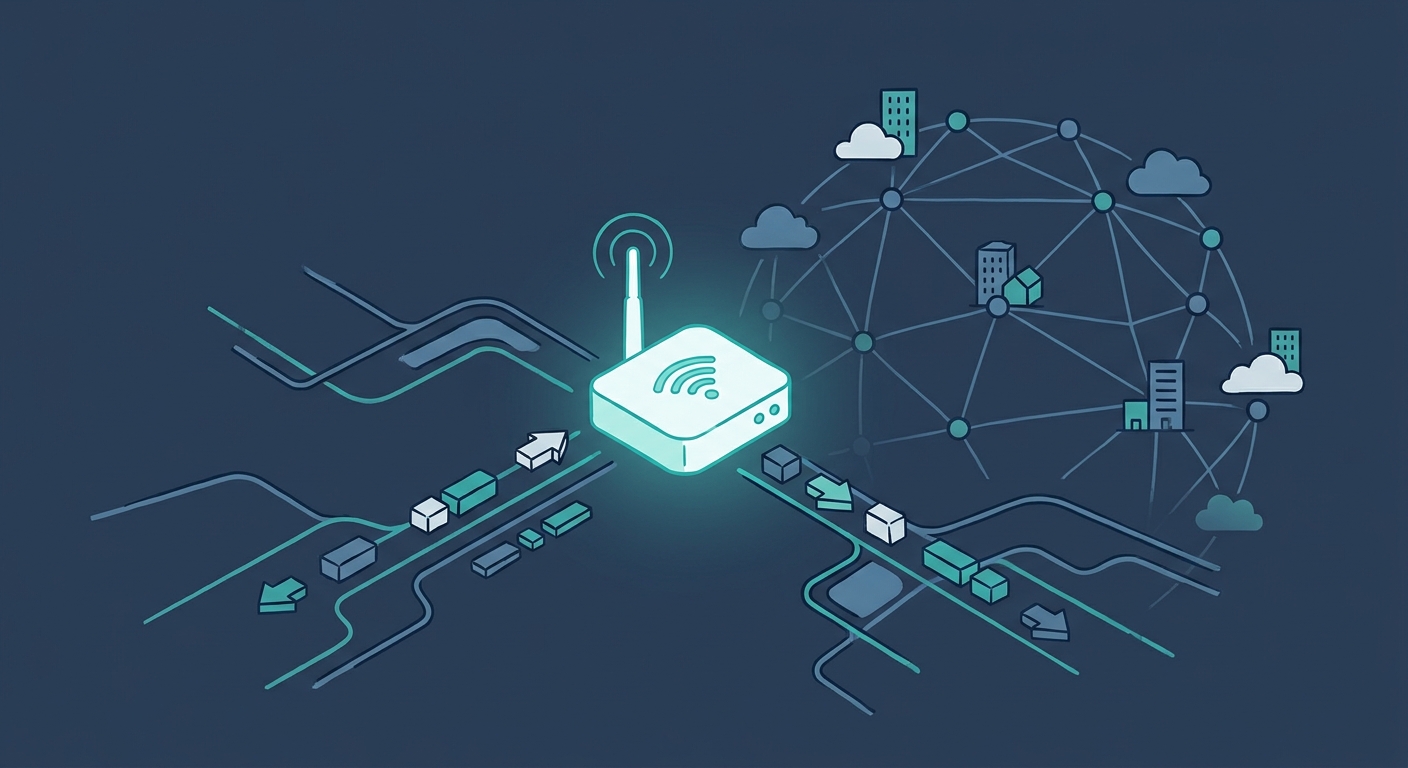
The "Airbnb for Bandwidth" isn't just a clever catchphrase. It’s the inevitable result of a world where connectivity is a basic utility, yet the infrastructure delivering it remains stuck in the dark ages of centralization.
Think about your home internet. You pay for a fat pipe of data that sits completely idle while you’re at work or asleep. That’s a wasted asset. We are entering a shift where your boring monthly internet bill stops being a "sunk cost" and starts becoming a revenue-generating machine. By tapping into Decentralized Physical Infrastructure Networks (DePIN), you’re turning your router into a node in a global marketplace. You aren't just a consumer anymore; you’re the backbone of the internet.
What is DePIN and Why is Bandwidth the New Digital Real Estate?
People love to throw around buzzwords, but the reality behind DePIN has evolved from speculative hype into something you can actually touch and use. DePIN is just a fancy way of saying we’re using blockchain incentives to build real-world hardware networks. While early projects were obsessed with mapping or decentralized storage, bandwidth has emerged as the heavy hitter.
Think about your current ISP plan. It’s a static utility. You pay for a pipe, and whether you use 10% or 100% of it, the bill stays the same. The "Airbnb for Bandwidth" model flips that. It lets you slice up that unused capacity and rent it out to global users, AI agents, or researchers. Your router is no longer just a plastic box gathering dust under your desk. It’s a node. It’s infrastructure. And it’s paying you back.
How Does the Decentralized Bandwidth Marketplace Actually Work?
Traditional ISPs force all your traffic through a central bottleneck. It’s a hub-and-spoke model that gives them total control—and total visibility—over your data. Decentralized exchanges kill the middleman. They use peer-to-peer (P2P) routing. If a user in another country needs to bypass a geo-block, they don't ask a corporate server for help. They ping a node. Maybe that node is yours.
The tech stack is surprisingly lean. It sits on three pillars: blockchain for payments, P2P protocols for moving the data, and WireGuard for rock-solid encryption. This decentralized autonomous routing means no single suit in a boardroom controls whether your data gets through.
The Economics of Connectivity: How Tokenomics Power the Network
How do you pay someone for a fraction of a cent’s worth of data? If you tried using a bank, the transaction fees would bankrupt you before you sent a single kilobyte. This is where DePIN tokenomics save the day.
By using "State Channels," these networks aggregate thousands of tiny transactions off-chain and only hit the main blockchain when it’s time to settle. It’s fast, it’s cheap, and it’s trustless. Through smart contract automation, the network pays you the millisecond your data transfer is verified. No invoices, no waiting 30 days for a check, and definitely no middleman skimming off the top.
Privacy vs. Passive Income: Can You Have Both?
Let’s address the elephant in the room: "Exit Node" fear. People worry that if they share their connection, they’ll be held responsible for someone else’s traffic. It's a valid concern, but the industry has moved past the "Wild West" phase.
Modern dVPN protocols use heavy-duty traffic isolation. When you run a node, you’re providing a secure tunneling protocol that keeps your personal business—your banking, your Netflix, your emails—completely siloed from the routed traffic. On top of that, reputation scoring acts as a bouncer. Nodes that play by the rules get more work; nodes that act suspiciously get kicked out. Automated filtering stops bad packets before they even touch your network.
Why Is the AI Era Accelerating Decentralized Bandwidth?
Here’s the thing: the internet isn't just for humans anymore. We’re in an era where autonomous AI agents are the ones doing the heavy lifting. These agents need massive, distributed bandwidth to scrape the web, train models, and talk to APIs. As noted in recent DePIN for AI analysis, bandwidth is the lifeblood of these AI clusters.
Big Cloud providers like AWS are becoming rigid, expensive, and geographically locked. AI agents don't want to play by those rules. They want a "Global Edge" that’s cheap and fast. If an AI needs to verify data from three continents at once, it doesn't wait for a centralized server. It pulls from a decentralized pool of nodes. It’s a high-performance mesh, and it’s built for the demands of tomorrow.
Comparison Matrix: Traditional VPNs vs. Decentralized Bandwidth Exchanges
| Feature | Traditional VPN | Decentralized Bandwidth Exchange |
|---|---|---|
| Trust Model | Centralized (Trust Provider) | Trustless (Cryptographically Verified) |
| Infrastructure | Owned Data Centers | Distributed Residential Nodes |
| Cost Structure | Fixed Subscription | Pay-as-you-go (Micro-payments) |
| Censorship | High (IP Blocking) | Low (Distributed Routing) |
| Privacy | Log-based (Potential) | Zero-Knowledge / Reputation-based |
| Resilience | Single Point of Failure | Fault-Tolerant Mesh |
Case Study: Connectivity as a Human Right
Consider a developer living under a regime that throttles access to international coding repositories. For them, the internet isn't an entertainment luxury—it's their paycheck. By hopping onto a decentralized bandwidth exchange, they can route their traffic through a node in an open-access region, effectively punching a hole through the censorship wall.
At the same time, that developer can run a light node on their secondary connection. They earn tokens that pay for their fiber bill. It’s a beautiful circle: the network gains a node in a hard-to-reach area, the developer gets uncensored access, and the economics of the internet start working for the user, not against them.
What Are the Regulatory Hurdles for 2026?
As these networks go mainstream, regulators are starting to ask questions about "Exit Node" liability. In 2026, the focus has shifted toward baking "Enterprise SLAs" (Service Level Agreements) directly into the protocol. By using cryptographically signed traffic and strict reputation filtering, these protocols can now give node operators legal peace of mind. They can prove they aren't responsible for the content of the packets they route. This move from "experimental" to "regulated infrastructure" is the final hurdle before mass institutional adoption.
How Can You Join the Bandwidth Economy?
The days of needing a PhD in Linux just to set up a node are dead. The industry has pivoted to "one-click" setups. Desktop apps now handle the node discovery, the encryption, and the wallet integration for you. You flick a switch, and suddenly, you’re no longer just a user—you’re a fundamental piece of the global internet backbone.
Frequently Asked Questions
Is sharing my bandwidth through a dVPN safe?
Yes, provided the protocol uses robust encryption and traffic isolation. Your local traffic is segregated from the traffic routed through your node, and reputation scoring systems ensure that node operators are protected from the content of the data they route.
How much can I actually earn by sharing my internet?
Earnings depend on variables such as your geographic location, the quality of your connection (latency/speed), and the current network demand for your local IP address. It is best viewed as a way to offset your utility costs rather than a "get rich quick" scheme.
What is the difference between a traditional VPN and a dVPN?
A traditional VPN relies on a centralized provider that you must trust not to log your data. A dVPN is a decentralized marketplace where your traffic is routed through multiple nodes, and no single party has the ability to view your data or log your activity.
Do I need technical skills to start a bandwidth node?
Modern dVPN clients have moved toward intuitive, user-friendly interfaces. Most users can set up a node in minutes through a desktop or mobile app without needing to interact with a command-line interface.
How do these networks handle malicious traffic?
Networks use reputation-based scoring and automated filtering mechanisms to monitor traffic patterns. If a node or user attempts to facilitate illegal activity, the network's protocol identifies the anomaly and restricts the offending actor, protecting the integrity of the node operators.