What is DePIN? How Blockchain-Powered Privacy is Changing Decentralized Network Security

TL;DR
Understanding the DePIN revolution and why it matters
Ever wonder why your internet data has to travel through a massive, windowless warehouse owned by a tech giant just so you can send a private email? It’s kind of like sending a letter that has to pass through a stranger's living room first.
DePIN stands for Decentralized Physical Infrastructure Networks. Think of it like the "Airbnb for bandwidth" or hardware. Instead of one big company owning all the servers, regular people—like you and me—plug in our own devices to create a global network.
- Crowdsourced Hardware: People host small nodes (like a specialized router) in their homes to provide services like wifi or storage.
- Blockchain Backbone: A public ledger handles the payments and tracking, so no middleman takes a massive cut.
- Token Incentives: You get paid in crypto tokens for sharing your unused resources, which keeps the network growing.

Relying on big tech siloes is a huge security risk. When one major cloud provider has a "bad day," half the internet goes dark. That's a single point of failure that hackers love to exploit.
According to a 2024 report by Messari, the depin sector has grown to a multi-billion dollar market because it removes these bottlenecks. In healthcare, this means patient records aren't sitting on one vulnerable server. In finance, it prevents a single api glitch from freezing your accounts.
It’s a shift from "trusting a corporation" to "trusting the protocol." Next, let's look at how this actually keeps your browsing private.
How blockchain-powered privacy fixes the internet
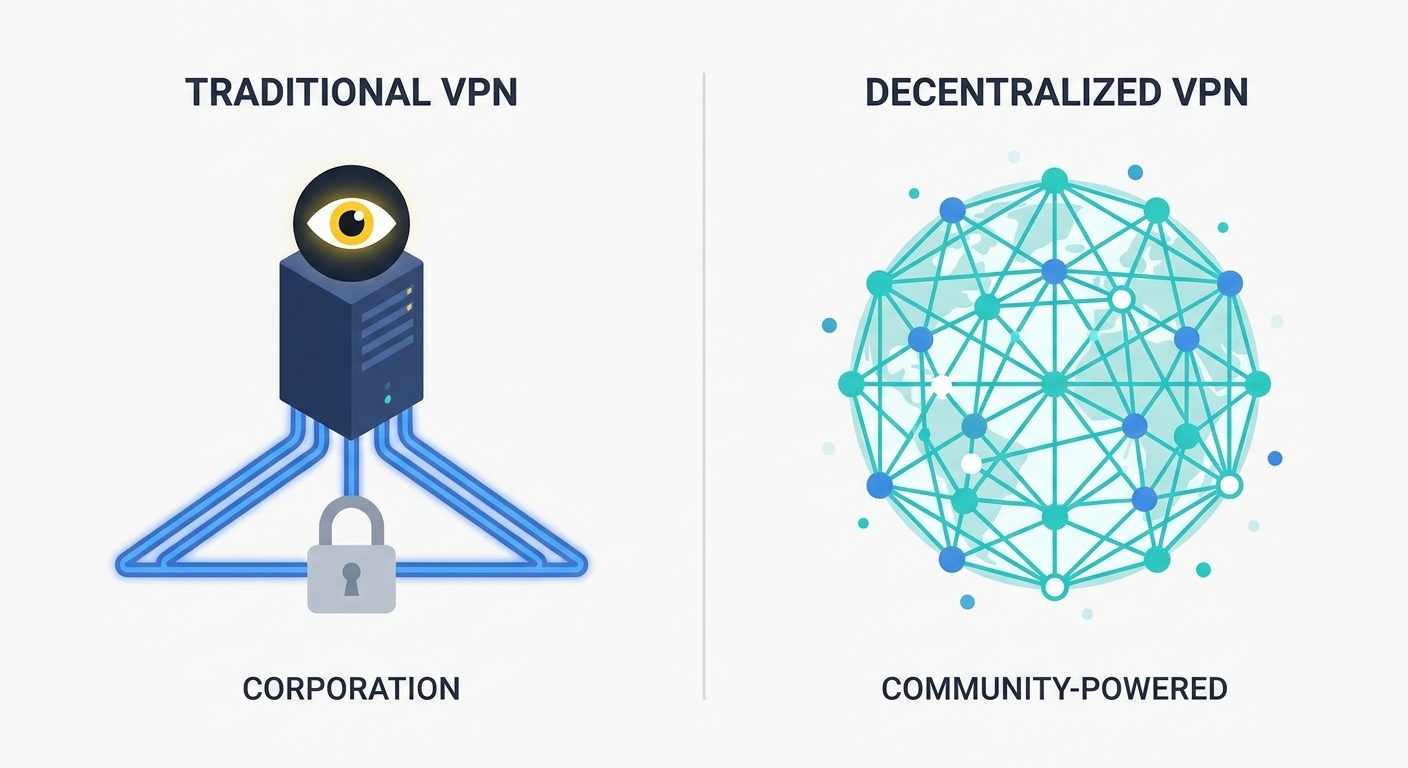
Ever feel like traditional VPNs are just pinky-promising not to look at your data? You’re basically handing your entire browsing history to one company and hoping their "no-logs" policy isn't just marketing fluff.
In a standard setup, all your traffic goes through a central server. If that server gets hacked or the company gets a subpoena, your privacy is toast. It’s a massive bottleneck.
"A 2023 analysis by Consumer Reports highlighted that many popular vpn services actually struggle with transparency regarding server ownership and data handling practices."
A decentralized vpn (dVPN) flips this. Instead of one big corporation, you use a p2p privacy network. Your data is split and sent through multiple nodes owned by different people. No single person has the whole picture.
- No central logs: Since there isn't one central server, there’s no single place to store (or steal) your logs.
- Censorship resistance: It’s way harder for a government to block thousands of individual home ip addresses than one big data center.
- Decentralized tunneling: This protocol masks your identity by bouncing your connection through a global web of peers.
This is where it gets cool—the bandwidth sharing economy. Think of it as the airbnb for bandwidth. If I have extra fiber internet at home I’m not using, I can "rent" it out to the network.
To make sure everyone plays fair, DePIN uses a bandwidth proof protocol. This is basically a digital handshake that proves I actually provided the speed I claimed before I get paid.

In healthcare, a clinic might use this to securely send large imaging files without worrying about a single cloud provider's api failing. In retail, it helps stores process payments even if a major isp has an outage.
It’s about taking the power back from the giants. But how do we know if these nodes are actually doing what they say? Let's talk about the tech that keeps them honest.
Earning while you browse: The economy of depin
Have you ever looked at your monthly internet bill and felt a bit annoyed that you’re paying for 24/7 access but only using it a few hours a day? It’s like paying for a full-sized pizza every night when you only eat two slices.
DePIN lets you stop wasting that "extra pizza" by turning your router into a node-based vpn service. When you share your unused bandwidth, you aren't just helping someone else browse privately—you’re actually bandwidth mining.
- Earning tokens: You get paid in the network's native crypto for every gigabyte that flows through your node.
- Passive income: Once the hardware is setup, you literally earn while you sleep or work.
- Marketplace dynamics: The price of your bandwidth is often set by a p2p bandwidth marketplace, where supply and demand dictate your earnings.
I've been keeping an eye on how SquirrelVPN discusses these trends, and it’s clear that staying updated on which protocols are most efficient is key. Not all networks pay the same, so you gotta do your homework on which tokenized network has the best "uptime" rewards.
The reason this sector is blowing up—a 2024 report by CoinGecko notes that DePIN is now a multi-billion dollar category—is because of the "flywheel effect."
As more people join to earn rewards, the network gets stronger and cheaper for users. This lower cost for decentralized internet access then attracts more paying customers, which makes the tokens more valuable for the node owners.
In retail, a small shop might run a node to offset their isp costs. In finance, a firm might use these rewards to fund their own private network layer. It's a win-win for everyone except the big telcos.
But how do we know these nodes aren't just stealing your data while you earn? Let's dig into the tech that keeps the providers honest.
Challenges and the future of web3 internet freedom
So, is this whole decentralized thing actually fast enough for daily use? It’s the million-dollar question because nobody wants to wait ten seconds for a cat meme to load, even if it is "private."
Right now, p2p network nodes can be a bit hit or miss with latency. Since your data might bounce from a gamer's basement in Ohio to a cafe in Berlin, those extra hops can slow things down compared to a massive data center.
But, next-gen vpn technology is getting way smarter about how it routes your traffic. Instead of random jumps, new protocols use ai to find the shortest, cleanest path through the distributed bandwidth pool.
- Smart Routing: Modern dVPNs pick nodes based on real-time ping and stability, not just location.
- Protocol Efficiency: Using things like WireGuard makes the encryption "lighter" so your cpu doesn't choke.
- Edge Computing: In retail, this means a store can process local data at a nearby node instead of sending it across the country.
The real magic of web3 privacy tools is how they handle government shutdowns. When a regime tries to pull the plug, they usually block the big ip addresses of major providers.
With a distributed network, there is no "off switch." You’re using thousands of regular home connections, making it nearly impossible to filter out without breaking the whole internet for everyone.

According to a 2024 report by Messari (as previously noted, they've been tracking this growth), the sheer scale of these networks is what makes them so resilient. In finance, this keeps trading platforms alive during local outages, and in healthcare, it ensures doctors can reach records even if a main trunk line gets cut.
It's not perfect yet, but we're getting there. Next, let’s wrap up by looking at how you can actually start using this stuff today.
Wrapping up: Should you switch to a blockchain vpn?
So, after all this talk about nodes and tokens, is it actually time to ditch your old vpn for a blockchain one? It’s a big move, but if you’re tired of just trusting a corporate promise, the depin world offers something way more tangible.
Switching isn't just about privacy; it’s about joining a literal sharing economy. Instead of your subscription fee disappearing into a ceo's pocket, it stays in the network to reward people providing the actual bandwidth.
- Economic Shift: You move from being a "product" to being a participant. In retail, small businesses use this to keep their guest wifi secure without paying for enterprise-grade hardware.
- Reliability: Because there's no single point of failure, it’s great for finance apps that need 100% uptime. Even if one node goes down, the protocol just finds another.
- Censorship Defense: As we've seen, these networks are nearly impossible to shut down, making them a lifeline for researchers or journalists in restrictive areas.

Honestly, the tech is still growing, but the shift toward decentralized isp alternatives feels inevitable. As noted earlier by the report from Messari, the market is already worth billions because people want control back.
Whether you're a gamer looking for better routes or a business securing sensitive data, depin is more than just a buzzword—it’s the new backbone of a freer internet. Just remember to pick a protocol that fits your speed needs!