Censorship-Resistant VPNs: How P2P Bandwidth Sharing Defeats Digital Restrictions
TL;DR
- ✓ Traditional VPNs fail because centralized servers create vulnerable honey pots for data surveillance.
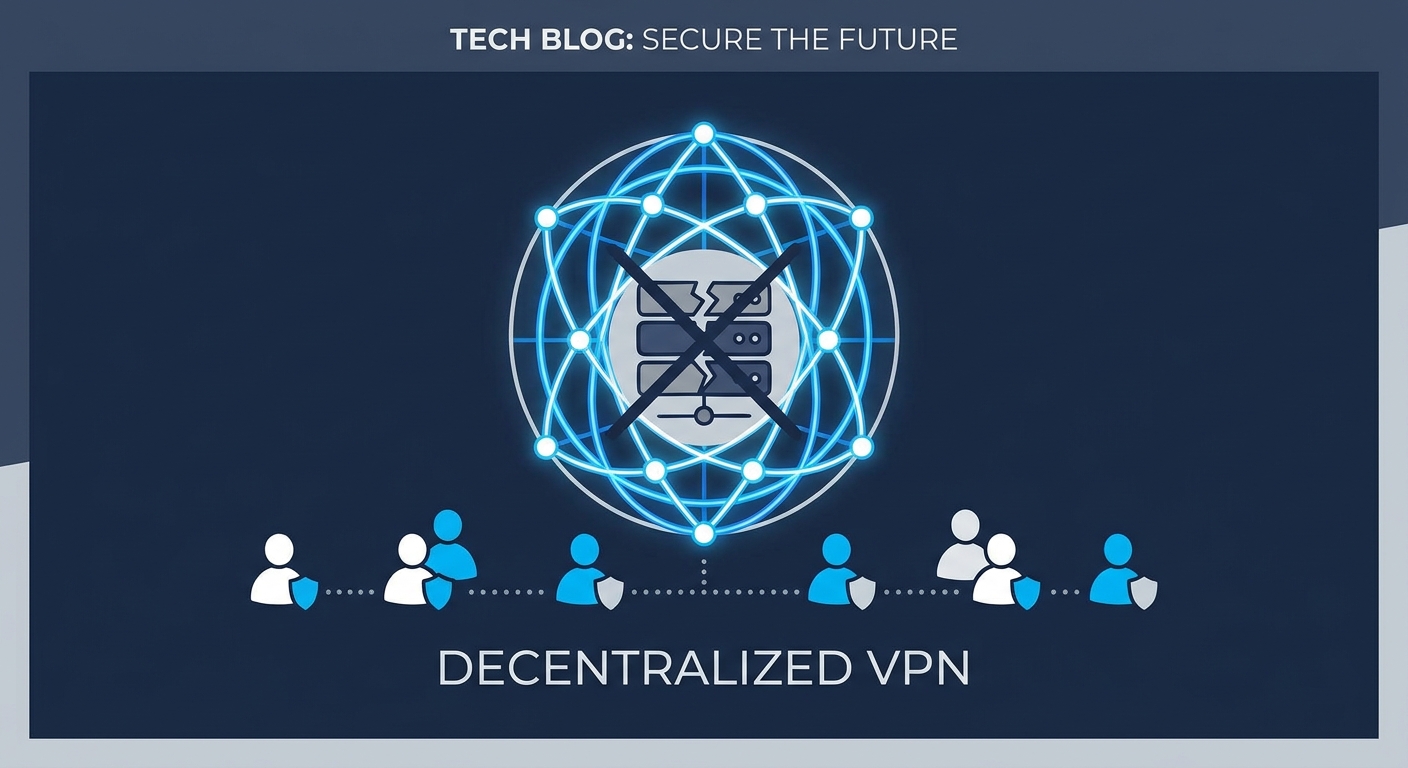
- ✓ Decentralized VPNs use P2P bandwidth sharing to eliminate single points of failure.
- ✓ Multi-hop routing ensures your IP address and destination remain private from any single node.
- ✓ dVPNs replace corporate trust with cryptographic security and verifiable, distributed network infrastructure.
The era of trusting a centralized VPN provider to "keep your secrets" is dead. We’ve been fed a lie for years: the "no-log" policy. We handed our digital lives over to corporate data centers, crossing our fingers and hoping they’d actually delete our footprints on request. But let’s be real—when a government agency comes knocking with a subpoena or a server gets compromised, that promise evaporates.
Decentralized VPNs (dVPNs) have finally shifted the paradigm. We’re moving from blind trust to verifiable, cryptographic security. By leveraging peer-to-peer (P2P) bandwidth sharing, these networks strip away the single point of failure. The result? An infrastructure that is as resilient and difficult to dismantle as the internet itself.
Why the "No-Log" Promise of Traditional VPNs is Failing
The fundamental flaw of a traditional VPN is its architecture. When you connect to a commercial VPN, you’re funneling your entire digital presence through a server owned and operated by a single company. This is a "honey pot" for surveillance. If that company is pressured by legal authorities, what choice do they have? They play ball or they go out of business. Even if their intentions are pure as the driven snow, the infrastructure is inherently fragile.
When you look at the dVPN vs. Traditional VPN Security, the distinction is stark: one relies on a corporate pinky-promise, the other on cold, hard math. Centralized servers are static targets. They have known IP ranges that sophisticated firewalls can identify, throttle, and block with surgical precision. When you use a corporate VPN, you aren’t just trusting the company; you’re trusting every low-level admin, every data center employee, and every legal jurisdiction that company operates in. In this day and age, that’s way too much trust to place in a single entity.
How Do Decentralized VPNs (dVPNs) Actually Work?
A dVPN operates on a P2P architecture. Instead of a corporation, individual users provide the infrastructure. You aren't connecting to a server in a data center; your traffic is routed through a distributed network of nodes—often residential connections—scattered across the globe. The central middleman? Gone.
The secret sauce is multi-hop routing. Your traffic doesn't just go from A to B. It’s encrypted and bounced through multiple nodes, ensuring that no single node knows both your identity—your IP address—and your destination.
By fragmenting your traffic across a decentralized mesh, you make it mathematically impossible for a single entity to correlate your activity. Even if the node you’re exiting from is malicious, they only see the traffic coming from the previous hop, not who you actually are.
Can P2P Routing Really Outsmart Deep Packet Inspection (DPI)?
Censorship regimes love Deep Packet Inspection (DPI). They use it to sniff out the "fingerprint" of VPN traffic. Traditional protocols are notorious for having recognizable patterns. To fight back, dVPNs have evolved.
They now use cutting-edge transport layers. Protocols like VLESS, paired with "Wandering Flow" routing, allow your traffic to masquerade as standard HTTPS browsing. By using QUIC and MASQUE, dVPNs blend in with the background noise of the web, making it incredibly difficult for automated censors to tell a secure tunnel apart from a YouTube video or a Google search. Furthermore, projects like the Nym Network Technology are pushing these boundaries by implementing advanced traffic mixing. Instead of just routing packets, they introduce "cover traffic" and timing delays, neutralizing an adversary’s ability to perform traffic analysis even if they’re watching both ends of the network.
What is the "Airbnb for Bandwidth" Economy?
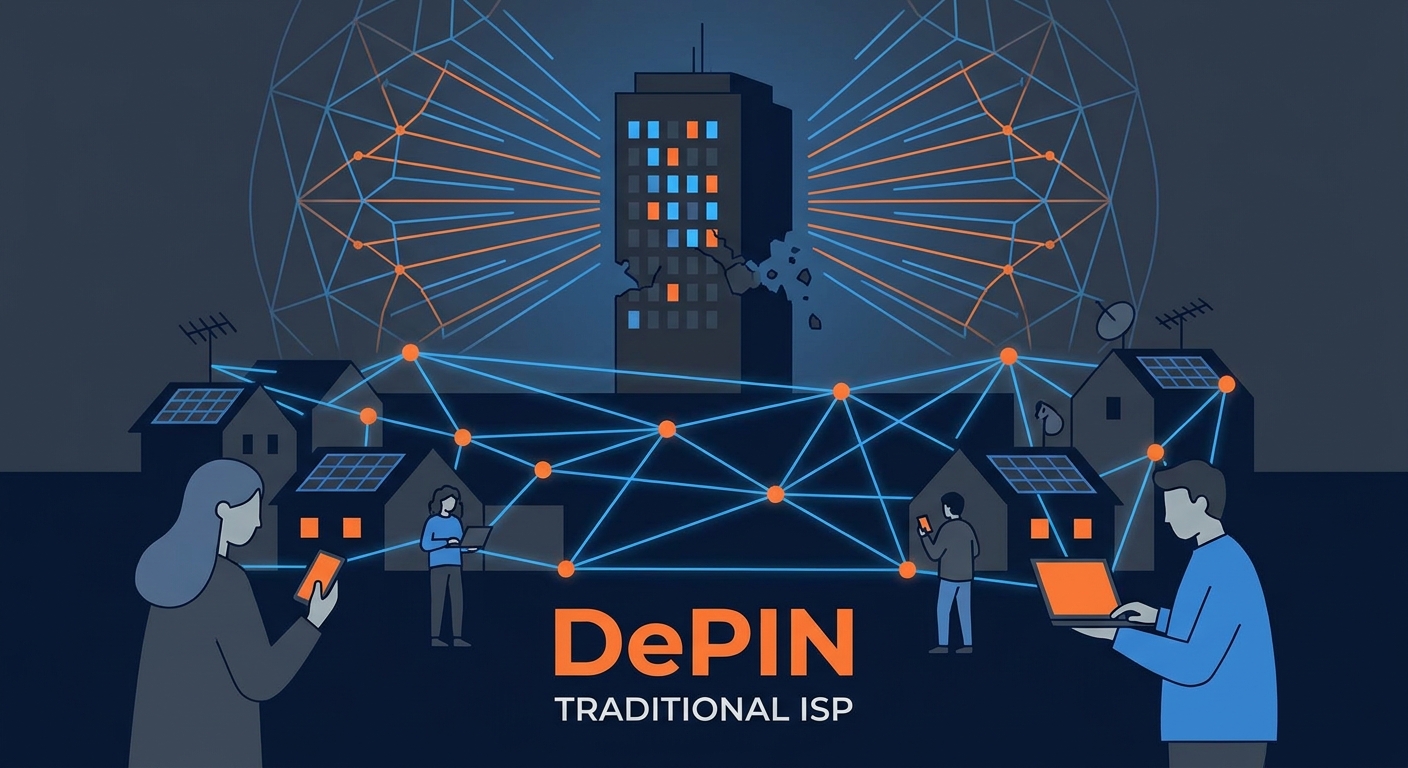
The true genius here is the economic incentive. It’s categorized as a DePIN (Decentralized Physical Infrastructure Network). According to recent DePIN Sector Analysis (Messari), the shift toward tokenized infrastructure is one of the most significant trends in Web3.
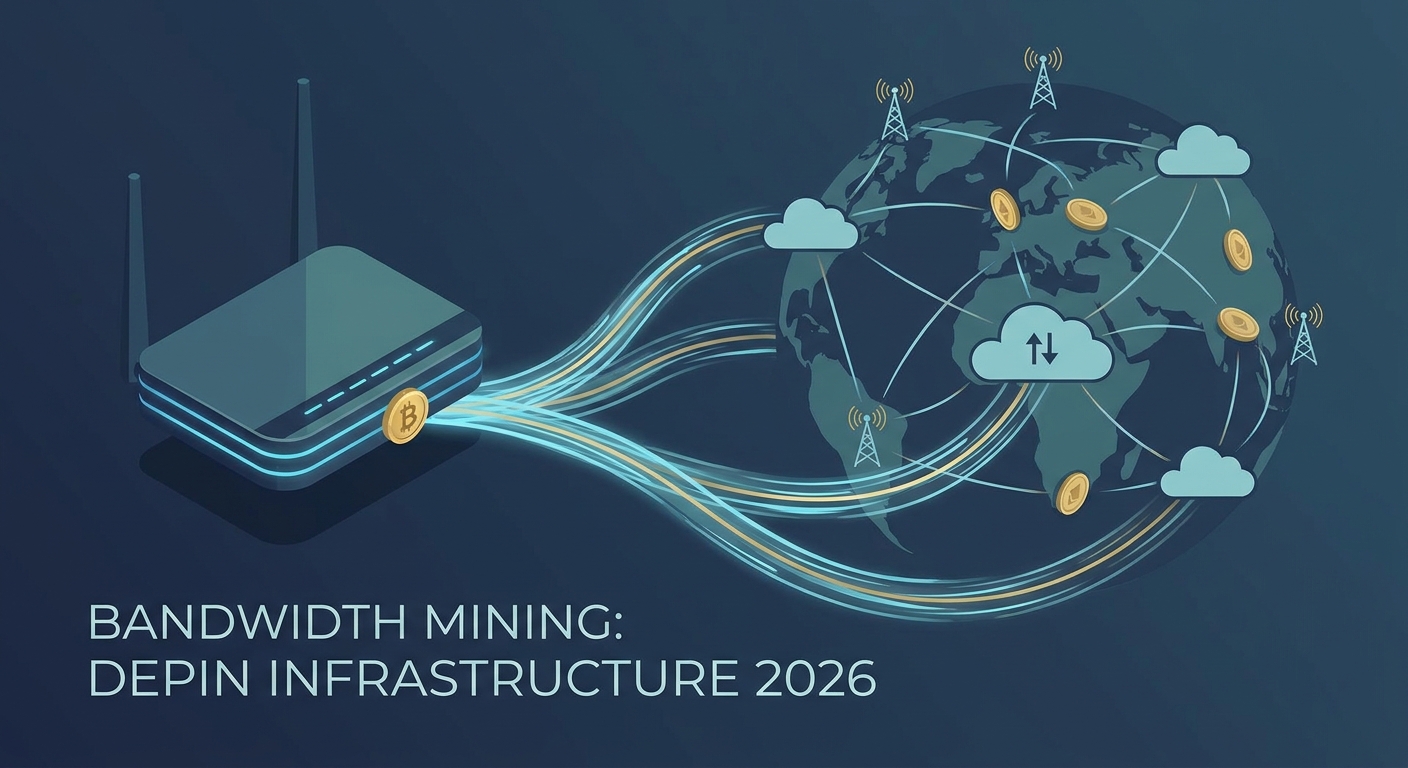
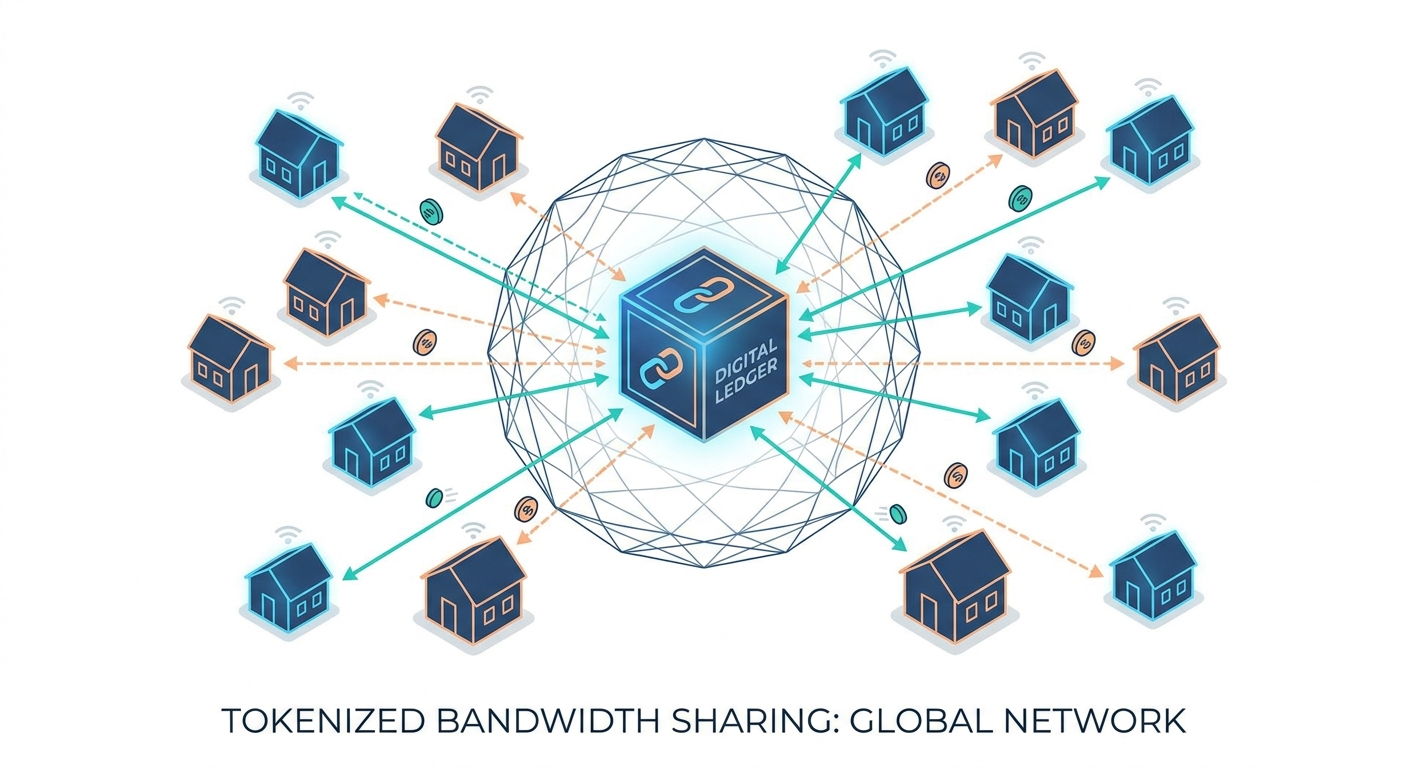
Here’s the deal: users with idle internet bandwidth become node operators. They get paid in native tokens for every gigabyte they relay. It’s a self-sustaining loop. The more people who need privacy, the more nodes pop up to satisfy that demand, and the more lucrative it becomes for operators to share their resources. For many, this is the ultimate way to Monetize Idle Internet Bandwidth, turning a monthly ISP bill into a revenue-generating asset while simultaneously hardening the global network against censorship.
Is Hardware-Based Privacy the Missing Link for Non-Techies?
Software is great, but convenience is king. For the average user who just wants to flick a switch and forget it, the rise of hardware gateways like Deeper Connect is a game-changer. These devices act as a bridge between the complex world of blockchain and the simplicity of a home router.
You plug the device into your modem, and it automatically connects to the dVPN network. It provides a "plug-and-play" firewall that protects every device on your home network—from your smart TV to your phone—without needing to install individual apps on every single piece of hardware. By hiding the complexity of keys, wallets, and node selection, these gateways are bringing decentralization to households that would never dream of configuring a manual node.
How Do You Verify That Your Traffic Is Truly Private?
The shift from "trust me" to "verify me" is finalized through Zero-Knowledge Proofs (ZKPs) and blockchain-based tallying. In a traditional VPN, you have to take the provider’s word that they aren't logging your data. In an open-source network like the Sentinel dVPN ecosystem, the code is public and the traffic accounting is handled by smart contracts.
Because the bandwidth is bought and sold on-chain, the network can verify that a session actually occurred without the network or the node operator ever knowing the content of the traffic or the identity of the user. You can audit the network's health, monitor the distribution of nodes, and see for yourself that no single entity has the power to censor your connection or leak your logs.
How to Get Started with Censorship-Resistant Tools
If you’re ready to reclaim your digital sovereignty, the barrier to entry has never been lower. Whether you are hunting for the Best Decentralized VPNs of 2026 or want to host your own node, the process is streamlined for the modern user.
Start by selecting a network that prioritizes open-source transparency. Download their client, explore the node marketplace, and connect to a node in a region that respects free information. If you have extra bandwidth, staking a small amount to become a relay node is a powerful way to contribute to the global anti-censorship effort while earning passive income.
Frequently Asked Questions
Are dVPNs legal and safe to use?
Yes, dVPNs are privacy tools, and using them is legal in most jurisdictions. They are simply a way to route traffic securely. However, always exercise common sense and comply with your local laws regarding internet usage.
Is it safe to let strangers use my internet bandwidth?
Generally, yes. Modern dVPN protocols use robust encryption and isolation. When someone routes traffic through your node, they are using your bandwidth as an exit point—they cannot access your local devices, your files, or your personal data. It works much like a public Tor exit node.
Will a dVPN significantly slow down my internet connection?
There is always a trade-off between privacy and speed. Because your traffic is taking a non-linear path through multiple nodes, latency may increase. However, as the network grows and more high-bandwidth nodes join, performance is becoming increasingly comparable to traditional centralized VPNs.
How do I start earning tokens with my idle bandwidth?
To earn, you must register your node on the dVPN network of your choice. This usually involves "staking" a small amount of the network’s native token as collateral to ensure good behavior, then configuring your client to accept traffic. Once set up, the network handles the accounting and rewards automatically.
What is the difference between a dVPN and Tor?
While both provide anonymity, they serve different purposes. Tor is designed for extreme anonymity and is often slower due to its fixed, rigid routing. dVPNs are designed for privacy and performance, allowing users to select specific exit locations (useful for bypassing geo-blocks) and often providing faster, more flexible connections for daily tasks like streaming or remote work.