Is Bandwidth Sharing Safe? A Deep Dive into P2P Privacy Networks and Tokenized Connectivity
TL;DR
- ✓ Bandwidth sharing is safe when built on decentralized, open-source cryptographic architecture.
- ✓ Centralized VPNs create single points of failure that threaten user privacy and security.
- ✓ Decentralized networks use residential nodes to bypass censorship and avoid detection markers.
- ✓ P2P bandwidth sharing functions like an Airbnb for your internet connection.
- ✓ DePIN and tokenized connectivity represent the evolution toward a more private internet.
Bandwidth sharing is safe—if you build it right. But moving from the old-school "no-logs" VPN model to peer-to-peer (P2P) mesh networks isn’t just a technical upgrade; it’s a total shift in how we think about the internet.
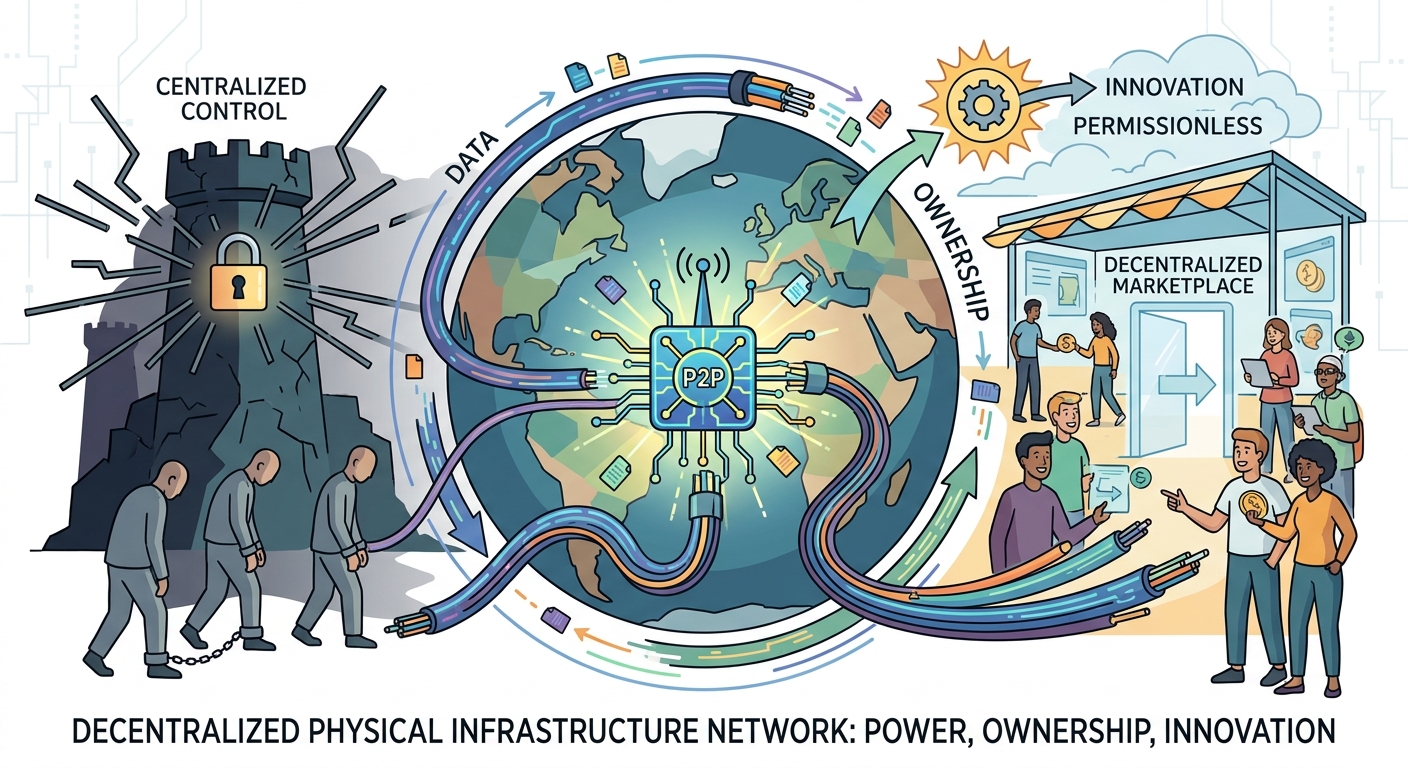
Is it actually safe to rent out your home connection to strangers? It’s not a simple yes-or-no question. It’s a question of architecture. By 2026, the rise of DePIN—or Decentralized Physical Infrastructure Networks—has turned the web into a collaborative utility. We are finally moving away from the "black box" corporate servers where "privacy" was just a shiny marketing slogan.
The Collapse of the "No-Logs" Myth
For years, the VPN industry sold us a fairy tale. They promised that a centralized, for-profit corporation would simply forget your browsing history. We know better now. A centralized server is a single point of failure—period. If a government or a hacker decides they want your data, they don't need to break the encryption; they just need to lean on the CEO.
We’re in the middle of a massive pivot toward decentralized, P2P mesh networks. As explored in this analysis of the future of decentralized networks, the move toward dVPNs replaces corporate promises with cold, hard math. You aren't trusting a boardroom to keep your secrets anymore. You’re trusting open-source code and cryptography. This isn't just a fad; it’s the internet growing up.
Why Traditional VPNs Are Becoming Obsolete
The biggest weakness of a traditional VPN is that it’s too easy to spot. If you’re a streaming service or a state censor, you know exactly what a data center exit node looks like. It’s a giant, glowing target. Once an IP range gets flagged as "VPN traffic," it gets blocked. Simple as that.
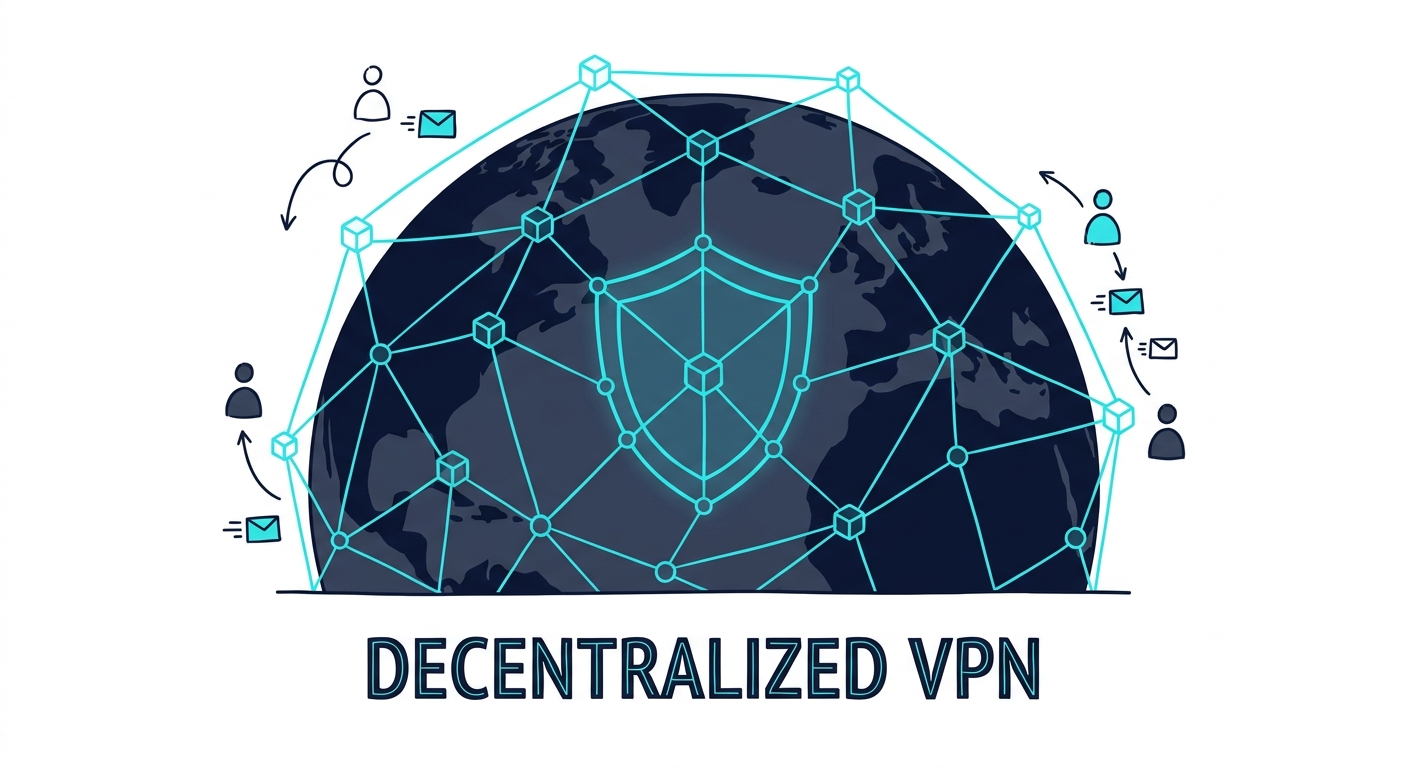
Decentralized networks flip the script. They use residential nodes. When you connect through a dVPN, you aren't coming from some server farm in a basement; you’re coming from a regular house in a regular neighborhood. Because these nodes are scattered all over the globe, they are a nightmare for censors to block. This "residential IP advantage" is why the DePIN movement is catching fire. It provides access that traditional infrastructure simply can’t touch.
How Does P2P Bandwidth Sharing Actually Work?
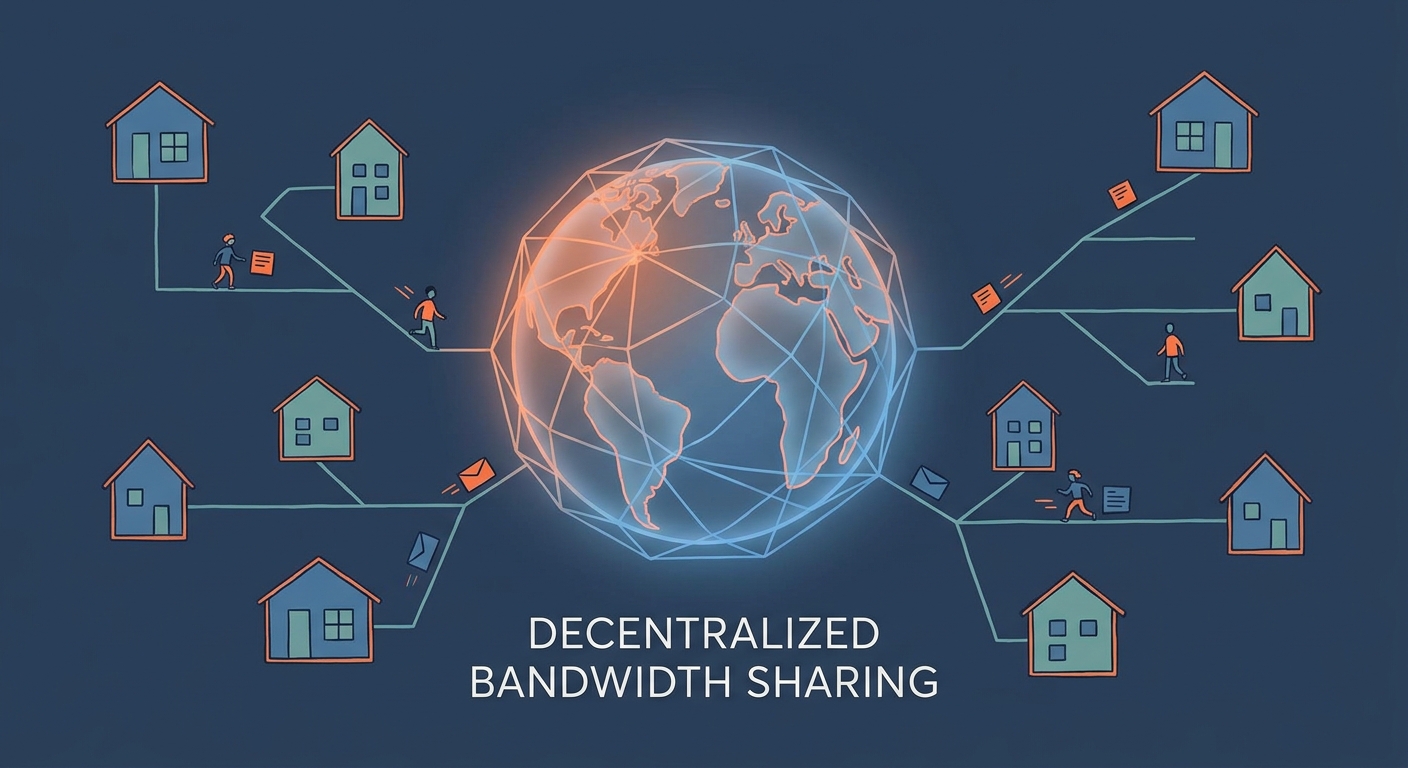
Think of P2P bandwidth sharing as an "Airbnb for your internet connection." You’ve got extra upload capacity you aren't using? Rent it out to someone who needs a private, secure, or geo-unrestricted route to the web.
The setup involves three main players: the Client (seeking privacy), the Relay Node (the bridge), and the Exit Node (the final point that decrypts the traffic and talks to the target website).
The real magic here is the multi-hop routing. The Relay Node has no idea where the traffic is headed, and the Exit Node has no idea who the original user is. They both hold tiny, encrypted, useless-on-their-own pieces of the puzzle.
The Privacy Revolution: Are ZK-Proofs the "Silver Bullet"?
Marketing is fluff. Math is truth. In 2026, the bedrock of dVPN security is the Zero-Knowledge Proof (ZK-Proof). As detailed in the Ethereum documentation on ZK-Proofs, these cryptographic mechanisms allow someone to prove a statement is true without actually revealing the underlying data.
In plain English? A node operator can prove they provided the bandwidth—so they can get paid—without ever seeing a single byte of your traffic. The relay node is essentially a blind tunnel. It carries the data, verifies the connection, and grabs the reward, all while remaining totally in the dark about what’s inside. It takes the "human element"—and the human risk—out of the equation entirely.
The Safety Myth-Buster: Is It Safe to Share Your Bandwidth?
The big fear is always: "What if someone does something illegal through my IP?" It’s a fair concern. But modern protocols have built-in defenses. Reputable dVPNs use aggressive exit-node filtering. They block common ports used for bad actors and keep a close eye on node reputation.
Better yet, you can choose your role. You can run as a "Relay-only" node. In this mode, your device is just a hop in the chain. You never act as the exit point, so your IP never touches the target destination. You earn fewer tokens, sure, but you also remove the risk entirely.
Bandwidth Mining: The Economics of Tokenized Connectivity
Bandwidth is now a commodity. Thanks to probabilistic nanopayments, the friction of getting paid for your connection is gone. You don't have to wait for a monthly check; your node earns small, real-time rewards as it processes data.
For some, this is just a hobby that pays the monthly internet bill. For others, especially those in underserved regions with high-speed connections, it’s a genuine side income. If you want to see how these platforms compare, check out the 10 Best Decentralized VPNs of 2026 to see which protocols offer the best bang for your buck.
Hardware vs. Software: How Should You Participate?
The barrier to entry is lower than ever. You can run a node on a spare laptop, a Raspberry Pi, or a dedicated DePIN router. Check the logic below to see which path is right for you.
If you really want to dive in, dedicated hardware routers are the way to go. They’re "set it and forget it," keeping the node activity off your primary computer so your gaming or streaming stays buttery smooth.
The Regulatory Outlook: What Do Governments Think?
Regulators are struggling to keep up. Because dVPNs don't have a central office or a CEO to subpoena, they are incredibly resilient. Trying to turn off a dVPN is like trying to regulate the wind. It’s a global, distributed phenomenon that doesn't care about borders.
Conclusion: Is Decentralized Connectivity for You?
Decentralized connectivity isn't just for cypherpunks anymore. It’s a mature, robust, and lucrative part of the modern internet. The trade-off is clear: you give up the "one-click" simplicity of a centralized VPN for the verifiable, censorship-resistant privacy of a dVPN.
If you care about digital sovereignty and want to earn rewards for assets you already own, the DePIN ecosystem is waiting. For those just starting their journey into personal digital protection, take a look at the latest VPN Privacy Guides to get your bearings.
Frequently Asked Questions
Can legal authorities trace illegal traffic back to my home IP if I run a node?
If you stick to being a "Relay-only" node, you’re just a middleman. You have no connection to the final destination, so you can't be linked to the traffic. If you run an "Exit Node," your IP is the final point, but most professional protocols use strict filtering to keep bad actors off their networks.
Does sharing my bandwidth slow down my home internet speed?
You’re in the driver’s seat. Most dVPN software lets you set strict limits. Want to only share 10% of your upload? You can do that. Your gaming and video calls will never know the difference.
Are dVPNs harder to set up than traditional VPN apps?
They used to be a pain. By 2026, though, it’s mostly "one-click" software. The apps handle the wallet, the routing, and the configuration in the background.
Is it actually profitable to participate in bandwidth mining in 2026?
It depends on your location and your connection speed. It’s not going to make you a millionaire, but it’s a very solid way to cover your internet bill and earn a bit of passive income if your node is reliable.