DePIN Explained: How Decentralized Physical Infrastructure Networks Are Changing the Internet
TL;DR
DePIN—Decentralized Physical Infrastructure Networks—is the quiet revolution flipping the tech world on its head. For years, we’ve been shackled to the "hyperscalers." You know the names: AWS, Google Cloud, Azure. These giants act as the landlords of the internet, charging whatever they want and dictating the rules of the digital road.
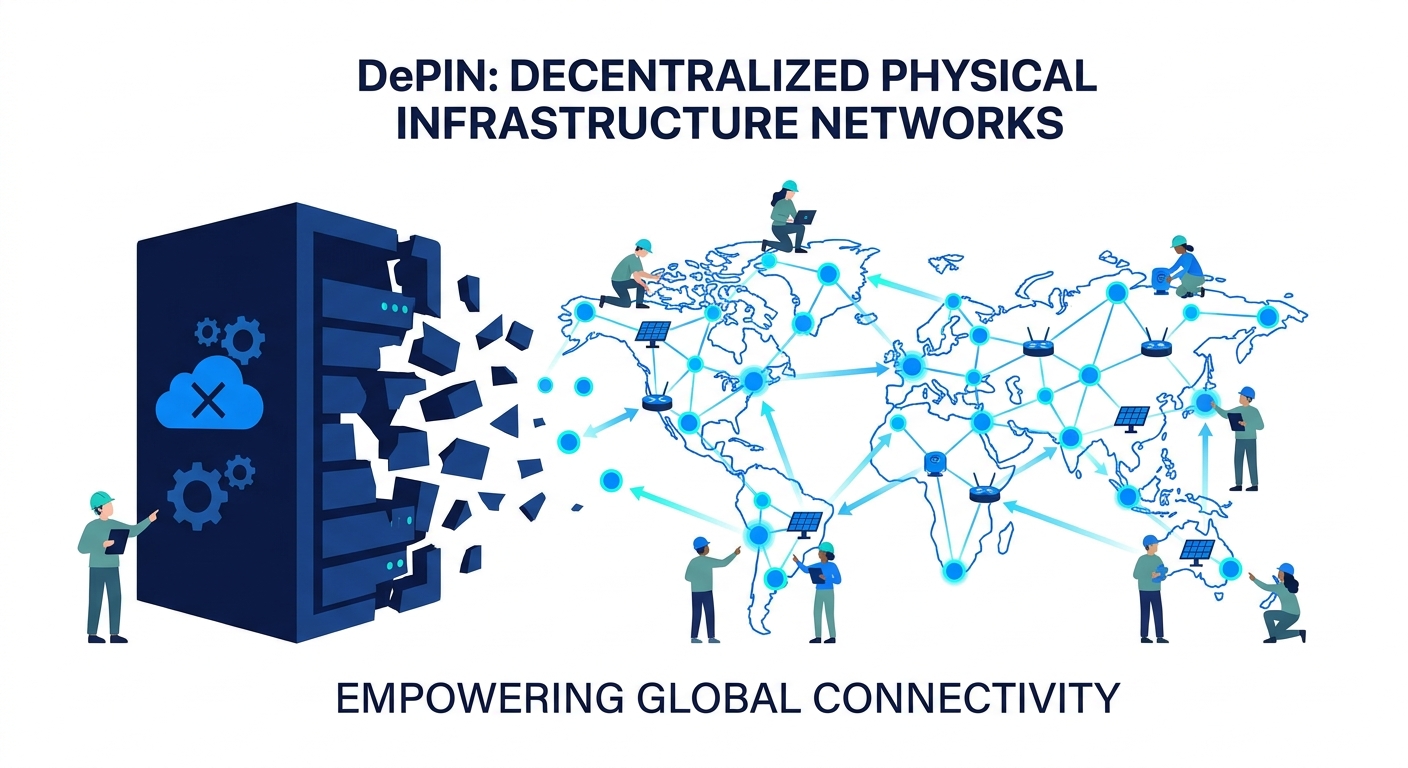
DePIN changes the game. Instead of relying on a handful of mega-corporations to build massive data centers, it uses token incentives to organize thousands of regular people to build, maintain, and run physical hardware. Think of it as the "Airbnb for hardware." Instead of renting out a spare bedroom, you’re renting out your idle GPU power, storage space, or bandwidth to a global, censorship-resistant network. If you take a look at Messari DePIN Research, it’s glaringly obvious: we’re moving away from the era of "moonshot" crypto speculation toward a reality where actual utility dictates what a project is worth.
What Exactly is DePIN?
At its heart, DePIN is a total rethink of how we fund and deploy infrastructure. Building a network—whether it’s a 5G grid, a data center, or a storage array—used to require billions in upfront capital. This created regional monopolies. A few corporations held all the cards, setting the price, the quality, and the privacy standards for the entire internet.
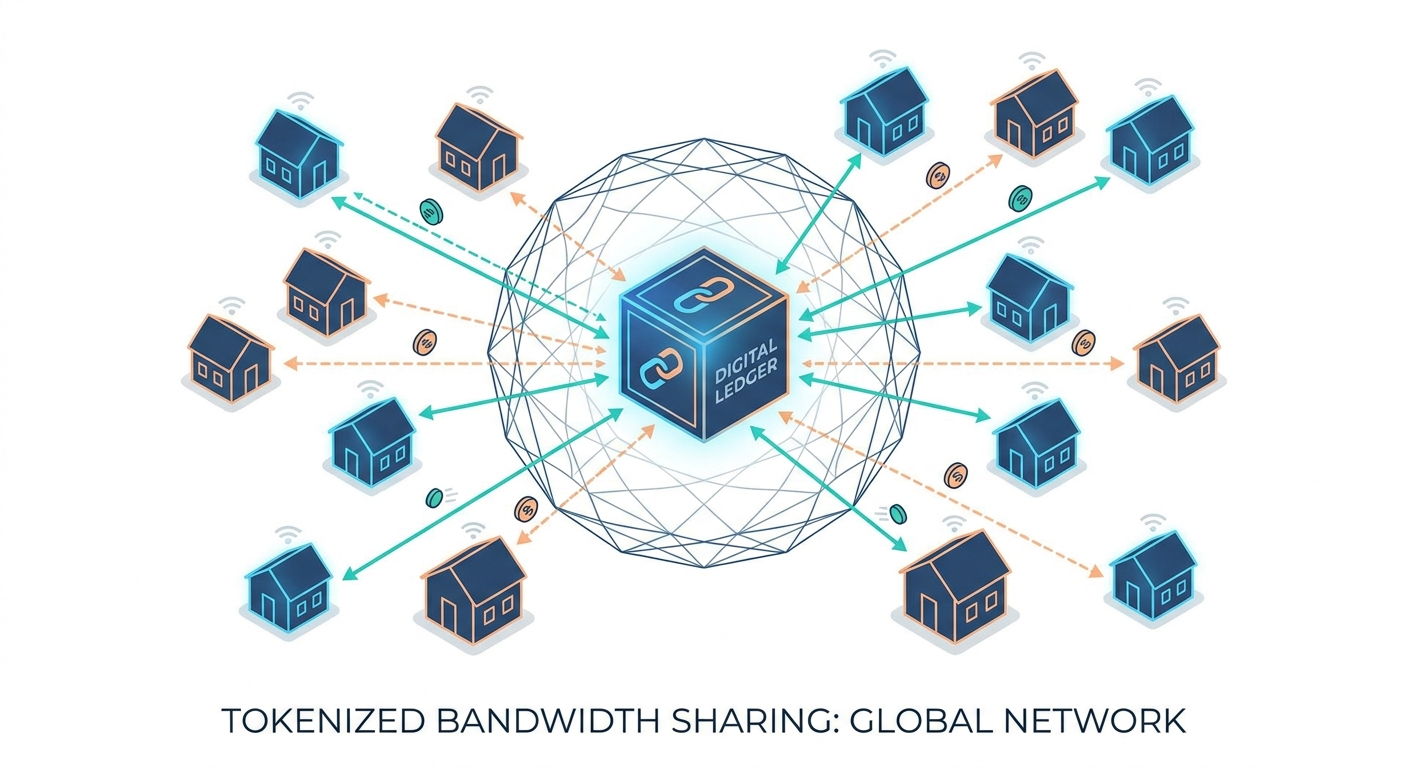
DePIN rips up that playbook. By using blockchain-based tokens, projects can bootstrap infrastructure without needing a central boss. The power shifts to the stakeholders: you. If you provide a service—like hosting a chunk of a decentralized database or routing encrypted traffic—you get paid in the network’s native token. This crowdsources the physical internet, allowing networks to scale faster and more efficiently than any single firm ever could.
Why Is the Current Infrastructure Model "Broken"?
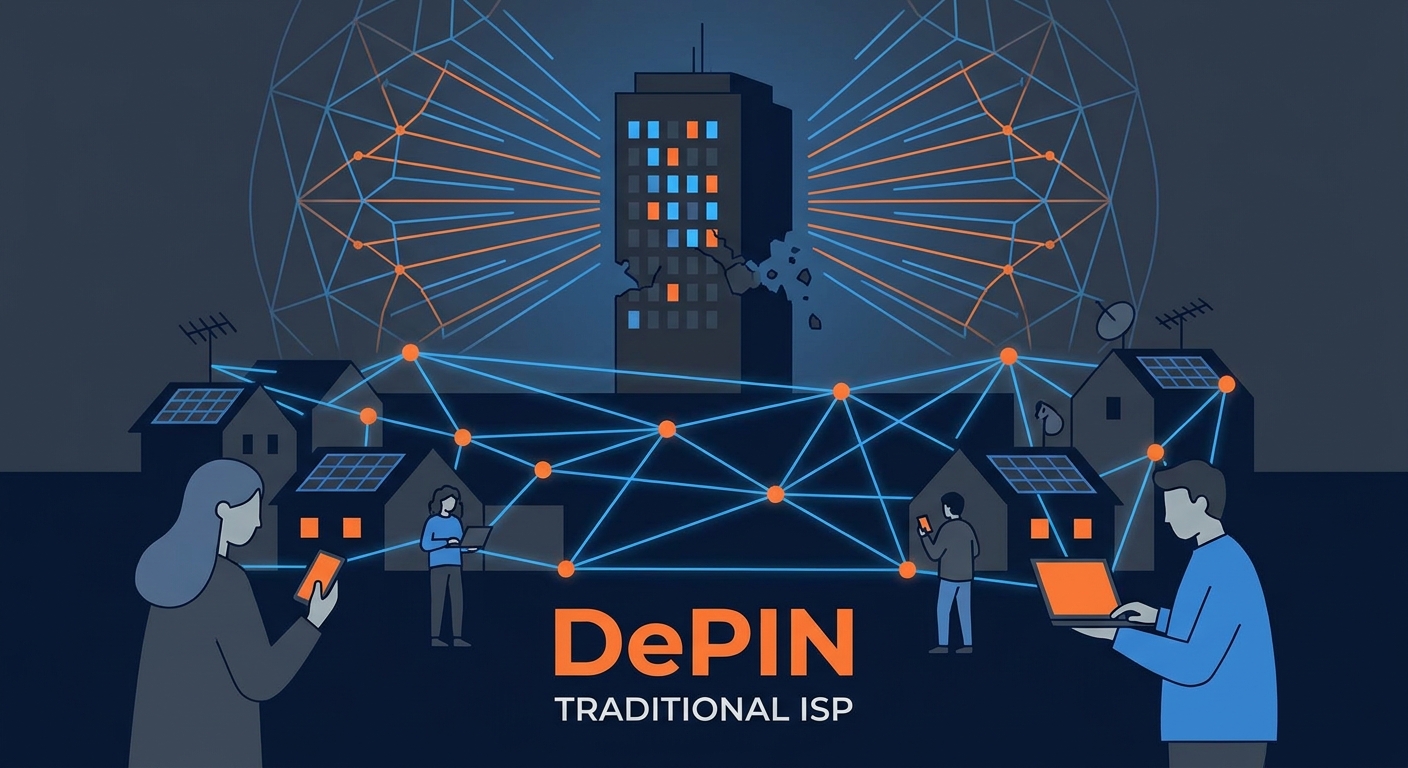
The modern internet is built on a "Hub-and-Spoke" model. A central authority sits at the top, managing massive server farms. If that authority decides to hike prices, censor your traffic, or pull the plug on a region, you’re stuck. There’s no recourse. It creates a "middleman tax" where you, the end-user, pay for the infrastructure, the maintenance, the corporate profit margins, and the bloated layers of bureaucracy in between.
Beyond the cost, this model is a house of cards. If the central data centers go dark, the apps relying on them vanish. DePIN replaces this brittleness with a mesh-like topology. The network is spread across thousands of independent nodes. No single point of failure. No single target for a regulator to hit. It’s significantly more resilient to physical, political, or technical interference.
How Does the "Proof-of-Physical-Work" Flywheel Work?
The real genius here is the incentive structure. We’ve moved past the old days of "mining" just to burn electricity. Modern DePIN projects use "Proof-of-Physical-Work." This mechanism ensures the node operator is actually providing the utility they claim—like 99.9% uptime for a storage server or verified location data for a mapping network.
Zero-Knowledge Proofs (ZKPs) are the secret sauce. They let a network verify that you’re doing your job without you having to hand over your private data or sensitive info. It’s a trustless, automated system where the "Flywheel" spins on its own.
When the flywheel is balanced, the incentives drive hardware deployment. That surge in capacity lowers the cost of services for everyone. As the service gets cheaper and more accessible, demand grows, which drives up the network’s token value—which, in turn, attracts even more node operators. It’s a self-sustaining loop.
How Do We Categorize DePINs? (PRN vs. DRN)
To make sense of the noise, it helps to split projects into two buckets:
Physical Resource Networks (PRN): These need hardware tied to a specific location. Think wireless 5G networks, decentralized mapping services like Hivemapper, or local weather stations. The value here is tied to the physical coverage they provide.
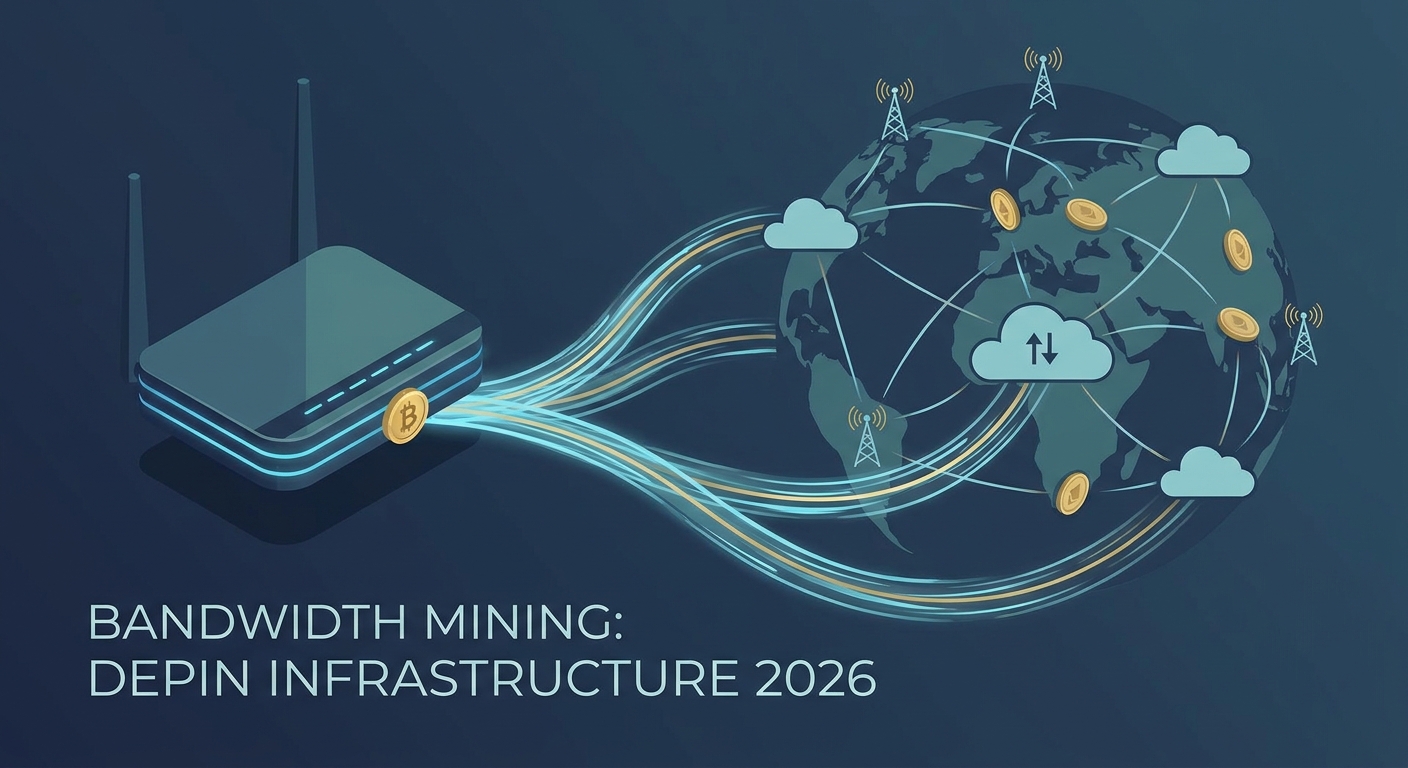
Digital Resource Networks (DRN): These are location-agnostic. They focus on compute, storage, and bandwidth. Projects like the Akash Network are the gold standard here, offering a decentralized, open-source marketplace for cloud computing. Because these services don’t care where the server sits, they scale horizontally with incredible speed.
Why Is the 2026 Shift Toward "Economic Rationality" Important?
Early crypto was full of "community-first" or "altruistic" vibes. By 2026, that era is dead. Today’s node operators are entrepreneurs. They’re crunching the numbers on ROI, power costs, and hardware depreciation just like a data center manager at a Fortune 500 company would.
This shift toward cold, hard economic rationality is exactly what the industry needed to grow up. When running a node becomes a business rather than a hobby, the network stabilizes. The massive demand for GPU power to train AI models has accelerated this, turning DePIN projects into legitimate, enterprise-grade alternatives to the hyperscaler giants.
What Are the Real-World Use Cases for DePIN?
Decentralized Storage & Compute: By pooling thousands of consumer hard drives and enterprise GPUs, DePIN protocols provide the infrastructure to run everything from AI training models to high-traffic web apps—usually at a massive discount compared to traditional cloud providers.
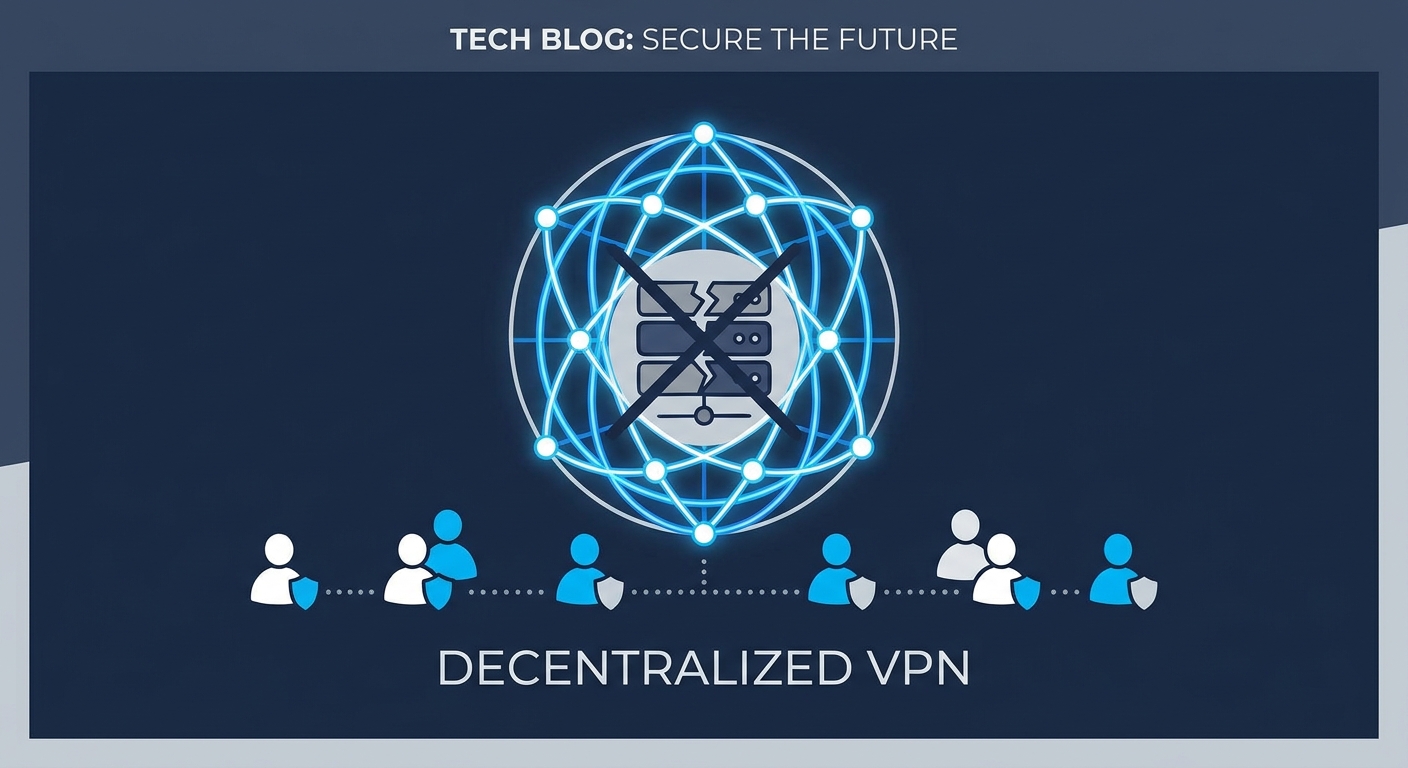
Decentralized VPNs (dVPNs): This is the easiest entry point for most people. By learning what a dVPN is, you’ll see that your home internet can serve as a node in a global, private network. Unlike traditional VPNs, which are often owned by centralized companies that keep logs, dVPNs route traffic through a distributed network of peers. It’s impossible for a central entity to track your activity or hand over data to third parties, which is why understanding why privacy matters in 2026 is mandatory for any serious digital citizen.
What Are the Risks and Challenges of DePIN?
It’s not all sunshine and rainbows. Hardware obsolescence is a constant threat; buy the wrong GPU or sensor today, and it might be a paperweight by 2028. Then there’s the regulatory fog. Governments are still scratching their heads, trying to figure out if these networks are telecommunications providers, financial instruments, or something else entirely.
Finally, there’s the volatility issue. If the token used to pay node operators crashes, the network can hit a "death spiral." Operators pull their hardware, service quality tanks, and the project bleeds out. Keeping an eye on dynamics through resources like the CoinGecko DePIN Category is essential if you want to gauge the actual health of the ecosystem.
How Can I Get Started as a Node Operator?
You don't need a PhD in computer science to get involved. Most modern projects have slick dashboards to track your gear.
- Assess Your Hardware: Figure out if you have spare CPU, GPU, or bandwidth capacity to contribute.
- Calculate ROI: Don't just look at the token price. Factor in electricity, cooling, and maintenance costs.
- Vet the Project: Look for projects that prioritize real-world utility over hype. Does it have actual paying customers? Is the tokenomics model sustainable, or is it just printing money for early investors?
Frequently Asked Questions
What is the difference between DePIN and traditional cloud infrastructure?
Traditional cloud infrastructure is centralized; one company owns the hardware and the data. DePIN is decentralized, meaning the hardware is owned and operated by a global, distributed community of individuals, which slashes costs and kills the single point of failure.
Is it profitable to run a DePIN node in 2026?
It depends entirely on the network and your local hardware costs. In 2026, the successful operators act like small business owners. They carefully weigh the cost of electricity and equipment against the rewards earned from the network.
How does a decentralized VPN (dVPN) protect my privacy better than a normal VPN?
A dVPN routes your traffic through independent nodes rather than a central server owned by a single company. Because there is no central entity, there is no "master log" of your activity for a company to store, sell, or be subpoenaed for.
What are the biggest risks of investing in DePIN projects?
The risks include the rapid pace of hardware obsolescence, regulatory uncertainty, and the volatility of the crypto tokens that incentivize the network. Do your own research and diversify.