What is a dVPN? The Ultimate Guide to Decentralized VPNs in 2026
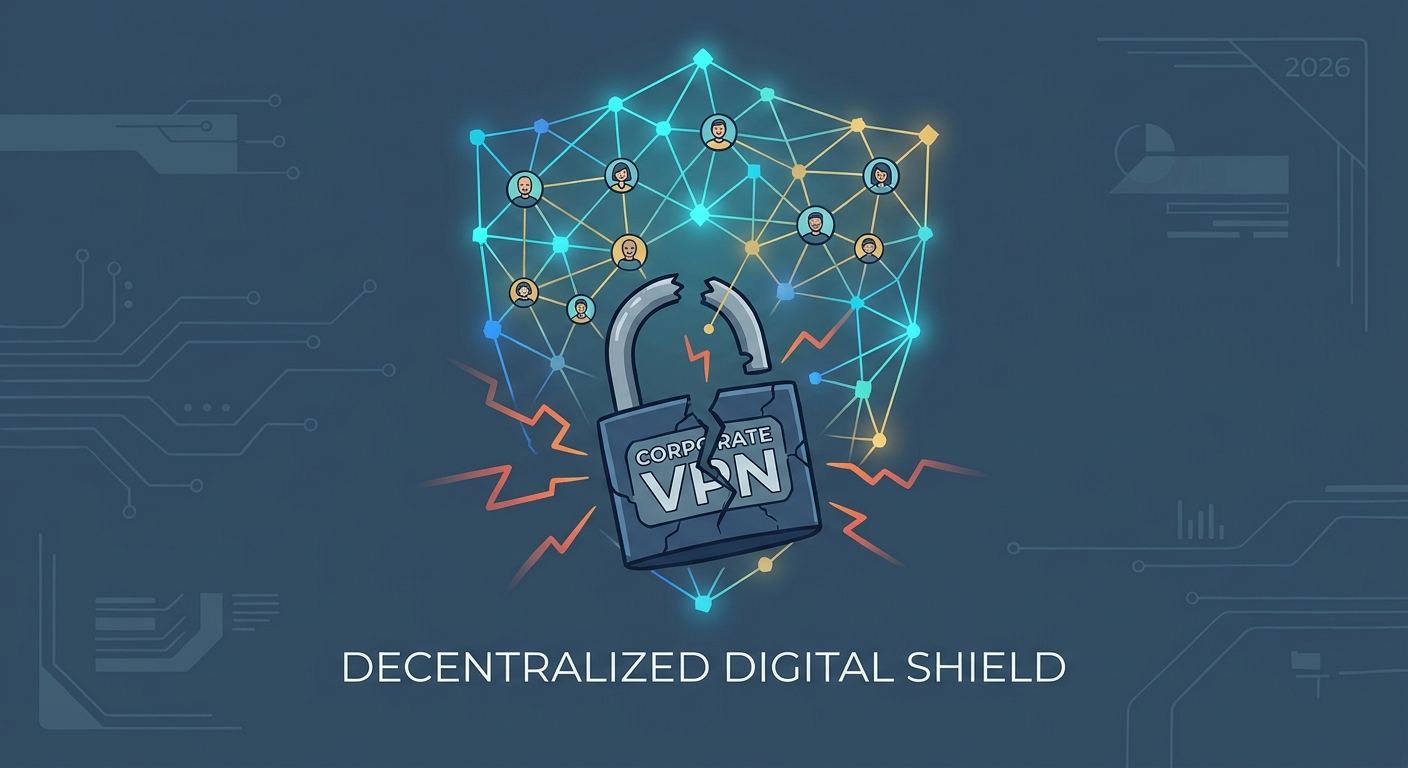
TL;DR
- ✓ dVPNs replace centralized corporate servers with a secure, global P2P node network.
- ✓ Decentralization eliminates the need to trust providers with your sensitive browsing logs.
- ✓ Traffic bounces through randomized nodes, making it mathematically impossible to track your data.
- ✓ The shift to dVPNs aligns with the growing DePIN movement for user-owned infrastructure.
Forget everything you think you know about VPNs. For years, we’ve been sold a lie: the idea that a faceless corporation, tucked away in some tax haven, is the ultimate guardian of our digital secrets. We pay them a monthly subscription, sign a "no-logs" pledge, and hope for the best.
In 2026, that "trust me" model is dead. It’s been hacked, subpoenaed, and exposed too many times to count.
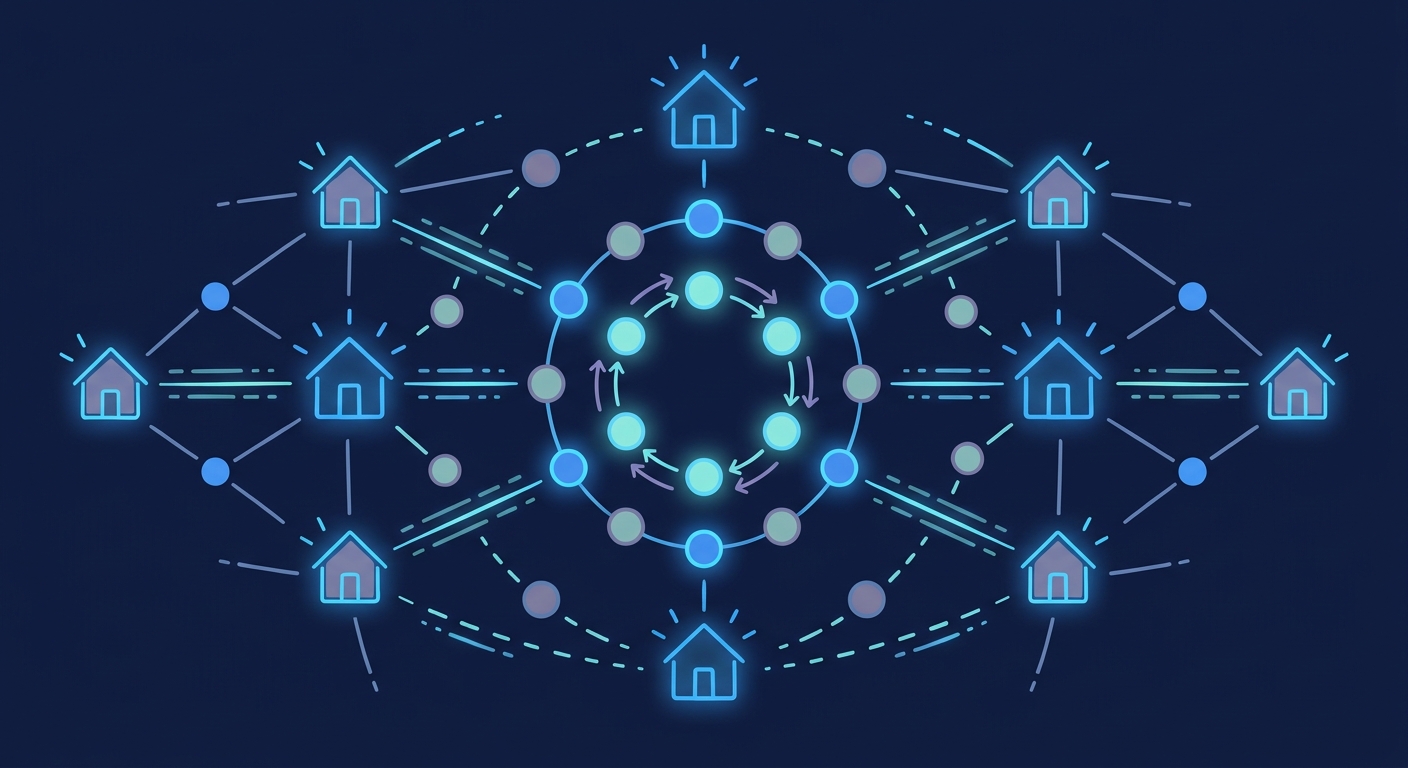
Enter the dVPN—the Decentralized Virtual Private Network. It’s not just a new piece of software; it’s a total reimagining of how we connect to the internet. Instead of funneling your data through a central corporate server, a dVPN uses a global mesh of user-operated nodes. It’s peer-to-peer. It’s encrypted. And most importantly, it’s not owned by a single entity that can be strong-armed by governments or compromised by hackers.
Why is the VPN Industry Shifting to Decentralization?
For over a decade, the VPN industry has been built on a foundation of blind trust. You pay a monthly fee, and in exchange, a company promises they don’t keep logs of your activity. But in 2026, "trust us" is no longer a viable security strategy. Time and again, centralized providers have been subpoenaed, hacked, or caught silently tracking user data in contradiction to their marketing claims.
The industry is currently undergoing a radical transition toward DePIN (Decentralized Physical Infrastructure Networks), a movement that treats internet infrastructure as a utility that should be owned and operated by the people who use it, rather than private data centers. By shifting from corporate-controlled gateways to decentralized nodes, we move away from the fragility of "no-logs" promises and toward "verifiable privacy," where the code itself forbids the storage of user data.
How Does a dVPN Differ from a Traditional VPN?
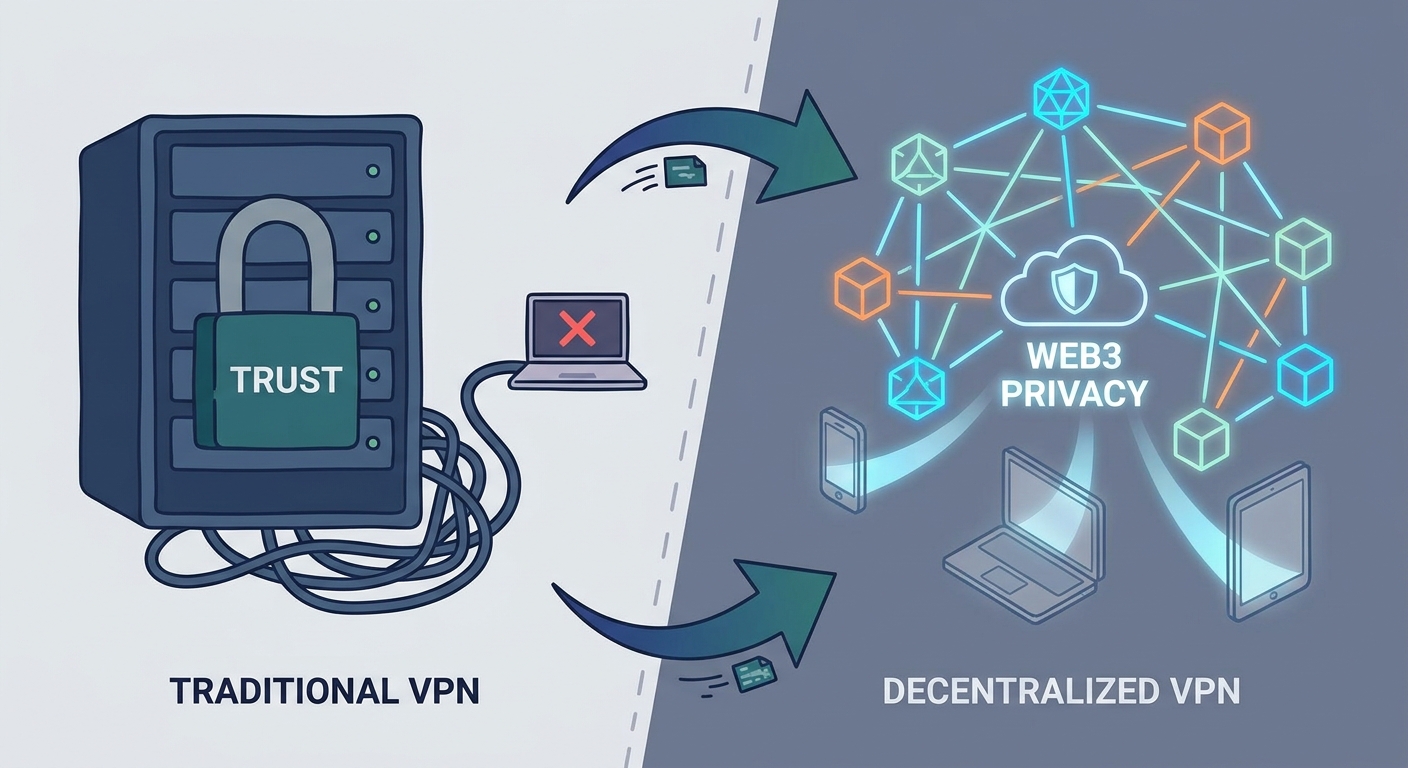
Think of a traditional VPN as a private toll road. One company owns the road, they control the entry and exit points, and they have cameras at every turn. If that company decides to sell your data or gets raided, your privacy goes up in smoke.
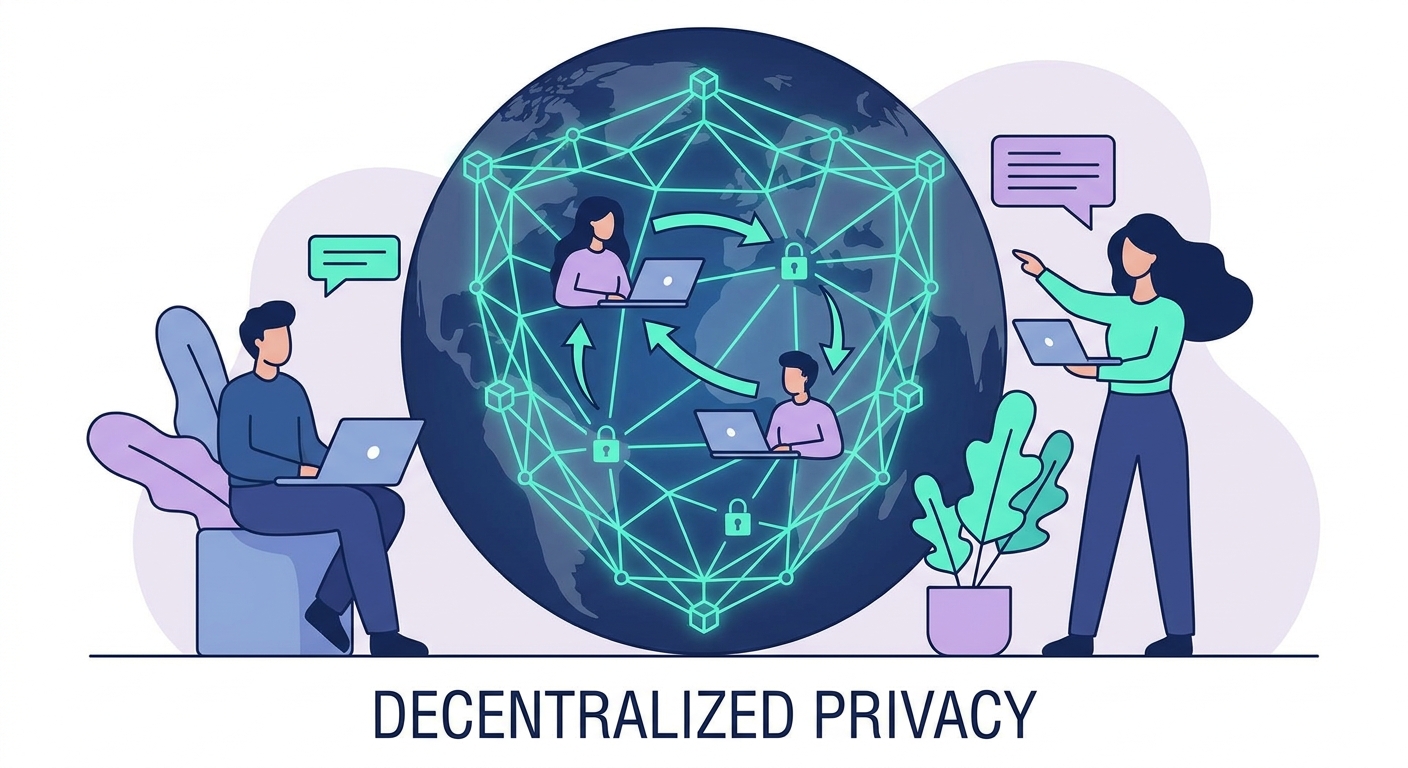
A dVPN? That’s like a decentralized highway system. There is no single owner. Every driver on the road is also a node in the network. When you hop on a dVPN, your traffic doesn't just go to Point B—it bounces through a randomized chain of anonymous, independent nodes. Because no one person controls the whole path, it is mathematically impossible for any single actor to reconstruct your browsing history. Understanding the core dVPN vs. Traditional VPN structural differences is the first step in reclaiming your digital footprint.
How Does a dVPN Actually Work?
At the heart of a dVPN is the blockchain. No, it’s not just a buzzword; it’s the accounting ledger that keeps the whole thing humming. Think of smart contracts as the automated middleman. They handle the introductions, matching people who need bandwidth with node providers who have extra capacity to spare.
When you click "Connect," your app isn't pinging a corporate server. It’s querying a blockchain to find high-quality, available nodes. Your session is encrypted, and your usage is paid for via micro-transactions—usually in native utility tokens. These Blockchain Privacy Standards ensure that even the node operator handling your data can’t see where it’s going. They’re just passing an encrypted fragment. It’s pure, trustless routing. You don’t need to trust the node operator because they literally have nothing to see.
What Are the Key Benefits of Using a dVPN in 2026?
The move toward decentralization isn't just for the privacy purists. It’s practical, it’s resilient, and it actually works better.
Censorship Resistance Modern AI is getting scary good at spotting VPN traffic. ISPs and government firewalls can flag and throttle standard VPN protocols in milliseconds. But a dVPN? It’s a shapeshifter. Because your traffic is jumping across a global mesh of nodes, there is no predictable pattern to block. It looks like standard, erratic internet usage. Good luck blocking that.
Internet Sovereignty Centralized VPNs are tied to the laws of the country where their data centers sit. If a server is in a jurisdiction with aggressive surveillance, the company has to comply. With a dVPN, your traffic is global. You aren't tethered to a corporate entity’s legal obligations. You’re just a ghost in the machine.
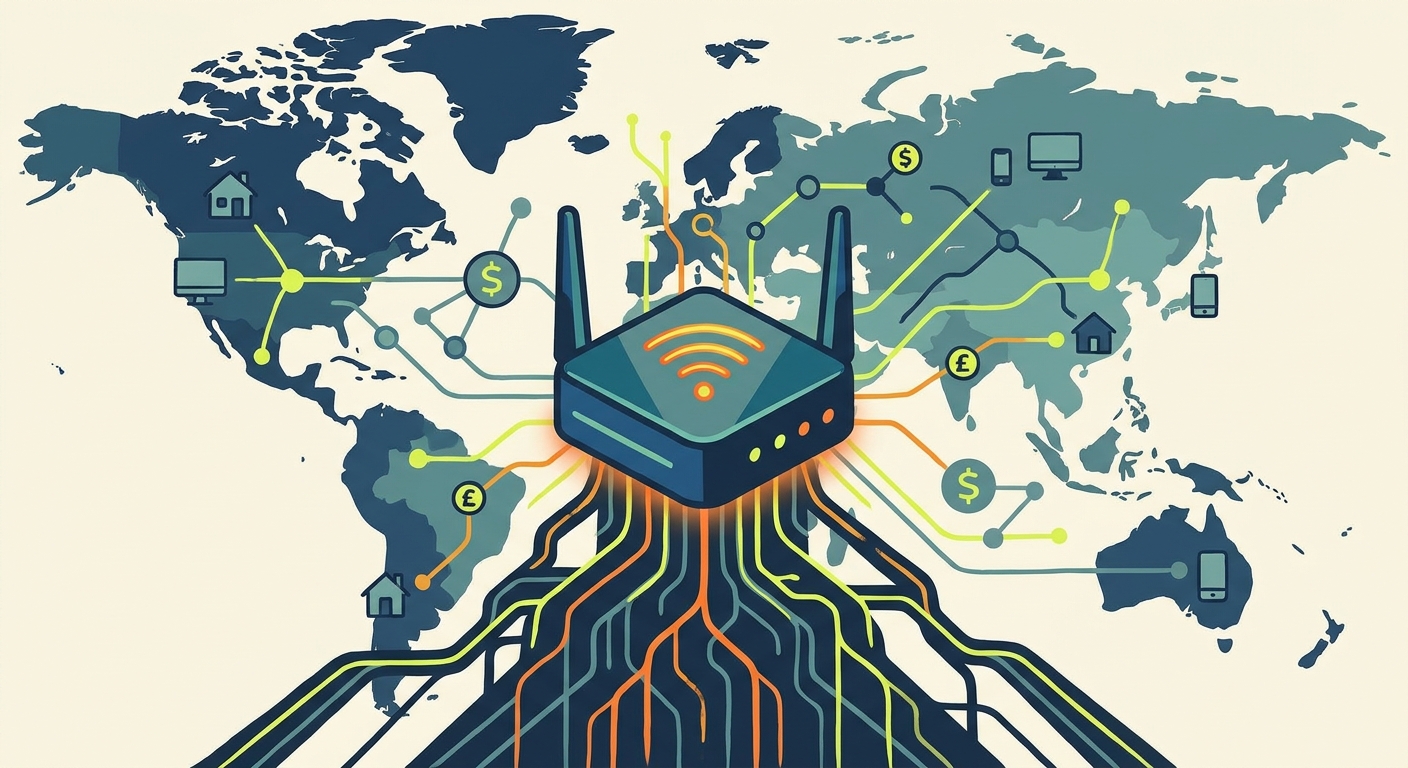
The Rise of Bandwidth Mining One of the most exciting developments is the shift toward Monetize Your Bandwidth. In 2026, you aren't just a consumer; you are a participant. By running a node on your home network, you can earn tokens for providing bandwidth to others in the network. This turns a monthly expense—your internet bill—into a potential revenue stream, effectively subsidizing your own privacy.
Is Hardware the Future of Decentralized Access?
For years, the biggest hurdle for decentralized tech was the setup. It was too "techy." That’s changing fast. We’re seeing a surge in plug-and-play hardware gateways that sit right next to your router.
These boxes handle the blockchain heavy lifting, node selection, and encryption automatically. You get the simplicity of a standard router with the ironclad security of a decentralized network. As noted in The Future of the Decentralized Web, this hardware-software convergence is exactly what’s going to move Web3 tools from the hands of enthusiasts into the average living room.
How Do I Get Started with a dVPN?
Getting started is far easier than it was even two years ago. Most modern dVPN applications function just like standard apps, with a "Connect" button that masks the underlying complexity.
- Select a Provider: Look for established protocols that have undergone third-party audits. You can find a curated list of the Best dVPNs of 2026 to see which fits your needs.
- Wallet Integration: Most dVPNs require a non-custodial wallet to manage your subscription tokens. If you are new to this, choose a provider that supports simple, fiat-to-crypto on-ramps.
- Client Installation: Download the desktop or mobile client.
- Connect: Once the app is running, it will automatically query the smart contract to find the fastest, most secure node path available to you.
Frequently Asked Questions
Are dVPNs really faster than traditional VPNs?
In many cases, yes. Because you are connecting to nodes that may be physically closer to you than a centralized data center, latency is often reduced. However, speed can fluctuate based on the quality of the specific node you are connected to. Most modern dVPN clients include "smart-routing" to ensure you always connect to the fastest available nodes.
Do I need to be a crypto-expert to use a dVPN?
Not at all. While the backend uses blockchain technology, the user interface for most 2026-era dVPNs is designed for the average person. If you can install a standard app, you can use a dVPN. Many providers now handle the complex token swaps in the background, allowing you to pay using traditional methods or simplified crypto-wallets.
Is my IP address truly hidden with a P2P node?
Yes. When you route your traffic through a dVPN node, the destination server sees the IP address of the exit node, not your home IP. Because your traffic is encrypted end-to-end, the node operator cannot see what data is passing through, and they have no logs to provide if a third party were to request them.
What happens if a node I am using is malicious?
This is the beauty of multi-hop routing. A dVPN doesn't rely on just one node. Your traffic is fragmented and routed through a sequence of nodes. Even if one node were compromised or malicious, it would only see a tiny, encrypted piece of your data, making it impossible to reconstruct your activity or identify your origin.
How does dVPN technology prevent censorship from ISPs?
ISPs use Deep Packet Inspection (DPI) to identify standard VPN traffic patterns and throttle or block them. dVPNs use decentralized, P2P protocols that constantly change and emulate regular web traffic. Because there is no single server IP to blacklist, it is functionally impossible for an ISP to block the entire network.