Top 7 Decentralized VPNs for 2026: The Best P2P Networks for Private Browsing
TL;DR
- ✓ Decentralized VPNs replace corporate servers with secure global peer-to-peer mesh networks.
- ✓ Smart contracts enable transparent bandwidth sharing and eliminate single points of failure.
- ✓ Residential nodes provide superior censorship resistance compared to traditional data center VPNs.
- ✓ Users can monetize idle internet bandwidth by participating in the decentralized network economy.
- ✓ Blockchain technology ensures an auditable and verifiable approach to online privacy.
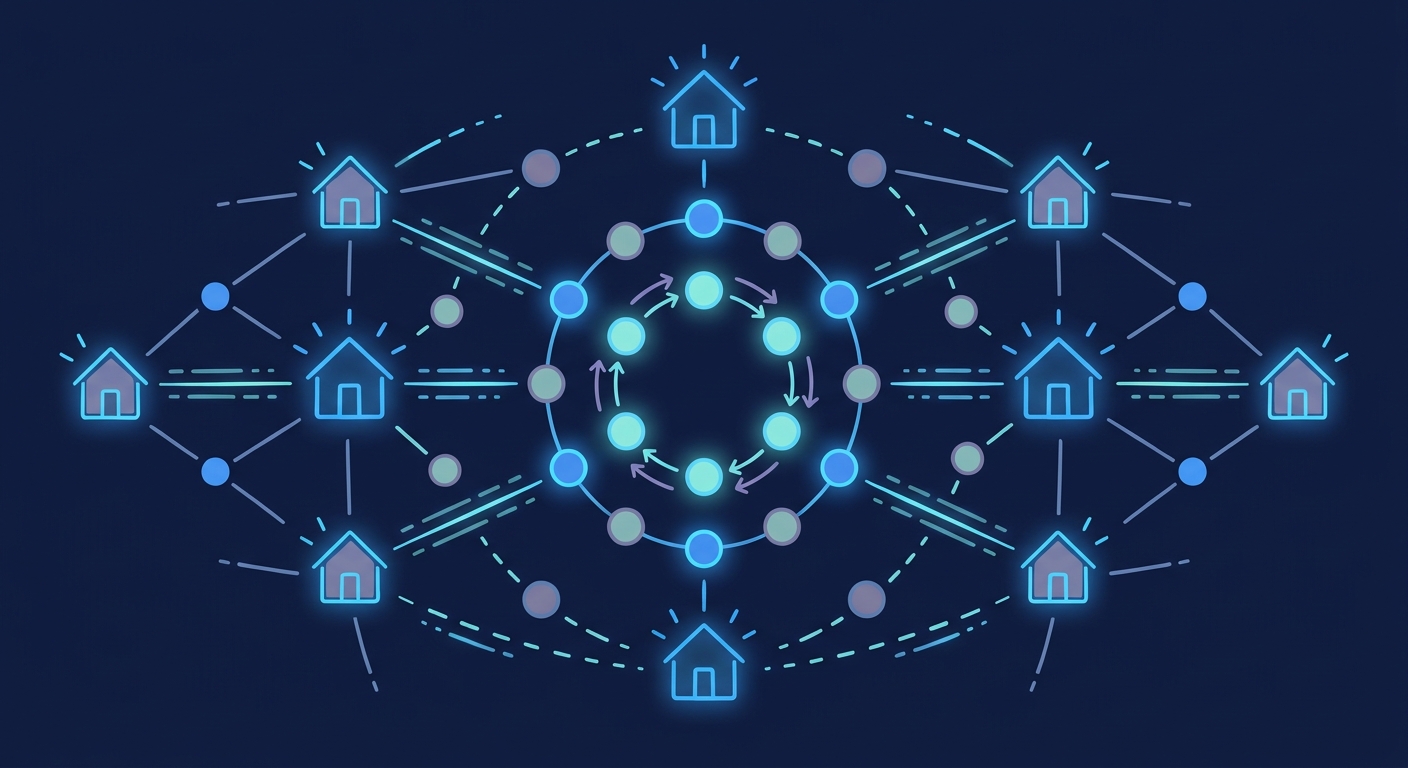
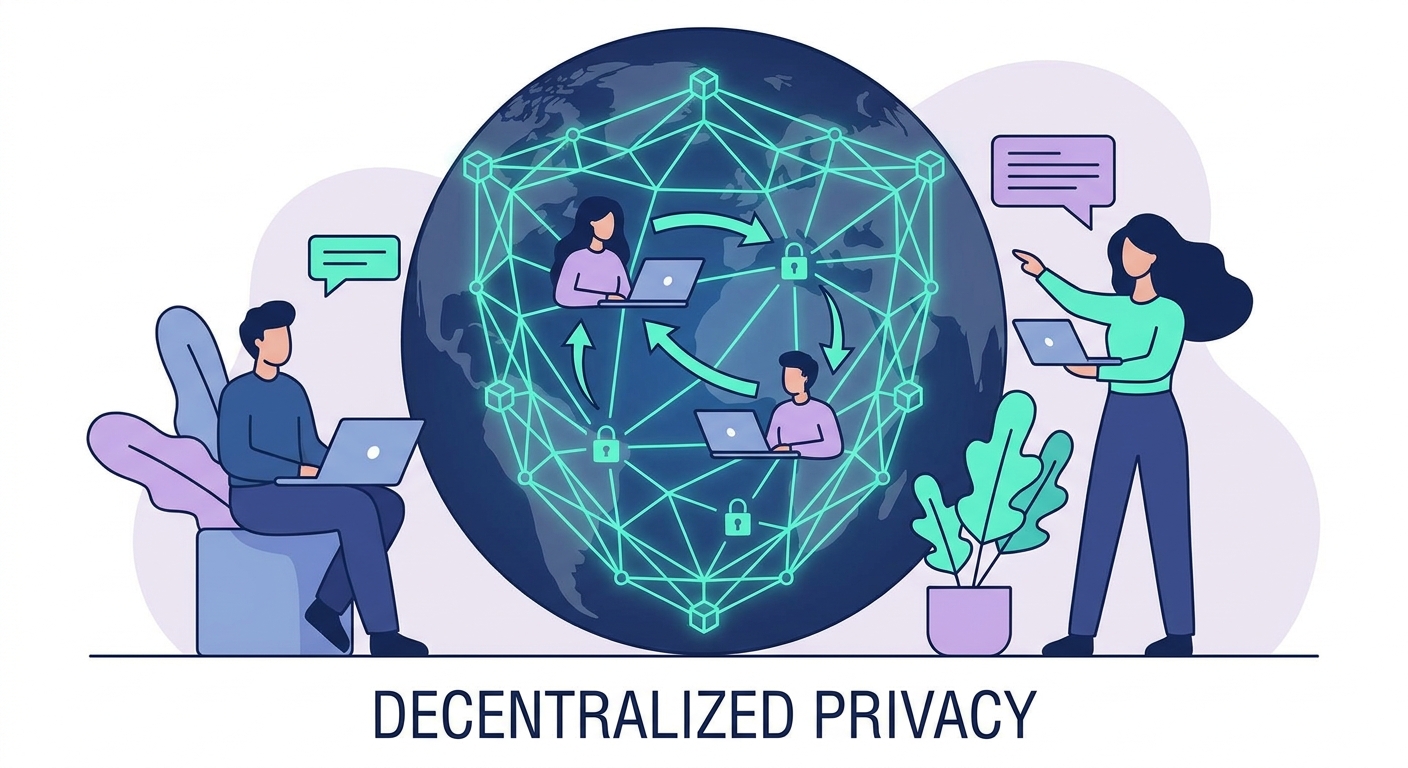
Decentralized VPNs (dVPNs) are shaking up the digital landscape. We’re moving away from the days of trusting massive, opaque server farms run by corporations. Instead, we’re entering the era of the global mesh network—a user-powered system that treats your internet connection like a utility rather than a product.
In 2026, the "Airbnb for Bandwidth" model isn’t some wild experiment anymore. It’s the new gold standard for anyone who values actual verification over the "trust me, bro" marketing of legacy VPN providers. If you want to see where this is heading, check out The State of DePIN 2026 report by Messari. It makes one thing crystal clear: decentralized infrastructure is becoming the bedrock of a resilient, censorship-resistant internet.
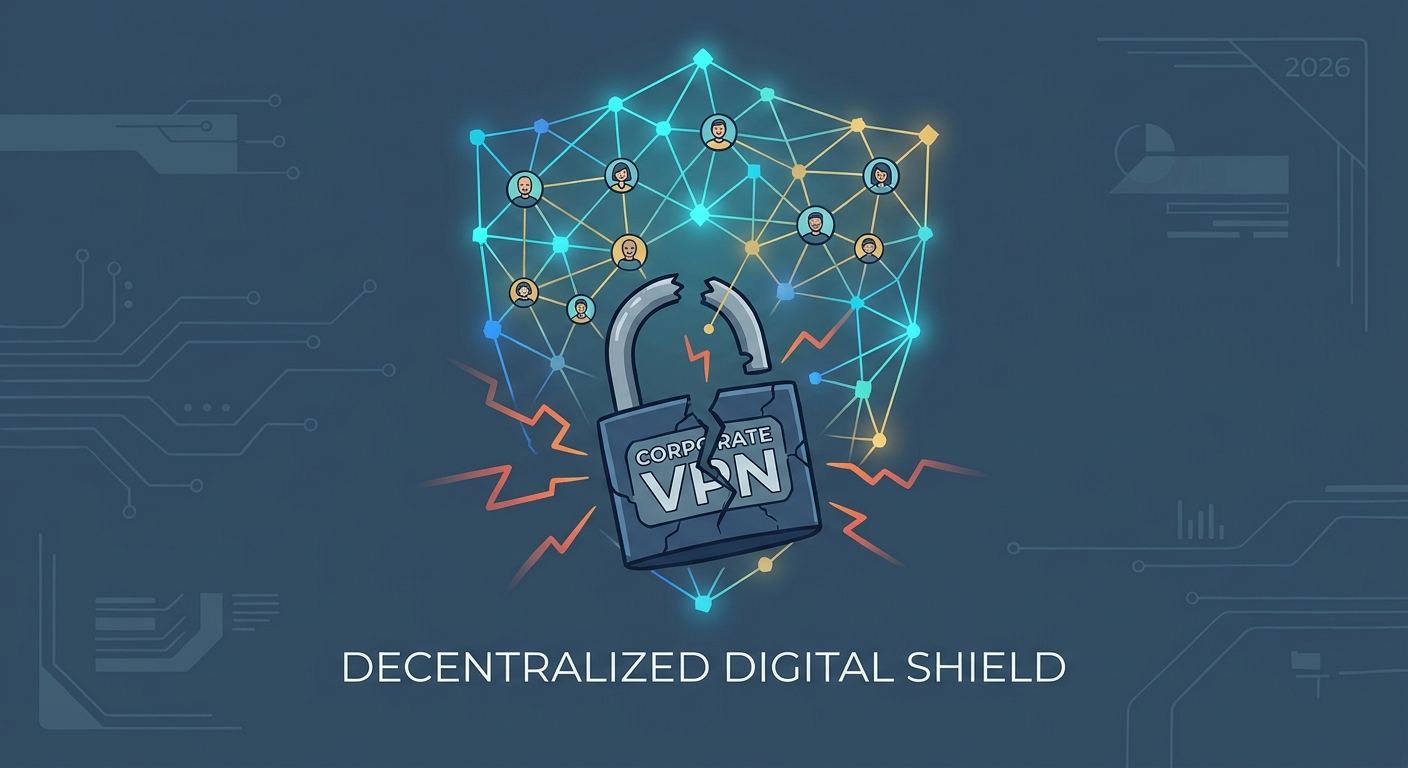
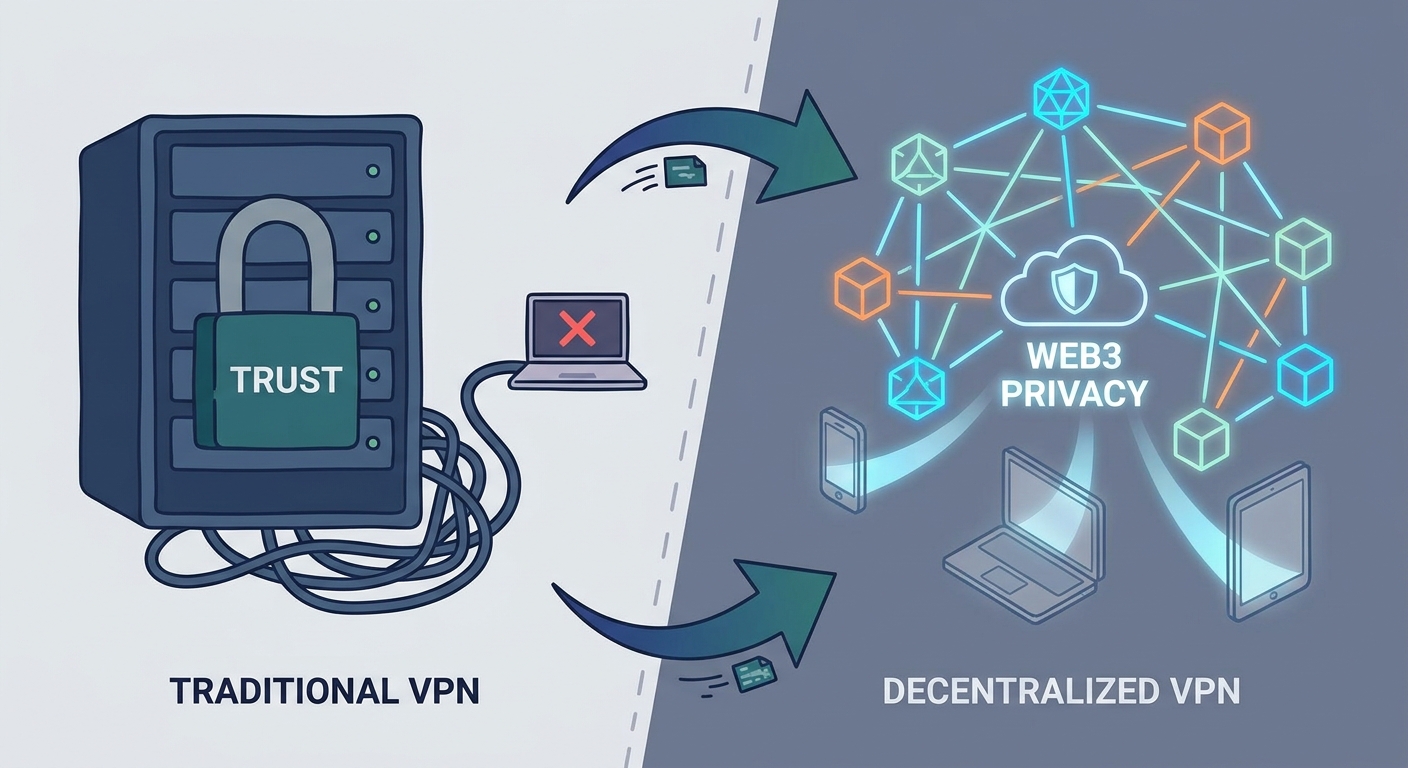
To get why this matters, let’s look at the old way. Traditionally, defining what a VPN is meant routing your data through a private server. The catch? You’re just moving your trust from your ISP to a VPN provider. If that company gets a subpoena or decides to keep logs, your privacy is toast. dVPNs flip the script. They route your traffic through a rotating series of residential nodes. It’s mathematically impossible for any single entity to track your connection history.
1. How Do Decentralized VPNs Actually Work?
At their heart, dVPNs use smart contracts to pair people who have extra bandwidth with people who need a secure tunnel. Forget the static data centers in tax havens. When you fire up a dVPN client, it broadcasts a request to the network. A matching engine finds you the best node based on speed and security, then builds an encrypted, multi-hop path that shifts as you browse.
This peer-to-peer setup kills the "single point of failure." Since the exit node jumps around and the protocols are open-source, the whole system is auditable. No more "No-Log" marketing fluff. It’s just cold, hard code.
2. Why Should You Care?
The biggest win is censorship resistance. According to global internet censorship statistics from OONI, governments are getting scary-good at blocking known VPN IP addresses. dVPNs use residential nodes—real home IP addresses—that are nearly impossible to blacklist without cutting off their own citizens.
Then there’s privacy by design. Traditional VPNs hide behind proprietary walls. dVPNs live in the open. The network topology is public and verifiable. You don't have to guess what's happening under the hood.
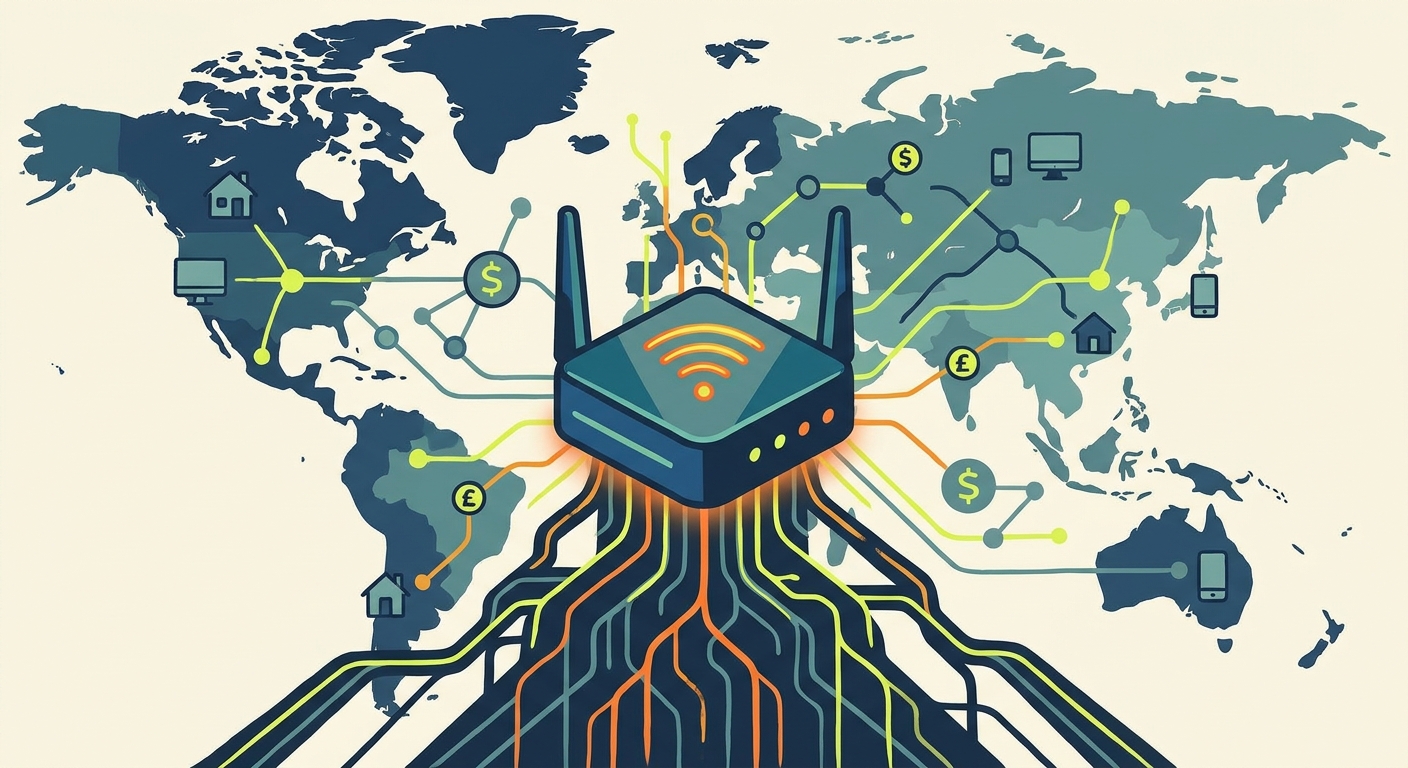
Finally, there’s the economic flip. Instead of flushing money into a monthly subscription, you can actually participate. Got a fast connection? Share your idle bandwidth, earn some tokens, and offset your internet bill. It turns a cost into a revenue stream.
3. The Top 7 Decentralized VPNs for 2026
1. Mysterium Network
Mysterium is still the king of residential IP diversity. It pulls from thousands of home nodes worldwide, giving you the most authentic "local" browsing experience possible.
- Core Protocol: Mysterium (Layer 2)
- Best For: Unblocking content and bypassing geo-restrictions.
- Performance Tier: High (Great for streaming).
2. Sentinel
Sentinel is the go-to for cross-chain flexibility. By sourcing bandwidth from multiple chains, it keeps the network running smooth even if one chain hits a traffic jam.
- Core Protocol: Cosmos SDK (IBC enabled)
- Best For: Privacy power users who want a modular, robust setup.
- Performance Tier: Medium-High.
3. Orchid
Orchid was the first to really nail the multi-hop model. It bounces your traffic through several nodes, making it a nightmare for anyone trying to analyze your data path.
- Core Protocol: Ethereum (EVM)
- Best For: Users who want maximum anonymity.
- Performance Tier: Medium (Latency is the price of total privacy).
4. Akash-Based VPNs
If you want the speed of a data center but the ownership of a dVPN, this is your pick. By tapping into the Akash decentralized cloud, these VPNs provide incredible throughput.
- Core Protocol: Akash Network
- Best For: 4K streaming or moving massive files.
- Performance Tier: Ultra-High.
5. VPN.io (Decentralized)
VPN.io makes the crypto stuff disappear. You pay with your credit card, and the app handles the token conversion in the background. It’s the perfect "plug-and-play" dVPN.
- Core Protocol: Custom P2P
- Best For: Beginners who don't want to mess with wallets.
- Performance Tier: Balanced.
6. DeNet VPN
Mobile browsing is king, and DeNet knows it. Their architecture is built to handle the constant connection drops and battery drain that plague mobile devices.
- Core Protocol: DeNet Storage/Network
- Best For: Digital nomads and mobile-first users.
- Performance Tier: High (Optimized for mobile).
7. PrivateLink (Web3)
This is for the hardcore privacy crowd. It’s like Tor, but with an economic incentive layer that keeps nodes running fast and staying online.
- Core Protocol: Proprietary P2P
- Best For: Extreme anonymity and dark-web-style routing.
- Performance Tier: Low (Speed takes a backseat to security).
4. Performance Benchmarks: Are They Really Faster?
Look, let’s be real. In the past, P2P networks were slow. But 2026 has brought "Advanced Routing Protocols" that actually work. Modern clients use AI-driven heuristics to map latency in real-time. They find the shortest path before you even click a link. While a massive corporate server might still win on raw speed, the gap is mostly gone. For 99% of your browsing, you won't notice a difference.
5. Risks and Considerations
The "Exit Node" problem is the elephant in the room. If you connect through a bad node, they could see your unencrypted traffic. But here’s the fix: reputation systems and staking. If a node acts up, they lose their collateral.
Still, use your head. Follow essential privacy tips for 2026 and always force HTTPS. When dealing with Web3 tools, stick to standardized privacy security principles. It’s a bit more complex than clicking "Connect," but the privacy payoff is worth the learning curve.
6. How to Get Started
- Wallet Setup: Grab a non-custodial wallet like MetaMask or Keplr.
- Acquire Gas: You’ll need a tiny bit of the native token for fees (though many apps now handle this automatically).
- Choose Your Client: Download the official app for your chosen dVPN.
- Connect: Open the dashboard and let it handle the heavy lifting.
- Bandwidth Dashboard: If you want to earn, toggle "Provider" mode and start sharing your idle capacity.
7. Conclusion: The Verdict for 2026
If you’re just a casual streamer who wants to watch Netflix from a different country, a traditional VPN is fine. But for the privacy-conscious, the activists, and the Web3 natives, dVPNs are the only real choice left. We’re building a world where your connection is as resilient as the internet itself. Pick your provider, take back your digital tunnel, and stop being the product.
Frequently Asked Questions
Is a dVPN actually faster than a traditional VPN?
Generally, no, but the gap is negligible. Traditional VPNs benefit from optimized, direct-to-backbone data center connections. dVPNs, however, offer better localized latency by allowing you to connect to nodes that are physically closer to your target destination, effectively bypassing the congestion often found at centralized VPN hubs.
Can someone use my shared bandwidth for illegal activities?
As a node provider, you are sharing your internet connection. Most dVPN protocols implement "Exit Node Filtering," which blocks traffic to illegal or high-risk domains. However, you should always consult the specific terms of the dVPN network you are running, as the legal landscape regarding bandwidth sharing is still evolving.
Do I need to hold cryptocurrency to use a dVPN?
Not necessarily. While the underlying economy is tokenized, many 2026-era dVPN apps have integrated fiat-on-ramps. These services handle the token conversion for you, allowing you to pay with a credit card or Apple Pay while the app manages the blockchain transactions in the background.
How do I know if a dVPN node is malicious?
dVPN networks use "Staking-Based Reputation Systems." Node operators must lock up tokens as collateral. If a node is caught performing malicious activity or failing to provide the promised service, their stake is slashed. This economic deterrent ensures that node operators are incentivized to maintain honest and reliable connections.
Are decentralized VPNs truly safer than centralized ones?
Yes, in terms of systemic risk. A centralized VPN provider can be forced by a government to hand over logs or install backdoors. In a decentralized network, there is no central authority, no single server to subpoena, and no central database of logs. Your privacy is protected by the mathematics of the protocol rather than the promises of a corporation.