The Future of Web3 Privacy Tools: Why 2026 is the Year of Decentralized Internet Access
TL;DR
- ✓ Legacy VPNs fail to provide true privacy by centralizing user data.
- ✓ DePIN replaces centralized servers with a secure global mesh of independent nodes.
- ✓ Decentralized infrastructure ensures censorship-resistant and transparent internet access for everyone.
- ✓ The future of online privacy relies on verifiable math instead of corporate trust.
By 2026, the fairy tale of "privacy" sold by big-name VPN providers has finally hit a wall. Let’s be real: you’re either handing your entire digital identity over to a massive, faceless conglomerate, or you’re taking control back through decentralized infrastructure. There is no middle ground anymore.
With AI scrapers and aggressive surveillance becoming the internet's default settings, moving to a decentralized web isn't just for the cypherpunks or the tech-obsessed anymore. It’s a basic requirement for anyone who wants to exist online without being tracked, profiled, or sold. We’re watching a massive pivot. Privacy is moving out of the "trust us, we’re a subscription service" era and into the "verify it with math" era. Welcome to the age of DePIN—Decentralized Physical Infrastructure Networks.
The DePIN Backbone: A New Architecture for Resilience
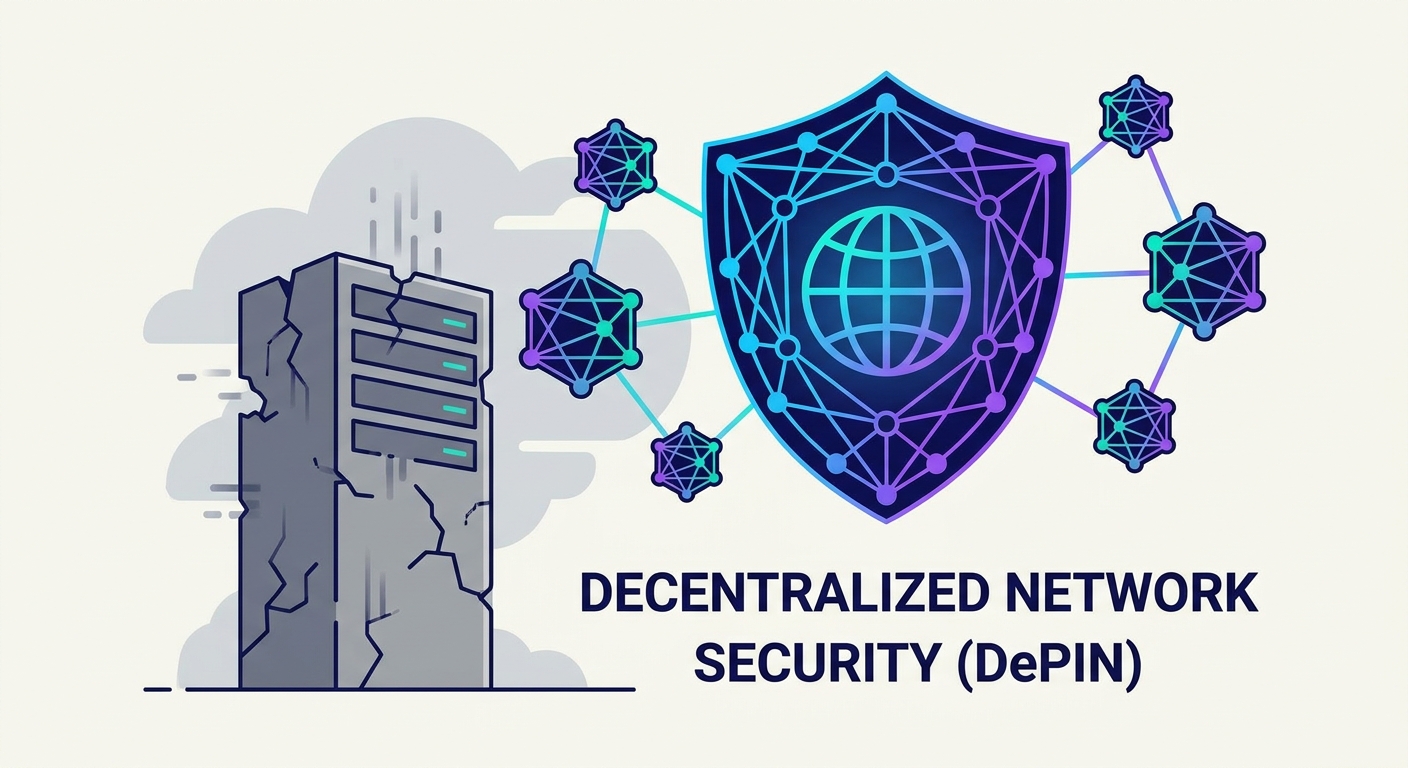
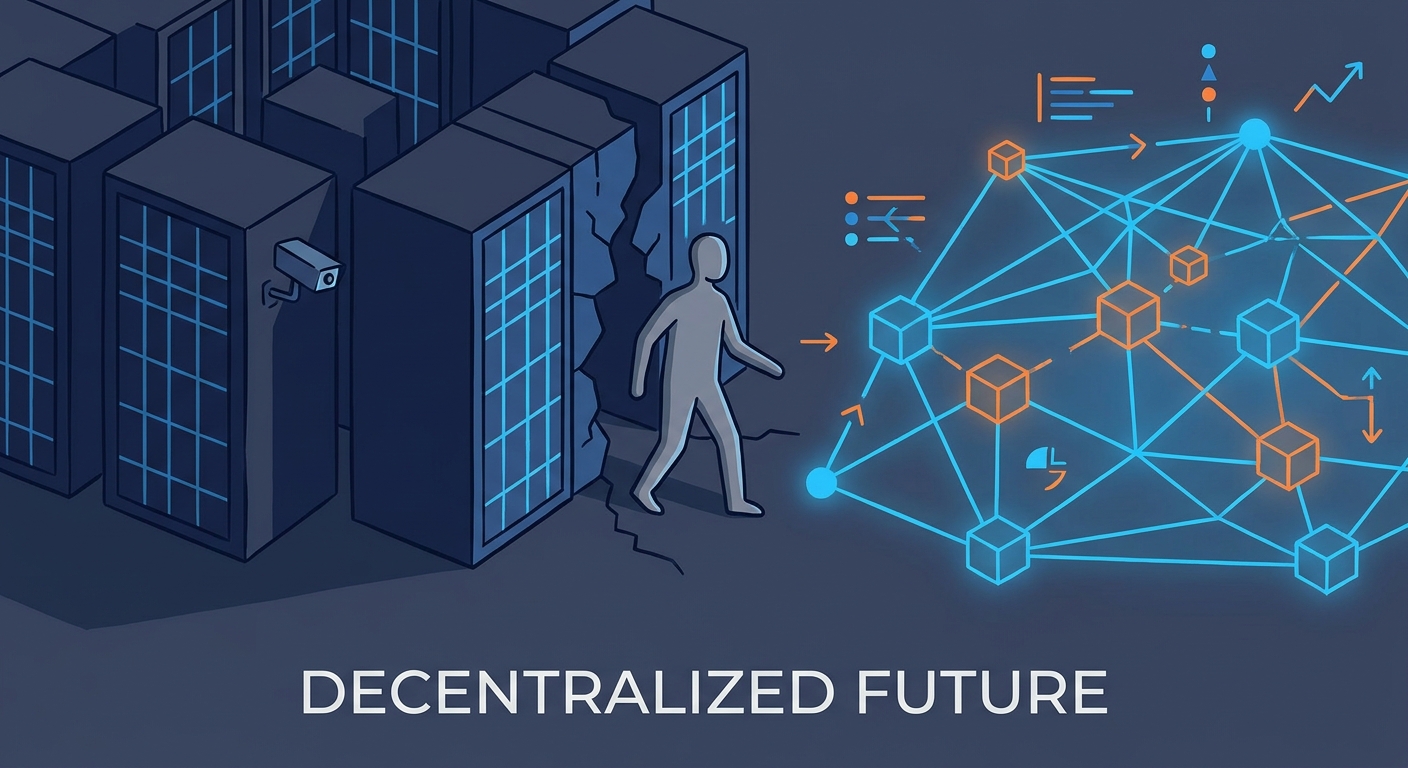
For decades, the internet has operated on a "hub-and-spoke" model. Think of it like a giant, centralized funnel. Your data flows through specific data centers, creating a massive bullseye for ISPs and hackers alike. When you sign up for a legacy VPN, you aren't actually solving the problem; you're just shifting your blind trust from your ISP to a private company. You’re swapping one middleman for another.
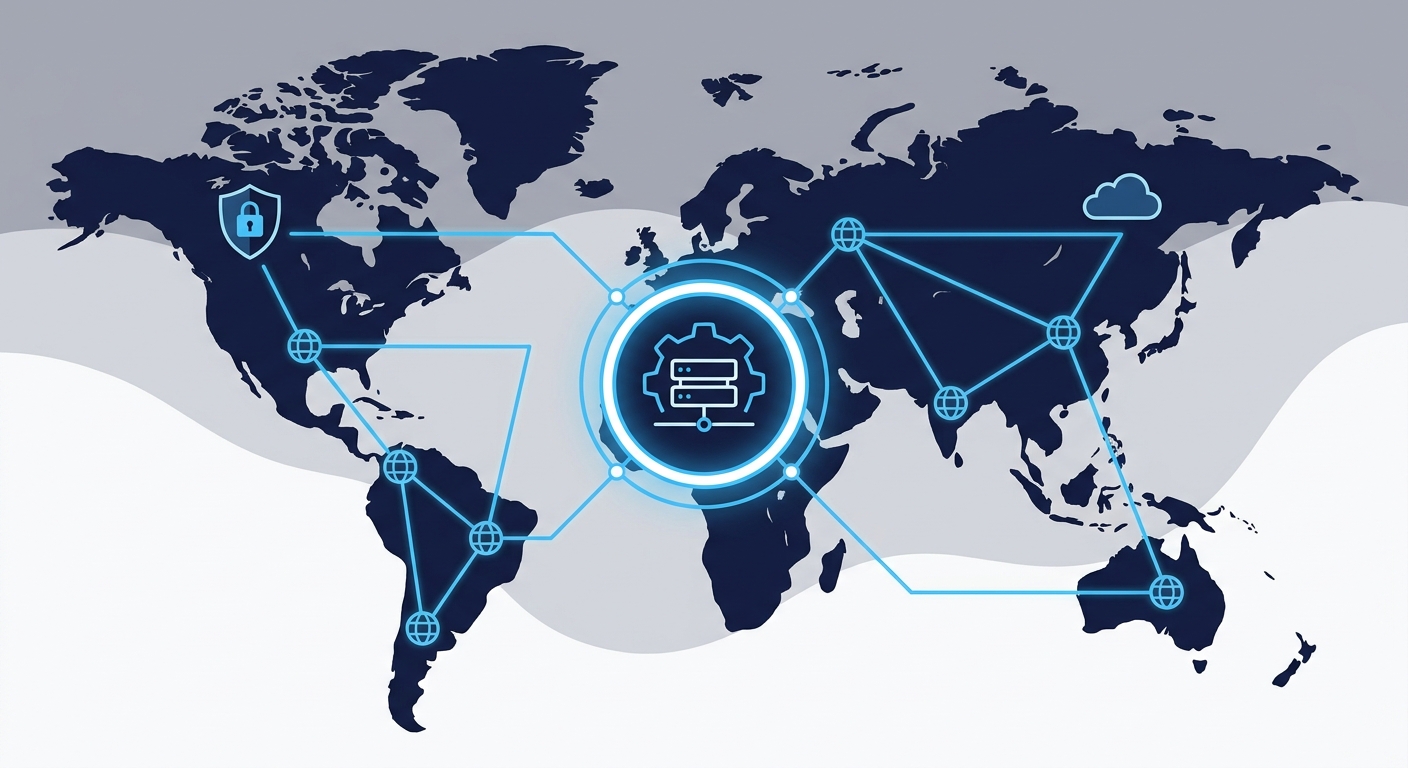
DePIN flips this on its head. Instead of a handful of massive servers, it uses a global mesh of independent nodes. Your traffic is distributed across thousands of verified, residential connections. It’s censorship-resistant, it’s robust, and—most importantly—the network is owned by the people, not some board of directors in a boardroom. As highlighted in recent DePIN sector market analysis, the shift toward decentralized infrastructure is accelerating as capital flows from speculative assets into real-world utility, solidifying the framework for a more resilient internet.
The VPN Monopoly Exposé: Why Ownership Transparency Matters
Here is the dirty secret of the privacy industry: the "conglomerate problem." You’ve probably noticed dozens of "competing" VPN brands, right? Dig a little deeper, and you’ll find that a tiny handful of parent corporations own almost all of them. You switch services, thinking you’re getting a fresh start, but you’re just moving your data from one room to another in the same house. That isn't privacy; that’s an illusion.
In the Web3 world, we don't do "trust." We do auditability. When you use decentralized protocols, you aren't relying on a corporate marketing promise. You’re interacting with smart contracts that handle the routing and encryption. This is the core philosophy behind why SquirrelVPN and similar projects prioritize open-source node discovery. By using blockchain explorers to verify node ownership and protocol neutrality, users can finally distinguish between genuine privacy tools and marketing-heavy shells. If you are looking to navigate this landscape, checking the Top 10 DePIN Projects 2026 is the first step in understanding which networks are truly decentralized versus those masquerading as such.
FHE and ZKPs: The Cryptographic Shield
Encryption isn't just about hiding data anymore; it’s about processing it without ever "seeing" it. We’re moving past the old-school AES-256 tunneling into a future defined by Fully Homomorphic Encryption (FHE) and Zero-Knowledge Proofs (ZKPs).
FHE is the holy grail. It allows data to be processed, analyzed, and routed while remaining fully encrypted. The network can do its job without ever knowing what your traffic actually contains. As explored in depth regarding understanding FHE in privacy, these technologies ensure that even in a decentralized mesh, the integrity of your data is mathematically guaranteed. Pair that with ZKPs, and suddenly you can prove you’re authorized to access a site without ever having to hand over your personal details or location. We are finally decoupling identity from activity.
The AI-Agent Connectivity Crisis
Have you noticed how hard it is to browse lately? Every site has a captcha, a firewall, or a blocklist. That’s because autonomous AI agents are everywhere, scraping data and flooding the pipes. Legacy VPNs are failing here because their IP addresses are easily flagged and blacklisted by AI-detection algorithms.
Decentralized networks fix this. Because dVPNs route traffic through real, residential connections, they look like regular, human traffic. As AI agents become our primary interface for the web, the demand for decentralized, "human-looking" bandwidth is going to explode. It’s not just about hiding; it’s about making sure your AI tools don't get locked out of the digital world.
The "Airbnb for Bandwidth" Economy
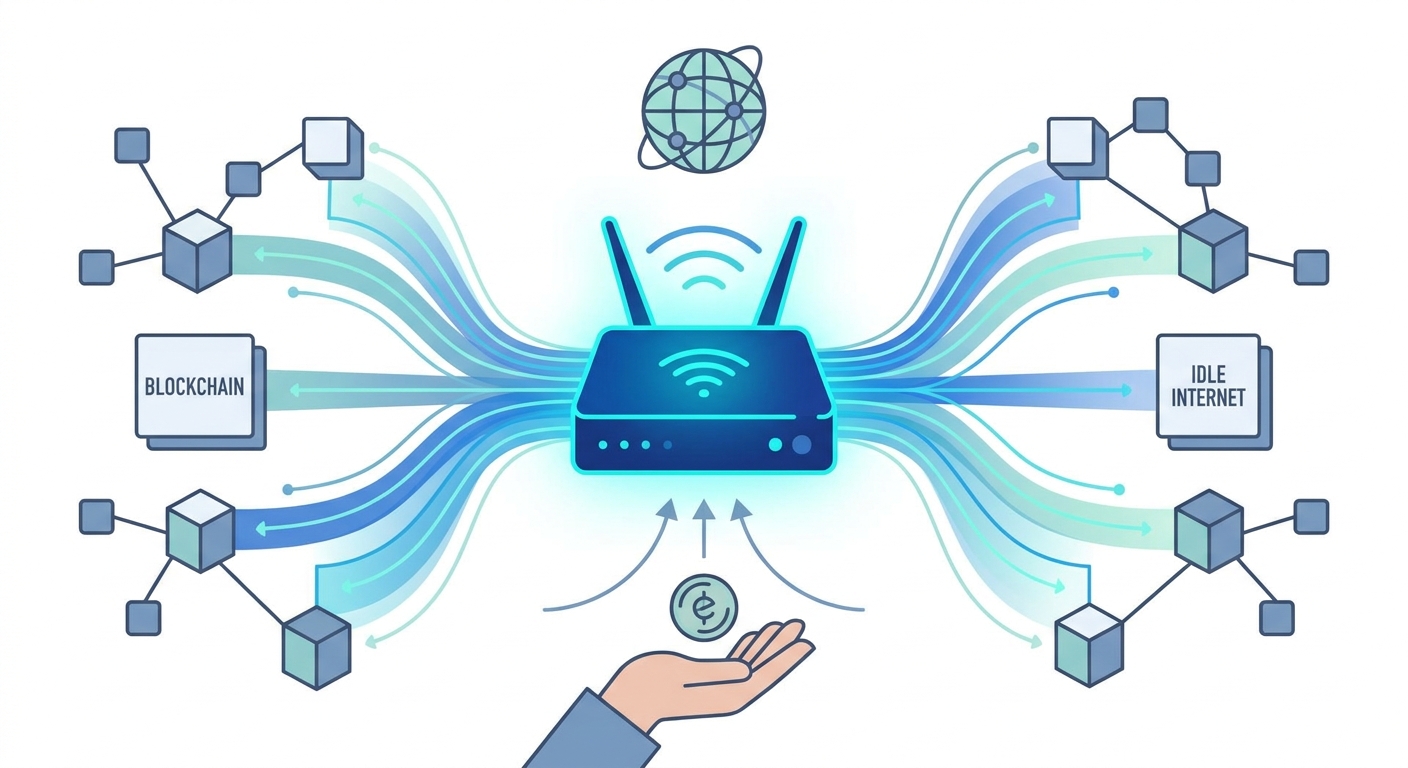
The most exciting shift in 2026 is the transformation of the user. You aren't just a passive consumer paying a subscription fee anymore; you’re an infrastructure provider. With the "Airbnb for Bandwidth" model, anyone with a spare internet connection can stake tokens, host a node, and become their own micro-ISP. It turns your idle bandwidth into a legitimate, productive asset.
The Reality Check: Hurdles to Mass Adoption
Let’s be honest: Web3 used to be a headache. It was designed by engineers, for engineers. But 2026 is changing that. We’re in the era of one-click UX. The best projects are making the tech invisible—it runs in the background of your browser or wallet, requiring absolutely zero manual configuration.
Is latency a problem? Sometimes. Traditional, centralized servers are fast because they’re optimized for speed over everything else. But as the decentralized mesh grows and routing algorithms get smarter, that speed gap is vanishing. Security is finally becoming a feature of the architecture, not a tax on performance.
Regulatory Resilience: The Only Way Forward
Governments and corporate gatekeepers are getting desperate. They want to control the flow of information, and centralized entities are easy targets for subpoenas and forced shutdowns. Decentralized protocols? They don't have a headquarters. They don't have a CEO to threaten. They don't have a single server to pull the plug on.
Using technology like the Mysterium Network, users can bypass regional censorship by tapping into a global, permissionless pool of nodes. When the infrastructure is spread across thousands of different jurisdictions, it becomes mathematically impossible to enforce a blanket ban. In an era of increasing digital authoritarianism, decentralized access is the only insurance policy that actually works.
Preparing for an Open Internet
The era of "privacy as a product" is dying. For too long, we’ve treated privacy like a luxury item we buy from a company, hoping they keep their word. That’s over. The future is "privacy as a protocol"—a non-negotiable layer of the internet, verified by code and maintained by the community.
Getting on board with decentralized infrastructure today isn't just about being "early." It’s about securing your place in a world that is actually open, transparent, and sovereign. The tools are ready for you. The network is waiting. The only thing left is to make the jump.
Frequently Asked Questions
How is a dVPN different from a traditional VPN?
A traditional VPN relies on a centralized company that owns the servers, meaning you must trust them not to log your data. A dVPN uses a decentralized network of independent nodes, where no single entity controls the infrastructure and the protocol is verifiable on-chain.
Is it legal to use a dVPN for anonymous browsing?
Yes. Privacy tools are essentially privacy-preserving communication protocols. Using a dVPN is a standard practice for protecting digital sovereignty and bypassing censorship; however, users should always ensure they are in compliance with local regulations regarding internet usage.
Can I really earn money by sharing my bandwidth?
Yes. Through the DePIN model, you can host a node on your hardware and earn tokens in exchange for providing bandwidth to the network. It turns your idle internet connection into a productive asset.
Are decentralized VPNs slower than traditional ones?
In the past, dVPNs faced latency challenges due to the nature of P2P routing. However, with the infrastructure advancements of 2026, the performance gap has narrowed significantly, often providing speeds that are indistinguishable from traditional providers while offering superior security.
How do I know the nodes in a dVPN are trustworthy?
Trust in a dVPN is not based on "marketing" but on cryptographic verification and reputation protocols. Most decentralized networks use staking mechanisms and on-chain metrics to ensure that nodes provide high-quality, honest service, with poor performers being automatically slashed or removed from the network.