Decentralized vs. Traditional VPNs: Why P2P Bandwidth Sharing is the Next Privacy Frontier
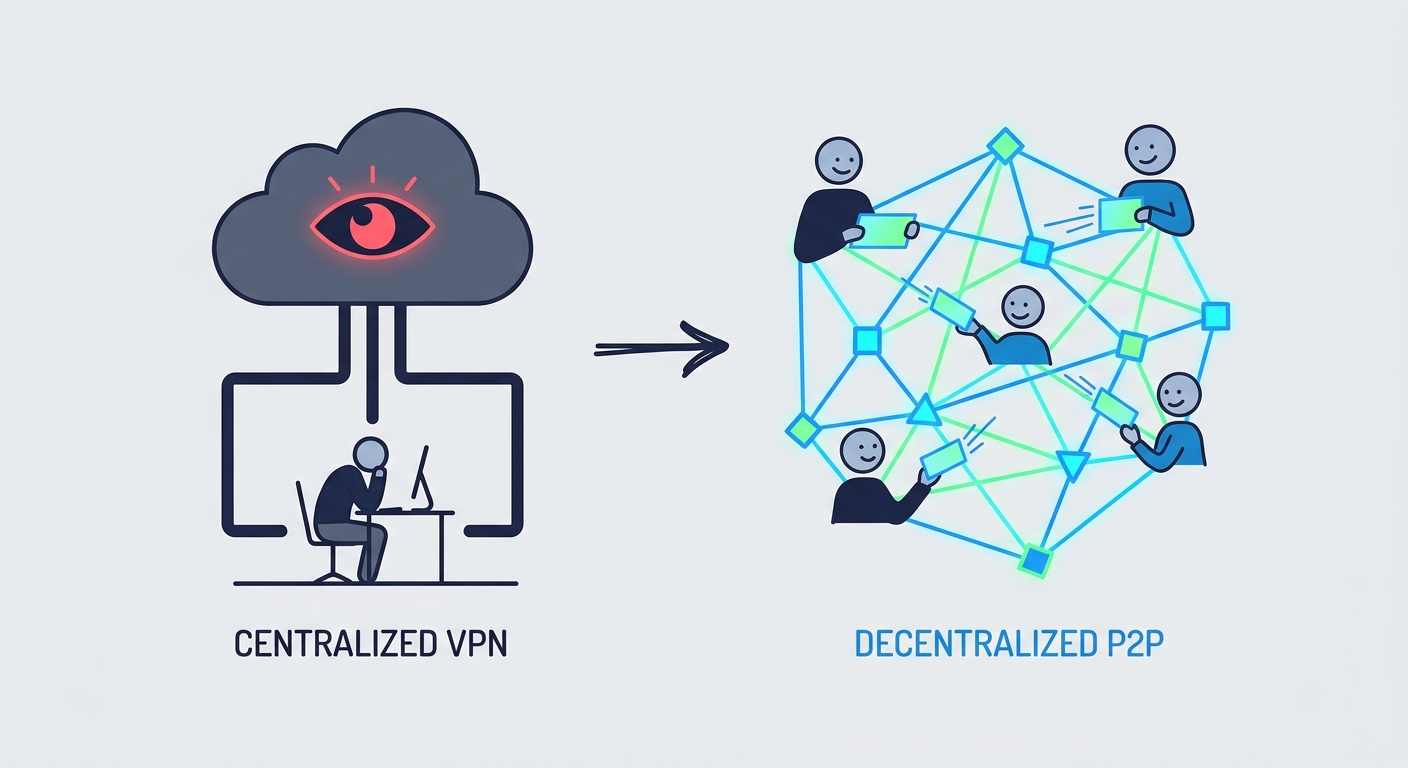
TL;DR
- ✓ Traditional VPNs rely on broken trust models and centralized points of failure.
- ✓ Decentralized VPNs replace corporate servers with a trustless P2P node network.
- ✓ Blockchain technology verifies data routing without compromising user anonymity or logs.
- ✓ Switching to dVPNs provides verifiable privacy instead of empty marketing promises.
Let’s be real: trusting a corporation to keep your browsing habits secret is a losing game. For years, we’ve been fed the "no-log" promise—a marketing slogan that relies entirely on the blind hope that a centralized company will actually delete your data when they say they will.
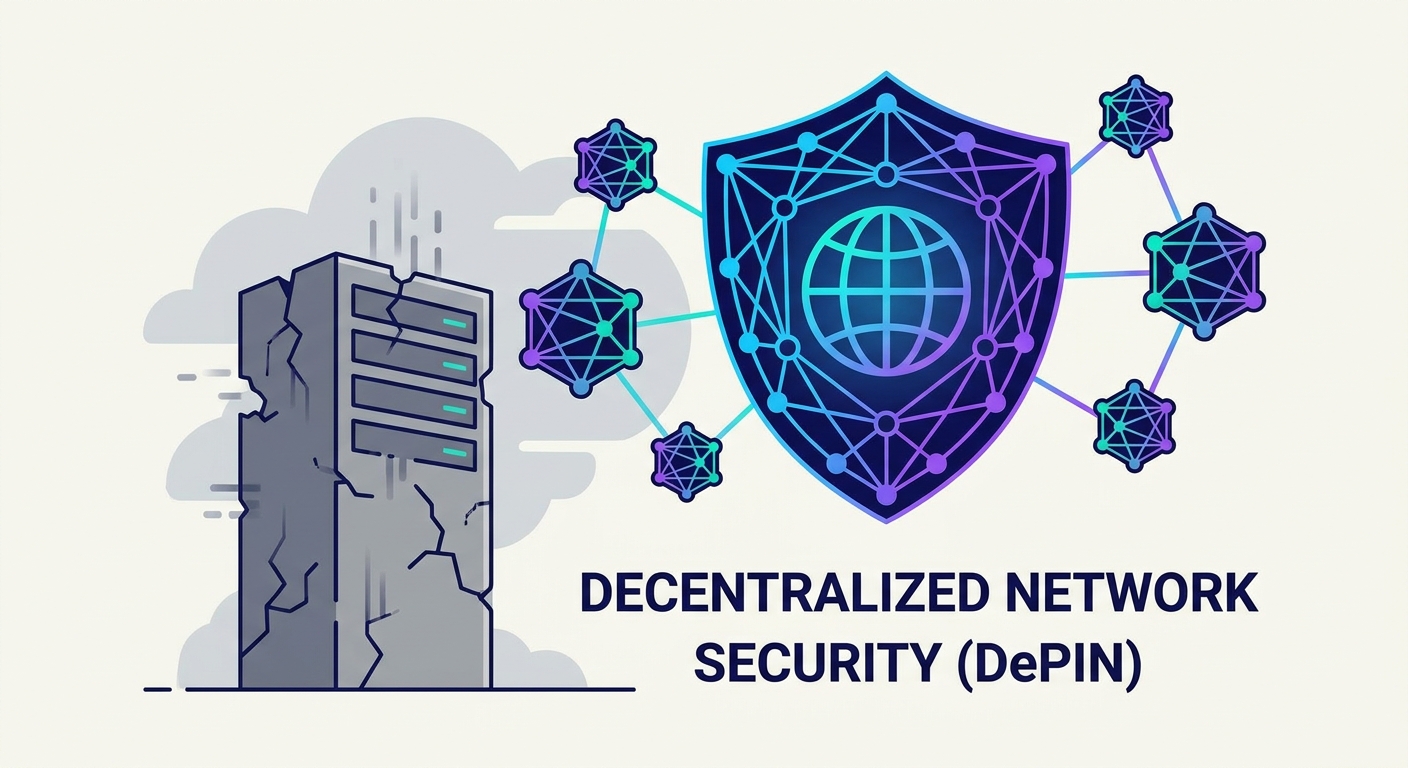
But here’s the problem: the architecture of a traditional VPN is fundamentally broken. It creates a centralized honey-pot that is begging to be hacked, subpoenaed, or leaked. It’s an open invitation for corporate consolidation. The shift toward decentralized VPNs (dVPNs) isn’t just a tech trend; it’s a move from "trust-based" privacy to "verifiable" privacy. By swapping a single point of failure for a distributed, trustless infrastructure, we’re finally taking the power back. If you’re ready to pull back the curtain on how this actually works, check out our complete guide on what a dVPN is.
Why is the "No-Logs" Marketing Myth Finally Collapsing?
"No-log" has become the industry’s version of "all-natural" on a food label. It sounds great, it’s comforting, but it’s mostly hot air. The technical reality? These policies fail constantly. As highlighted in this CSIRO study on VPN security risks, many providers inadvertently leak traffic or store metadata, leaving users totally exposed despite their glossy marketing brochures.
It’s a "Hall of Mirrors" effect. You pick a VPN because the logo looks cool and they promise "ironclad anonymity," only to find out it’s one of twenty brands owned by the exact same opaque holding company. When the backend infrastructure is shared across a dozen different labels, your "independent" choice is a total illusion.
These centralized servers are massive, singular points of failure. If a government entity serves a warrant to a data center, they don’t just get one user’s logs—they get the keys to the entire server cluster. You’re essentially trading your ISP’s surveillance for a VPN provider’s surveillance, all while crossing your fingers that the latter is a bit more honest.
What is the Architectural Shift Behind dVPNs?
Traditional VPNs are built on a client-to-server model. You connect to a server owned by a company, they route your traffic, and you hope they "forget" your activity. That’s a lot of hope.
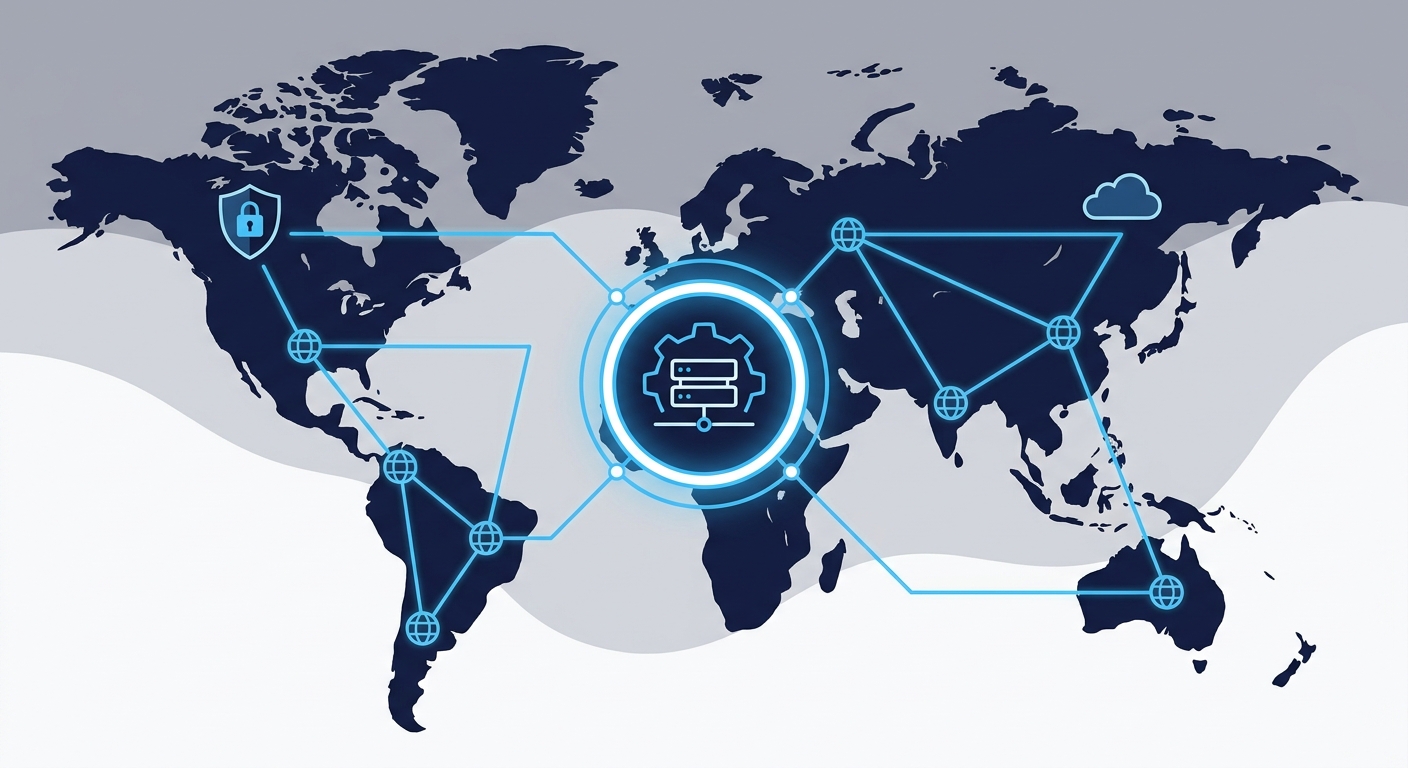
dVPNs use a client-to-node architecture. Your request is broken into packets and routed through a series of independent, volunteer-operated nodes scattered across the globe. There’s no central authority to subpoena. No central server to log your activity. Instead, blockchain technology acts as the arbiter of truth. It verifies that nodes are online and routing data correctly without the node operators ever knowing who you are or what you’re looking at.
The Anatomy of a Decentralized Routing Path
How Does DePIN Change the Economics of Privacy?
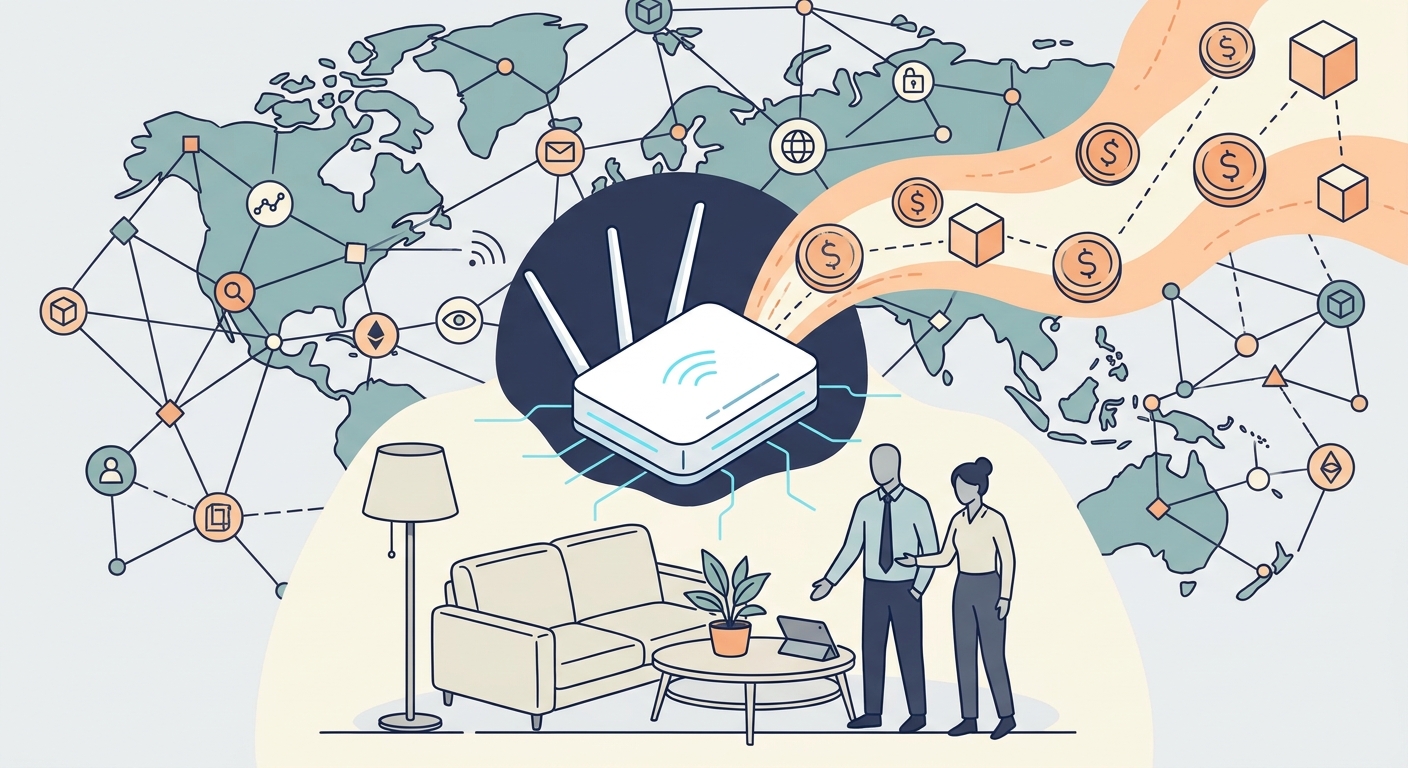
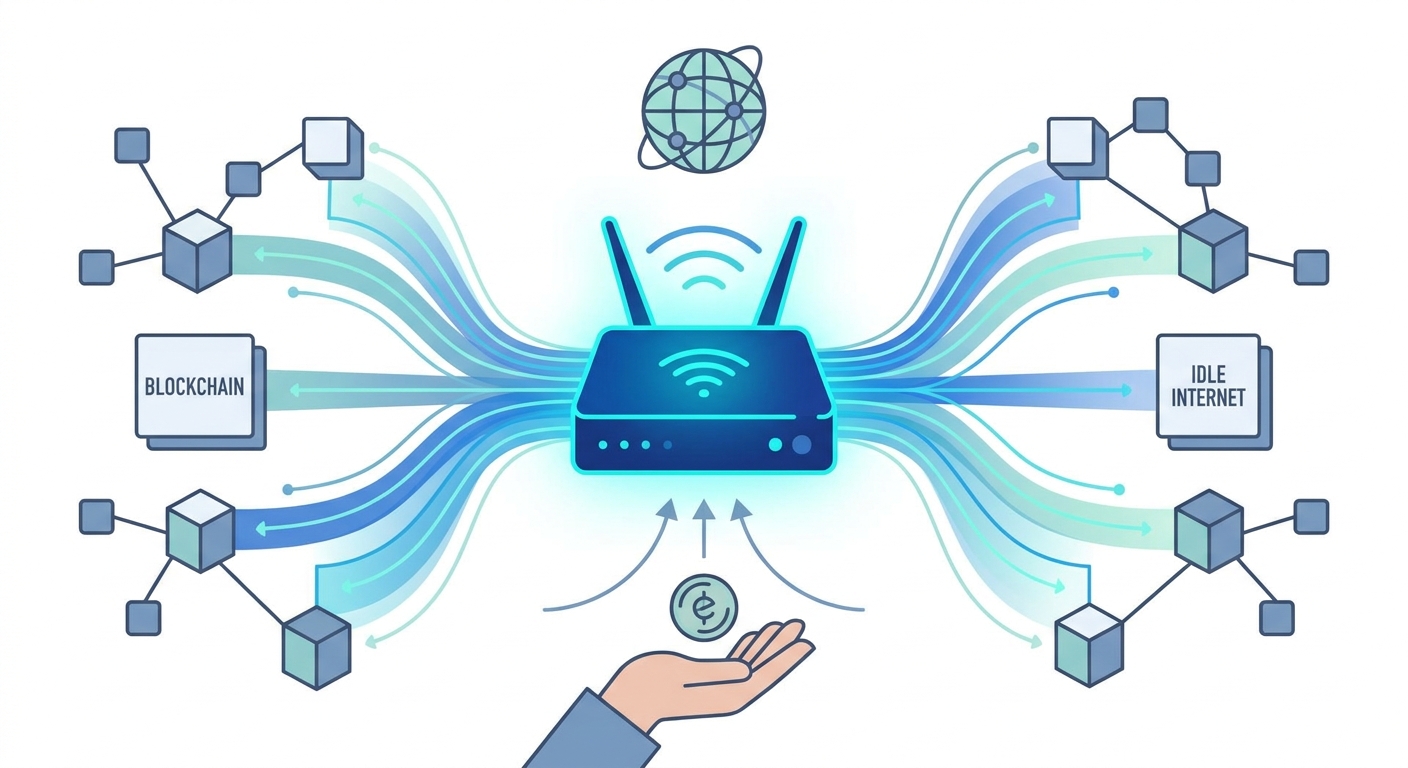
We’re seeing the rise of Decentralized Physical Infrastructure Networks (DePIN)—think of it like an "Airbnb for Bandwidth."
In the legacy world, companies spend millions on server infrastructure and pass those costs on to you via monthly subscriptions. In a DePIN model, the network is built by the users. If you’ve got a high-speed fiber connection, you can contribute your idle bandwidth to the network. In exchange? You earn tokens. It’s a self-sustaining economy where the cost of privacy is based on actual utility, not corporate overhead. This overview of what DePIN is shows exactly how this model turns the internet into a shared resource, incentivizing speed and uptime through market-driven rewards.
Is Centralized VPN Consolidation Endangering Your Privacy?
The consolidation of the VPN industry is a direct threat to digital freedom. When a handful of conglomerates own the most popular "independent" VPN brands, your traffic is likely flowing through the same corporate backend regardless of which app you download.
It’s a privacy paradox. You’re paying for a service that is, in many cases, just as centralized and opaque as the ISP you’re trying to hide from. As highlighted in this breakdown of the problems with centralized VPNs, relying on these corporate entities is a step backward. If you want true privacy, you have to move away from entities that can be bought, coerced, or compromised.
How Do dVPNs Combat Metadata Tracking and Traffic Analysis?
In a traditional VPN, your traffic is encrypted between your device and the server, but the provider still sees your destination. More importantly, they can perform traffic analysis—monitoring packet timing and volume to correlate when you send data and when a website receives it. It’s a classic de-anonymization trick.
dVPNs fix this with multi-hop, non-custodial routing. Because your traffic bounces through multiple, disparate nodes operated by different people, no single entity has the full picture. By the time your traffic hits the exit node, it’s cryptographically decoupled from the entry node. This makes volume and timing analysis exponentially harder for any adversary trying to map your activity.
Feature Comparison: Traditional vs. Decentralized
| Feature | Traditional VPN | dVPN |
|---|---|---|
| Trust Model | Trust-based (Company) | Trustless (Code/Protocol) |
| Infrastructure | Centralized Servers | Distributed P2P Nodes |
| Data Ownership | Corporate Controlled | User Controlled |
| Censorship Resistance | Low (Targetable IPs) | High (Dynamic Routing) |
| Revenue Model | Subscription Fees | Tokenized Incentives |
How Do You Get Started with the dVPN Ecosystem?
Transitioning to a decentralized network isn't the technical nightmare it used to be. Modern clients have done a great job abstracting the "crypto" layer, letting you connect with a single click—just like you would with a legacy provider. When you open a dVPN client, you’re usually presented with a list of available nodes. You can pick one based on your specific needs: speed, location, or cost.
Want to do more than just consume? You can "stake" tokens to help secure the network or provide bandwidth to earn rewards. If you’re ready to take the leap, check out our 10 best decentralized VPNs of 2026 to find the right starting point for your setup.
Frequently Asked Questions
Are dVPNs slower than traditional VPNs?
Early on, maybe. But modern protocols use optimized P2P routing that frequently matches or beats traditional speeds. By dynamically selecting the most efficient, shortest path through the network rather than forcing all your traffic through one congested, centralized data center, dVPNs often provide a much snappier experience.
Do I need to be a crypto expert to use a dVPN?
Not at all. Modern dVPN apps handle the heavy lifting. The blockchain and token mechanics run seamlessly in the background. You don’t need to be a DeFi wizard to benefit from the superior privacy architecture.
Can I really make money sharing my bandwidth?
Yes. Through the DePIN model, you can run a node on your home connection. By providing bandwidth to the network, you earn tokens. It basically turns your idle internet connection into a digital asset, helping you offset your privacy costs or even generate a little passive income.
If there is no company, who do I contact for support?
Because dVPNs are protocol-based, support is community-driven. You’ll find that most projects have active, developer-led channels on Discord, GitHub, or Telegram. It creates a transparent, collaborative environment where issues are solved by the people who actually build and use the tech, rather than a support desk reading from a script.