Vietnam Security Summit 2026 Prioritizes AI-Driven Cyber Defense and Post-Quantum Cryptography Standards
TL;DR
Vietnam Security Summit 2026: Facing the AI and Quantum Reckoning
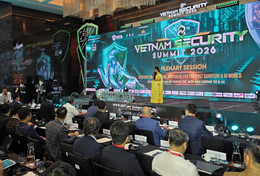
On May 22, the JW Marriott Hotel in Hanoi played host to the 8th Vietnam Security Summit. It wasn't just another industry gathering; it was a high-stakes emergency room for the digital age. With the theme "Securing Digital Future: Preparing for the Post-Quantum & AI World," the event brought together the people who actually pull the levers—government regulators, industry titans, and the engineers on the front lines—to grapple with a future that feels like it’s arriving ten years ahead of schedule.
Organized by the National Cybersecurity Association and IEC Group, the summit made one thing painfully clear: the old playbook is dead. As our infrastructure becomes a tangled web of interconnected systems, we’re no longer just fighting hackers in basements. We’re fighting algorithms that think faster than we do, and we’re staring down the barrel of quantum computing—a technology that threatens to turn our current encryption into a digital paperweight.
Image courtesy of VietnamNet
The Double-Edged Sword of AI
The consensus in Hanoi was sobering. AI is a miracle for defensive security, sure, but it’s a force multiplier for the bad guys. It’s lowered the barrier to entry so significantly that a script kiddie today can wield the power of a state-sponsored actor from five years ago.
During the plenary sessions, the experts laid out the new reality of our threat landscape:
- Deepfake Impersonation: Biometrics are failing. We’re seeing synthetic media so convincing it can walk right through the front door of secure authentication systems.
- AI-Enhanced Phishing: The days of "Dear Sir" emails are gone. We’re now seeing hyper-personalized, context-aware campaigns that feel like they were written by someone who knows your entire browser history.
- Automated Ransomware: Imagine malware that doesn't just sit there—it learns. These algorithms hunt for vulnerabilities and adapt their attack vectors in real-time, making them nearly impossible to block with static rules.
- Voice Impersonation: If you think you can trust a phone call from your boss, think again. Audio synthesis has reached a point where a few seconds of a sample can be used to trick employees into handing over the keys to the kingdom.
Colonel Nguyen Hong Quan of the Ministry of Public Security didn't mince words. These threats don't respect borders, and they are eroding the very foundation of public trust. The takeaway? We can’t just buy better software. We need a fundamental shift in how regulators, tech giants, and academia talk to each other.
The Quantum Clock is Ticking
If AI is the fire at our heels, quantum computing is the slow-moving glacier that’s going to crush everything in its path. The fear isn't just about what quantum computers will do in ten years; it’s about what they’re doing right now.
Adversaries are currently employing a "harvest now, decrypt later" strategy. They are vacuuming up encrypted data today, storing it in massive data centers, and waiting for the day their quantum hardware is powerful enough to crack it open like an egg. This makes the transition to post-quantum cryptography (PQC) not just a "nice-to-have" upgrade, but a race against time.
| Threat Category | Primary Risk Factor | Mitigation Strategy |
|---|---|---|
| AI-Driven Fraud | Deepfakes & Social Engineering | AI-based detection & behavioral analysis |
| Quantum Computing | Decryption of current data | Adoption of post-quantum standards |
| Supply Chain | Dormant malware & vulnerabilities | Rigorous vetting & zero-trust architecture |
| Zero-Day Attacks | Unpatched software flaws | Proactive threat hunting & rapid patching |
Building a Resilient Ecosystem
The summit wasn't just talk. Between the plenary sessions and the thematic workshops, the focus shifted to the "how." How do we integrate machine learning into our defensive frameworks without it becoming another attack surface? How do we move toward zero-trust architectures when our supply chains are so globalized?
For those looking to dig into the technical weeds, the conference agenda and the list of speakers provide a roadmap of the expertise that was on display. The goal here is simple: stop relying on static defenses. You cannot defend a dynamic, AI-driven network with a firewall that hasn't been updated in six months.
As reported by VietnamNet, the summit was a wake-up call. The private sector and the government have to stop working in silos. If the defense isn't unified, the attackers—who are more collaborative than ever—will find the cracks.
The Path Forward
We are at a crossroads. The about documentation for the summit emphasizes that this is about creating a collaborative platform, not just a trade show. The sponsors and exhibitors were there to showcase the tools—AI-powered threat intelligence, hardware-based security, and quantum-resistant algorithms—but the real value was in the alignment of standards.
We’re moving toward a world where your security posture is defined by your ability to adapt. Whether it’s protecting data from quantum decryption or stopping a deepfake in its tracks, the mission remains the same: ensuring that the digital future doesn't become a digital liability.
The Vietnam Security Summit 2026 made it clear: the transition to a post-quantum and AI-integrated world isn't just a technical hurdle. It’s a complete rewrite of the security rulebook. And if we don't start writing it together, we’re going to be left reading the results of someone else’s work.