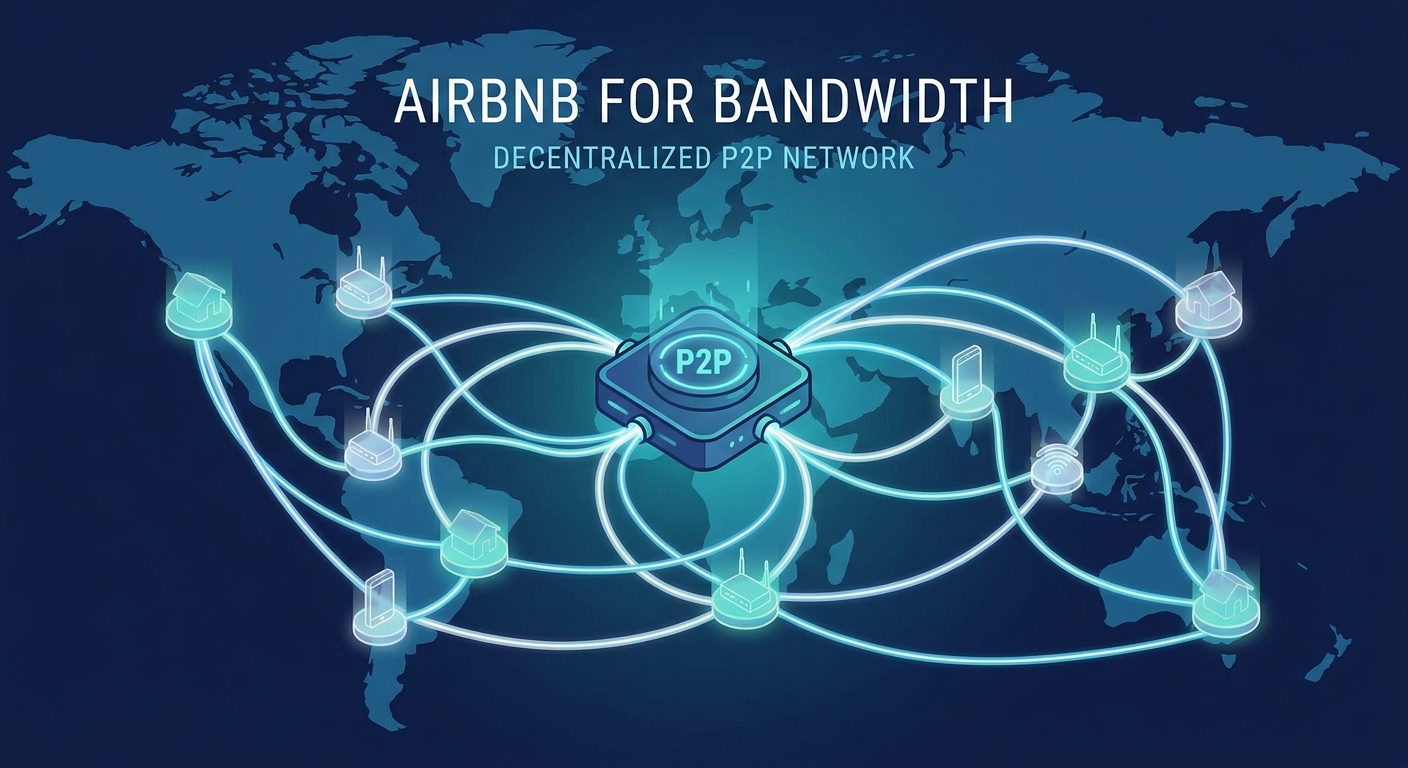
How to Build a Peer to Peer Network: A Beginner’s Guide to Bandwidth Mining (2026)
TL;DR
- ✓ Bandwidth mining allows you to monetize idle home internet as a digital asset.
- ✓ DePIN networks provide essential residential IP addresses for AI and proxy data collection.
- ✓ Running a node acts as a secure, decentralized bridge for network service requests.
- ✓ Proof-of-service protocols ensure you receive automated token rewards for your shared bandwidth.
Bandwidth mining is the modern digital gold rush. But forget the pickaxe and the grime. Today, you’re simply putting your idle internet connection to work. By 2026, DePIN—or Decentralized Physical Infrastructure Networks, if you want the long-winded version—has stopped being a collection of speculative whitepapers and transformed into the actual plumbing of the web.
When you run a node, you’re turning your underutilized home internet into a revenue-generating asset. You’re providing the connectivity that AI models and proxy networks are starving for. According to the latest DePIN Industry Growth Report 2026, this sector has matured into a multi-billion dollar backbone of the internet. It’s a simple trade: you rent out the digital "real estate" you already own, and in return, you get paid.
How Does Bandwidth Mining Actually Work?
Think of bandwidth mining as the great migration away from the clunky, centralized data centers of the past. We’re moving to a distributed, peer-to-peer model. When you run a node, your computer effectively becomes a gateway for authenticated network requests.
Why do they need you? AI companies and data scrapers have a massive problem. They need residential IP addresses to bypass those annoying geo-blocks and gather unbiased data. Old-school data center IPs are easily spotted and blocked, but your home connection? That carries the "trust score" of a real person.
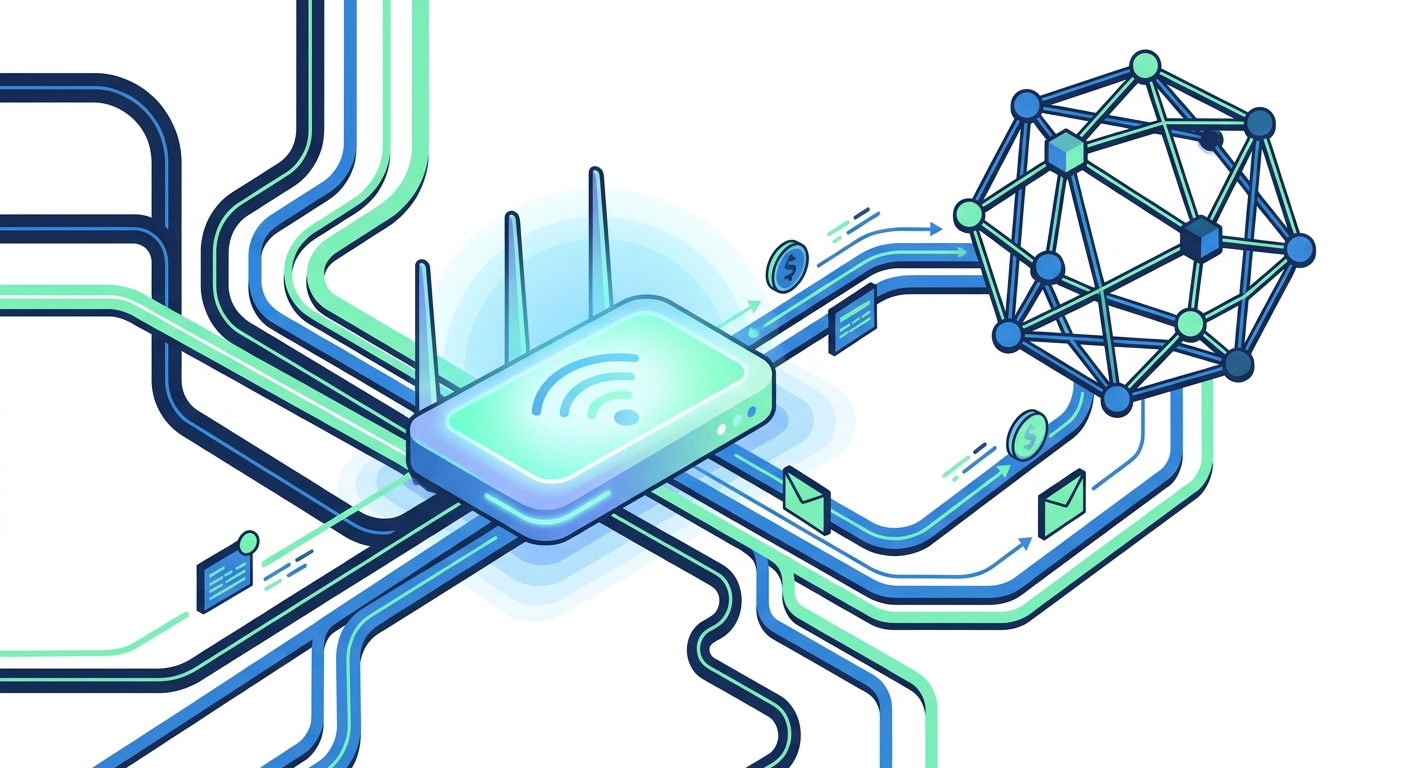
The lifecycle of a packet is simple. Your node acts as a bridge. When an AI model needs data from a specific region, your idle bandwidth facilitates that request. Because it’s a residential connection, it gets the job done. Once your node finishes the task, the network settles the bill through a "proof-of-service" protocol. It’s a massive upgrade from the energy-guzzling mining of the past. No GPUs melting down here—just tokenized rewards dropped straight into your wallet.
Why 2026 is the Year of Decentralized Infrastructure
Massive AI models have an insatiable hunger. They crave raw, diverse, residential-grade data. Traditional proxies get flagged and blocked by web security in seconds. That makes the residential IPs from decentralized networks the only game in town for large-scale data gathering.
This is exactly why the Solana DePIN Ecosystem has exploded. It provides the low-latency, high-throughput environment needed to handle millions of nodes firing at once.
In this new economy, your "hash rate" isn't about raw GPU power. It’s about reliability. Uptime, connection stability, and—most importantly—where you live. If you’re in a major city where data demand is high, your node is worth a lot more to the network. It’s all about location, location, location.
Is Bandwidth Mining Safe and Private?
The first thing everyone asks is, "If someone uses my internet, am I on the hook for what they do?"
It’s a fair question. But the architecture of modern dVPNs and proxy protocols has evolved. These networks use heavy-duty encryption to ensure your node is nothing more than an encrypted tunnel. You aren’t a participant in the traffic; you’re just a relay.
By using Zero-Knowledge Proofs (ZKPs), the network can verify you’ve provided the service without ever looking at the data packets themselves. Your privacy is baked into the code, not left to the honor system. For a deeper look into why these protocols are changing the game, read our analysis on why node-based VPNs are the future of privacy. You aren't just a miner; you’re an infrastructure provider.
Step-by-Step: How to Build Your First Node
Building a node used to be a headache. Now? It’s a "set-and-forget" process that takes about fifteen minutes.
1. Hardware Selection: Keep it simple. You don't need a supercomputer. A low-power PC, a spare laptop, or even a Raspberry Pi 5 will do the trick. The only real requirement is a stable, 24/7 internet connection. If you have an old laptop gathering dust, put it to work.
2. Network Configuration: Go with Ethernet if you can. Wi-Fi is fine, but latency spikes can mess with your "proof-of-service" rewards. Wired is just more reliable.
3. Software Installation: Grab the official client from your chosen network provider. Once it’s installed, you’ll link a non-custodial crypto wallet. That’s where your rewards land.
4. Optimization: Don't let the node eat your bandwidth. Adjust the settings to cap usage so it never interferes with your gaming, 4K streaming, or work calls. Ready to get started? Follow our guide on how to start bandwidth mining to get your node live today.
Profitability: Estimating Your Monthly Yield
Your earnings boil down to three things: latency, demand, and uptime. A 1Gbps connection in a bustling city is going to out-earn a 50Mbps connection in the middle of nowhere every single time.
| Connection Speed | Expected Monthly Yield (Avg) |
|---|---|
| 50 Mbps | $5 - $15 |
| 500 Mbps | $25 - $60 |
| 1 Gbps+ | $75 - $150+ |
Note: These figures are estimates based on 2026 market demand and the reality of token price volatility. This is passive income, not a replacement for your 9-to-5.
Debunking Myths: Will It Slow My Internet?
The biggest myth out there is that this will throttle your connection. Modern clients are built with "idle thresholding." If the software detects you’re gaming, on a video call, or streaming, it throttles its own usage to near-zero. It only pushes hard when you’re actually idle. Think of it like renting out your driveway while you’re at the office. You won’t even know it’s being used.
The Long-Term Play: Why Bandwidth Mining is Here to Stay
This shift toward decentralized infrastructure isn't just a trend. It’s a necessity. AI models are getting smarter and more complex, and they need a constant flow of real-world data to stay relevant. That demand for decentralized, residential-grade bandwidth isn't going anywhere. By setting up your node now, you’re positioning yourself as a permanent player in the new internet economy. You’re a silent, passive provider of the infrastructure that powers the AI revolution.
Frequently Asked Questions
Will bandwidth mining slow down my home internet connection?
No. Modern bandwidth clients use "idle thresholding," which detects when you are using your connection for gaming or streaming and automatically pauses or throttles node activity to ensure your personal traffic is always prioritized.
Is it legal and safe to share my bandwidth?
Yes, provided you use reputable, established protocols. Modern dVPNs use Zero-Knowledge Proofs and end-to-end encryption to ensure that you are merely an encrypted relay, protecting you from liability regarding the traffic passing through your node.
How much can I realistically earn in 2026?
Earnings depend on your geographic location, connection speed, and uptime. While a standard home setup might earn $20–$50 a month, high-speed, 24/7 nodes in high-demand regions can earn significantly more. Always account for token price volatility.
What hardware do I need to get started?
Most modern laptops, dedicated small-form-factor PCs, or even Raspberry Pi devices are sufficient. The most important factor is a stable, consistent internet connection rather than raw processing power.