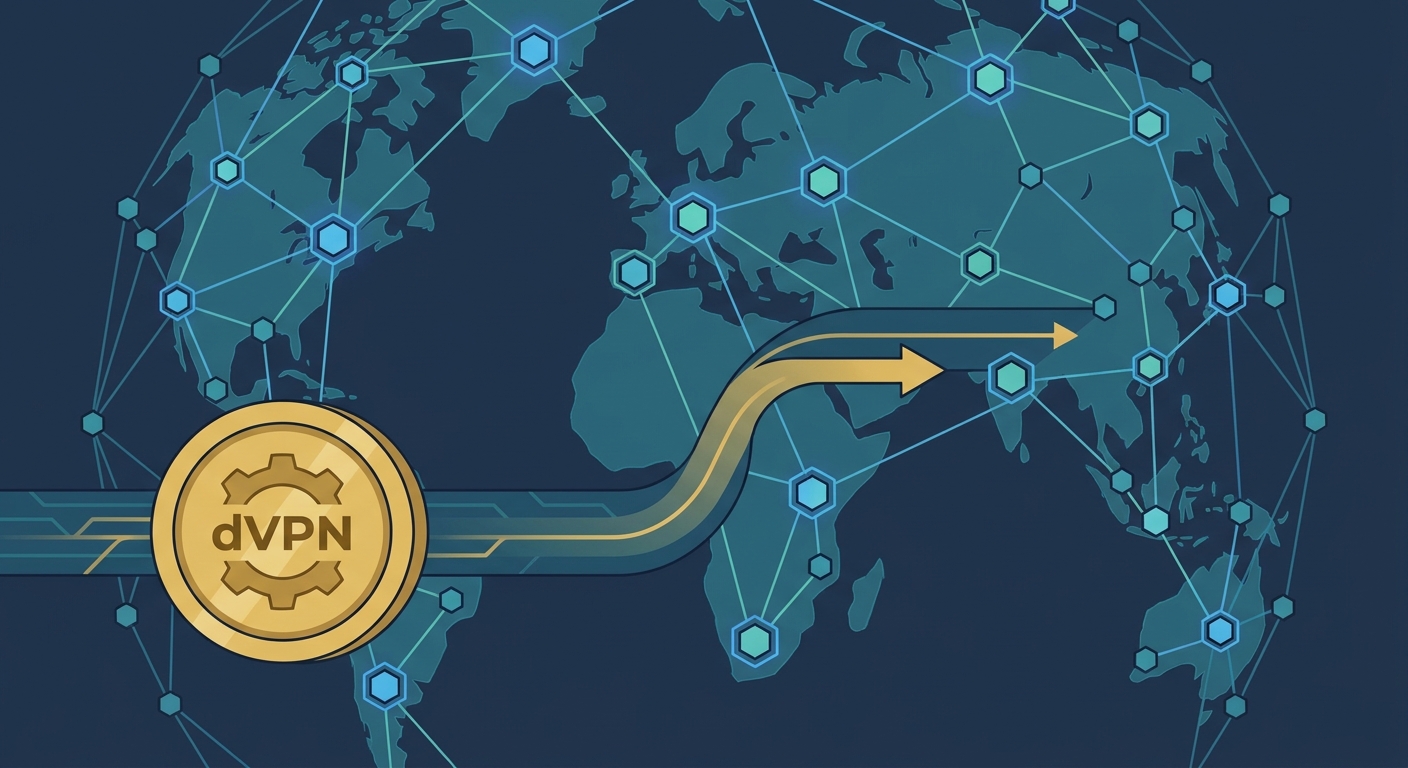
What is DePIN? Understanding the 'Airbnb for Bandwidth' Revolution
TL;DR
- ✓ DePIN decentralizes physical infrastructure by crowdsourcing hardware from individual users globally.
- ✓ Users earn token rewards by renting out their spare bandwidth and digital storage capacity.
- ✓ Solana provides the high-speed, low-cost blockchain backbone necessary for micro-transaction scaling.
- ✓ This model creates a more resilient and private alternative to centralized corporate internet providers.
DePIN—Decentralized Physical Infrastructure Networks—is the bridge between that dusty, unused hardware in your closet and the massive, hungry digital services powering today’s internet.
Think about how we usually build the web. It’s a top-down game. Massive corporations spend billions on data centers, cell towers, and server farms, then charge you a premium to access them. DePIN flips the script. It takes that power and puts it back in your hands. If you’ve got an internet connection, a router, or a bit of spare storage, you aren't just a consumer anymore. You’re the service provider.
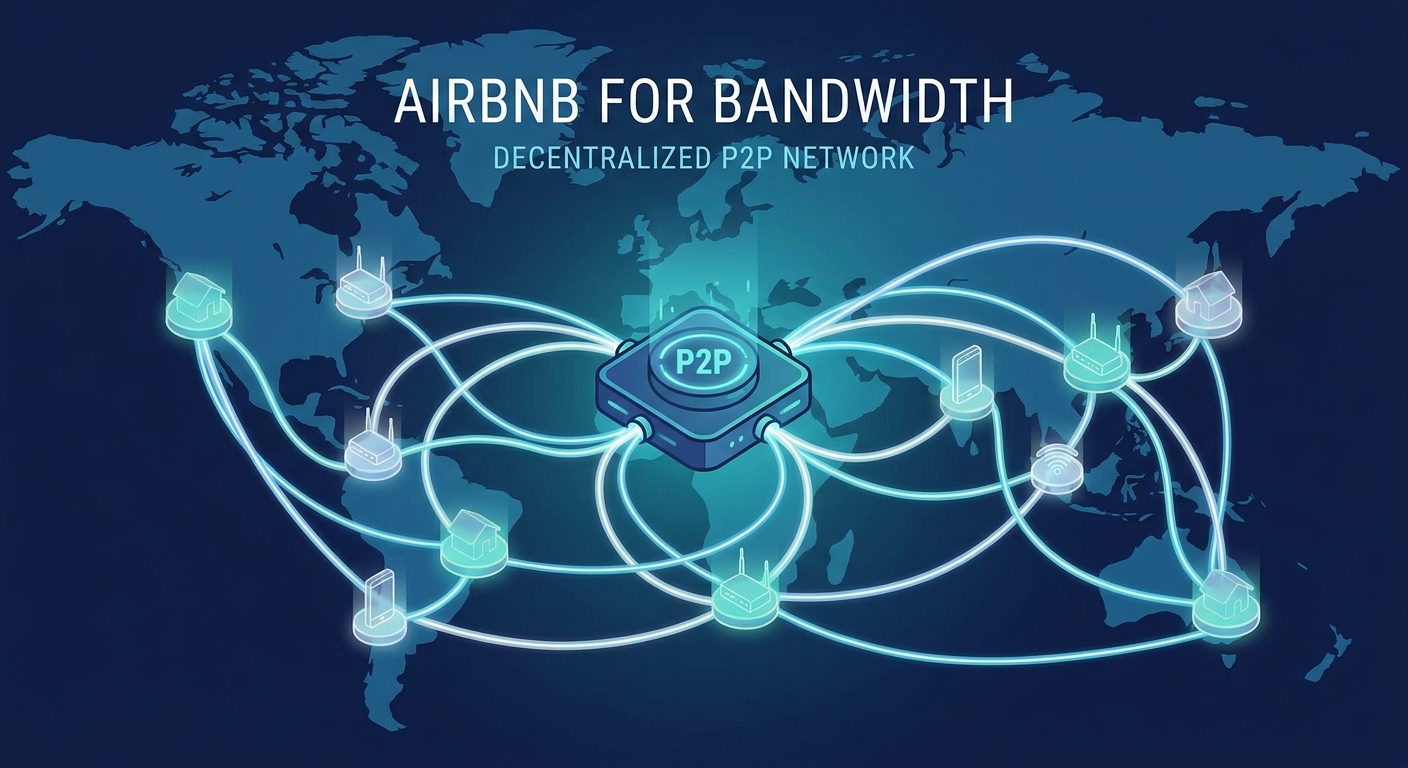
It’s essentially the "Airbnb for bandwidth." You’re renting out your unused digital capacity to the people who need it, creating a decentralized, user-owned backbone for the web.
Beyond the Hype: Why DePIN is the Infrastructure of 2026
We’re well past the era of empty promises and speculative tokens. By 2026, DePIN has matured into a $20 billion market built on actual, boring, reliable utility. If you’re seeing massive adoption, it’s not because of some viral tweet. It’s because AI researchers, privacy-obsessed users, and businesses are actually paying for the resources these networks provide.
The shift is undeniable. For decades, we’ve just accepted that ISPs will throttle our speeds, harvest our data, and lock us into miserable, expensive contracts. DePIN changes the power dynamic. By spreading hardware across thousands of homes instead of relying on one vulnerable, centralized data center, these networks offer a level of resilience that the old guard simply can’t touch. This isn't about "crypto" for the sake of it. It’s about building a faster, more private, and more efficient internet that actually pays you for your contribution.
How Does the DePIN Ecosystem Actually Work?
A DePIN network stands on four pillars that turn individual contributions into a cohesive system:
- The Blockchain: It acts as the transparent ledger for all transactions. No funny business.
- The Hardware: Whether it’s your home router or a lightweight software node on your laptop, this is the engine.
- Token Incentives: This is the "flywheel." You get rewarded for contributing, which draws in more users, which makes the network stronger, which attracts more demand.
- Off-Chain Computation: This handles the heavy lifting, keeping the network fast and scalable.
The Solana ecosystem has become the primary, high-throughput backbone for this revolution. Because decentralized infrastructure requires thousands of micro-transactions to reward users, Solana’s ultra-low fees and speed make it the only logical choice to support this scale.
The 'Airbnb for Bandwidth' Deep Dive: How It Monetizes Your Connection
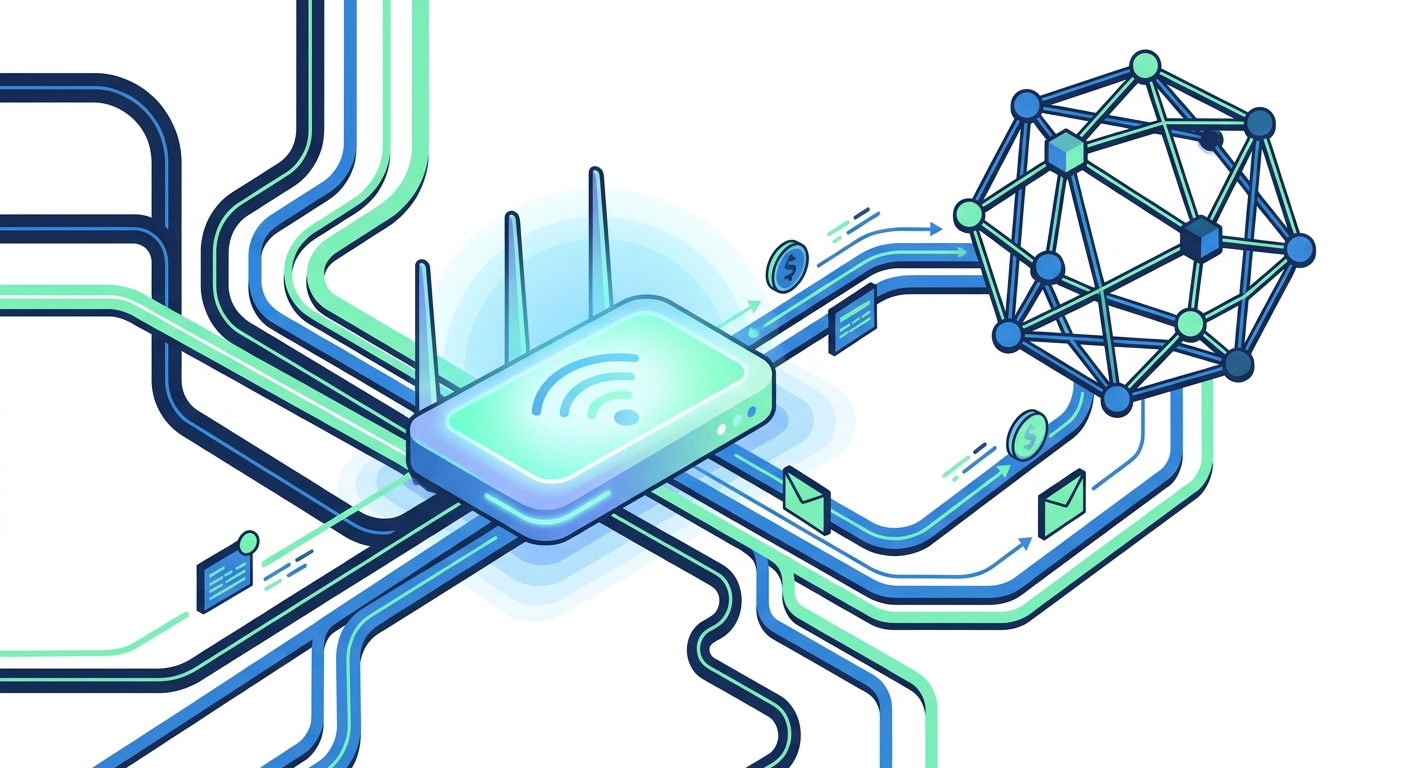
When you join a bandwidth-sharing network, you’re turning your home internet into a P2P marketplace. When you aren't using your full connection, your node makes that surplus capacity available to the network.
Who is buying it? AI researchers, for one. They need vast amounts of high-quality residential IP addresses to train models without hitting regional blocks. Businesses also use it to verify localized content across the globe.
By running a node, you become the infrastructure provider. This isn't just theory; it is a functioning economy. You can explore the mechanics of this in our Bandwidth Monetization Guide, which details how your idle connection generates value in real-time. The best part? It’s passive. You set it up, the network manages the demand, and you collect the rewards.
Why Is DePIN Replacing Traditional ISPs and Centralized VPNs?
The contrast is stark. Traditional ISPs operate like gatekeepers. They mine your data to build profiles for advertisers, throttle your connection during peak hours, and act as a single point of failure.
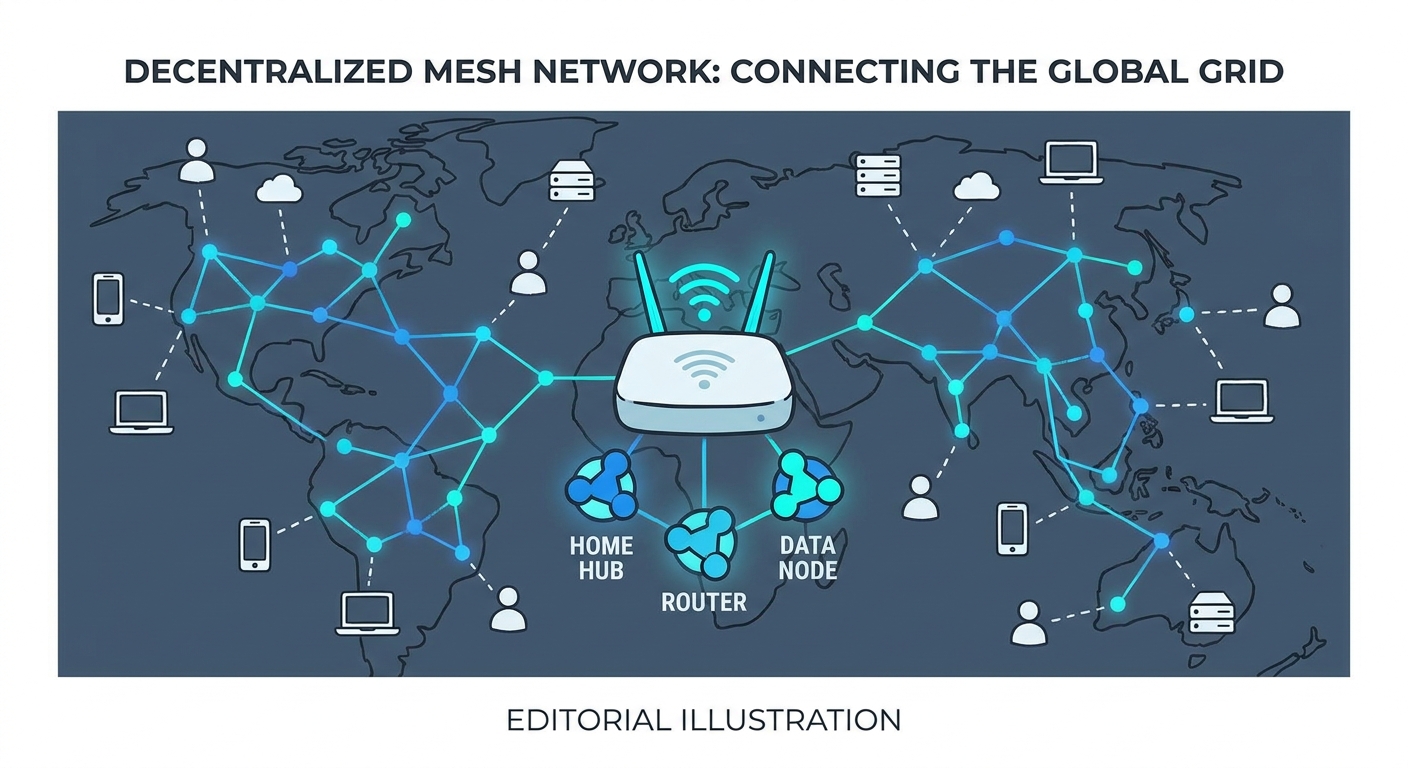
DePIN networks are built on censorship resistance. Because traffic is routed through a distributed mesh of nodes, there is no "master switch" for a government or corporation to pull. If you want to see the scale of this shift, platforms like DePINscan offer real-time metrics on network growth. The trend is clear: users are migrating toward decentralization for better privacy and lower costs.
| Feature | Traditional ISP / Centralized VPN | DePIN Network |
|---|---|---|
| Cost | Fixed Subscription | Revenue Sharing / Pay-as-you-go |
| Privacy | Centralized Logs (Data-mining) | Zero-Knowledge / Encrypted |
| Censorship | High (Single point of failure) | Low (Distributed nodes) |
| Ownership | Corporate Control | User-Owned Infrastructure |
Is DePIN the Ultimate Web3 Privacy Tool?
Privacy is the most valuable commodity on the internet, and DePIN is shifting the landscape for dVPNs (decentralized Virtual Private Networks). A traditional VPN requires you to trust that the provider isn't logging your activity. With a dVPN, trust is removed from the equation. Because the network is decentralized, no single entity can view your entire traffic history. You can learn more about how this works in our explainer on what a dVPN is.
The security layer is also fundamentally different. A centralized data center is a massive target for hackers. A decentralized network is a moving target. To compromise the network, an attacker would have to breach thousands of independent nodes simultaneously—which is, frankly, logistically impossible. For those interested in the rigorous standards of these systems, Hacken Security Reports provide deep insights into how these decentralized protocols are audited to keep users safe.
What Are the Real-World Use Cases in 2026?
DePIN is far more than just bandwidth. It is a fundamental rethink of how we build the physical world.
- Decentralized Storage: We’re creating global, encrypted storage clouds that are cheaper and more resilient than the big-tech giants like Amazon or Google.
- AI/ML Integration: The AI boom requires massive compute power. DePIN networks are aggregating the power of thousands of GPUs globally to provide "compute-on-demand" for training the next generation of LLMs.
- Wireless Expansion: Projects like Helium have proven that you don't need a multi-billion dollar telecom budget to deploy 5G. By incentivizing individuals to host small cells, we are filling coverage gaps in rural areas that major carriers ignore.
What Are the Risks and Challenges for New Users?
It’s not all sunshine and rainbows. The main risk for a new user is smart contract security. Not every project is built with the same level of care, so stick to projects that have undergone rigorous, third-party security audits.
We’re also moving away from the early days of "inflationary rewards," where tokens were minted just to lure people in. We are entering a phase where projects must prove they can generate actual revenue to sustain their node operators. Regulatory uncertainty also persists; as DePIN grows, governments will inevitably poke their heads in to see how these decentralized ISPs fit into existing telecommunications laws.
How Can You Start Participating Today?
The barrier to entry has plummeted. You don't need to be a network engineer or own a server rack. In 2026, many of the most effective DePIN projects allow you to contribute via simple browser extensions or lightweight software that runs in the background.
When evaluating a project, look for transparency. Does it have a clear use case? Is there real demand for the resource? For those ready to take the next step, our guide on the best decentralized VPNs of 2026 outlines the most reliable, audited, and user-friendly networks currently available. Start small, verify the project's track record, and contribute only what you are comfortable sharing.
Frequently Asked Questions
Is DePIN just another crypto bubble?
Unlike the speculative bubbles of the past, DePIN is defined by utility. The growth we are seeing in 2026 is fueled by actual revenue from businesses and AI developers who pay to use these decentralized networks. The focus has shifted from price speculation to the tangible infrastructure value provided by user-operated nodes.
Is sharing my bandwidth safe?
Yes, when using reputable dVPN protocols. Your traffic is encrypted, and the network is designed so that node operators cannot see the content of the data passing through their machines. The system ensures that you are merely a relay point, not a monitor of the traffic.
Do I need expensive hardware to participate in a DePIN network?
Absolutely not. While dedicated hardware can increase your earnings in some networks, the modern trend is toward lightweight software nodes. Many DePIN projects now run as browser extensions or small applications on standard home routers, allowing anyone with an internet connection to contribute.
How does the 'Airbnb for Bandwidth' model actually generate money?
It operates on a supply-and-demand curve. AI researchers, privacy-conscious users, and businesses need access to distributed, high-quality bandwidth to bypass regional restrictions or train data models. They pay the network for this access, and the network, in turn, distributes those fees as rewards to the node operators who provide the infrastructure.