Airbnb for Bandwidth: How Blockchain VPNs Are Changing the P2P Network Economy
TL;DR
- ✓ Decentralized VPNs replace centralized data centers with a global peer-to-peer bandwidth marketplace.
- ✓ DePIN architecture allows users to monetize idle data by acting as residential network nodes.
- ✓ Blockchain technology ensures privacy through trustless smart contracts instead of corporate no-log promises.
- ✓ This model effectively dismantles ISP monopolies by creating censorship-resistant and distributed internet pipelines.
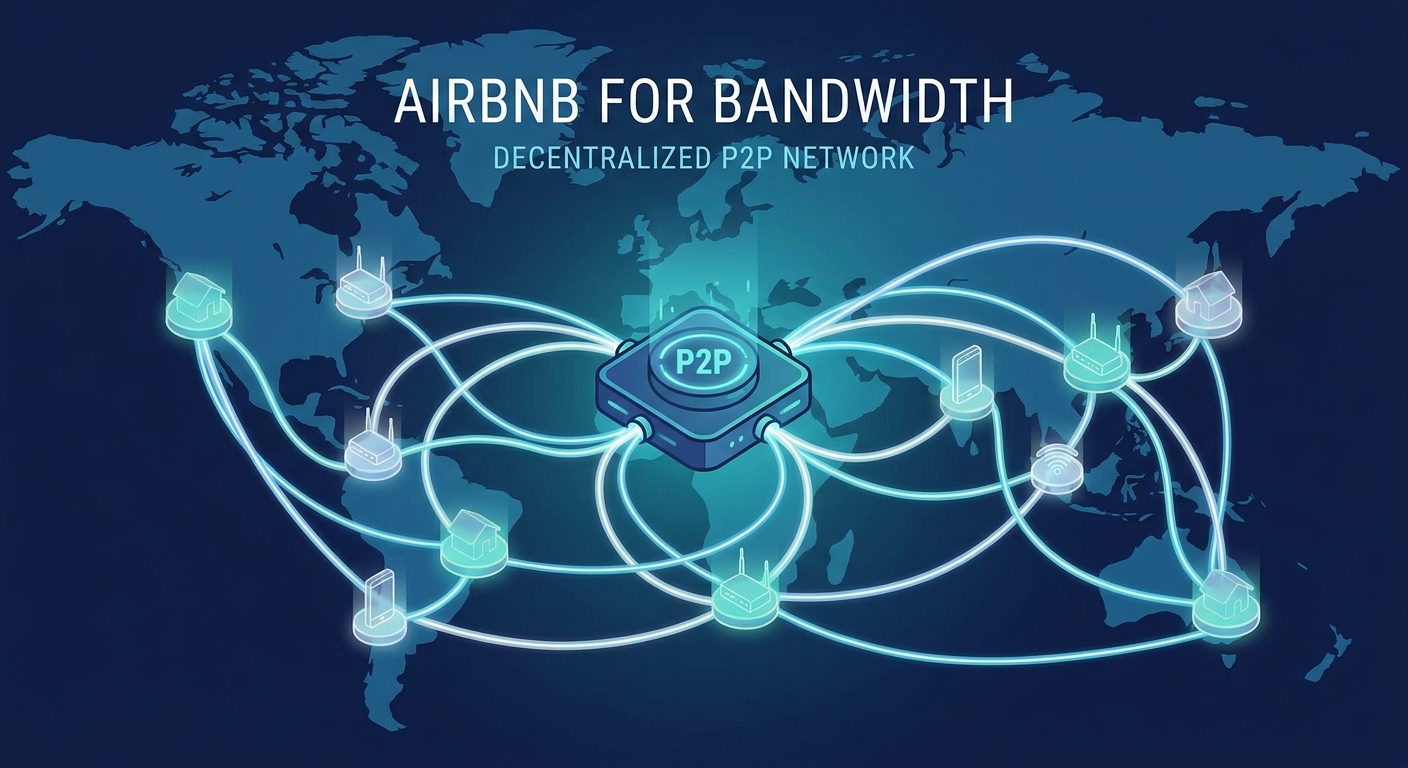
The "Airbnb for Bandwidth" model is quietly dismantling the legacy ISP monopoly. It’s a simple idea: take the world’s idle internet connections and turn them into a global, censorship-resistant utility. By leveraging Decentralized Physical Infrastructure Networks (DePIN)—often described as the nervous system of the modern web—these blockchain VPNs (dVPNs) let everyday people rent out their unused data to privacy-seekers. This isn't just another tech upgrade. It’s a fundamental shift in the P2P network economy. We are moving away from centralized, log-heavy server farms toward a distributed, trustless architecture that puts the power back in your hands, not the boardroom’s.
Why Is the Internet Infrastructure Being Rewired?
For decades, the internet has relied on a "hub-and-spoke" model. Traffic gets funneled through massive, centralized data centers controlled by a handful of tech giants. It’s a flawed design. These centers are single points of failure, prime targets for state-level throttling, and subject to corporate "no-log" policies that are rarely—if ever—audited.
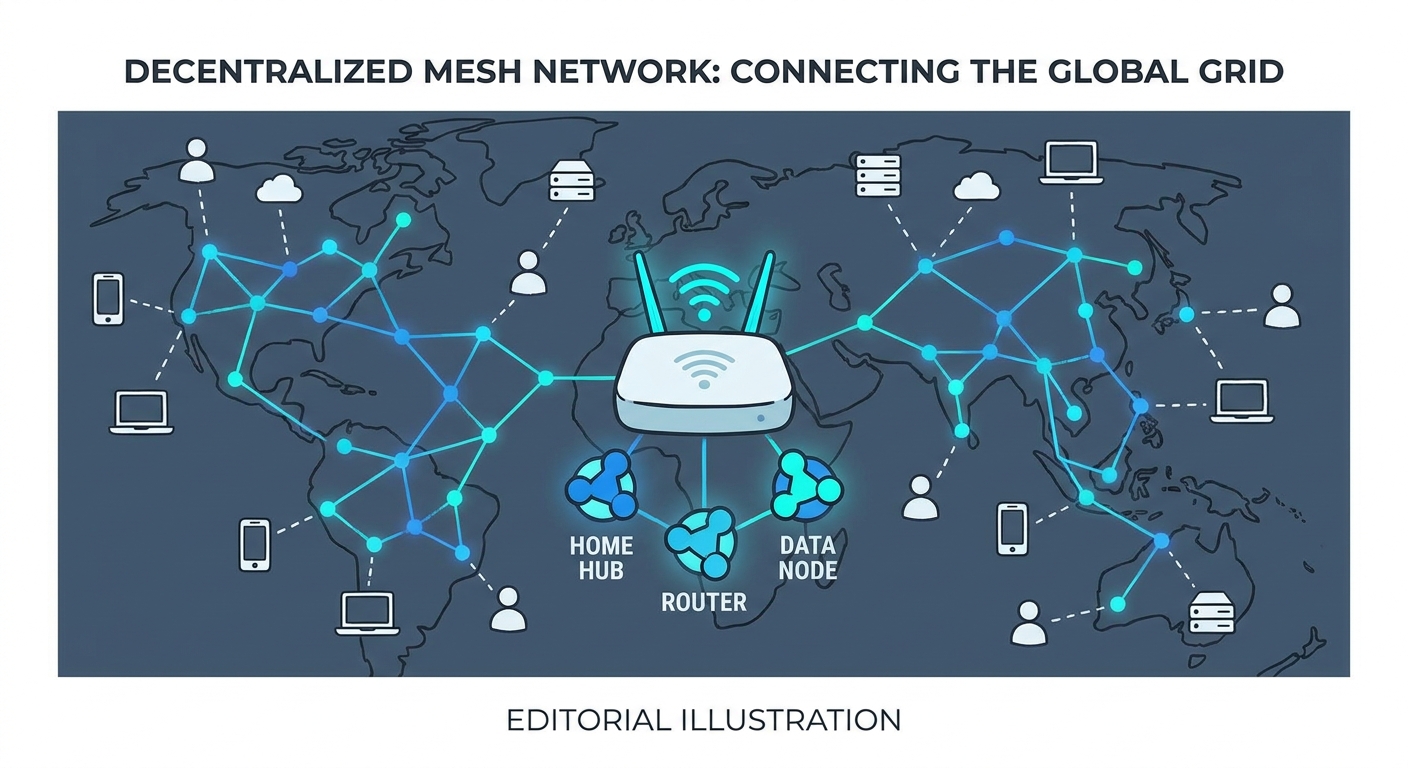
The rise of DePIN is the correction we’ve been waiting for. By spreading infrastructure across thousands of residential nodes, we kill the bottleneck. When you browse the web through a decentralized network, your traffic isn’t hitting some known corporate VPN rack. It’s bouncing through a random home in a random city. That makes it nearly impossible for ISPs or authorities to blacklist the connection. As noted in recent analysis on why DePIN will be big in 2026, the focus is shifting from speculative token hype toward tangible, real-world utility. Infrastructure should be owned by the people who actually use it.
What Is the "Airbnb for Bandwidth" Model?
At its heart, this is just a two-sided marketplace. On one side, you have "Node Providers"—regular people with a solid fiber connection who install a lightweight client and earn rewards for moving data. On the other side, you have "Privacy Seekers"—people who need to dodge regional firewalls or keep their real IP address hidden.
Traditional VPNs ask you to pay a subscription fee to a company that promises (but can’t prove) they aren't logging your activity. The dVPN model changes the game. It uses smart contracts to handle the exchange. You’re paying for the bandwidth of a peer, not the logs of a provider. This transition to utility-driven networks is why the sector is gaining real resilience; the value is baked into the network throughput, not just the market cap of a coin.
How Does a Decentralized VPN (dVPN) Actually Work?
A dVPN strips away the central server layer that defines traditional private networks. Instead of tunneling your traffic to a company-owned data center, your device builds an encrypted tunnel to a decentralized node—a residential IP address. That node forwards your request to the target service. To the outside world, your traffic looks like it’s coming from a legitimate household. This is how you bypass those sophisticated state-level firewalls that block commercial VPN traffic. To understand the deeper mechanics behind this, you can explore what a blockchain VPN is.
How Do We Verify Trust Without a Central Authority?
In a decentralized system, you can’t just trust a node to be honest about its speed or uptime. Enter Proof of Bandwidth (PoB). PoB is a consensus mechanism that monitors the actual traffic flowing through a node. It doesn't just check if the computer is turned on; it cryptographically verifies that the node is actually delivering the speed and latency it promised.
The network uses cryptographic accounting to ensure payments are released only when service is verified. There’s no middleman needed to "verify" the transaction because the smart contract acts as an immutable arbiter. For those interested in the technical nuances, Proof of Bandwidth explained covers why this is the only way to build a truly trustless P2P economy.
Privacy-by-Design: Why Zero-Knowledge Proofs Matter
Traditional VPNs are built on a "Trust-us" model. You fork over your cash, and they give you a promise they aren’t recording your activity. In the world of dVPNs, we move to "Zero-Trust." Through the integration of Zero-Knowledge Proofs (ZKPs), the network can verify a node’s reputation or a user’s subscription status without ever requiring them to reveal their identity, IP, or browsing history.
ZKPs let the system confirm a transaction is valid without knowing the "who," "where," or "what." It’s the gold standard for privacy. It turns the network into a black box where even the protocol developers can’t see who is connecting to whom.
Is the Economy Shifting Toward Sustainability?
The 2026 market is showing a clear split between speculative assets and utility-focused DePIN projects. As reported in recent DePIN revenue trends, projects focusing on actual network fees are consistently outperforming those relying on inflationary token incentives. This is a healthy maturation. When a network’s value is tied to bandwidth consumed by real users, the ecosystem becomes sustainable. We are moving away from "move-to-earn" or "click-to-earn" gimmicks toward "utility-to-earn" models that provide a service people actually want to pay for.
How Can You Monetize Your Idle Internet?
If you have a stable, high-speed connection, you’re sitting on an untapped asset. Monetizing your bandwidth is becoming a straightforward "set-it-and-forget-it" process.
- Select a Protocol: Choose a reputable decentralized bandwidth marketplace.
- Setup the Node: Most providers offer a lightweight app or a Docker container that runs silently in the background.
- Hardware Requirements: A standard PC or a dedicated mini-PC (like a Raspberry Pi) is usually enough.
- Expectations: Don't expect to quit your day job. Earnings depend on demand in your area and the quality of your connection. Treat it as a small, passive offset to your monthly ISP bill.
How Do dVPNs Compare to Traditional VPN Providers?
| Feature | Traditional VPN | Decentralized VPN (dVPN) |
|---|---|---|
| Privacy | Relies on company policy | Cryptographically enforced (Zero-Trust) |
| Cost | Fixed monthly subscription | Pay-as-you-go (Micro-payments) |
| Censorship | Easily blocked (centralized IPs) | Highly resistant (residential IPs) |
| Transparency | "Black box" logs | Open-source/On-chain verification |
Future Outlook: DePIN as the Infrastructure for AI
"Airbnb for Bandwidth" is just the first layer. By 2026, we are seeing the intersection of bandwidth sharing and decentralized AI. The same nodes that provide routing for dVPNs are increasingly being used to facilitate decentralized model training and inference. As AI gets hungrier for distributed compute and data transit, the P2P network economy will become the bedrock of the decentralized intelligence era.
Ready to Join the Decentralized Revolution?
The transition to a decentralized internet isn't coming—it’s already here. Whether you’re a privacy advocate looking to reclaim your digital footprint or a user looking to turn your idle hardware into a productive asset, the tools are ready. Start by exploring the top Web3 VPNs for 2026 to see which protocol fits your needs, and take control of your data today.
Frequently Asked Questions
Is sharing my bandwidth through a dVPN safe?
Yes, provided you use a reputable protocol. Modern dVPNs employ sophisticated node isolation, meaning your own traffic is logically separated from the traffic you relay for others. Because your node acts only as a relay, you are generally not responsible for the content passing through the tunnel, much like an ISP is not liable for the data passing through their cables.
How much can I actually earn by sharing my internet?
Earnings depend on network saturation, your location, and the quality of your connection (latency/throughput). While some users earn enough to cover their internet bill, it is best to view this as a low-effort passive income stream rather than a full-time salary. Be wary of projects promising high, fixed returns, as these are often unsustainable.
Is a decentralized VPN faster than a traditional VPN?
It depends. Traditional VPNs have optimized, high-bandwidth server racks, which can offer faster speeds for simple tasks. However, dVPNs can be faster for bypassing censorship because they utilize residential connections that aren't flagged as "VPN traffic." Your speed in a dVPN is largely determined by the distance between you and the node provider you choose.
How does a dVPN protect my identity compared to a standard VPN?
A standard VPN requires you to trust that the company is not keeping logs of your activity. A dVPN uses P2P architecture and cryptographic accounting, meaning there is no central server to store logs in the first place. Your identity is protected by the decentralized nature of the network, ensuring that no single entity has the power to track your browsing habits.