Beyond Privacy: Why DePIN is the Backbone of the Decentralized Internet
TL;DR
- ✓ DePIN replaces fragile, centralized internet infrastructure with resilient, decentralized physical networks.
- ✓ Token incentives solve the cold start problem for building global digital infrastructure.
- ✓ Decentralized networks eliminate single points of failure inherent in current cloud provider models.
- ✓ Users evolve from passive consumers into active, rewarded participants in the digital economy.
The modern internet is a house of cards. It’s held together by the thin, fragile goodwill of a few centralized giants. By 2026, the cracks in this foundation are impossible to ignore. When these massive server farms suffer a hardware failure or a regional power outage, the digital economy grinds to a halt. We’ve been living on borrowed time.
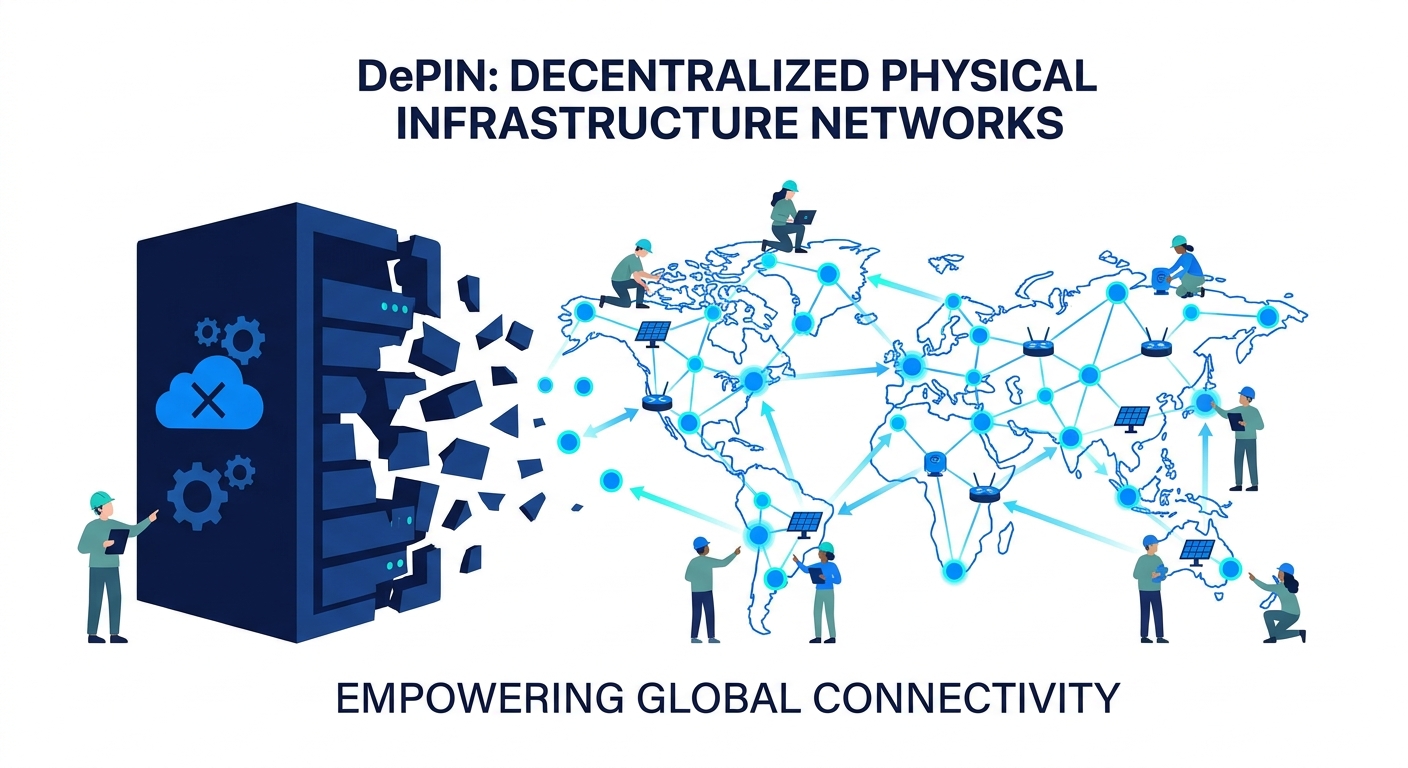
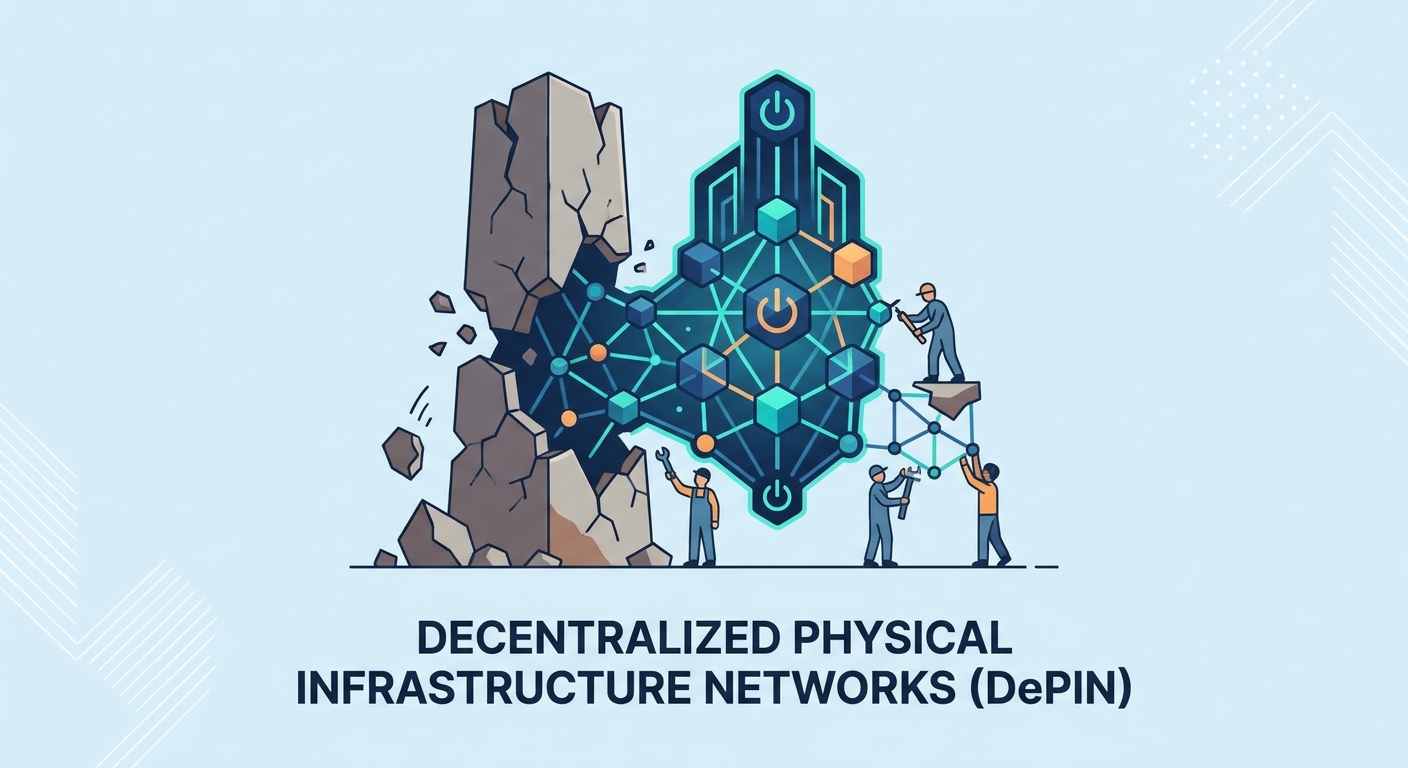
DePIN—Decentralized Physical Infrastructure Networks—isn't some fringe experiment for crypto hobbyists. It’s the necessary, hardened backbone for a future where web access is a public utility, not a corporate-controlled privilege. We are finally shifting from passive consumption to an active, owner-stakeholder model. It’s time to build an internet that actually refuses to go dark.
The Fragility of the Centralized Web
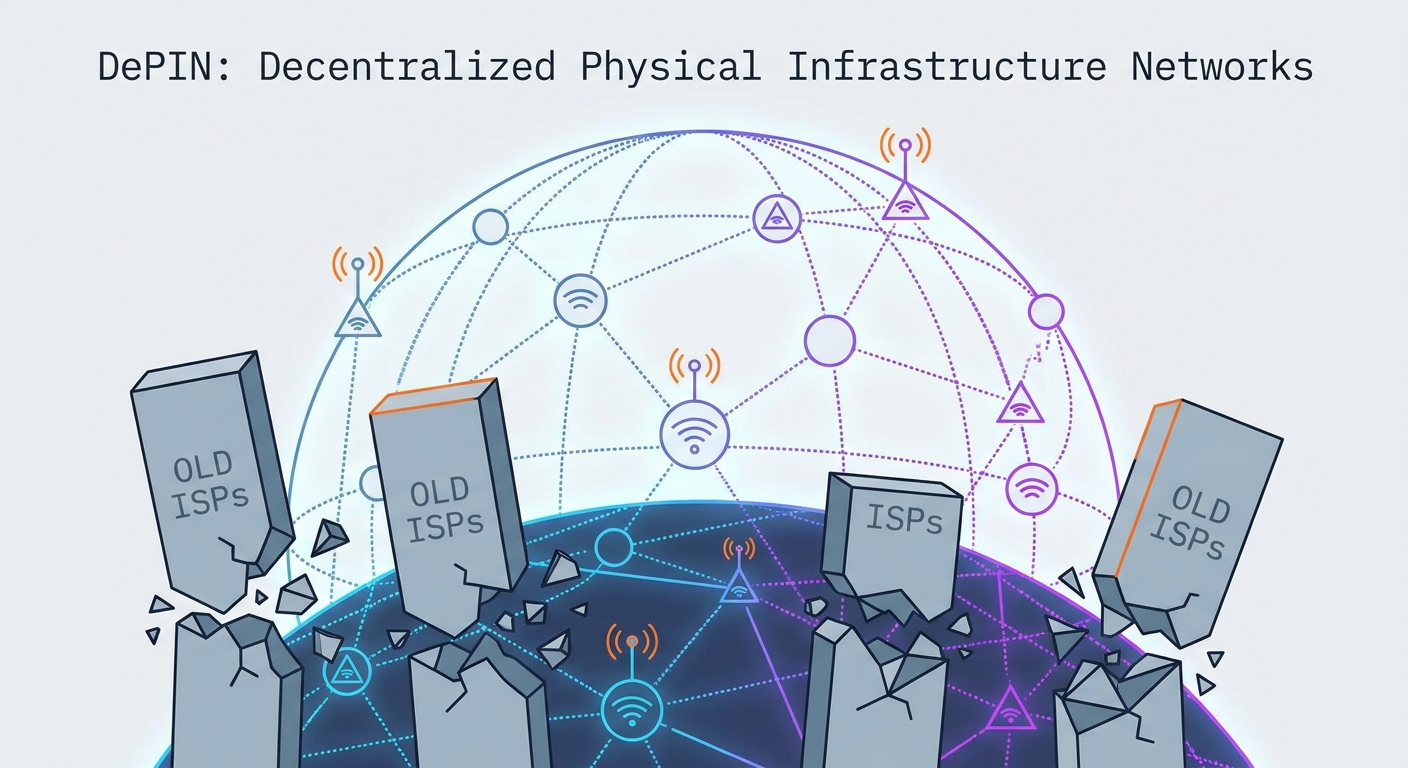
Look at how we connect today. We rely on ISPs and cloud providers that operate like digital feudal lords. When you send a packet of data, it’s at the mercy of proprietary routing and massive, siloed data centers. This "hub-and-spoke" model is a single point of failure waiting to happen. If the hub gets compromised, censored, or just overwhelmed by traffic, every spoke—every user—is left in the dark.
This centralization isn't just inefficient; it’s a weapon. It allows for regional blackouts and granular data throttling, turning the internet into a tool for control rather than a platform for human collaboration.
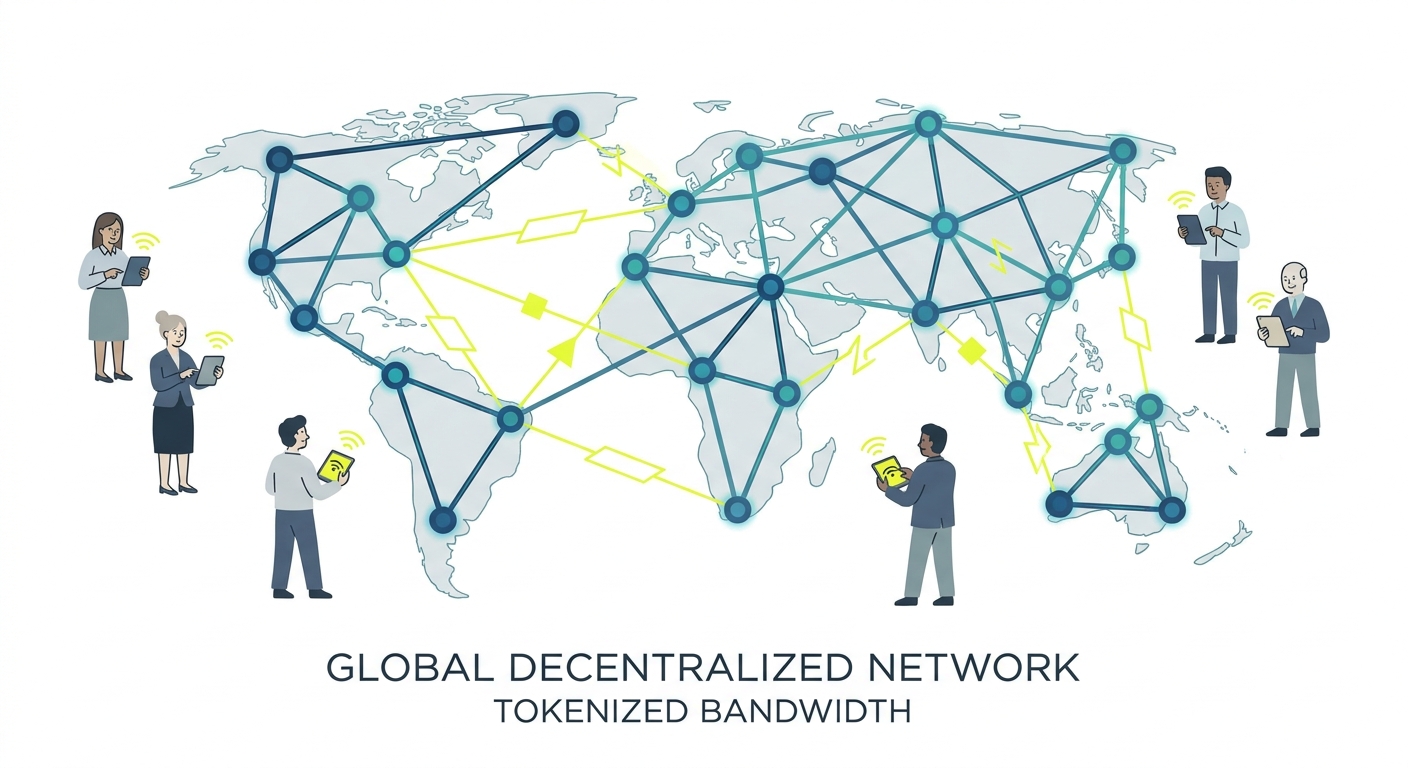
Even worse, the waste is staggering. Millions of devices sit idle every single day, their processing power and bandwidth gathering dust. According to Chainlink’s comprehensive DePIN guide, the core promise of this movement is to solve the "Cold Start" problem. We’re bootstrapping vital infrastructure by incentivizing the collective to provide what used to be the sole domain of multi-billion dollar telcos.
Network Architecture Comparison
How DePIN Flips the Script
The genius of DePIN lies in how it reverses traditional capital expenditure. In the old world, a company spends billions building towers and laying fiber before they see a single customer. It’s a high-stakes gamble.
In the DePIN world, the network exists because the users want it to exist. Through token incentives, we solve the classic chicken-and-egg problem of network growth. When you provide bandwidth or storage to a network, you aren't just "mining" in a dark basement; you’re becoming a shareholder in a utility.
It creates a powerful "Owner-User" loop. As more people join, the network becomes faster and more reliable. That reliability attracts more users, which increases the value for everyone. By 2026, tokens have evolved beyond speculative gambling. They now serve as functional rights—access tokens that guarantee you bandwidth, compute, or storage priority on the very network you helped build.
The Three Pillars of the Decentralized Internet
1. Connectivity: The Beacon of Open Access
Connectivity is the main battlefield. Decentralized VPNs and mesh networks are effectively building a parallel, censorship-resistant web. By routing traffic through a distributed network of nodes, these protocols make it nearly impossible for a single entity to flip the kill switch.
When we talk about why internet freedom matters, we are talking about the right to exist in the digital space without a gatekeeper. Understanding what is a decentralized VPN reveals that this isn't just about hiding your IP address—it's about participating in a global, unblockable mesh that functions even when the official "national" internet is severed.
2. Compute: The Fuel for the AI Era
The AI revolution is currently being throttled. Why? Because the compute power is locked away in the private clusters of tech conglomerates. DePIN is changing this by creating GPU-sharing marketplaces, effectively turning thousands of individual high-end gaming rigs and workstations into a decentralized supercomputer. This is the only way to scale AI training and inference sustainably. By democratizing access to compute, we prevent the "AI-haves" from hoarding the intelligence of the future.
3. Storage: Trust Without Transparency
Historically, if you wanted to store data, you had to trust a company. They could look at your files, sell your data, or lose it. Now, decentralized storage protocols allow you to verify the integrity of your data without the provider ever seeing what you’ve stored. By utilizing Zero-Knowledge Proofs (ZKPs), the network can prove your data is stored and intact without the node operator ever needing to peek at the contents. It’s the ultimate evolution of digital privacy.
The Green Internet: Efficiency Over Excess
The environmental impact of our digital infrastructure is often ignored, but it’s unsustainable. We keep building massive, energy-hungry data centers that require constant cooling, even when they’re sitting idle. DePIN flips this script by optimizing existing hardware. Why build a new data center when millions of home routers and idle PCs can provide the same service with a fraction of the carbon footprint?
As noted in this analysis of DePIN’s rise in 2026, the transition to decentralized infrastructure is arguably the most significant "green" upgrade for the internet in the last decade. We’re recycling the hardware we already have, reducing the need for new manufacturing and energy-intensive construction.
Resilience in Action
In late 2026, we saw the true power of this model when a major metropolitan ISP experienced a multi-day outage. While traditional residential connections went dead, users running peer-to-peer mesh protocols stayed online. These nodes, acting as a self-healing, distributed fabric, seamlessly routed traffic around the blackout zones. Projects like the Titan Network have become blueprints for this kind of resilience, proving that a decentralized network is not just theoretically better—it’s practically superior when the chips are down.
The Future: From "Crypto-First" to "Utility-First"
We’re moving past the "crypto" hype phase. In 2027 and beyond, the average user won't care about blockchain protocols or token economics. They will care that their internet is faster, cheaper, and always on. We’re moving toward a seamless user experience where your router automatically contributes to the network and earns credits that pay for your streaming services. The infrastructure of the future will be invisible, ubiquitous, and owned by the very people who use it.
Conclusion: Your Role in the Infrastructure Revolution
The internet was designed to be decentralized, yet we allowed it to be captured by a handful of entities. DePIN is our chance to take it back. This isn't just about privacy—it's about reclaiming the internet as a public utility that serves the user rather than the shareholder. You don't need a degree in computer science to participate; you just need to be willing to open up your hardware to the collective. By contributing your idle resources today, you are laying the foundation for a web that is truly, fundamentally, and permanently yours.
Frequently Asked Questions
Is DePIN just about crypto speculation?
No; while tokens are used for incentives, the core value is the real-world utility—like bandwidth, compute, and storage—which remains operational regardless of crypto market volatility.
How is a dVPN different from a traditional VPN?
Traditional VPNs rely on a central company's servers, creating a single point of failure and trust. dVPNs use a distributed network of user-operated nodes, making them significantly harder to block, censor, or monitor.
Do I need expensive hardware to participate in DePIN?
Not at all. Most 2026-era DePIN projects are designed to run on hardware you already own, including smartphones, home routers, and idle desktop computers.
Is my data truly private on a decentralized network?
Yes. By utilizing end-to-end encryption and Zero-Knowledge Proofs (ZKPs), your data is routed through nodes that cannot see, log, or store your browsing activity or personal information.