Bandwidth Tokenization and Automated Liquidity Pools for Network Resources
TL;DR
What is Bandwidth Tokenization anyway?
Ever wonder why you pay for a full gigabit fiber line just to use it for scrolling cat memes three hours a day? It’s basically like paying for a whole hotel floor but only sleeping in one bed while the rest stays empty.
Bandwidth tokenization is just a fancy way of saying we're turning that idle capacity into a liquid asset. Instead of your isp pocketing the "unused" data you already paid for, you slice it up into tiny packets and sell 'em on a p2p market.
- Idle capacity as a commodity: Your home router becomes a node that shares spare upstream bits with users who need it, like a researcher in a restricted region.
- smart contracts for throughput: These scripts handle the handshake, verifying that $X$ amount of data actually moved from Point A to Point B before releasing payment.
- Standard units of value: By using a native token, the network creates a unified price floor for data, regardless of if you're in a retail shop in London or a clinic in rural Kenya.

Think about how airbnb let people monetize their spare rooms. This is the same thing but for your network pipe. You're hosting a node, and in return, you get crypto vpn rewards. It’s a decentralized physical infrastructure network (DePIN) that bypasses the big telcos.
According to a 2024 report by Messari, the DePIN sector is growing fast because it cuts out the middleman, allowing for way cheaper routing than traditional providers.
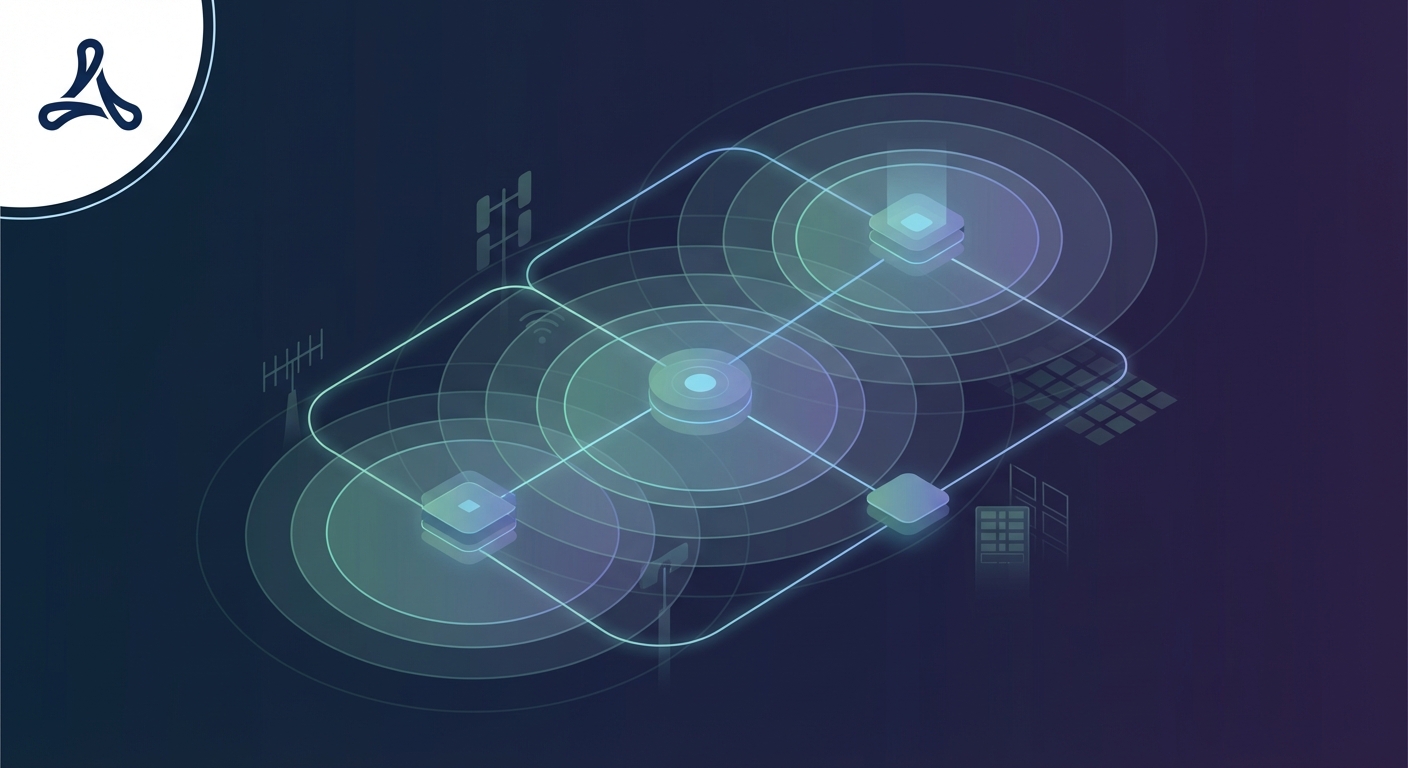
So, instead of a centralized server in Virginia, your traffic hops through thousands of individual nodes. This makes it way harder for isp surveillance to track a single point of failure. Next, we'll look at how these tokens actually get traded in liquidity pools without a central bank.
How Automated Liquidity Pools (ALPs) work for networks
So how do we actually trade this "invisible" internet pipe without some big bank or isp taking a massive cut? It’s all about these automated liquidity pools, or ALPs, which basically act like a digital vending machine for bandwidth.
In a traditional setup, you buy a fixed plan and that is it. With an alp, the network uses a mathematical formula—usually something like $x * y = k$—to set the price of data in real-time. If a ton of people suddenly start streaming 4k video in a specific region, the "supply" of available bandwidth tokens drops, and the price automatically ticks up.
- Constant Availability: Unlike a human broker who sleeps, the pool ensures there is always "speed" available for a dvpn user. You aren't waiting for a seller to approve your request; the smart contract does it instantly.
- Retail vs Enterprise: A local coffee shop might provide a few mbps to the pool for extra crypto, while a data center in Frankfurt could dump terabytes into the same pool to keep their pipes from sitting idle.
- Global Price Discovery: This creates a true market value for network resources. According to Uniswap's documentation on AMMs, this model allows for decentralized trading without needing a centralized limit order book, which is perfect for the fragmented nature of p2p networks.

You can't just say you have fast internet and then provide a dial-up connection. To keep everyone honest, providers often have to stake tokens as a sort of "good behavior" bond. If your node goes offline or starts dropping packets like crazy, you risk losing a portion of that stake.
- Incentivizing Uptime: The network rewards nodes that stay online 24/7. This is huge for healthcare apps or finance firms that need a stable, encrypted tunnel that doesn't just vanish mid-session.
- Slippage Risks: Just like in crypto trading, if you try to buy a massive amount of bandwidth from a "shallow" pool, you might pay a way higher price than expected.
It’s a bit messy right now, but it’s way more efficient than paying for data you never use. Next, we’re going to look at the actual protocols that keep these connections secure so your isp can't peek at what you're doing.
The DePIN revolution and online privacy
Most people think depin is just about earning a few tokens for running a router, but the real magic is how it nukes the traditional isp surveillance model. When you use a decentralized network, you aren't just hiding your ip; you are physically fragmenting your data footprint across a global mesh of nodes that no single government can subpoena.
The beauty of this is that it solves the "honeypot" problem. In a normal vpn, the provider sees everything—they're a central point of failure. In a depin setup, the network architecture is inherently hostile to snooping because the person providing your bandwidth doesn't even know who you are or what packets they're relaying.
- Zero-knowledge routing: Most of these protocols use onion-style routing where each hop only knows the previous and next address.
- Resistance to DPI: Deep packet inspection (dpi) becomes a nightmare for isps when traffic isn't flowing to a known vpn server but to a random residential ip in suburbs.
- Economic Privacy: Since you pay with tokens from a liquidity pool, there's no credit card trail linked to your browsing habits.
Staying on top of this stuff is hard because the tech moves faster than the regulations. At SquirrelVPN, we’re obsessed with educating folks because a tool is only as good as the person wielding it. If you don't understand how ipv6 leaks can deanonymize you even on a vpn, you're still at risk.
We focus on the nitty-gritty, like how to audit your own network or why a specific tunneling protocol might be better for bypassing the "Great Firewall" than another. It’s about building a stack of privacy tools that actually work together.
The world of blockchain-powered privacy is messy, but it's the only way we get back to a truly open internet. It's not just about "crypto," it's about owning the pipes. Next, we’ll dive into the specific protocols making these tunnels bulletproof.
Technical hurdles and the Bandwidth Proof Protocol
So, you've got a global mesh of nodes, but how do you know if a provider in Brazil is actually giving you the 100mbps they promised or if they're just spoofing packets to farm tokens? It's a massive "trust but verify" headache that keeps network architects up at night.
The Bandwidth Proof Protocol is the referee here. It isn't just a simple ping; it uses cryptographic challenges to verify throughput in real-time. If a node claims high speed but fails to deliver the specific data chunks requested by the verifier, the smart contract flags them.
- Throughput vs. Latency: In a p2p privacy network, a node might have a fat pipe (high throughput) but terrible routing (high latency). This makes it great for bulk file transfers in research but useless for a voip call in a finance office.
- Probabilistic Audits: Since checking every single packet would tank the network's performance, the protocol randomly audits segments of the traffic. It's like a spot check at a factory—keep 'em on their toes without stopping the assembly line.
- Encryption Overhead: Every layer of encryption adds "weight" to the packet. According to IEEE Xplore in a 2021 study on p2p security, the computational cost of maintaining a zero-knowledge tunnel can drop effective bandwidth by up to 30% if the hardware isn't optimized.
"The challenge isn't just moving the data, it's proving it moved without seeing what was inside the envelope."
I've seen nodes try to "game" the system by using compressed dummy data to look faster than they are. Good protocols catch this by using high-entropy data strings that can't be compressed.
Next, we're going to wrap all this up and see how this actually changes the way we pay for the internet.
The future of web3 internet freedom
So, we're basically looking at a world where your internet connection isn't just a utility bill you hate paying every month. It's becoming a piece of global infrastructure that you actually own a slice of.
The shift from centralized vpn servers to these p2p bandwidth markets is the final nail in the coffin for old-school isp snooping. When your traffic is routed through a decentralized mesh, geo-blocks become almost impossible to enforce because there’s no central "blocklist" of ip addresses to target.
Traditional providers are basically just one big target for governments. If they want to shut down access, they just raid one data center. With web3 internet freedom, the network is everywhere and nowhere at the same time.
- Censorship Resistance: In retail or finance, keeping a connection open during a blackout is life or death. These networks use multi-hop routing that automatically finds a new path if one node gets clipped.
- Micro-payments for bits: You don't need a $15/month subscription. You pay for the exact packets you send, which is a game changer for low-income regions or small businesses.
- Global Liquidity: As discussed earlier with ALPs, the market ensures that even if you're in a remote clinic, you can "buy" priority throughput from the global pool.
Honestly, the tech is still a bit of a "wild west" situation. But as we've seen with the technical hurdles mentioned in that study from the ieee xplore, we're getting better at proving bandwidth without sacrificing privacy. It's about taking the power back from the telcos and putting it into the hands of the people actually using the pipes. The future isn't just private; it's decentralized.