
New Industry Report Highlights Critical Need for Edge-Based Trust Decisions in Zero Trust Architectures
TL;DR
Why Zero Trust Needs to Get Closer to the Edge
There’s a quiet tension building in the world of Zero Trust Architecture (ZTA). On one side, we have the rigid, centralized governance that makes ZTA so appealing. On the other, we have the messy, real-world requirement for low-latency, edge-based decision-making.
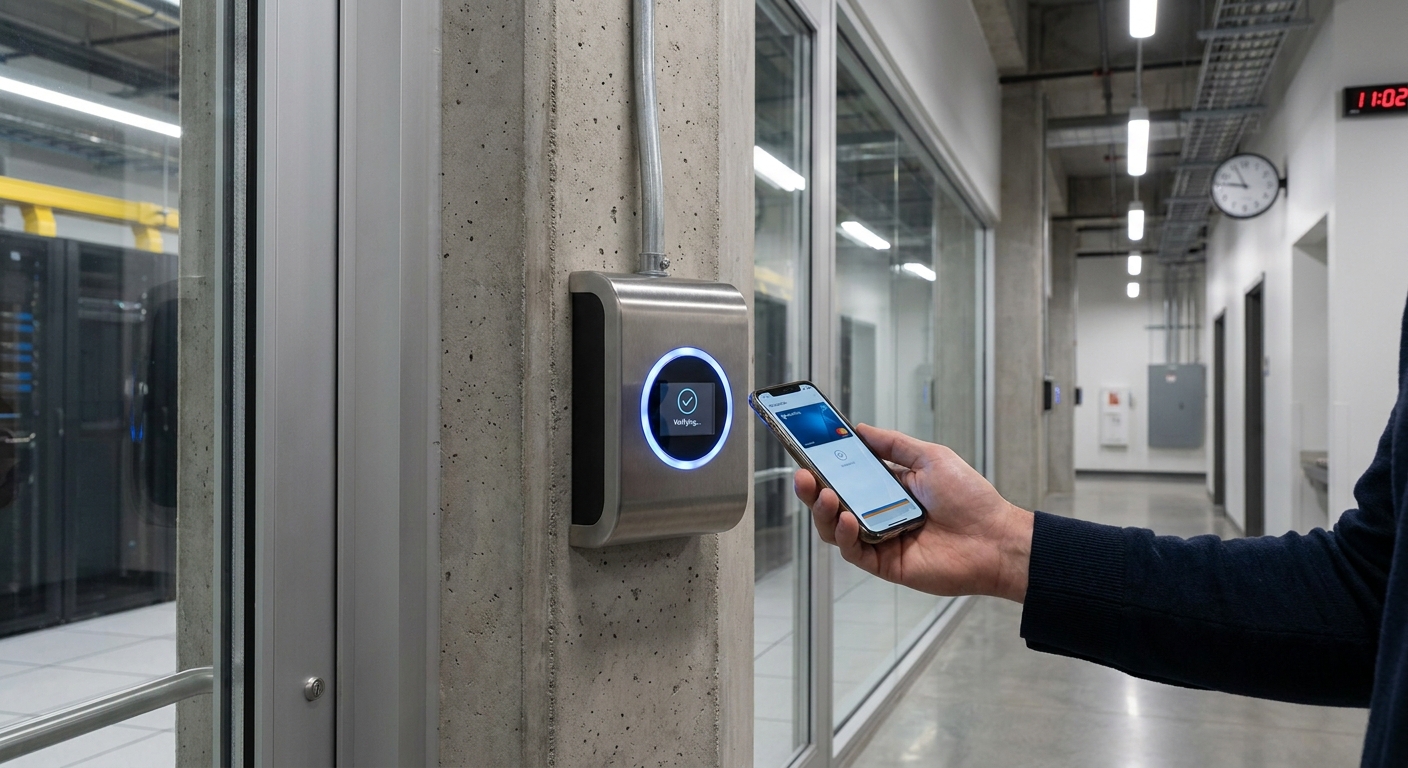
The core promise of Zero Trust is simple: never trust, always verify. But when you move that theory into a physical building—think door controllers, biometric scanners, or industrial sensors—the "always verify" part starts to break down. If a door controller has to ping a central server to check your credentials every time you swipe your badge, you’re going to be standing there for a long time.
This is the friction point. Organizations are struggling to separate policy decision-making from enforcement without sacrificing security or speed.
The "Drifting Perimeter" Trap
Chuck Davis, VP of Global Information Security at Hikvision, has seen this play out too many times. To keep systems running during a network hiccup, companies often extend the lifetime of their policy caches. It’s a classic "quick fix" for connectivity issues, but it’s a dangerous one.
When you let a device operate on stale authorization data, you aren't really practicing Zero Trust anymore. You’re essentially creating a "drifting perimeter." You’ve essentially reverted to the old-school model you were trying to escape, where a device is trusted simply because it was trusted yesterday. It’s a security regression disguised as an operational necessity.
The push toward ZTA is relentless. The global market is projected to grow at a 27.5% CAGR through 2026, and the U.S. Department of Defense is backing that shift with nearly a billion dollars in the 2025 budget alone. Everyone is moving toward this, but not everyone is doing it right.

The Frameworks We Live By
The NIST 800-207 standard is the bedrock here. It moved us away from the "castle-and-moat" mentality—where once you’re inside the VPN, you have the run of the place—toward a model of continuous, context-aware verification.
Most organizations now lean on the CISA Zero Trust Maturity Model to keep their projects on track. It breaks the challenge down into five manageable pillars: Identity, Devices, Networks, Applications/Workloads, and Data. It’s a solid roadmap, but it requires a fundamental shift in mindset. You have to stop thinking about "trust but verify" and start living by "never trust, always verify."
| Core ZTA Principle | Operational Impact |
|---|---|
| Continuous Authentication | Eliminates persistent trust sessions. |
| Context-Based Validation | Ensures access is tied to current risk state. |
| Least Privilege Access | Limits lateral movement by malicious actors. |
| Just-in-Time (JiT) Access | Reduces risk duration for specific tasks. |
The Edge Enforcement Dilemma
The real headache starts when you try to force physical infrastructure into a software-defined box. In a perfect world, the Policy Decision Point (PDP) and the Policy Enforcement Point (PEP) are distinct. But in the real world, if your PEP needs a round-trip to a central server for every single transaction, latency becomes a dealbreaker.
If you can’t hit sub-200ms latency, your physical security systems become unusable. But again, the answer isn't to just cache the credentials indefinitely. That’s how you get breached. Instead, security leaders are looking at a few smarter alternatives:
- Cryptographically Signed Policies: Let the edge devices do the heavy lifting by using policies that are cryptographically signed by the central authority. This keeps the integrity intact without needing a constant heartbeat to the mothership.
- Short-Lived Credentials: If you must use tokens, make them expire fast. If an edge device gets compromised, you want to limit the blast radius.
- Explicit Fail-Safe/Fail-Secure Logic: Don't leave your fail-state to chance. Conduct a risk assessment. Does the door stay locked or open during an outage? Safety and security often clash here, and you need a documented plan.
- Reduced Attack Surface: ZTA is your best defense against lateral movement. By segmenting the network, you stop hackers from jumping from a compromised printer to your core database—a common tactic seen in vulnerabilities in legacy remote access tools.
Where We Go From Here
The data is clear: the traditional perimeter is dead. ZTNA grew 87% year-over-year between 2021 and 2022, and nearly half of all organizations are currently in the thick of a Zero Trust rollout.
For those in the trenches, the goal is to find strategic implementation frameworks that don't treat digital and physical assets as separate silos. We’re moving toward a world where identity is the perimeter. It doesn't matter if you're logging into a cloud app or walking through a server room door—the verification process should be just as rigorous.
The future of ZTA isn't about centralized control at the expense of performance. It’s about pushing that intelligence to the edge. The organizations that win will be the ones that figure out how to enforce strict, centralized policy at the speed of the edge. It’s a delicate balance, but it’s the only way to build a truly resilient, modern infrastructure.