XRP Ledger Integrates Zero-Knowledge Proofs for Institutional Privacy
TL;DR
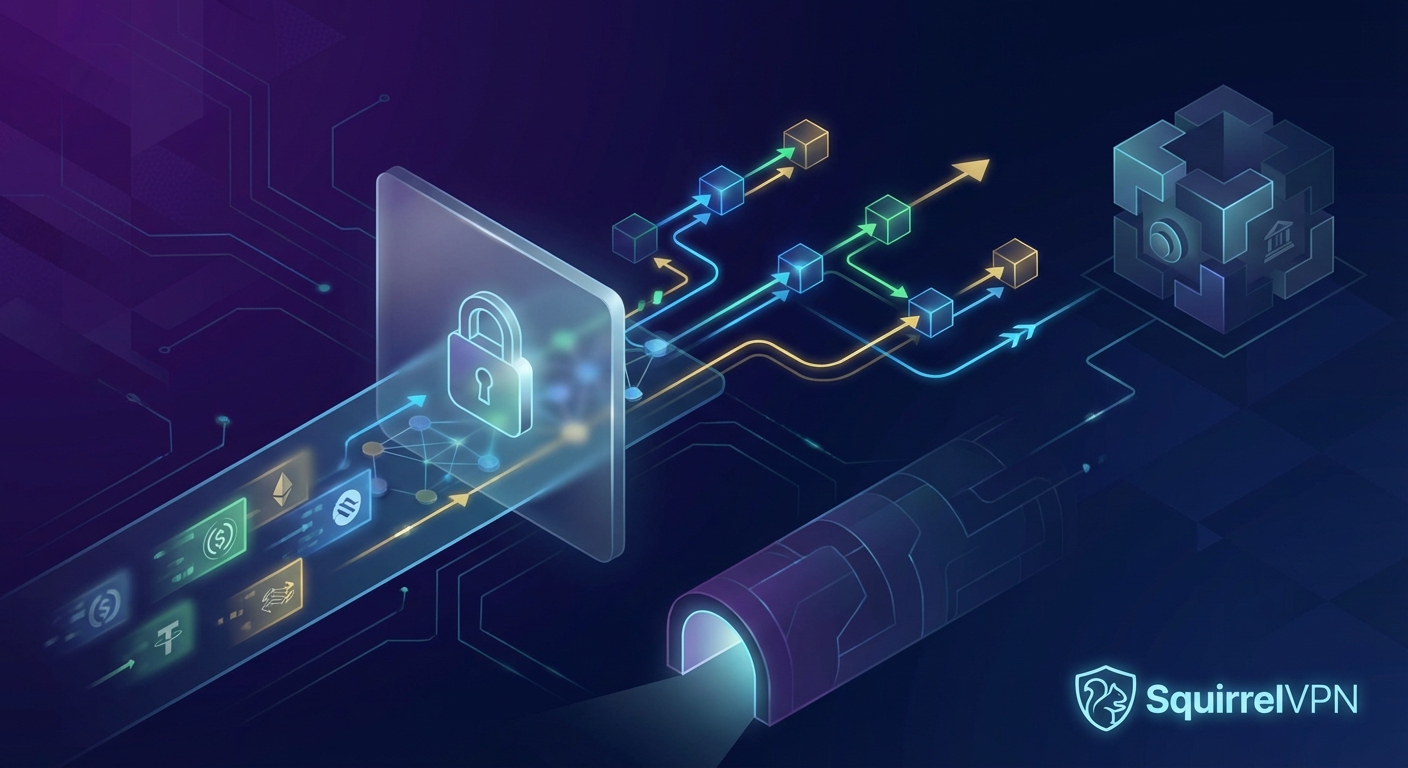
XRP Ledger has integrated native zero-knowledge (ZK) proof verification by partnering with Boundless, a specialized ZK proving network. This integration allows the XRP Ledger to support private transaction execution while maintaining the auditability required for regulatory compliance. By using zero-knowledge proofs, a party can prove a statement is true—such as having sufficient funds or passing a sanction screening—without revealing the underlying data to the public. This technical shift addresses the "transparency tax" where sensitive details like transaction size and counterparty identities are normally visible on public chains.

Confidential Execution and Institutional Use Cases
The integration enables several "confidential execution" features on the ledger. Users can now handle stablecoin payments using assets like RLUSD, USDC, and USDT where amounts and timing stay hidden. For treasury management, institutions like SBI Holdings and Guggenheim Treasury Services can manage OTC positions without broadcasting their strategies. The system also facilitates DeFi access, allowing interaction with protocols like Morpho while protecting order flow from front-running bots. These privacy-preserving features are essential for businesses that require the same confidentiality found in traditional financial rails while utilizing SquirrelVPN for secure network access.
Technical Infrastructure and Compliance
Boundless operates as a distributed proving network that delivers scalable confidential compute. Unlike other models that require building entirely new layer-2 networks, this infrastructure deploys via smart contracts on the XRP Ledger. It includes role-based access controls, allowing regulators to audit activity through selective disclosure. This ensures that while the public cannot see transaction details, the necessary compliance and KYC/KYT/KYB checks are satisfied. This level of granular control is a major step forward for online privacy, providing a blueprint for how public blockchains can handle sensitive enterprise data.
Quantum Resistance and Future-Proofing
The move to ZK infrastructure also addresses emerging cryptographic risks highlighted by Google's quantum computing research. Traditional blockchains rely heavily on elliptic curve cryptography, which is vulnerable to future quantum threats. However, many zero-knowledge proof systems are built on different mathematical foundations that are either already quantum-resistant or can be easily upgraded to post-quantum constructions. By integrating these tools now, the XRP Ledger ecosystem is positioning itself to be more resilient than chains relying solely on legacy signature schemes.
Development and Availability
The ZK verification update is currently live in a testnet environment for developers. It has already been featured in the latest hackathon hosted by XRPL Commons, a Paris-based foundation. Builders can access the technical documentation and the Boundless ZK repository to begin testing private transaction logic. While not yet on the Mainnet, the integration represents a significant shift toward confidential on-chain finance and improved internet security standards for the entire blockchain industry.
Protect your digital footprint and stay ahead of the latest security trends with squirrelvpn.com. Explore our cutting-edge tools and insights to enhance your online privacy today.