Active Exploitation of SonicWall SMA Zero-Day Vulnerabilities Allows Unauthenticated Root Access to Enterprise Infrastructure
TL;DR
If you’re running SonicWall SMA 1000 series appliances, stop what you’re doing and check your logs. Cybersecurity agencies and researchers have confirmed that two nasty zero-day vulnerabilities—CVE-2026-15409 and CVE-2026-15410—are being hammered in the wild. We aren’t talking about theoretical risks here; attackers are actively using these to bypass authentication, escalate privileges, and grab full root-level control of enterprise networks.
The trail of breadcrumbs leads straight to some heavy hitters, including the Inc ransomware group and a shadowy actor known as UTA0533. Since the first signs of trouble on June 22, 2026, these groups have been busy deploying custom malware, scraping credentials, and moving laterally through corporate environments like they own the place.
The Anatomy of the Attack
The whole house of cards starts with CVE-2026-15409, a Server-Side Request Forgery (SSRF) flaw that earned a perfect 10.0 CVSS score. It’s a classic "front door left wide open" scenario. By leveraging websocket-based tunneling, an unauthenticated attacker can talk directly to services on the appliance’s localhost. Essentially, they’re bypassing the security checks that are supposed to keep internal management interfaces away from the prying eyes of the public internet.
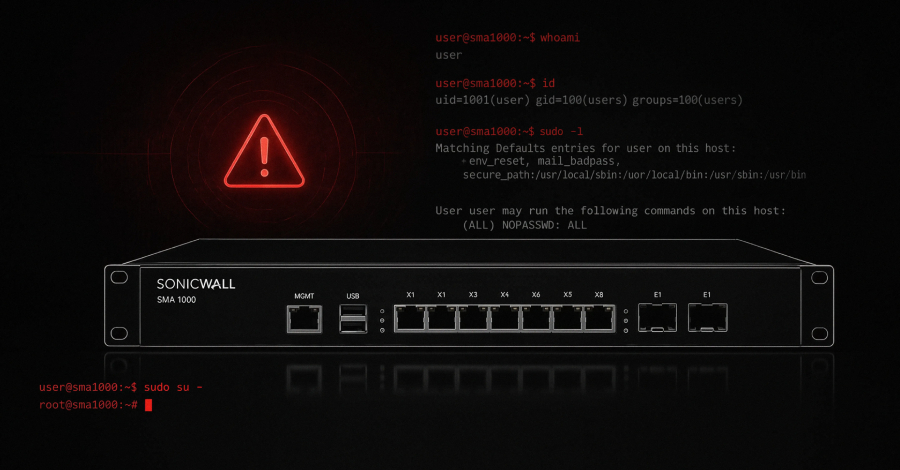
Once they’ve poked a hole in the perimeter, they pivot to CVE-2026-15410. This is a high-severity privilege escalation bug hidden inside the remove_hotfix workflow. It’s a path traversal trick that lets an attacker go from "random internet stranger" to "root-level administrator" in a few quick steps. Chain these two together, and you’ve essentially handed over the keys to your entire infrastructure.
Who Is Doing This and Why?
The Rapid7 MDR team has been doing the heavy lifting here, documenting how these actors aren’t just getting in—they’re setting up shop. They’ve spotted some nasty payloads, including 'ROOTRUN,' a setuid binary that ensures they keep their root access even if the appliance reboots, and 'KNUCKLEBALL,' a Python script designed to inject malicious Java Archive (JAR) files into the system.
The toolkit doesn't stop there. Researchers have also identified:
- Suo5: An HTTP proxy tool that keeps their communications quiet and covert.
- ORANGETAIL: A web shell that gives them a comfortable interface for remote command execution and file theft.
- Credential Harvesters: These are particularly dangerous, specifically targeting session databases and Multi-Factor Authentication (MFA) seeds.
When the Inc ransomware group gets their hands on MFA seeds, your secondary authentication is effectively neutralized. They use that access to map out your network, steal sensitive data, and prepare for the final act: large-scale encryption.
Vulnerability Breakdown
| CVE Identifier | Type | Severity | Impact |
|---|---|---|---|
| CVE-2026-15409 | SSRF | Critical (10.0) | Unauthenticated tunneling to localhost |
| CVE-2026-15410 | Privilege Escalation | High (7.2) | Root-level code execution |
How to Lock Down Your Network
CISA saw the writing on the wall and added both vulnerabilities to their Known Exploited Vulnerabilities (KEV) catalog on July 14, 2026. If you haven't patched yet, you are officially behind the curve.
SonicWall has pushed out hotfixes, and you need to get them installed immediately. Head over to the official SonicWall PSIRT advisory to grab the patches for your SMA 1000 series appliances (specifically models 6210, 7210, and 8200v).
Your immediate to-do list:
- Inventory: Confirm exactly which SMA 1000 units are sitting on your network.
- Patch: Apply the manufacturer's hotfixes without delay.
- Audit: Comb through your system logs. Look for anything suspicious—websocket tunneling attempts or the presence of binaries like 'ROOTRUN' are major red flags.
- Reset: If you suspect you’ve been compromised, assume everything is burned. Rotate every credential on the device, including administrative passwords and those critical MFA seeds.
The proxying methods documented by Volexity are a stark reminder that edge devices are the most dangerous points of failure in any modern network. Chaining an SSRF to a path traversal is a surgical strike, and it’s a tactic we’re seeing more frequently.
The situation is still shifting as researchers track new payloads and evolving tactics from the Inc group. Don't wait for a ransom note to start hardening your perimeter. Get those appliances updated, monitor your traffic, and assume that if you’re exposed, someone is already looking for a way in.