
New Ransomware Campaigns Target Enterprise VPN Gateways Through Exploitation of Critical Infrastructure Vulnerabilities
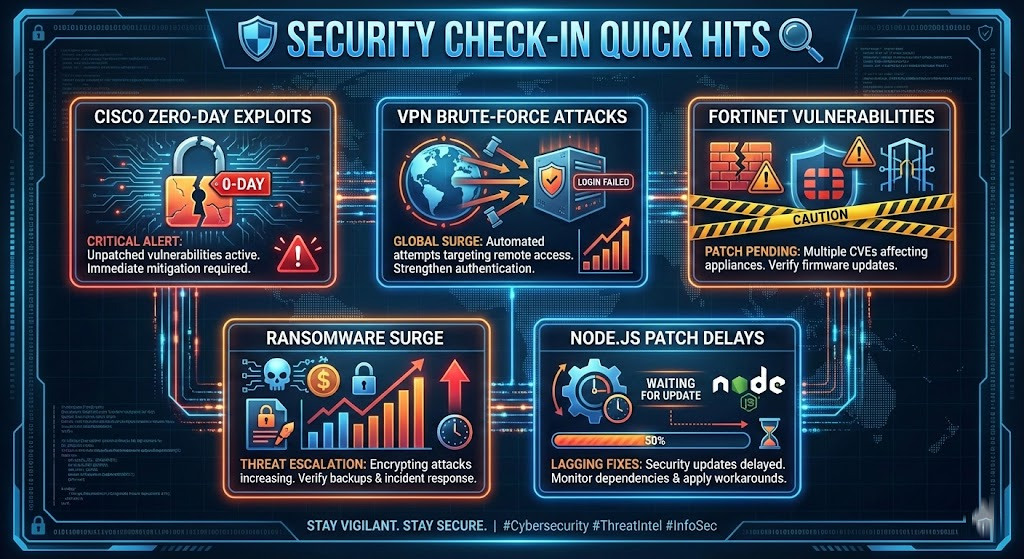
TL;DR
Ransomware’s New Frontline: Why Enterprise VPNs Are Under Siege
The digital perimeter is crumbling, and the culprits aren't just knocking—they’re walking right through the front door. Throughout late 2025, global cybersecurity agencies and threat hunters have watched a massive escalation in targeted strikes against enterprise VPN gateways and edge infrastructure. We aren't talking about random noise here. These are surgical, high-stakes operations leveraging a cocktail of critical remote code execution (RCE) flaws, authentication bypasses, and brute-force barrages that make traditional defenses look like paper shields.
The landscape is currently a minefield. Major vendors—Cisco, Fortinet, Palo Alto Networks—are in the crosshairs. Researchers have traced these campaigns to a dangerous cocktail of state-sponsored APT groups and ransomware syndicates. The common thread? They’re all leaning hard into automated, AI-driven tactics to sniff out and exploit vulnerabilities before your security team even has a chance to read the patch notes.
The Vulnerability Gold Rush
The current wave of attacks isn't just about breaking in; it’s about weaponizing the very tools meant to keep networks secure. If you’re running these systems, the following vulnerabilities are likely keeping your SOC team up at night:
- CVE-2025-20393 (Cisco AsyncOS): This one is a nightmare. With a 10.0 CVSS score, it’s the ultimate "get out of jail free" card for attackers. It affects Secure Email Gateways, allowing for remote code execution. We’ve already seen the China-based APT group UAT-9686 using this to deploy the 'AquaShell' backdoor, ensuring they stay in your network long after the initial breach.
- CVE-2025-59718 and CVE-2025-59719 (Fortinet): These flaws effectively strip the locks off the doors, allowing attackers to bypass authentication on Fortinet devices. It’s a direct route into firewalls and VPN gateways that shouldn't be accessible.
- The 'FortiBleed' Campaign: This isn't just a vulnerability; it’s a full-blown campaign. Global agencies have been sounding the alarm, noting that attackers are using this to harvest credentials on a massive scale.
Image courtesy of Rod Trent's Substack
The sheer scale is staggering. We’re seeing brute-force campaigns utilizing over 10,000 unique IP addresses simultaneously to hammer Cisco and Palo Alto Networks gateways. It’s a numbers game, and the attackers are winning. Gateway security devices now account for a staggering 17% of all exploited vulnerabilities. The perimeter isn't just thin; it’s effectively transparent.
Tactical Shifts: The New Normal
If you look at the data from the first half of 2025, the picture gets grimmer. CVE disclosures jumped 16% compared to the previous year, with 161 vulnerabilities seeing active exploitation in the wild. The real kicker? Nearly 69% of those exploits require zero authentication. You don't need a password if the door is already off its hinges.
As documented in H1 2025 malware and vulnerability trends, the tactical shift is clear: attackers are pivoting toward versatile Remote Access Trojans (RATs) like AsyncRAT, XWorm, and Remcos. They’re also getting creative with supply chain attacks, such as the PyStoreRAT campaign, which targets IT professionals directly to gain a foothold in the enterprise.
| Vector Type | Primary Target | Key Attribute |
|---|---|---|
| Remote Code Execution | Cisco AsyncOS | 10.0 CVSS / APT-linked |
| Authentication Bypass | Fortinet Gateways | Credential exposure |
| Brute-Force | VPN Gateways | 10,000+ unique IPs |
| Supply Chain | IT Professionals | PyStoreRAT deployment |
How to Hold the Line
Defending against this mess requires more than just a firewall refresh. It requires a fundamental shift in how we view trust. Global agencies are pushing hard for organizations to recognize the credential exposure risks inherent in campaigns like FortiBleed, and the message is simple: patch fast or pay the price.
Security professionals need to be hyper-vigilant regarding latest Cisco and Fortinet infrastructure alerts. Since these exploits often bypass authentication entirely, your perimeter is essentially a suggestion, not a barrier. If you’re looking to harden your defenses, start here:
- Patching is non-negotiable: If you haven't addressed CVE-2025-20393, CVE-2025-59718, and CVE-2025-59719, stop reading and go do it now.
- Kill the static password: Move to phishing-resistant MFA. If your VPN access still relies on a password alone, you are effectively inviting these groups in.
- Segment your network: If they get into the gateway, don't let them get into the crown jewels. Limit lateral movement by walling off your critical infrastructure.
- Watch for behavior, not just signatures: Use EDR tools to hunt for the specific footprints of RATs like AsyncRAT or the AquaShell backdoor.
The integration of AI into these ransomware campaigns has turned a slow-moving threat into a high-speed collision. Attackers are weaponizing vulnerabilities at a pace that manual patching simply cannot match. While standardized attack frameworks are helpful for mapping these threats, they are only as good as the response time of the team using them.
The reality is that the perimeter has dissolved. Between mobile-first financial fraud and the rise of sophisticated relay attacks, "inside" and "outside" are becoming meaningless distinctions. We are in an era of identity-centric security. If you aren't rigorously validating every single connection attempt to your VPN, you’re already behind. Stay alert, stay paranoid, and keep those patches current—the alternative is far too expensive.