New Market Report Projects Rapid Adoption of Zero-Trust Network Access Amid Evolving Cyber Threats
TL;DR
The Perimeter Is Dead: Why Zero-Trust Is the New Baseline for Security
The old way of doing cybersecurity—building a high wall around your office network and hoping for the best—is officially a relic. We’ve moved past the "castle-and-moat" era. Today, your workforce is everywhere, your data lives in the cloud, and the bad guys have never been more sophisticated. This is why organizations are sprinting toward Zero-Trust Network Access (ZTNA). It’s not just a trend; it’s a fundamental survival strategy.
Recent market data paints a clear picture: the ZTNA sector is set to explode, with valuations projected to hit USD 14.74 billion by 2033. Why the rush? Because remote and hybrid work aren't going anywhere, and the threats we face today don't care where your employees are sitting.
As digital transformation turns every company into a tech company, the Zero Trust Network Access (ZTNA) market has become the backbone of modern defense. The philosophy is simple, even if the implementation is complex: "never trust, always check." Every user, every device, and every request is treated as a potential threat until proven otherwise.
The Numbers Behind the Shift
The broader Zero Trust ecosystem is scaling at a breakneck pace. According to MarketsandMarkets, the global market for Zero Trust security is expected to balloon from USD 36.5 billion in 2024 to USD 78.7 billion by 2029. That’s a compound annual growth rate of 16.6%.
Why are companies pouring billions into this? Because legacy architectures are failing. Between the move to cloud-native systems and the crushing weight of global compliance mandates—think GDPR, HIPAA, and CCPA—IT leaders are realizing that their old security stacks are essentially Swiss cheese. They need identity-based control, and they need it yesterday.
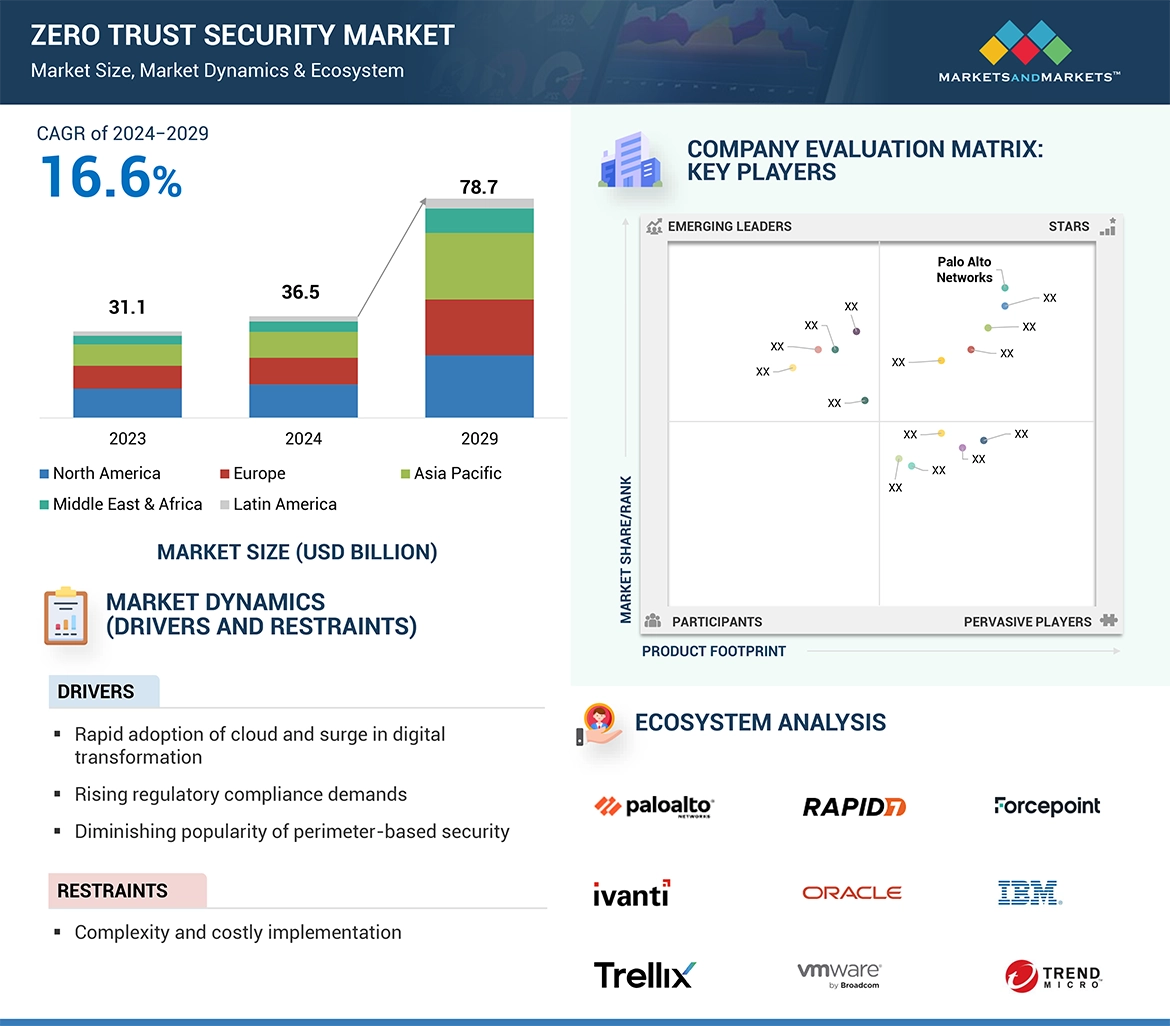
Looking further out, Market Research Future suggests the growth won't stop in 2029. They’re projecting the market to reach USD 68.45 billion by 2035. While North America is currently the biggest player, keep an eye on the Asia-Pacific region. It’s the fastest-growing sector right now, fueled by massive infrastructure investments and heavy-hitting partnerships between telecom giants and security firms.
A Snapshot of the Forecasts
Industry analysts have varying models, but the trend line is unmistakably upward. Here is how the current projections stack up:
| Report Source | Base Year | Forecast Year | Projected Value |
|---|---|---|---|
| MarketsandMarkets | 2024 | 2029 | USD 78.7 Billion |
| Market Research Future | 2025 | 2035 | USD 68.45 Billion |
| SNS Insider (ZTNA specific) | 2024 | 2033 | USD 14.74 Billion |
Beyond the Buzzwords: Integration and Reality
Zero Trust isn't an island. We’re seeing it increasingly woven into Secure Access Service Edge (SASE) architectures. By marrying Zero Trust with SASE, companies can finally put AI and machine learning to work, automating threat detection in real-time. It’s about getting granular—knowing exactly who is accessing what, where they are, and whether their behavior looks suspicious.
Regionally, the adoption is fascinating. In Asia-Pacific, major enterprises are already going all-in on Zero Trust Exchange solutions to lock down their cloud environments. While cloud-based security is the clear winner, we’re still seeing a surprising amount of life in on-premises upgrades. Many companies are retrofitting their legacy hardware to meet modern standards rather than ripping and replacing everything at once.
Why the Shift Is Inevitable
If you’re wondering why your IT department is obsessed with this, look at the pressure points they’re dealing with:
- The Death of the Office Perimeter: With the workforce scattered, the "castle-and-moat" model is dead. Identity is the new perimeter.
- The Compliance Hammer: GDPR, HIPAA, and CCPA aren't suggestions. They require ironclad, auditable access controls that only ZTNA can provide.
- The Cloud Migration: When your data moves to the cloud, your security has to follow it. You can't protect what you can't see.
- The Threat Landscape: Cyber-attacks are faster and more complex. Manual oversight doesn't cut it anymore; you need continuous, automated verification.
- AI-Driven Security: Machine learning is the only way to spot anomalies in a sea of network traffic. It’s the difference between catching a breach in seconds versus months.
At the end of the day, Zero Trust is no longer a luxury for the Fortune 500; it’s the new standard operating procedure. As we navigate a world that is permanently connected and cloud-dependent, the "never trust, always verify" mindset is the only way to keep the lights on and the data safe. The technology is evolving, the market is growing, and the transition is well underway. The question isn't whether your organization will adopt Zero Trust—it's how quickly you can get there.