Western Digital Launches First Post-Quantum Cryptography Hard Drives to Secure Data Against Future Threats

TL;DR
The clock is ticking on modern encryption, and Western Digital is the first to blink. They’ve just pulled the curtain back on the industry’s first enterprise hard disk drives (HDDs) built specifically to survive the quantum computing era.
These new Ultrastar DC HC6100 UltraSMR drives aren’t just about raw capacity; they’re packing NIST-approved, quantum-resistant algorithms. The goal? To lock down firmware and device trust before the "harvest now, decrypt later" (HNDL) strategy—where bad actors scoop up encrypted data today, waiting for the day they can crack it—becomes a reality.
By baking these standards into the hardware, Western Digital is trying to get ahead of a looming security crisis. In the world of hyperscale data, where information is archived for decades, the security decisions made today are effectively binding contracts with the future. As Western Digital points out, the shelf life of data is outlasting the shelf life of our current cryptographic shields.
The Quantum Threat: A Race Against Time
Why the rush? Experts are betting that within the next decade, quantum computers will be powerful enough to chew through the RSA-based encryption that currently guards the internet. That’s a massive problem for enterprise hardware, which often stays in high-intensity service for five years or longer. We are essentially looking at a window where data stored today is already sitting on a ticking time bomb.
The focus here is on the "root of trust." If you can’t trust the firmware, you can’t trust the drive. By ensuring that secure boot processes and firmware updates are essentially bulletproof against quantum-based tampering, Western Digital is preventing a scenario where an attacker could inject malicious code to compromise the entire storage stack.
As noted by The Quantum Insider, this is a fundamental shift. In an age of AI-driven environments where we’re hoarding massive datasets, the security of the hardware itself has become the last line of defense.
Technical Implementation: The Dual-Signing Strategy
You can’t just flip a switch and move to a post-quantum world; you have to keep the lights on for the systems we use today. To bridge that gap, Western Digital is using a "dual-signing" approach. It’s a clever way to maintain backward compatibility while laying the groundwork for a quantum-resistant future.
Here is how the tech breaks down under the hood:
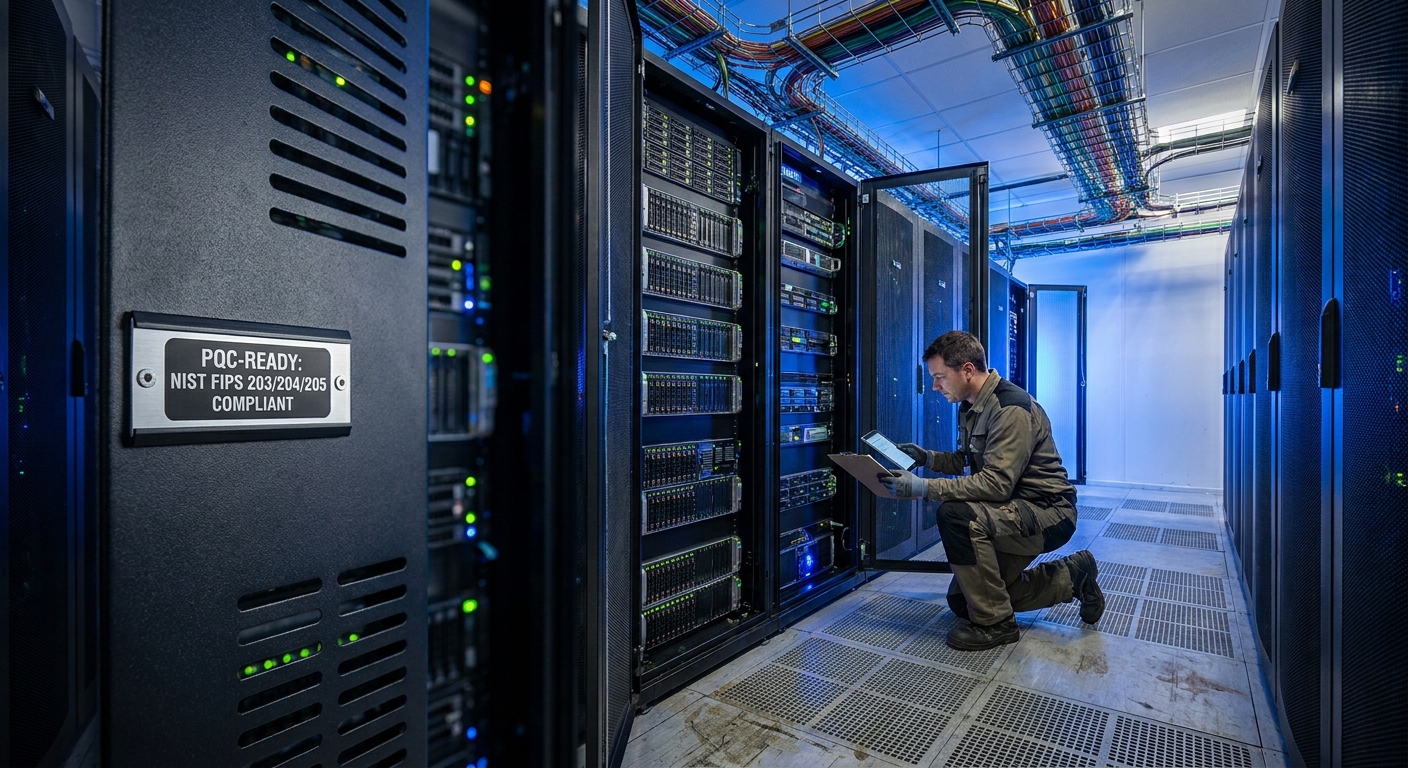
- ML-DSA-87 (NIST FIPS 204): This is the heavy-duty, quantum-resistant algorithm used to verify that firmware is authentic and untouched.
- RSA-3072: The old guard. By pairing this with the PQC algorithm, the drives remain compatible with legacy systems while still being "quantum-ready."
- Firmware Integrity Protection: It’s all about the secure boot. By locking this down, the drives prevent the forgery of digital signatures that would otherwise allow an attacker to slip in malicious firmware.
- HNDL Mitigation: By securing the device at the firmware level, these drives effectively neutralize the HNDL threat, ensuring that even if the data is intercepted, it remains unreadable to future quantum-enabled adversaries.
| Feature | Specification / Detail |
|---|---|
| Primary PQC Algorithm | ML-DSA-87 (NIST FIPS 204) |
| Legacy Compatibility | RSA-3072 dual-signing |
| Primary Security Focus | Firmware integrity & secure boot |
| Deployment Status | Currently in qualification with hyperscale customers |
| Host Impact | Transparent; no software/process changes required |
The "Drop-In" Advantage
One of the biggest headaches for IT administrators is the "break-everything" upgrade. Nobody wants to overhaul their entire software stack just to get a bit more security. Western Digital knows this, which is why they’ve made this implementation entirely transparent.
The quantum-resistant logic lives inside the drive’s internal security controller. The host system doesn't even know it’s there. For a hyperscale data center juggling petabytes of data, this is a godsend. It’s a "drop-in" replacement that requires zero changes to existing management processes. These drives are currently being put through the wringer by hyperscale customers, signaling a move toward making quantum-resistant hardware the new baseline for enterprise storage.
As explained in the Western Digital blog, this proactive stance is about preventing vulnerabilities before they become headline news. It’s not just about patching holes; it’s about building a foundation that doesn’t have holes to begin with.
Securing the AI Foundation
We’re living in an era where data is the most valuable currency on the planet. AI-driven environments are creating massive, sensitive datasets that need to remain secure for years, if not decades. In this context, the HNDL threat is particularly dangerous because the value of that data doesn't expire—it often grows.
By moving the defense to the device level, Western Digital has created a layer of security that doesn't rely on the host OS or the application layer. If the host environment is compromised, the drive still holds its own. This is a strategic move, because firmware is the foundation of everything. If the foundation cracks, everything built on top of it—including disk-level encryption—is effectively useless.
By hardening the firmware against quantum-enabled forgery, Western Digital is providing a critical security anchor. As these drives move through the qualification process and toward widespread deployment, the message to the industry is clear: the future of enterprise storage is quantum-resistant, and the time to start building that future is right now.