Zero-Knowledge Proofs for Private Traffic Verification
TL;DR
The Problem with Traditional Traffic Logging
Ever wonder why we trust a random company in a different country with every single one of our digital secrets? It’s a bit weird if you think about it. We pay for privacy, but we’re basically just moving our data from the isp’s bucket into a vpn provider’s bucket.
The big issue is that most services claim "no-logs," but there is literally no way for you to verify that. It’s a pinky promise at best.
- The Honeypot Risk: Centralized servers are massive targets. If a government or a hacker gets in, they get everything from everyone at once.
- Broken Promises: We've seen cases where "no-log" providers handed over data when pressured by authorities.
- Hidden Metadata: Even if they don't log your "traffic," they often keep timestamps or ip addresses for "troubleshooting" which can still identify you.
Decentralized vpns (dvpn) try to fix this by using a p2p network where regular people share their extra bandwidth. But it’s not perfect yet. While dvpns solve the centralization problem, they introduce a new trust issue: the individual node operator. Since a random person is routing your data, you have to worry about them snooping on your traffic.
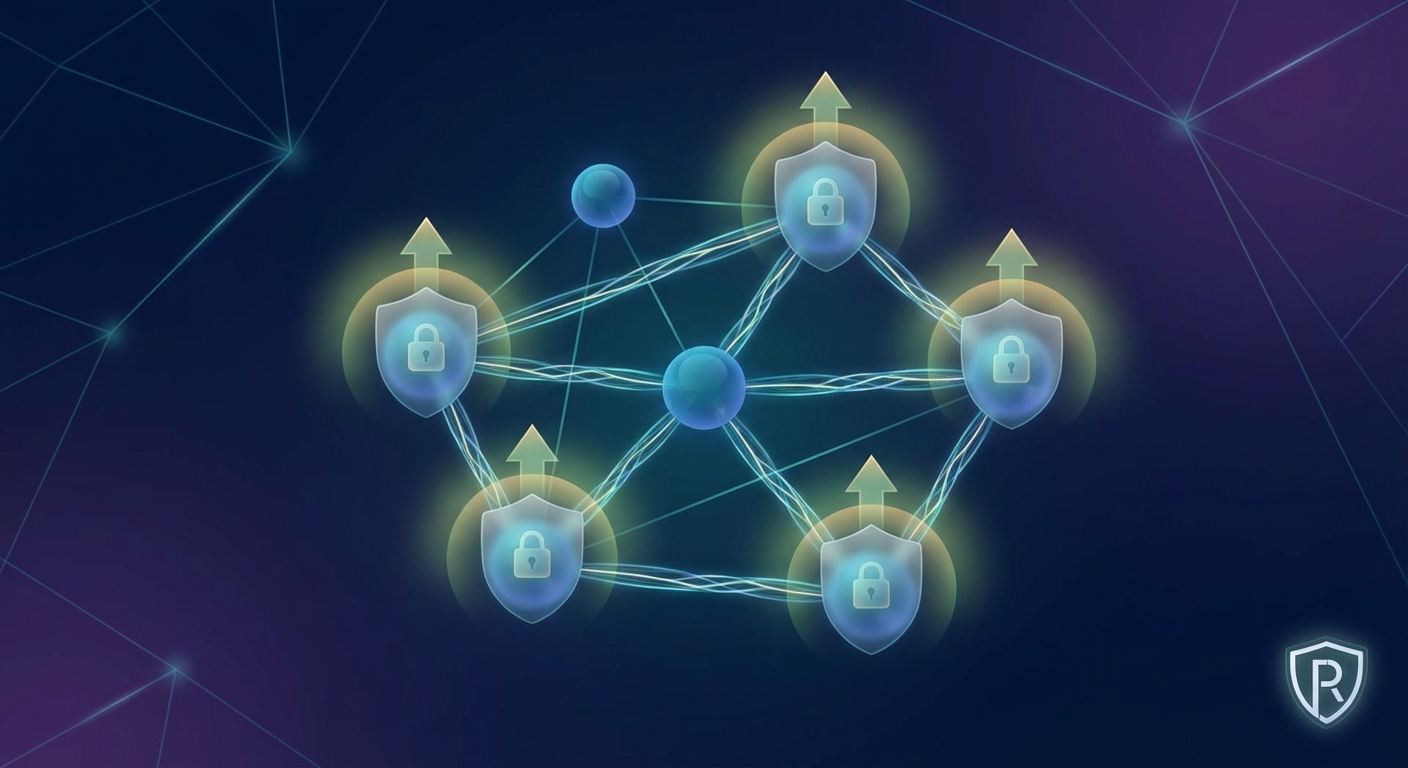
As shown in Diagram 1, the data flow shifts from a central hub to a distributed mesh, where your connection bounces through multiple individual nodes instead of one big corporate server.

According to a 2024 report by Top10VPN, many top services still have "vague" logging policies despite marketing otherwise. In a dvpn, you’re worried about the node operator sniffing your packets. Plus, the network needs to prove that a node actually provided the service without seeing what you were doing.
So, how do we prove traffic happened without actually looking at the traffic? That’s where things get really interesting with zero-knowledge proofs.
What are Zero-Knowledge Proofs anyway?
Imagine you want to prove to a friend you have the key to a locked box, but you don't actually want them to see the key or what's inside. How do you do it without just handing it over?
That’s essentially the magic of Zero-Knowledge Proofs (zkp). It is a cryptographic method where one party (the prover) can prove to another party (the verifier) that a statement is true, without revealing any info beyond the validity of the statement itself.
Think of a circular cave with a secret door at the back that requires a password. If I want to prove to you I know the password without telling it to you, I can enter the cave, and you watch me come out the other side. You don't hear the password, but you know I must have it to get through.
- Finance: Banks can verify you have enough money for a mortgage without seeing your full transaction history or exact balance.
- Healthcare: A researcher can confirm a patient has a specific gene marker for a study without ever seeing the patient's name or other private medical records.
- Retail: proving you're over 21 to buy a product online without sharing your actual birth date or home address.
- Network Traffic: Proving a data packet was sent from point A to point B without revealing the contents of the message or the identity of the sender.
Diagram 2 illustrates this logic by showing how the "Prover" sends a mathematical proof to the "Verifier" that confirms the truth of a claim without sharing the underlying data.

According to Chainlink, zkp systems like zk-SNARKs are becoming the gold standard for privacy because they're "non-interactive," meaning the proof is just one small piece of data sent once.
In the world of decentralized vpns, this is huge. It means a node can prove it routed your data correctly without ever "seeing" the data packets. But how do we actually apply this to messy internet traffic? That's where the tech gets even cooler.
Implementing ZKP in Bandwidth Marketplace
So, how do we actually pay someone for bandwidth without knowing what they're sending or where it's going? It sounds like a paradox, right—proving a job was done while keeping the job itself a total secret.
In a bandwidth marketplace, we use zk-snarks to verify that a node actually moved 500MB of data for a user. The node provides a "proof" that the packet headers match the expected protocol and size, but the actual payload—your emails, passwords, or cat memes—remains encrypted and invisible to the node.
- Packet Validation: The network checks that packets are the right size and frequency without peekin' inside. This stops nodes from just sending empty junk data to farm rewards.
- Sybil Protection: It ensures one person isn't running 100 fake nodes on one machine to "share" bandwidth with themselves. This works because zkp can prove a node has a unique hardware signature or "Proof of Contribution" without revealing the node's specific identity.
- Privacy First: Even if a node operator is tech-savvy, they can't see your destination ip because the proof only validates the fact of the transfer, not the details.
According to Ingo Research, zk-snarks allow for "succinct" verification, meaning the blockchain doesn't get bogged down with huge files; it just checks a tiny proof.
This is where the money (or tokens) comes in. We use smart contracts to act as an automated, unbiased escrow. When the zkp is verified, the contract automatically releases payment to the node provider.
A 2023 report by Messari on DePIN (Decentralized Physical Infrastructure Networks)—which is just a fancy way of saying networks built and owned by users instead of big companies—suggests that token incentives are the only way to scale p2p networks to compete with big ISPs.
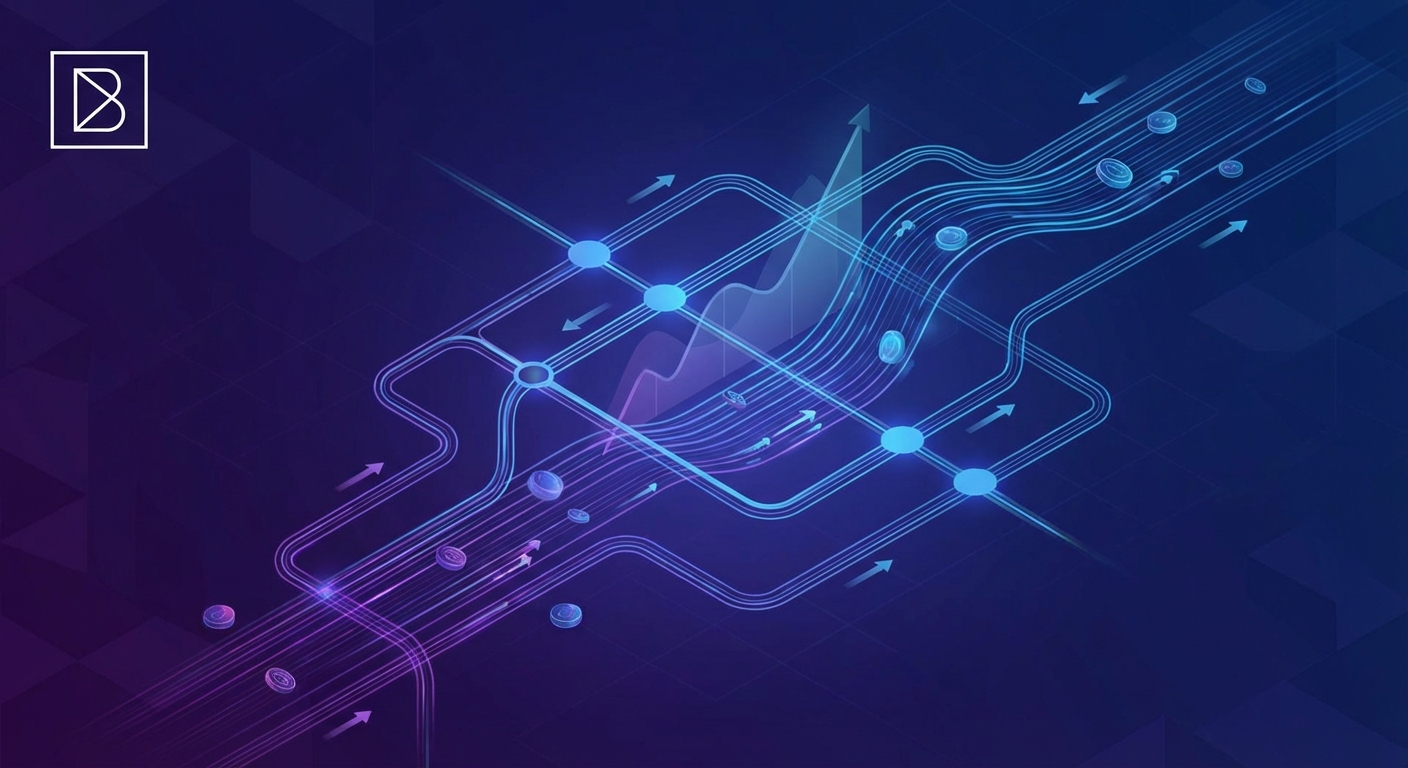
Diagram 3 shows the marketplace loop: the user requests bandwidth, the node provides it, a zkp is generated to prove the work, and the smart contract pays out the reward.

It’s basically a trustless vending machine. You put in a request, the node does the work, the math proves it, and the payment happens instantly. No middleman needed to "approve" the transaction.
Next, we're gonna look at the technical hurdles like cpu usage and latency that make this hard to pull off in the real world.
Technical Hurdles and the Future of DePIN
So, if this tech is so great, why aren't we all using it yet? Well, the truth is that "proving" something without showing it is actually a massive workout for your computer.
Generating a zkp isn’t exactly "light" work. While verifying a proof is super fast, the person creating it—the node operator—has to do some heavy lifting. On a regular laptop, this can cause a noticeable spike in cpu usage and a bit of lag.
- Processing Overhead: Creating zk-snarks requires complex math that can slow down real-time traffic. If your vpn feels like dial-up, nobody is gonna use it.
- Latency Issues: In a p2p network, every millisecond counts. Adding a "verification step" to every packet bundle can frustrate gamers or people on video calls.
- Optimization: Developers are working on "recursive proofs" and hardware acceleration (like using gpus) to make this happen in the background without you noticing.
According to a 2023 technical blog by a16z crypto, prover efficiency is one of the biggest bottlenecks for scaling these privacy systems.
Despite the hurdles, the dream is a network that big tech can't just "turn off." By pooling bandwidth from thousands of homes, we create a distributed web that's basically impossible to censor.
- Censorship Resistance: Since there's no central server to block, a depin network keeps running even if a government tries to pull the plug.
- Global Reach: You're getting an ip from a real person's house, making it way harder for streaming sites or firewalls to flag you as a "vpn user."
It’s a bit of a cat-and-mouse game, honestly. But as the tech gets leaner, these p2p tools will start feeling just as snappy as the centralized ones we use today.
How to Get Involved: The User Experience
For the average person, using a zkp-powered dvpn isn't actually that different from a normal app. You download a client, hit "connect," and the math happens behind the scenes. The cool part is the earning potential. If you have fast internet at home that you aren't using while you sleep, you can run a node. You basically leave your computer on, and the depin protocol pays you in tokens for the bandwidth you share. It's not "get rich quick" money, but it's a way to turn your monthly internet bill into a little bit of passive income while helping build a more private web.
Conclusion: A Trustless Internet is Possible
So, are we actually reaching a point where "trust" is just a math equation? It feels like we're finally moving past those sketchy "no-log" promises that nobody could actually verify.
By mixing zkp with decentralized networks, we're building a web where privacy isn't a feature you buy, but just how the plumbing works. It’s about taking the power back from giant isps and putting it into a transparent, p2p marketplace.
- Verification over Trust: You don't need to believe a provider; the blockchain protocol proves the work happened without seeing your data.
- The Sharing Economy: Regular people can earn rewards for providing bandwidth, similar to how airbnb works for spare rooms.
- Global Resilience: A 2023 report from Syari (a depin data aggregator) notes that decentralized infrastructure is much harder for single entities to censor or shut down compared to old-school servers.
Honestly, the tech is still a bit clunky and heavy on the cpu, but the direction is clear. We’re heading toward an internet that’s private by default, and frankly, it’s about time. Stay curious, and maybe consider running a node yourself—it’s the best way to see the future in action.