Smart Contract Automation for Real-Time Tokenized Bandwidth Marketplace Liquidity
TL;DR
The Rise of DePIN and Tokenized Bandwidth
Ever wonder why you’re paying a massive monthly bill for high-speed fiber when your router sits idle for ten hours a day while you're at work? It’s kind of like owning a car that you only drive to the grocery store once a week, yet you’re paying for the gas and insurance as if you’re a full-time Uber driver.
Traditional internet service providers (isps) operate on a "closed garden" model. They own the cables, they set the prices, and honestly, they don't have much incentive to care about your privacy. If a government asks for your data, or if a corporate entity wants to throttle your speeds, there isn't much you can do. (CMV: The internet should be given Utility status - Reddit)
DePIN, or Decentralized Physical Infrastructure Networks, is flipping this script by treating hardware like a shared resource. Think of it as the "Airbnb for bandwidth." Instead of one giant company owning the servers, thousands of regular people host small nodes. This decentralized approach manifests in several key ways across different sectors:
- Crowdsourced Coverage: In retail settings, shop owners can share their guest Wi-Fi capacity to earn tokens, effectively turning a business expense into a revenue stream.
- Privacy by Design: Because traffic is routed through a peer-to-peer (P2P) mesh, there’s no central point for data harvesting, which is huge for sensitive industries like healthcare. (SecAODV: A Secure Healthcare Routing Scheme Based on Hybrid ...)
- Resilience: Unlike centralized hubs, a DePIN network doesn't just "go down" if one data center fails.
According to a 2024 report by Messari, the DePIN ecosystem has grown to a market cap of over $20 billion, signaling a massive shift in how we think about physical infrastructure.
Tokenization is just a fancy way of saying we’re turning your unused internet speed into a digital asset. When you "mine" bandwidth, you aren't solving complex math problems like Bitcoin. You're just letting the network use your extra capacity to move data for someone else.

It’s a win-win. You earn crypto rewards for something you’ve already paid for, and the user gets a Censorship-Resistant VPN experience that is much harder to track than a standard corporate service.
This setup creates a living, breathing marketplace where supply and demand dictate the price of connectivity in real-time. But for this to actually work without a middleman, we need a way to automate the payments—which brings us to the role of smart contracts.
How Smart Contracts Automate Marketplace Liquidity
Think of a smart contract like a digital vending machine that doesn’t just sit there waiting for coins, but actually goes out and finds the soda for you. In a decentralized bandwidth market, we can't have a human manager sitting in a cubicle manually approving every time someone’s phone connects to a p2p node, right?
That's where the automation kicks in. These contracts are basically "if/then" logic baked into the blockchain that handle the heavy lifting of keeping the network alive.
In traditional finance, an Automated Market Maker (amm) keeps trading pairs liquid so you can always swap assets. For tokenized bandwidth, we use a similar logic. The smart contract looks at how many people want to buy privacy (demand) versus how many people are sharing their home internet (supply).
If a huge protest happens in a country with heavy censorship and thousands of people suddenly need a Censorship-Resistant VPN, the contract sees that spike. It can automatically nudge the token rewards higher to attract more node providers to that specific region.
- Retail sector: A coffee shop owner doesn't need to be a tech genius; their router just talks to the contract, which handles the "price discovery" based on local congestion.
- Healthcare: Clinics sending massive imaging files can get guaranteed "lanes" because the contract locks in the required bandwidth before the transfer even starts.
- Finance: High-frequency traders use these protocols to ensure they aren't hit by sudden lag, with the contract "slashing" (penalizing collateral for poor performance) providers who don't meet the speed they promised.

The coolest part is how we actually prove the work was done. You can't just take a provider's word for it that they sent 5GB of data. Bandwidth Proof Protocols act as the referee. These protocols use cryptographic mechanisms like "Proof of Transfer," where nodes must provide signed packets or periodic heartbeat checks to prove they actually moved the data without needing a central boss watching them.
According to a 2023 report by CoinGecko, the integration of on-chain verification is what separates modern depin from older, failed p2p attempts because it removes the "trust" factor entirely.
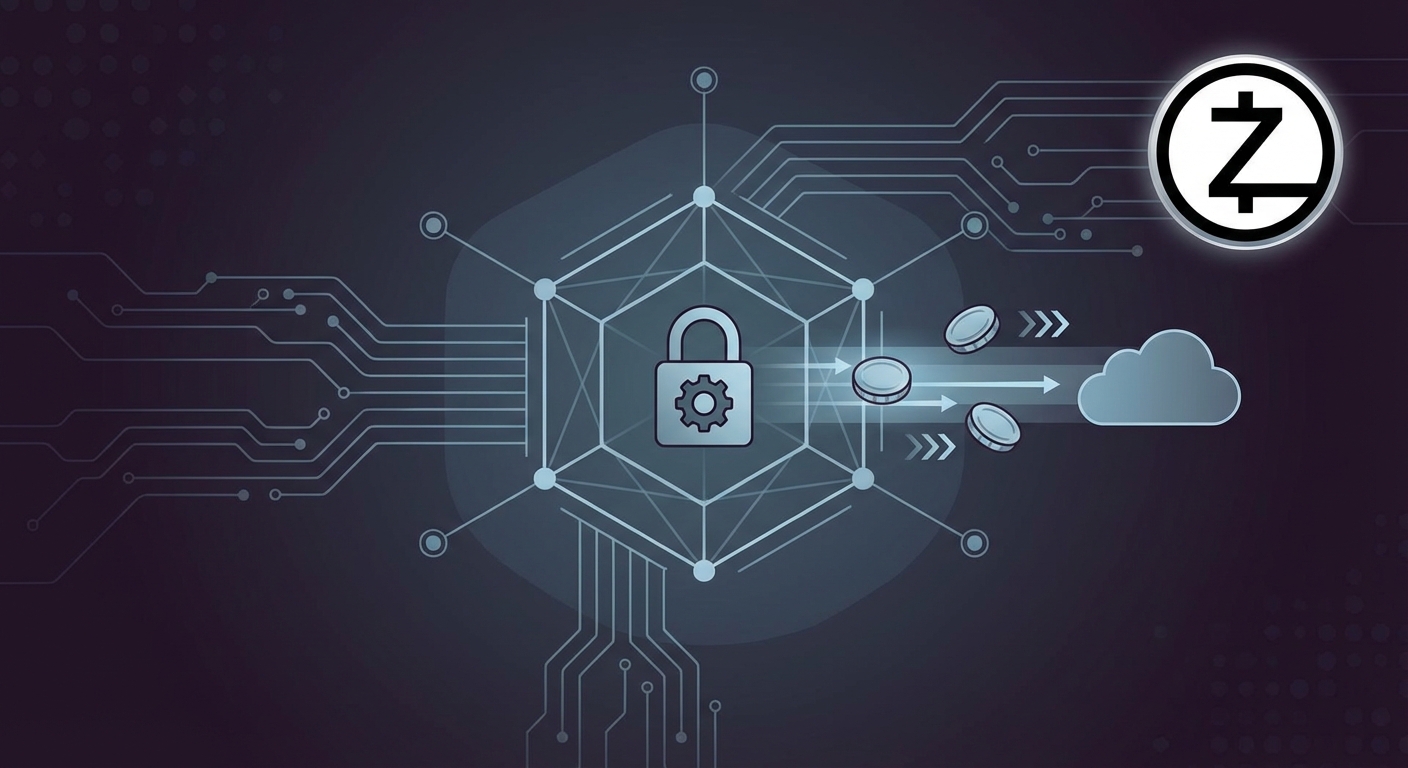
The contract holds the user's tokens in escrow and releases them in tiny, real-time increments—what we call micro-payments—only after the node proves it actually moved the packets. If the connection drops, the payment stops instantly. No more fighting with a cable company's customer service for a refund on a service that didn't work.
But honestly, having all this automation is great, but it doesn't mean much if the underlying network isn't secure. Next, we should probably look at how these protocols actually keep your data private while all this trading is happening.
Securing the Decentralized VPN Ecosystem
If you’ve ever used a free VPN and wondered why your battery is draining or why you’re suddenly seeing ads for that one weird thing you whispered about once, you already know the "cost" of centralized privacy. Most people don't realize that even paid services often log your metadata, which is just as dangerous as logging your traffic in the eyes of international privacy law.
Staying ahead of the curve isn't just about faster speeds anymore; it's about staying invisible to the very infrastructure you're using. SquirrelVPN and similar next-gen tools are leaning into this by integrating with automated liquidity pools to ensure you aren't just a "user" in a database, but an anonymous participant in a mesh.
- Dynamic Node Switching: Instead of sticking to one server, these tools use smart contracts to hop between providers. If a node in a specific jurisdiction—say, one with strict data retention laws—becomes a liability, the system rotates you out instantly.
- Zero-Knowledge Proofs: You can prove you paid for the service without ever revealing your credit card or identity to the node provider. It’s like showing a bouncer a "verified 21+" stamp instead of handing over your actual ID.
- Automated Compliance: For businesses in the healthcare or legal sectors, these tools can be configured to only route traffic through nodes that meet specific regulatory standards, like gdpr-compliant regions, without the admin having to lift a finger.
The legal landscape is shifting fast. According to a 2024 report by the International Association of Privacy Professionals (IAPP), over 70% of countries now have some form of data privacy legislation. This makes "blind" routing through a decentralized network a legal necessity for corporate compliance, not just a hobby for tech enthusiasts.

Honestly, the tech is finally catching up to the promises we were made years ago. By mixing user-friendly apps like squirrelvpn with the "math-is-law" approach of smart contracts, we’re finally moving away from trusting companies and toward trusting protocols.
Global Censorship Resistance and Digital Blockades
When a government decides to shut down the internet or block specific sites, they usually go to the big isps and tell them to pull the plug. Because the internet is so centralized, this is actually pretty easy to do. But with a decentralized vpn, there is no "plug" to pull.
These networks resist censorship because they don't rely on a list of known server IP addresses that a firewall can just block. Instead, the network is made of thousands of residential IPs—regular people's homes—that look like normal traffic. If one node gets blocked, the smart contract just routes you through another one in a different city or country instantly.
This creates a "cat and mouse" game where the censors are always losing. Since the bandwidth is tokenized, there's a financial incentive for people to keep their nodes running even in high-pressure zones. It turns digital freedom into a market-driven force that's much harder to stop than a simple protest. Next, we'll dive into the technical hurdles that make running these massive global systems so tricky.
Technical Challenges in Real-Time Bandwidth Exchanges
Honestly, building a real-time marketplace for bandwidth is like trying to tune an engine while the car is doing 80 on the highway. You've got thousands of nodes popping in and out, and if the blockchain is too slow to keep up, the whole "decentralized" dream just falls apart.
The biggest headache is definitely "block time." If you're using a standard layer 1 blockchain, it might take several seconds—or even minutes—to confirm a transaction. That's a lifetime when someone is trying to stream a 4k video or a doctor is waiting for a high-res MRI scan to load over a p2p network.
To fix this, most modern depin projects move the heavy lifting to "Layer 2" solutions or sidechains. This lets the network process thousands of tiny micro-payments per second without clogging up the main chain. It’s basically like having a tab at a bar; you don’t pay for every sip, you just settle up at the end of the night.

Then there’s the "flaky provider" problem. Since these are regular people running nodes on their home internet, what happens if their cat trips over the router? If a node goes offline in the middle of a secure session, it ruins the experience.
- Slashing Mechanisms: Smart contracts act as a digital escrow. If a node provider promises 100Mbps but only delivers 10, the contract can "slash" their staked tokens as a penalty.
- Uptime Tiers: In the Bandwidth Sharing Economy, nodes with 99% uptime earn a "reputation score." High-score nodes get priority for premium traffic, like financial data, which pays out better rewards.
- Redundant Tunneling: To keep things smooth, many Web3 VPN tools actually open multiple tunnels at once. If one node fails, the traffic just slides over to another one without the user even noticing a flicker.
A recent 2024 study on network reliability found that decentralized mesh networks can achieve over 99.9% uptime by using these redundant paths, which actually beats many mid-tier centralized providers in developing regions. It's not just about speed; it's about making sure the network is robust enough to handle real-world legal and technical pressure.
It’s a tough balancing act, for sure. But once you solve the reliability issue, you unlock something even bigger: true, global resistance to digital blockades. Let's look at how this all holds up when someone actually tries to pull the plug.
The Future of Decentralized Internet Access
So, where does this leave us? We’re basically looking at a world where the internet isn't just something you buy from a giant corporation, but something we all build and own together.
It's pretty clear that tokenized internet infrastructure is becoming a global standard for how we handle data. We're moving past simple privacy tools into a full-on bandwidth sharing economy that works for everyone.
- ai-Driven Markets: In the near future, ai agents will likely manage your smart contracts, automatically switching your node to the most profitable or private path based on real-time legal shifts.
- Retail & Healthcare: Imagine a local clinic that uses these protocols to keep patient records off public servers while earning tokens to offset their own IT costs.
- Global Finance: Banks could use p2p bandwidth to ensure their transactions never hit a centralized bottleneck, making the whole system more stable.
As we’ve seen with the growth mentioned earlier by Messari, this isn't just a niche hobby anymore. It’s a necessary shift toward digital rights. Honestly, the tech is finally ready. It's time to stop being the product and start being the infrastructure.